

Dubai accelerates AI-first economy with plan to transform 295,000 firms under new strategy
Startups, infrastructure and government integration milestones reviewed during high-level committee meeting
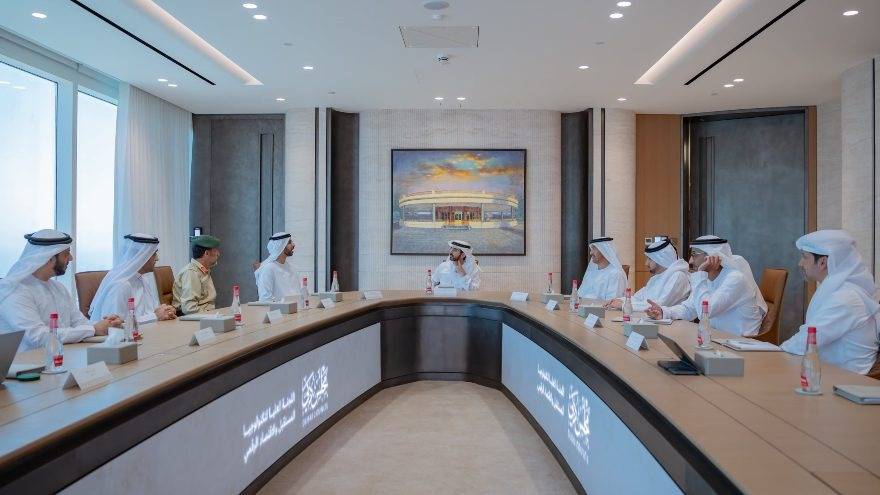
DUBAI – His Highness Sheikh Hamdan bin Mohammed bin Rashid Al Maktoum , Crown Prince of Dubai, Deputy Prime Minister, Minister of Defence, Chairman of The Executive Council of Dubai, and Chairman of the Higher Committee for Future Technology Development and the Digital Economy, chaired a meeting of the Higher Committee for Future Technology Development and the Digital Economy, marking another step in Dubai’s accelerated push towards becoming a global hub for artificial intelligence and digital innovation.
The session brought together senior officials overseeing economic development, digital transformation and advanced technology programmes across the emirate.
During the meeting, members were briefed on a series of strategic initiatives designed to deepen the integration of AI across the private sector, strengthen digital infrastructure, and expand Dubai’s global talent ecosystem. Central to the discussion was an executive plan focused on accelerating the adoption of agentic artificial intelligence, a new generation of AI systems capable of executing tasks, making decisions and managing workflows with minimal human intervention.
Sheikh Hamdan also approved Dubai’s hosting of the 50th edition of the International Collegiate Programming Contest (ICPC) World Finals, reinforcing the city’s position as a global stage for emerging tech talent. The event, scheduled to take place from 16 to 20 November 2026, will bring together 140 teams from more than 70 countries, making it one of the largest student programming competitions in the world.
AI strategy
The meeting underscored a structural shift in Dubai’s digital economy agenda, with agentic AI positioned as a core driver of productivity and competitiveness. Officials reviewed a comprehensive transformation programme aimed at empowering 295,000 companies across Dubai, signalling one of the most extensive AI adoption frameworks announced in the region.
The plan includes the development and deployment of 100 specialised AI assistants over the next two years, designed to support businesses in operations, customer engagement and decision-making processes. In addition, the strategy targets the establishment of 50 agentic AI companies, intended to anchor new innovation clusters within the emirate’s technology ecosystem.
During a meeting of the Higher Committee for the Future of Technology and the Digital Economy, we reviewed key updates on major projects and the roadmap for Agentic AI transformation in the private sector.
— Hamdan bin Mohammed (@HamdanMohammed) June 11, 2026
Over the next two years, more than 295,000 companies will be empowered… pic.twitter.com/qOe5pwuF3x
Sheikh Hamdan emphasised that AI is no longer confined to automation tools but is evolving into systems capable of reshaping entire business models. He highlighted that the next phase of development will focus on turning technological capability into measurable economic value, while enhancing Dubai’s global competitiveness.
Talent drive
A significant component of the meeting focused on strengthening Dubai’s position as a magnet for global expertise. The newly approved “Dubai Global Talent Network” aims to connect professionals who are currently based in Dubai or have prior experience in the emirate, enabling deeper collaboration across industries and future projects.
The platform is designed to enhance networking among international experts, encourage knowledge exchange and attract high-value professionals to Dubai’s expanding innovation landscape. Officials noted that talent attraction remains a cornerstone of the emirate’s long-term strategy for sustaining economic diversification.
The importance of global engagement was further highlighted through Dubai’s approval to host the ICPC World Finals, an event widely regarded as the pinnacle of university-level programming competitions. The contest will feature participants from more than 70 countries, reinforcing Dubai’s ambition to position itself as a centre for knowledge-based industries.
Digital systems
Security and infrastructure modernisation formed another key pillar of the meeting, with approval granted for the “Digital Twin System” for Dubai Police. The initiative aims to enhance smart surveillance capabilities through advanced digital modelling, improving monitoring accuracy, data analysis and operational response.
The pilot phase will integrate 150 cameras across Dubai, creating a real-time digital environment that supports decision-making and situational awareness. The system is expected to strengthen the emirate’s use of data-driven policing and improve coordination across security operations.
In parallel, updates were presented on the AI Infrastructure Empowerment Platform, which has already been adopted by 27 government entities. The platform enables faster integration of AI into public services while ensuring full data sovereignty for Dubai, a key priority in the emirate’s digital governance framework.
Startup growth
The meeting also reviewed significant progress across Dubai’s entrepreneurial ecosystem, reflecting strong momentum in digital business expansion. The SME digital trade support initiative, delivered in partnership with Amazon, has expanded to more than 105,000 companies by May 2026, surpassing its original target of 100,000 firms.
The “Ignyte” platform continues to play a central role in supporting entrepreneurs, recording more than 36,000 users and delivering over 3,000 specialised mentoring sessions. It provides integrated services for startups seeking guidance, funding access and operational support.
Meanwhile, the Dubai AI Campus now hosts over 400 specialised companies and has trained more than 1,500 participants through its AI Academy. The Dubai PropTech Hub has also recorded 118 percent growth in the number of companies within a single year, reflecting rising demand for property technology solutions.
Tech ecosystem
Broader ecosystem updates highlighted strong expansion across Dubai’s innovation landscape. The Dubai Centre for Artificial Intelligence has delivered more than 108,000 hours of support to government entities, assisting in the development and deployment of AI applications and evaluating their operational impact.
The “Dubai Founders HQ” has also shown rapid growth, attracting over 1,100 members and 500 startups within nine months of launch. Companies under its network have collectively raised more than Dh200 million in funding, signalling growing investor confidence in Dubai’s startup environment.
Further progress was noted in the SME digital trade programme, AI acceleration initiatives and cross-sector digital infrastructure projects, all of which continue to reinforce Dubai’s positioning as a global hub for technology-driven growth.
The meeting also brought together senior officials including representatives from economic, security and digital authorities, reflecting a coordinated governance approach to shaping Dubai’s future economy through integrated technological transformation.