

Live Update ATM Dubai 2026: Four days of travel deals, new ideas and global tourism buzz comes to close
More than 115 countries and 55 destination stands brought global tourism together
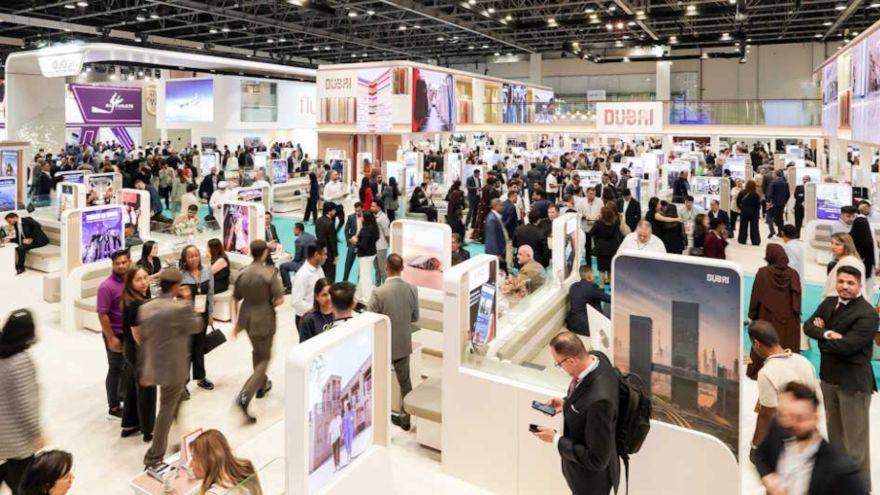
DUBAI – The Arabian Travel Market (ATM) Dubai 2026 has wrapped up after four days of airline announcements, tourism launches, destination showcases, technology and global industry conversations, with the Final Day putting the spotlight on one of the region’s biggest emerging opportunities – the Asia-GCC travel corridor.
The 33rd edition, held from 14 to 17 September at Dubai World Trade Centre, brought together decision-makers, tourism authorities, airlines, hotels, transport providers, technology companies, tour operators and buyers from more than 115 countries under the theme “Travel 2040: Driving New Frontiers Through Innovation and Technology.”
With more than 55 destination stands, the event provided a broad view of where international tourism is heading, from AI-powered travel and smart mobility to new airline cabins, multi-emirate holidays, medical tourism, education travel and changing visitor expectations.
Asia-GCC corridor
One of the Final Day’s key discussions focused on the growing flow of travellers between Asia and the GCC.
Data presented at ATM showed that overnight guests travelling from Asia-Pacific into GCC countries reached 164.8 million in 2025, up around 161% compared with 2019.
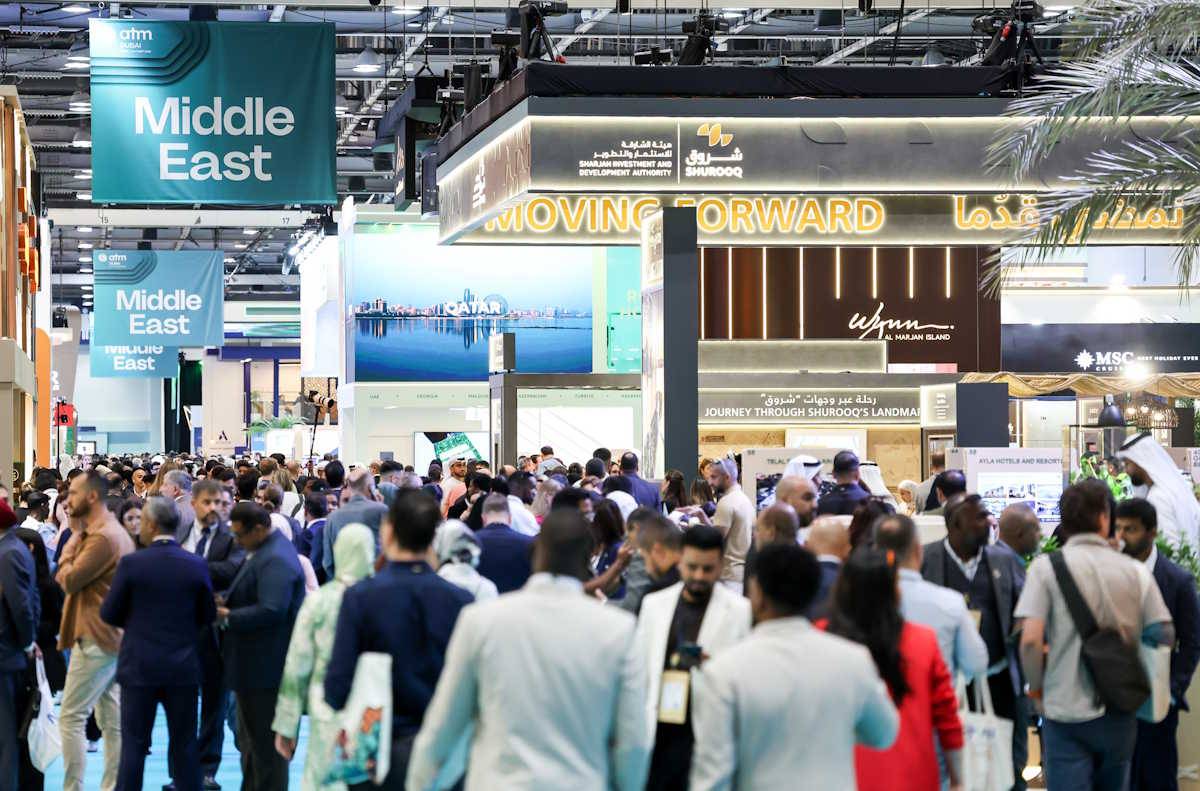
Industry leaders said easier visas, seamless digital payments, stronger connectivity and tailored tourism products could help unlock further growth from markets including China, India, South Korea, Malaysia and Australia.
Shahab Abdollah Shayan, Regional Director Asia Pacific at Dubai Department of Economy and Tourism, highlighted Dubai’s visa-free access for Chinese travellers and efforts to make the visitor journey easier through payment systems such as Alipay and WeChat Pay.
The discussion also highlighted growing travel in the opposite direction, with GCC arrivals to China exceeding 150,000 in 2025, according to figures presented at the event.
The session underlined how the next phase of tourism growth depends not only on flights and hotel capacity, but also on entry requirements, payment systems, mobility and the quality of the visitor experience.
UAE unveils new tourism platform
Earlier in the event, the UAE introduced Visit UAE, its first unified national tourism brand, alongside the UAE Grand Tour.
The platform connects the seven emirates through multi-destination itineraries of up to 14 days, covering family, culture, nature and adventure.
Developed with Rocket International and tourism authorities across the emirates, the Grand Tour brings together hotels, attractions, transport providers and tourism experiences, allowing travellers and trade partners to build integrated programmes across the country.
The launch supports the UAE Tourism Strategy 2031, which targets a Dh450 billion tourism contribution to GDP, Dh100 billion in additional tourism investment and 40 million hotel guests annually.
The UAE also announced the international expansion of its World’s Coolest Winter campaign, taking the initiative beyond its traditional domestic and resident audience.
Dubai takes centre stage
Dubai’s tourism strength was a recurring theme throughout the four-day event.
The Dubai Department of Economy and Tourism participated with more than 115 co-exhibitors, covering hotels, DMCs, tour operators and tourism partners. Government entities including Dubai Civil Aviation Authority, Dubai Culture and Arts Authority, Dubai Health Experience, Dubai Municipality and GDRFA Dubai also took part.
During his ATM visit, His Highness Sheikh Mohammed bin Rashid Al Maktoum highlighted around 7 million tourists visiting Dubai in the first eight months of 2026, alongside around 21 million hotel room bookings during the same period.
Dubai’s wider tourism data showed hotel occupancy reaching 66% in August, with close to 149,000 rooms in inventory and more than 21.61 million occupied room nights recorded between January and August.
Future projects showcased during the event included the planned Dh128 billion passenger terminal at Al Maktoum International Airport, Palm Jebel Ali, Hatta’s development plans, Jebel Ali Beach and Dubai 2040.
Issam Kazim, CEO of the Dubai Corporation for Tourism and Commerce Marketing, said ATM provided a platform for local and international stakeholders to strengthen partnerships and explore new areas of collaboration.
ATM’s Hosted Buyers programme brought more than 300 international travel trade professionals from over 40 countries, alongside more than 40 travel media representatives.
Royal visits
ATM 2026 also drew royal attention.
His Highness Sheikh Hamdan bin Mohammed bin Rashid Al Maktoum, Crown Prince of Dubai, Deputy Prime Minister and Minister of Defence of the UAE, Chairman of The Executive Council of Dubai, visited the exhibition and toured the Emirates stand.
During his visit, His Highness Sheikh Hamdan bin Mohammed bin Rashid Al Maktoum highlighted the participation of 1,405 organisations, institutions and companies and described ATM as a global platform for travel and tourism cooperation.
He also sampled Emirates’ new Premium Economy seat.
His Highness Sheikh Mohammed bin Rashid Al Maktoum, Vice President and Prime Minister of the UAE and Ruler of Dubai, visited the show earlier, reviewing new tourism solutions, technologies and industry trends.
Emirates expands reach
Emirates made partnerships and product innovation a major part of its ATM presence, signing and renewing agreements across tourism, aviation, education, medical travel, technology, business and emerging travel segments.
The airline signed 11 memoranda of understanding during the event, strengthening connections with seven regional and global destinations and expanding cooperation around technology, marketing, products, packages and passenger experiences. Across its wider ATM programme, Emirates also announced or renewed more than 30 agreements and partnerships.
Among the highlights were expanded relationships with Alibaba’s Fliggy, MSC Cruises, DERTOUR, Emirates Islamic, Huawei, Dubai Duty Free and Al Etihad Payments, alongside tourism agreements across Africa, Europe, Asia and the UAE.
The airline also unveiled its new A350 Premium Economy seat to the public. The electrically powered seat features a full-height adjustable privacy divider, U-Dream leather headrest, wireless charging, USB-C connectivity and a 13.3-inch 4K HDR screen.
Visitors could also explore the Emirates A380 Shower Spa and Onboard Lounge, Boeing 777 Game Changer First Class Suite, and A350 Business and Economy cabins.
Emirates used ATM to expand into new travel segments, including education and medical tourism. An agreement with Dubai’s Knowledge and Human Development Authority provides tailored fares, additional baggage and booking flexibility for eligible education-sector travellers, while an MoU with ICEF positions Emirates as a preferred airline for international education travel.
A separate agreement with the Medical Tourism Association focuses on international medical and wellness travellers from Africa, Asia and the Middle East, with Emirates working towards becoming the world’s first GHA-accredited airline.
Its reciprocal codeshare agreement with Kuwait Airways further expanded connectivity.
Etihad’s next chapter
Etihad used ATM for the world debut of its redesigned A330 cabin, introducing a new premium three-cabin experience for regional and medium-haul services.
The aircraft will feature four First suites with doors, companion dining space, 32-inch screens and wireless charging, alongside 24 fully lie-flat Business Class seats with direct aisle access.
Economy will have 252 seats, 13.3-inch 4K screens and fixed-wing headrests, while 32 Extra Legroom seats will offer four additional inches of pitch.
The A330 is scheduled to enter service from September 2027, with 15 aircraft planned over five years.
Etihad also introduced Etihad Escapes, a new hotel-booking platform launching in October, and signed an agreement with Etihad Rail to explore integrated air-rail journeys across the UAE.
Its partnership with Swissport was expanded from 30 to 40 airports, covering ground handling and cargo operations across Africa, Europe, North America, the Middle East and Asia.
More routes, hotels and tech
Jazeera Airways announced its first winter service between Kuwait and Prague, with twice-weekly flights beginning 17 December 2026 and operating until 7 February 2027, targeting festive travel and winter school holidays.
Hospitality group Rotana unveiled the next phase of its regional growth strategy, with 40 hotels and more than 8,300 keys under development, including 10 projects in Saudi Arabia.
The event also saw the announcement of a new Saudi airline by a consortium comprising Air Arabia Group, Nesma Group and KUN Holding Company. The carrier is scheduled to begin operations on 20 September 2026, linking Dammam with Riyadh, Madinah and Jeddah.
Meanwhile, Mastercard and Trip.com showcased AI-powered booking experiences using TripGenie, developed with Network International to help transform how travellers search, plan and pay for trips.
Technology reshapes ATM
ATM Travel Tech made its debut in 2026, bringing more than 180 exhibitors from 30 countries into two dedicated halls.
The 850-square-metre Tech & Innovation Hub featured AI, VR and AR, robotics, fintech and green technology, while 28 live showcases were staged in the Tech & Innovation Hub Demo Zone.
Across the wider programme, more than 90 sessions were held on the Global Stage, Future Stage and Experience Hub, examining AI, digital transformation, smart mobility, sustainability, aviation, hospitality, business travel and changing traveller behaviour.
AI featured prominently in discussions about how travel companies and destinations can move beyond chatbots and personalisation towards infrastructure, governance, connected ecosystems and more discoverable destination information.
The event also introduced a refreshed brand identity, reflecting ATM’s expansion beyond the traditional exhibition floor into a year-round platform for the global travel and tourism community.
China and premium travel
Chinese outbound tourism remained another major ATM theme.
Research presented at the event showed that 77% of Chinese travel agents reported growth in demand during the first half of 2026, while 70% reported summer growth.
Luxury, FIT, group and youth travel were among the segments discussed, with the UAE and Saudi Arabia identified as important long-term markets.
The show also examined premiumisation, cruise tourism and the changing expectations of high-value travellers, alongside the need for destinations to develop experiences that encourage longer stays.
Culture beyond deals
The exhibition floor offered plenty beyond business announcements.
Sri Lanka brought traditional dance and cultural performances, while Bahrain added live music to the Final Day.
Heritage Express showcased Old Dubai through tours combining Emirati history, cuisine, architecture and stories of the UAE’s transformation.
Al Ain Zoo brought wildlife experiences to the event, including an albino corn snake, birds of prey and other animals.
Dubai Police added another crowd-puller with its 800hp Mansory Ferrari 812 Superfast, alongside smart security services, Tourist Police initiatives and its luxury patrol fleet.
The Dubai Police Band also performed at the event, bringing music and local culture to the show floor.
Destinations make their pitch
Kerala Tourism Minister P.C. Vishnunadh visited the Kerala stand during the Final Day as the Indian state promoted its tourism offering to international buyers.
Abu Dhabi’s Zayed National Museum was also showcased, highlighting a journey through the UAE’s history from ancient times to the present.
Germany promoted its growing GCC visitor market, with around 1.2 million GCC overnight stays recorded in 2025, while Czechia highlighted wellness, gastronomy, culture, nature and destinations beyond Prague.
Ajman showcased its heritage and tourism experiences, including its “From the Memory of Ajman” exhibition, while Sharjah brought more than 30 government and private-sector entities together around culture, tourism, development and sustainability.
Hotels see diverse demand
Hospitality demand was another important thread.
Iftikhar Hamdani, Area General Manager for Bahi Ajman Palace Hotel and Coral Beach Resort Sharjah, said both properties were recording occupancy above 95%, with strong demand from Russia, Belarus, Kazakhstan, Central Asia, India and China.
He also highlighted sustainability work at Coral Beach Resort Sharjah, where a biodigester diverts around 300kg of waste from landfill each day and converts it into nutrient-rich greywater for plants.
A global meeting point
For Dr Zafar Tahir, Chief Operating Officer of Vista Maritime Travel Tourism LLC, the scale and diversity of ATM were among its defining features.
Speaking to TravelsDubai, he pointed to participants from the Gulf, Europe, the US, Canada, Central Asia and South Asia, describing the event as a major meeting point for the global tourism industry.
That international mix was visible throughout the four days, with destinations and businesses using Dubai to meet buyers, launch products, negotiate partnerships and showcase experiences.
Four days, one travel story
As the 33rd Arabian Travel Market closed at Dubai World Trade Centre on Thursday, 17 September, the four-day event left behind a packed pipeline of routes, partnerships, products and tourism initiatives.
The next edition of Arabian Travel Market is scheduled for 3–6 May 2027 at Dubai World Trade Centre, with the global travel community set to return to Dubai for another round of industry deals, destination showcases and new ideas.
ATM Dubai 2026: Etihad signs Uzbekistan tourism deal as Abu Dhabi-Tashkent route expands
DUBAI – Etihad Airways has signed a Memorandum of Co-operation (MoC) with the Tourism Committee of Uzbekistan to strengthen tourism and trade links between the UAE and Uzbekistan.
The agreement was signed during Arabian Travel Market (ATM) 2026 in Dubai, following the launch of Etihad’s first-ever route to the Central Asian country.
The partnership will focus on promoting Uzbekistan to travellers across Etihad’s international network.
UAE-Uzbekistan travel
Under the agreement, Etihad and Uzbekistan’s Tourism Committee will work together on marketing campaigns, promotional activities and trade initiatives aimed at raising the country’s profile among the airline’s international guests.
The MoC was signed by Aysha Saeed Al Kaabi, Vice President Commercial Enablement at Etihad Airways, and Abdulaziz Akkulov, Chairman of the Tourism Committee of Uzbekistan.
Etihad Chief Executive Officer Antonoaldo Neves said the airline’s daily service to Tashkent, combined with its growing codeshare partnership with Uzbekistan Airways, would make it easier for travellers to reach destinations including Samarkand and Bukhara.
Akkulov said 9.1 million foreign tourists visited Uzbekistan between January and August 2026, while tourism service exports reached $4.6 billion. He said the country was seeking to broaden inbound tourism, improve access to destinations and strengthen its presence in international tourism markets.
Etihad in Uzbekistan
Etihad launched its first-ever Uzbekistan route on 9 August 2026, introducing a daily non-stop Airbus A320 service between Abu Dhabi and Tashkent. The route provides a direct connection between the UAE capital and Uzbekistan’s capital, creating a new gateway to Central Asia.
The new service builds on Etihad’s codeshare agreement with Uzbekistan Airways, which took effect on 15 May 2026. Through the arrangement, Etihad guests can book single-ticket journeys to eight additional destinations in Uzbekistan.
The destinations include Samarkand, Bukhara, Urgench, Nukus, Termez, Fergana, Namangan and Andijan, alongside other key routes operated across the Uzbekistan Airways network.
18 Sep, 2026
17 Sep, 2026
Over 30 deals and a new cabin experience: How Emirates made its mark at ATM Dubai 2026
DUBAI – Emirates wrapped up Arabian Travel Market (ATM) Dubai 2026 with more than 30 agreements signed or renewed during the four-day industry event, extending its network of partnerships across tourism, business and emerging travel segments.
The airline's presence at the show also put its latest onboard products firmly in the spotlight, with its new electrically powered Premium Economy seat making its public debut. Thousands of visitors passed through the Emirates stand, where they could experience the new seat alongside some of the airline's flagship cabin products.
At this year's Arabian Travel Market, we didn't just talk about the future of flying better. We showed it. ✈️ pic.twitter.com/uStj4KQrct
— Emirates (@emirates) September 17, 2026
From tourism authorities spanning 16 countries to organisations representing education, medical travel, sport and the maritime sector, the agreements reflected Emirates' efforts to develop new sources of passenger demand while strengthening established markets.
New Premium Economy seat
The new Premium Economy seat became one of the main attractions at the Emirates stand, offering ATM visitors their first public opportunity to try the electrically powered product.
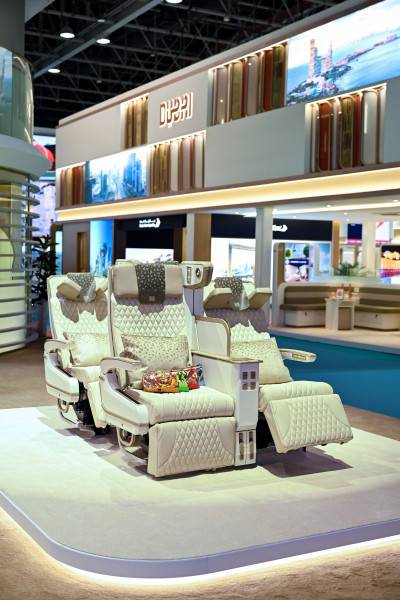
Thousands of guests sat in the seats and explored their functions, giving visitors a closer look at the cabin experience Emirates is developing for Premium Economy passengers. The stand also featured the A380 Shower Spa and Onboard Lounge, the Boeing 777 Game Changer First Class Suite and A350 Business and Economy Class seats fitted with the U-Dream headrest.
The product showcase provided a cross-section of Emirates' current and forthcoming cabin experience, bringing several of its distinctive onboard features together at one of the industry's biggest annual travel gatherings.
Tourism ties
Partnership activity formed another major part of Emirates' ATM presence, with agreements spanning Africa, Europe, Asia and the UAE.
In Africa, Emirates signed new agreements with the Kenya Tourism Board and Mozambique's ANDITUR. In Europe, it partnered with Visit Finland ahead of the launch of its Helsinki service on October 1, as well as Fjord Norway, Bologna Welcome and Parma Welcome. Emirates Holidays also signed an agreement with the Spain Tourism Office.
Across West and Southeast Asia, the airline reached agreements with Tourism Malaysia, the Japan National Tourism Organization, Sri Lanka Tourism Promotion Bureau, Maldives Marketing and Public Relations Corporation, Seychelles Tourism Board and the Ministry of Tourism and Culture, and Mauritius Tourism Promotion Authority.
Emirates also renewed its partnership with Madagascar's Ministry of Tourism and Handicrafts. In the UAE, it renewed its relationship with the Sharjah Commerce & Tourism Development Authority and signed a new agreement with the Ras Al Khaimah Tourism Development Authority.
The partnerships are designed to support destination promotion and strengthen the links between international air connectivity and visitor arrivals.
https://www.travelsdubai.com/14-Sep-2026/atm-dubai-2026-emirates-expands-global-tourism-push-seven-new-deals
New travel deals
Beyond conventional leisure and corporate travel, several agreements announced at ATM were focused on specific communities and fast-growing travel segments.
In education, Emirates partnered with the Knowledge and Human Development Authority to support Dubai's ambition of becoming a global study destination. It also signed with ICEF to become a preferred global airline partner for education travel.
https://www.travelsdubai.com/17-Sep-2026/dubai-students-get-new-emirates-travel-perks-special-fares-extra-baggage
The airline expanded its presence in medical and wellness tourism through an agreement with the Medical Tourism Association, covering longevity and wellness travel alongside traditional medical travel.
https://www.travelsdubai.com/17-Sep-2026/medical-tourists-will-soon-able-link-flights-treatment-care-emirates
Sports travel was another area of expansion. Through a partnership with Cutting Edge, Emirates will develop travel packages for fans attending major cricket, football, motorsport, golf and tennis fixtures.
The airline also strengthened its links with the maritime sector through agreements with Cisalpina Tours International and MSC Cruises. These cover seafarer rotations, dedicated crew fares and enhanced baggage allowances.
https://www.travelsdubai.com/15-Sep-2026/emirates-expands-global-reach-11-new-deals-atm-dubai-2026
Wider connections
A further group of agreements extended Emirates' reach through business communities, technology platforms and travel distribution channels.
The airline signed agreements with the Overseas Workers Welfare Administration, Finnish and Vietnamese Business Councils, Huawei, Dubai Duty Free, Alibaba Fliggy, DERTOUR Group, Emirates Islamic and Al Etihad Payments. The latter partnership will bring Jaywan to Emirates bookings.
Emirates and Kuwait Airways also agreed to expand their interline partnership into a reciprocal codeshare, broadening the connectivity available through their respective networks.
The collection of agreements came as Emirates continues to rebuild its operations following earlier disruption. The airline said it is now operating at approximately 93% of its pre-disruption capacity, with ATM providing a platform for discussions around the continuing development of Dubai's tourism and aviation ecosystem.
Industry recognition
Emirates also collected a series of awards during ATM 2026.
At the 2026 World Travel Awards Middle East, the airline received four honours: Middle East's Leading Airline, First Class 2026; Middle East's Leading Airline Brand 2026; Middle East's Leading Airline Lounge, First Class 2026; and Middle East's Leading Airline Rewards Programme 2026.
It was also named Best Long-Haul Airline at the inaugural Independent Travel Awards 2026 and received the Al Rehla Golden Travel Award in the UAE.
Jazeera Airways launches first-ever winter flights from Kuwait to Prague at ATM Dubai 2026
DUBAI – Jazeera Airways has announced its first-ever winter flights between Kuwait and Prague, extending the airline’s established seasonal service to the Czech capital into the colder months.
The new service was announced in partnership with CzechTourism during Arabian Travel Market 2026 in Dubai. The route will give travellers from Kuwait and the wider region direct access to Prague during the festive season and winter school holidays.
Flights will begin on December 17, 2026, with Jazeera Airways operating twice-weekly services between Kuwait and Prague. The seasonal operation is scheduled to continue until February 7, 2027, extending a route that has traditionally been available as part of the airline’s European summer network.
The winter service is being introduced to provide travellers with another opportunity to visit Prague during a period associated with festive markets, seasonal celebrations and winter activities. It also marks the first time Jazeera Airways has operated the Kuwait-Prague route during the winter season.
Winter service
Barathan Pasupathi, Chief Executive Officer of Jazeera Airways, said Prague had remained a popular summer destination among the airline’s passengers and that the winter operation would offer a different opportunity to experience the Czech capital.
He said the timing of the service around school holidays and Prague’s festive season would allow travellers from Kuwait to visit the city during a period featuring winter markets, castles and seasonal celebrations.
Pasupathi added that the new operation reflected the airline’s approach to developing seasonal routes in response to market demand.
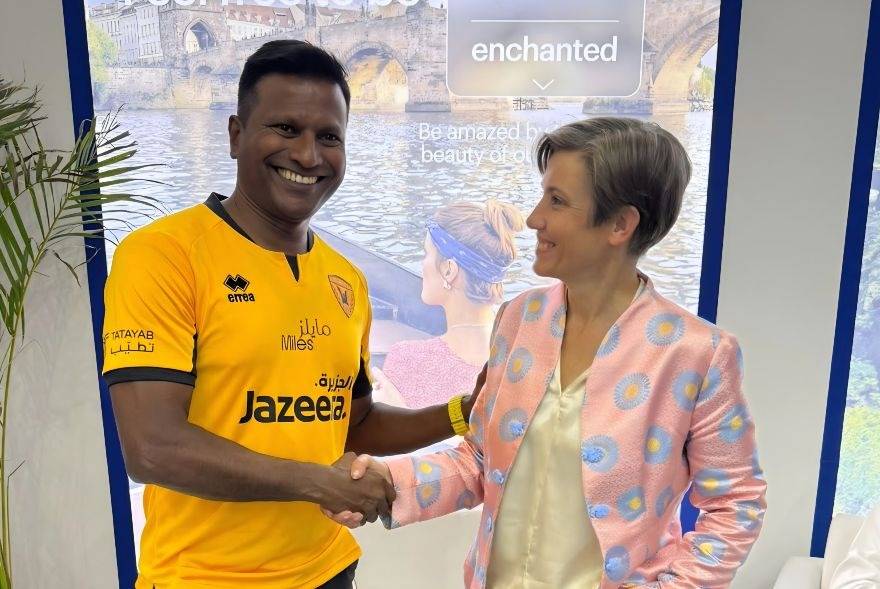
Prague is known for landmarks including Prague Castle, Charles Bridge, the Astronomical Clock and its historic Old Town. The Czech capital also offers museums and galleries, riverside districts, cafés and a wide range of cultural attractions.
During the winter months, the city takes on a distinctly seasonal character, with illuminated streets and squares, festive events and markets forming part of the visitor experience. Old Town Square is among the key locations for Prague’s winter celebrations and is a major attraction during the festive period.
The seasonal service is therefore expected to provide direct access for travellers seeking a European winter break, including families travelling during school holidays and leisure visitors planning festive trips.
Tourism ties
Barbara Andelová, International Marketing for the Middle East and India at CzechTourism, said the organisation was pleased to partner with Jazeera Airways on the new winter operation.
She said Prague was already well known among travellers from Kuwait during the summer, while the winter season offered visitors a different perspective through its festive markets, historic attractions and cultural experiences.
According to CzechTourism, the new flights will make it easier for visitors from Kuwait and the wider region to explore Czechia during the winter season and support stronger tourism links between the two countries.
Jazeera Airways first launched direct flights between Kuwait and Prague in June 2022. Following the inaugural operation, the airline continued serving Prague through its European summer network, providing passengers with nonstop access between the two cities.
The introduction of winter flights now expands the route beyond its established summer schedule and creates an additional travel period for passengers considering Prague.
Beyond Prague
While Prague remains the country’s principal tourism draw, CzechTourism is also promoting attractions beyond the capital. Czechia is home to more than 1,200 castles and chateaux, 16 UNESCO World Heritage Sites, traditional thermal spas and destinations associated with crystal and glassmaking.
The country’s tourism offering also extends to historic towns and regional attractions. Karlovy Vary, one of the best-known destinations in the Western Bohemian spa triangle, is recognised for its spa heritage, while Český Krumlov, Telč and Olomouc offer historic architecture and cultural attractions.
In South Moravia, Brno serves as the regional capital and a major cultural destination. The Lednice-Valtice complex is another prominent attraction in the region, adding heritage sites and landscaped surroundings to the country’s wider tourism offering.
Jazeera Airways said the new flights are available for booking through its website and mobile application.
Founded in 2004, the Kuwait-based low-cost carrier serves more than 60 destinations across the Middle East, Central and South Asia, Africa and Europe. The airline says it has carried more than five million passengers across its network.
Jazeera Airways currently operates a fleet of 23 Airbus A320ceo and A320neo aircraft. Its order book includes 26 additional aircraft, comprising 18 A320neos and eight A321neos, with deliveries expected from 2026 onwards.
The airline is listed on Boursa Kuwait and operates Jazeera Terminal 5 at Kuwait International Airport, which it describes as one of the first terminals designed, built and operated by an airline for its own operations.
17 Sep, 2026
17 Sep, 2026
Medical tourists will soon be able to link flights, treatment and care through Emirates
DUBAI – Medical tourists will soon have a more connected way to plan flights, treatment and healthcare journeys through a new partnership between Emirates and the Medical Tourism Association (MTA).
The two organisations have signed a Memorandum of Understanding aimed at developing medical, wellness and longevity travel as a strategic customer segment for the airline. Signed on the sidelines of ATM Dubai 2026, the agreement will explore how international patients can connect travel arrangements with accredited healthcare providers and other services.
The partnership brings together Emirates’ global network of close to 140 destinations with Dubai’s position as a leading healthcare, wellness and medical tourism hub. It will focus on creating a structured approach to serving people travelling internationally for treatment, while also considering the requirements of referring physicians, insurers and employers.
Travel care
Under the agreement, Emirates will partner with MTA as its preferred airline for international medical and wellness travellers. The organisations will identify key markets and medical travel corridors, particularly across Africa, Asia and the Middle East.
They will also work towards developing tailored travel solutions and an enhanced customer experience around the needs of medical travellers. This includes examining how patients can better coordinate the different stages of a journey, from arranging travel to accessing healthcare.
For Emirates, the initiative represents an expansion into a specialised segment where international travel and healthcare are closely connected. The airline said its network and onboard and ground products provide a platform for serving these travellers, while insights from MTA will help inform propositions suited to how medical tourists plan, book and experience their journeys.
Adnan Kazim, Emirates’ Deputy President and Chief Commercial Officer, said healthcare is among the important reasons people travel internationally and is growing significantly. He said the partnership would position Emirates around emerging premium demand while helping the airline develop propositions tailored to medical travellers.
Accredited providers
A key part of the partnership will involve collaboration with providers accredited by Global Healthcare Accreditation (GHA), the sector’s accreditation body. Emirates and MTA will work on thought leadership, industry engagement and shared market intelligence to identify growth opportunities and support international best practices in medical travel.
The agreement also supports Emirates’ ambition to become the world’s first GHA-accredited airline, extending the airline’s focus on standards within the medical travel sector.
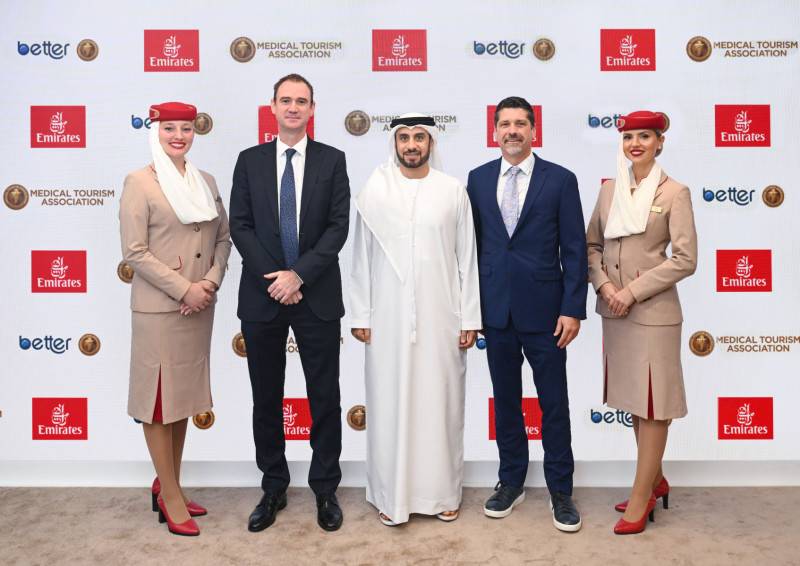
MTA CEO and Founder Jonathan Edelheit said the partnership would provide a pathway connecting international demand with accredited healthcare providers through Better by MTA, its platform for medical travel services.
Connected journeys
MTA’s global network reaches more than 500,000 healthcare providers, employers, insurers and industry leaders. Its platforms also reach millions of prospective medical and wellness travellers annually, while the organisation maintains direct government relationships across more than 100 countries.
As part of the partnership, Emirates and MTA will explore opportunities to use the platform to help travellers identify accredited providers and coordinate treatment and travel arrangements. They will also examine secure cross-border payment options powered by Mastercard®.
The proposed model would bring several elements of a medical tourism journey closer together, including provider identification, care coordination, travel planning and payments. For international patients, the partnership is intended to create a more seamless journey between choosing a healthcare provider and arranging the trip needed to reach it.
Dubai students get new Emirates travel perks with special fares and extra baggage
DUBAI – Emirates has partnered with the Knowledge and Human Development Authority (KHDA) on initiatives aimed at strengthening Dubai’s position as a global destination for higher education and international students, with new travel benefits for students studying at the emirate’s private higher education institutions.
The airline and KHDA signed a Memorandum of Understanding (MoU) on the sidelines of Arabian Travel Market 2026. The agreement introduces a range of travel benefits, including specially tailored fares, additional baggage and greater booking flexibility for eligible students travelling to and from Dubai and across the Emirates network.
The partnership also supports the objectives of Dubai’s Education 33 (E33) strategy, including improving accessibility for students, strengthening international connectivity and promoting the City of Students game changer and Study Dubai programme in international markets.
Emirates-KHDA deal
The MoU was signed by Adnan Kazim, Emirates’ Deputy President and Chief Commercial Officer, and Dr Wafi Dawood, CEO of the Strategic Development Sector at KHDA.
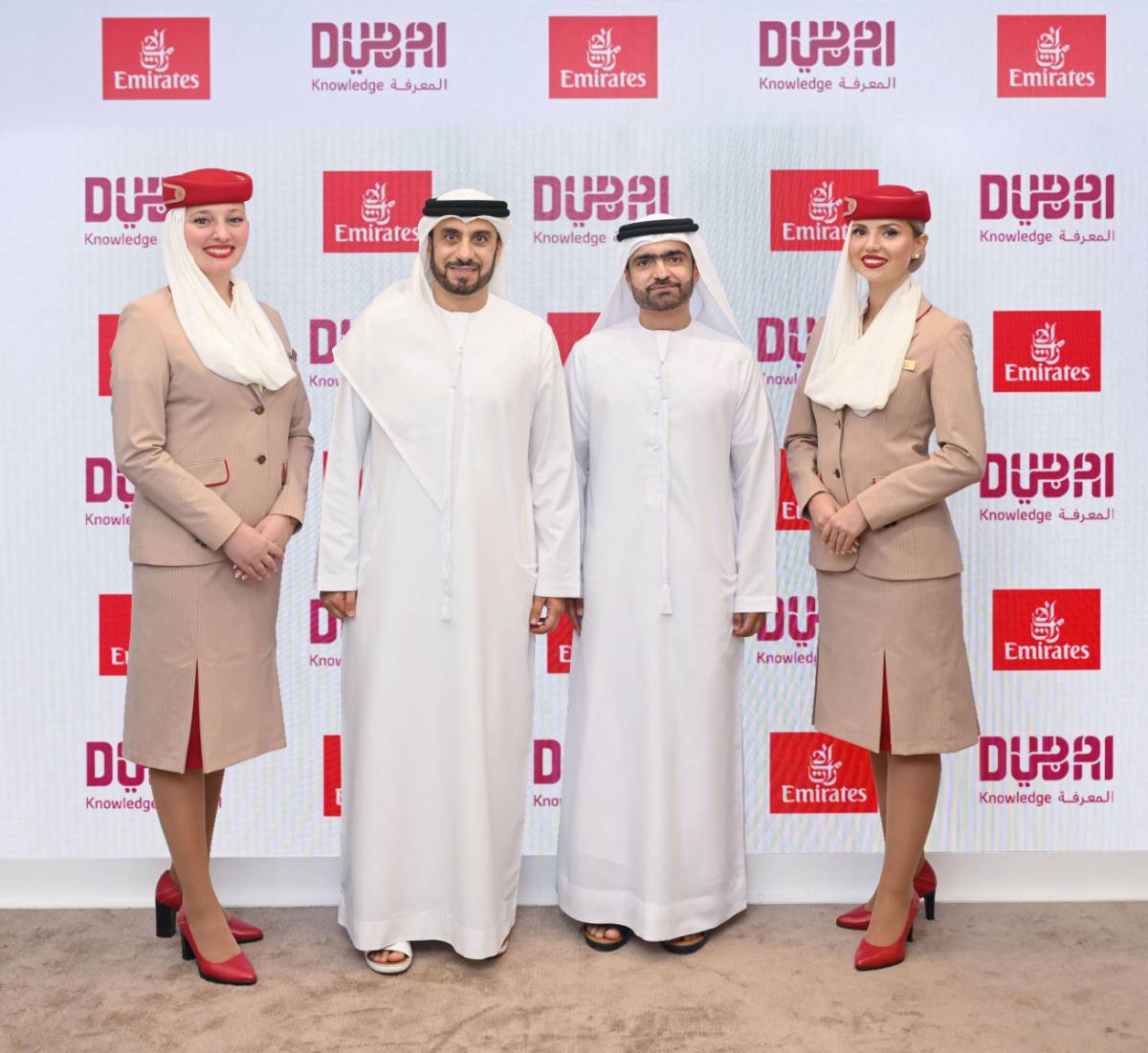
Under the agreement, Emirates will develop dedicated travel programmes for students enrolled at KHDA-regulated private higher education institutions. The proposition is designed to provide students with tailored fares and additional baggage allowances, alongside more flexibility when arranging journeys to Dubai, returning home and travelling elsewhere across the airline’s network.
Faculty and teaching staff will also be able to access travel benefits through the Emirates Academic Programme. The airline will provide dedicated travel support for students participating in the Hamdan bin Mohammed Scholarship Programme.
Global recruitment
The partnership extends beyond travel benefits, with Emirates joining Study Dubai student recruitment missions and international activation events alongside KHDA, Dubai’s Department of Economy and Tourism and TECOM Group.
These activities will promote Dubai as a study destination in key international markets served by Emirates. The airline and KHDA will also share insights into international student travel flows and coordinate joint marketing initiatives highlighting Dubai’s higher education sector.
Emirates operates a network of close to 140 destinations, giving the partnership an international platform for reaching prospective students and their families. The airline said the collaboration will support travel to Dubai throughout the academic journey, including repeat journeys during students’ studies.
Education is a key element of Dubai’s Economic Agenda (D33) and is being advanced through the Education 33 strategy. Under the City of Students game changer, E33 aims to raise the proportion of international students enrolled at Dubai’s higher education institutions to 50% by 2033.
The strategy also targets a place for Dubai among the world’s top 10 student cities and seeks to increase education tourism tenfold.
ICEF partnership
Emirates has separately signed an MoU with International Consultants for Exhibitions and Fairs (ICEF), a global B2B network serving the international education sector. Under the agreement, Emirates becomes ICEF’s preferred airline for education travel.
ICEF operates across more than 100 countries, connecting accredited education agencies with educational institutions through events, training programmes and market intelligence platforms, including ICEF Monitor.
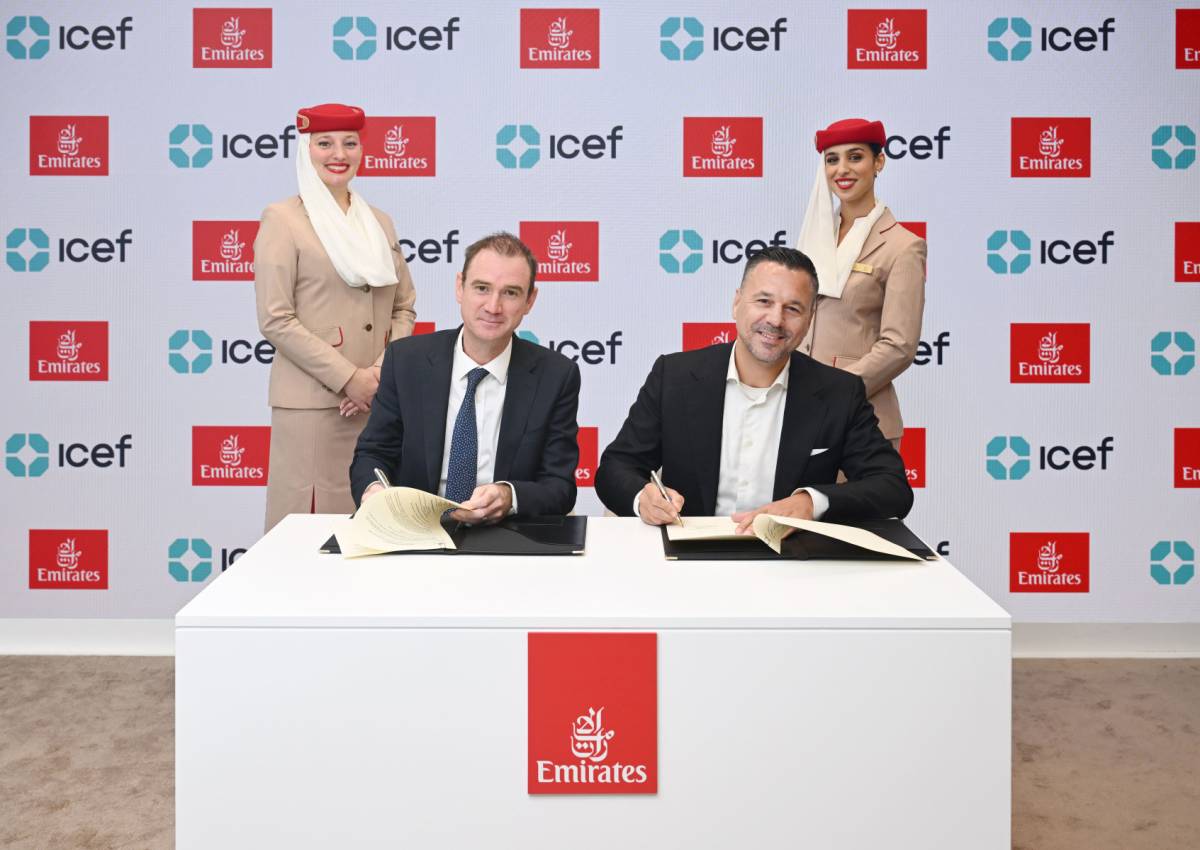
Emirates and ICEF will work on dedicated travel propositions for ICEF-accredited agencies and their student customers travelling across the airline’s network. The partnership will also explore booking support and account management services for ICEF member organisations.
Co-branded campaigns will target international students and education professionals, while Emirates will have a presence at major ICEF events in Berlin, Dubai and the US.
The agreement also covers training and market intelligence. Emirates will participate in ICEF Academy programmes for education agents and share insights into student travel and destination trends. The airline will also contribute to ICEF conferences through speaking opportunities and industry partnerships.
17 Sep, 2026
16 Sep, 2026
Emirates signs new destination, tourism and business deals at ATM Dubai 2026
DUBAI – Emirates is expanding its network of commercial and destination partnerships as it seeks to reach new audiences and develop more targeted travel propositions across key markets.
At ATM Dubai 2026, the airline announced a series of agreements spanning tourism boards, travel technology, cruise travel, sporting experiences, business communities and financial services.
The deals cover markets including Kenya, Mozambique, China, Finland, Vietnam and Spain, while separate agreements with MSC Cruises, Cutting Edge and Emirates Islamic are designed to broaden the range of products and benefits available to travellers, businesses, sports fans and loyalty programme members. The latest partnerships also build on several long-running relationships, extending cooperation into new areas such as digital travel, crew mobility, cruise distribution and personalised customer benefits.
Mozambique
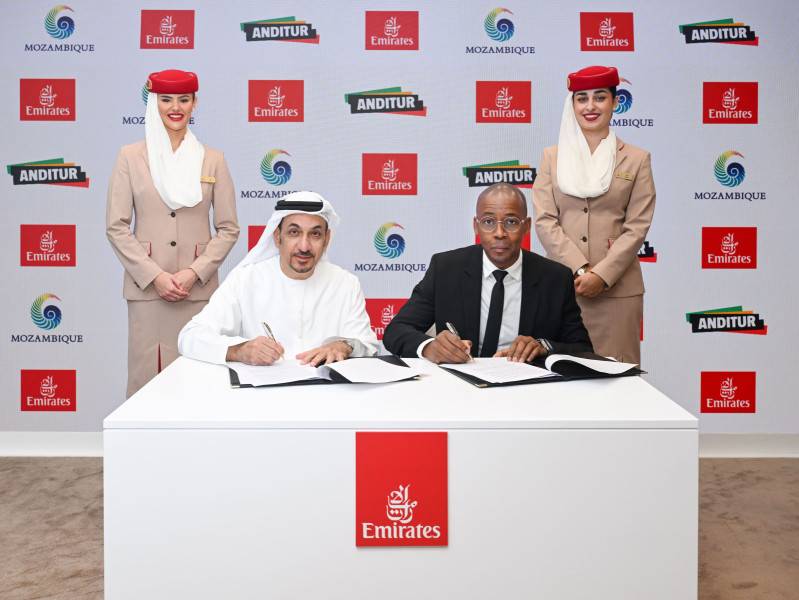
Emirates and the Mozambique National Agency for Tourism Development and Investment, Public Fund (ANDITUR) have signed an agreement aimed at supporting the growth of international tourism to Mozambique.
The partnership will see the two organisations explore opportunities to promote Mozambique to international travellers in key markets, using airline partnerships across Africa to support more seamless connectivity into the country.
Mozambique offers about 2,500 kilometres of coastline and is known for beach holidays and ocean adventures, alongside cultural experiences, fusion cuisine and urban destinations.
Through the partnership, Emirates and ANDITUR will examine ways of raising the destination's profile among international travellers and supporting tourism flows into Mozambique.
Kenya
Emirates and the Kenya Tourism Board (KTB) have entered a partnership to strengthen cooperation and support inbound tourism to Kenya.
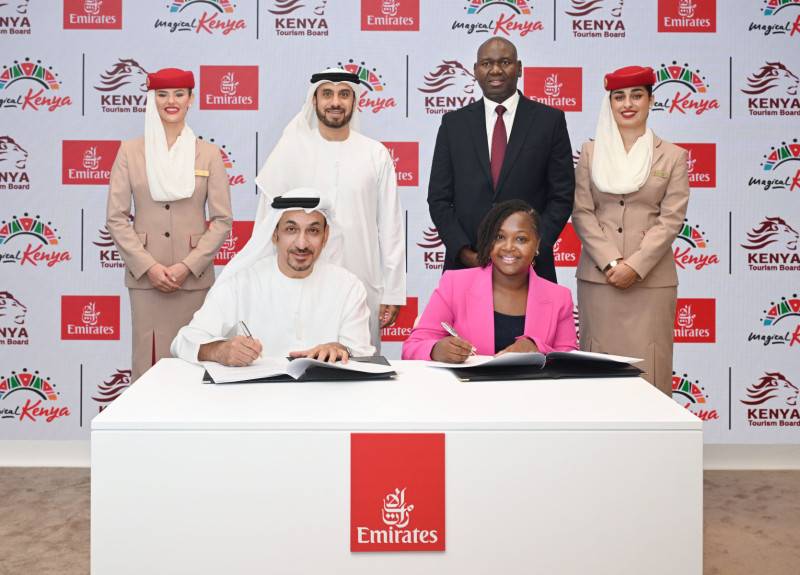
Kenya is already one of the consistently in-demand destinations on Emirates' African network. The new agreement is intended to build on that demand while creating opportunities to attract visitors from both established and emerging international markets.
Tourism remains an important part of Kenya's economy, supporting employment and attracting millions of visitors each year. KTB has set out ambitions to position Kenya as Africa's most visited tourism destination by promoting a year-round programme of diverse, sustainable and authentic experiences.
The partnership with Emirates will support those efforts through closer collaboration and opportunities to promote Kenya to the airline's international customer base.
Alibaba Fliggy
Emirates and Alibaba Fliggy, one of China's major online travel agencies, have signed a memorandum of understanding to strengthen their strategic partnership in China.
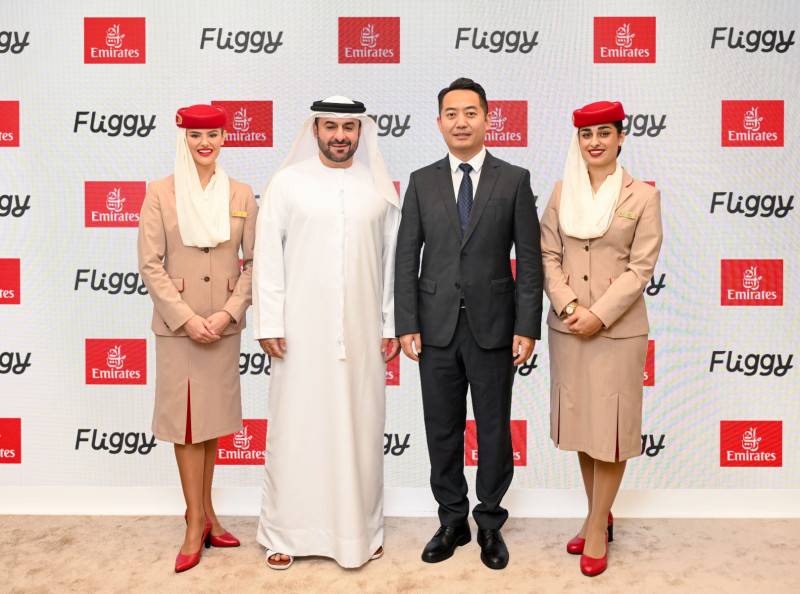
The collaboration will combine Emirates' international network with Fliggy's digital travel platform, with the two companies planning joint activity focused on marketing, customer engagement and potential technology integration.
One area under consideration is closer integration between Emirates Skywards and Fliggy's membership ecosystem. The partners will explore initiatives designed to increase brand visibility, stimulate travel demand and create more personalised experiences for Chinese consumers.
The agreement also gives the two companies scope to develop their relationship through digital channels as Chinese travellers increasingly use online platforms to research, book and manage their journeys.
MSC Cruises
Emirates and MSC Cruises have signed an MoU expanding a partnership that has already lasted more than a decade.
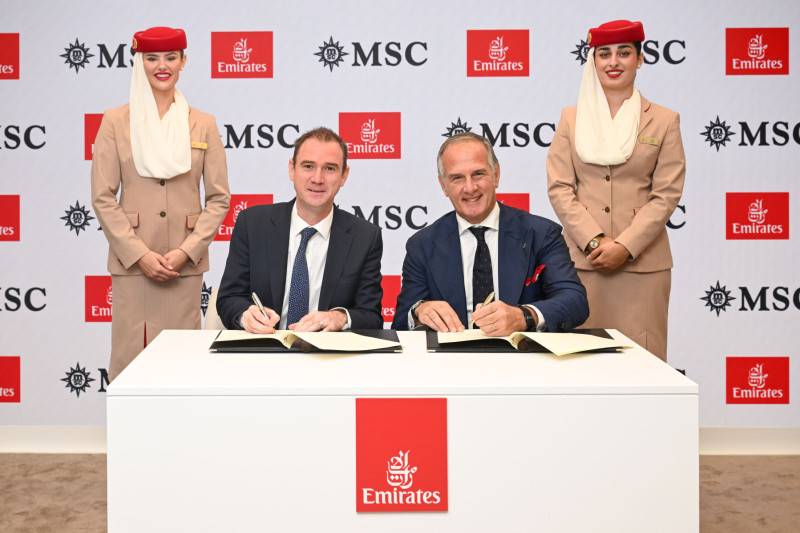
The latest agreement covers fly-cruise distribution, air-sea product integration, crew travel and customer loyalty initiatives, creating additional opportunities to connect Emirates' air network with MSC's cruise operations.
The companies will expand fly-cruise distribution across the Emirates network in line with MSC Cruises' seasonal homeport strategy. Plans include developing through-fares and open-jaw itineraries, while reviewing gateway markets for further opportunities.
The partnership will also focus on MSC Grand Voyages and repositioning cruises. By drawing on Emirates' network, the companies aim to develop one-way travel options for passengers travelling between different regions.
Emirates and MSC Cruises will additionally explore whether the Port Rashid model in Dubai can be extended to other cruise ports. The model includes terminal check-in, through-baggage services, coordinated transfers and joint procedures for disruption management and the repatriation of Emirates cruise customers and MSC guests.
The agreement also introduces a stronger focus on crew mobility. Emirates will work with MSC Cruises on seafarer rotations and will serve as a preferred carrier, with dedicated crew fares, enhanced baggage allowances and specialised servicing channels designed around seafarers' requirements.
Finnish Business Council
Emirates has signed an agreement with the Finnish Business Council (FBC), a non-profit organisation supporting Finnish businesses and professionals in the UAE.
The partnership comes ahead of Emirates' new direct Dubai-Helsinki route, which is scheduled to begin on 1 October.
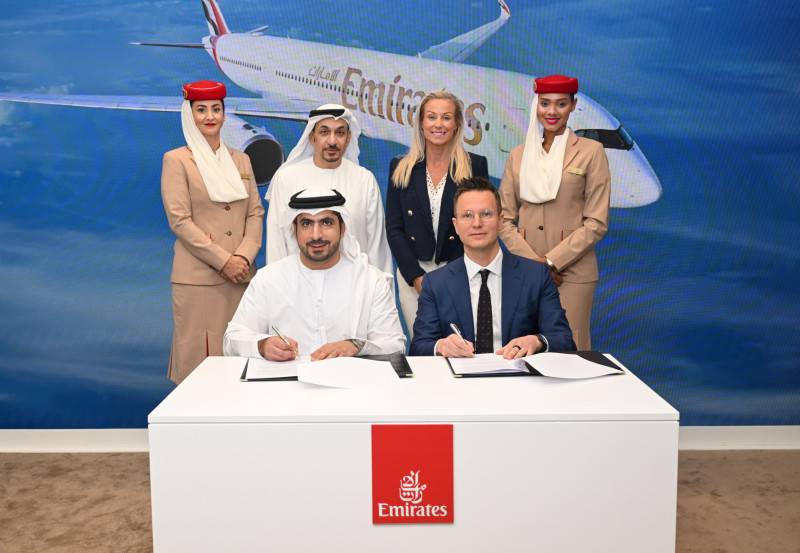
Under the agreement, Emirates will provide exclusive benefits to FBC members, while the council will create opportunities for the airline to engage with Finland's business community in the UAE.
The arrangement is designed to strengthen interaction between Emirates and FBC's network while supporting business connections around the new direct service.
Vietnamese Business Council
Emirates has also partnered with the Vietnamese Business Council (VNBC), which represents Vietnamese businesses and professionals in the UAE.
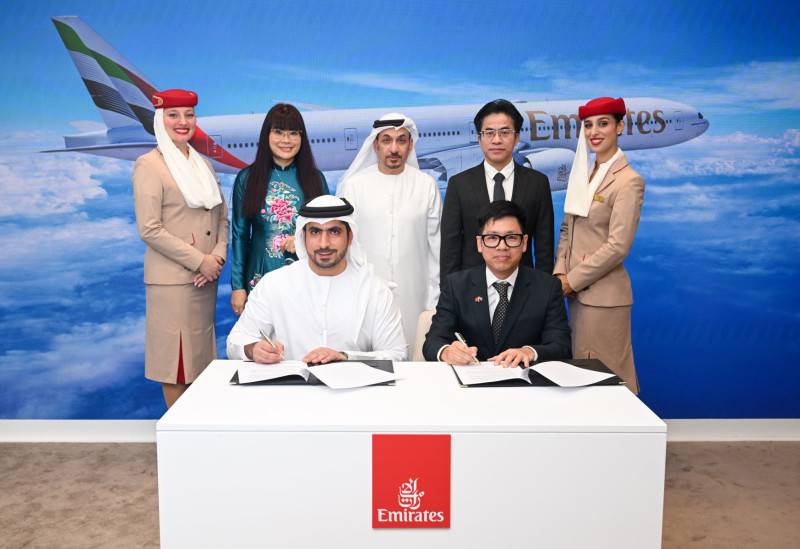
The agreement is intended to deepen the airline's relationship with Vietnam's business community and follows Emirates' announcement of additional services to Hanoi and Ho Chi Minh City from this winter.
The expanded services will give travellers more options between Dubai and the airline's two Vietnamese destinations. VNBC members will receive exclusive Emirates benefits, while the council will facilitate engagement opportunities between its members and the airline.
Sports travel
Emirates has partnered with Cutting Edge, a travel management company specialising in international sports tourism, to create bespoke packages for fans travelling to major sporting events around the world.
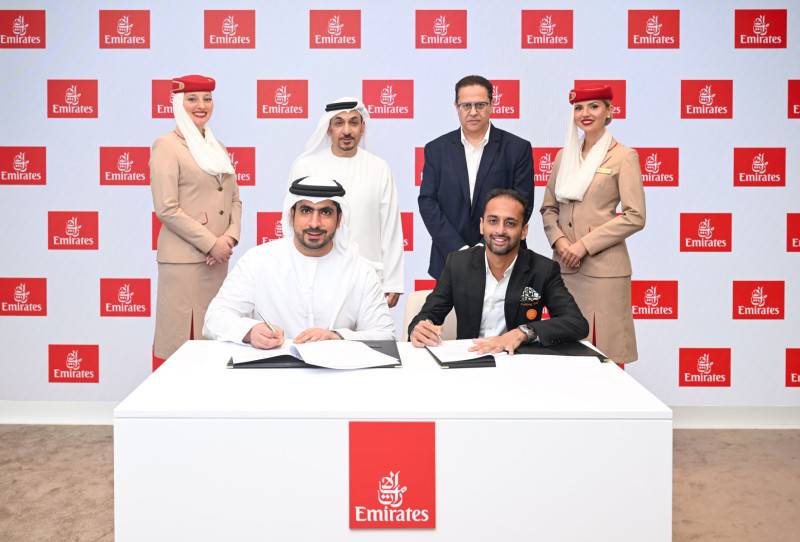
The partnership combines Emirates' network of close to 140 destinations with Cutting Edge's access to sporting events across cricket, football, motorsports, golf and tennis.
The companies will develop complete travel experiences for sports fans, including journeys connected to Emirates' sponsorship properties as well as other major events on the international sporting calendar.
The arrangement is intended to give fans access to travel packages built around major fixtures rather than standalone flight arrangements.
Spain Tourism
Emirates Holidays, the tour operating arm of Emirates Airline, has signed an MoU with the Spain Tourism Office to promote inbound tourism to Spain.
The partnership will focus on encouraging travellers from Emirates' extensive Middle East network to visit Spain through curated holiday packages featuring the country's culture, landscapes and hospitality.
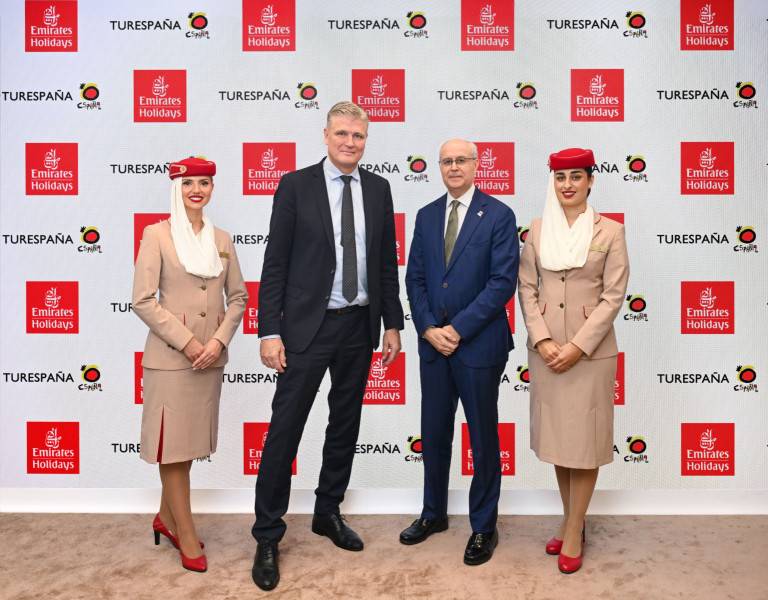
Emirates Holidays and the Spain Tourism Office will explore initiatives aimed at raising awareness of Spain across key Middle Eastern markets and encouraging package bookings.
Planned activity includes integrated marketing campaigns and seasonal promotions highlighting different tourism experiences across Spain. The partners will also develop exclusive holiday packages combining Emirates flights with premium accommodation, local experiences and additional traveller benefits.
Emirates Islamic
Emirates Skywards and Emirates Islamic have renewed their strategic partnership, extending an 18-year relationship focused on the development of products and benefits for Emirates Islamic Skywards co-branded cardholders.
The renewed agreement places continued emphasis on product innovation and more personalised benefits and experiences for customers.
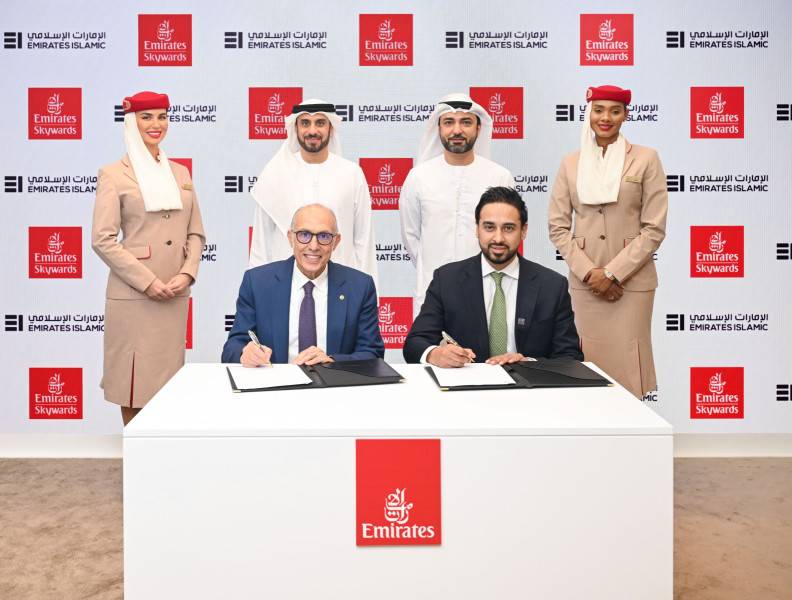
The partnership has expanded considerably since its launch, with three Emirates Skywards co-branded cards now available, including the Emirates Islamic Skywards Black Card. The relationship also covers a co-branded Savings Account, Salary Transfer proposition and Miles exchange product.
The collaboration began in 2008 with the launch of the Emirates Islamic Skywards Card, described as the region's first Islamic co-branded airline credit card. It brought together Emirates Islamic's Shariah-compliant banking proposition with the Emirates Skywards loyalty programme.
The 2026 renewal will continue the focus on product development and enhanced benefits, with the partners seeking to further personalise the experience available to Emirates Skywards co-brand cardholders.
https://www.travelsdubai.com/15-Sep-2026/emirates-expands-global-reach-11-new-deals-atm-dubai-2026
flydubai draws travel trade from 50 markets at ATM Dubai 2026
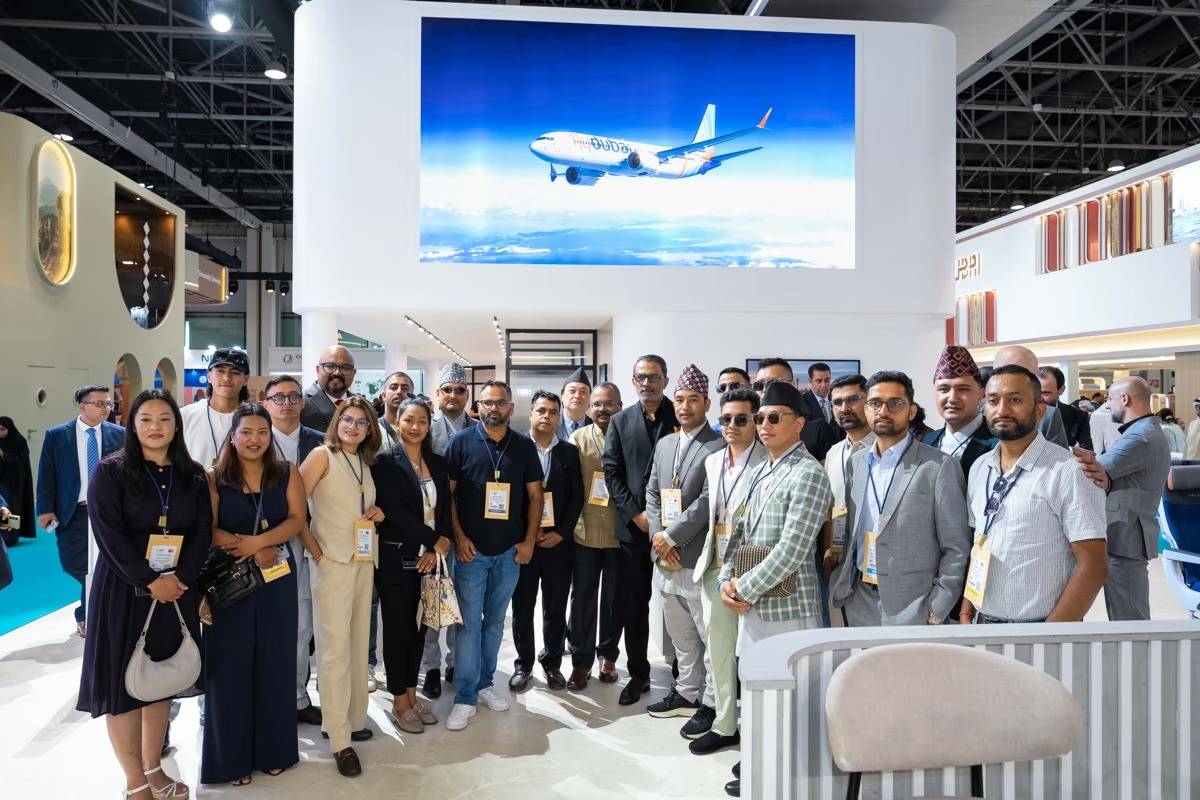
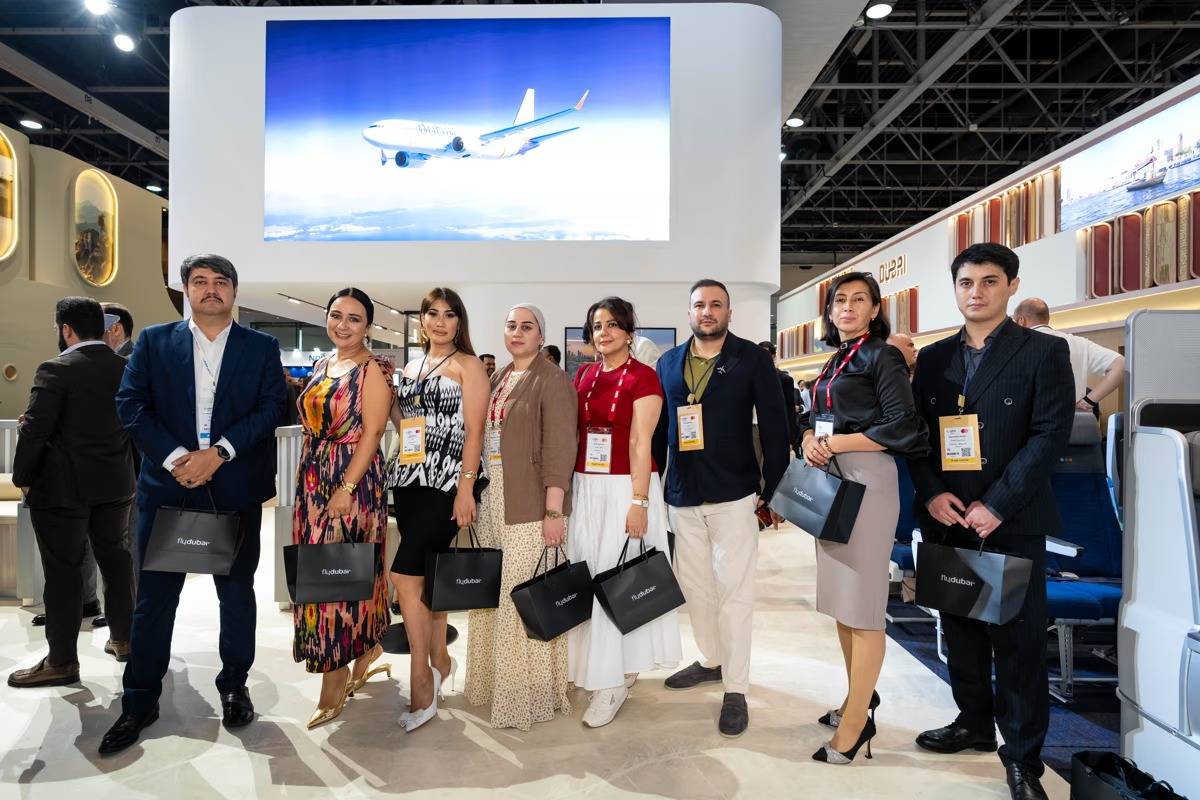
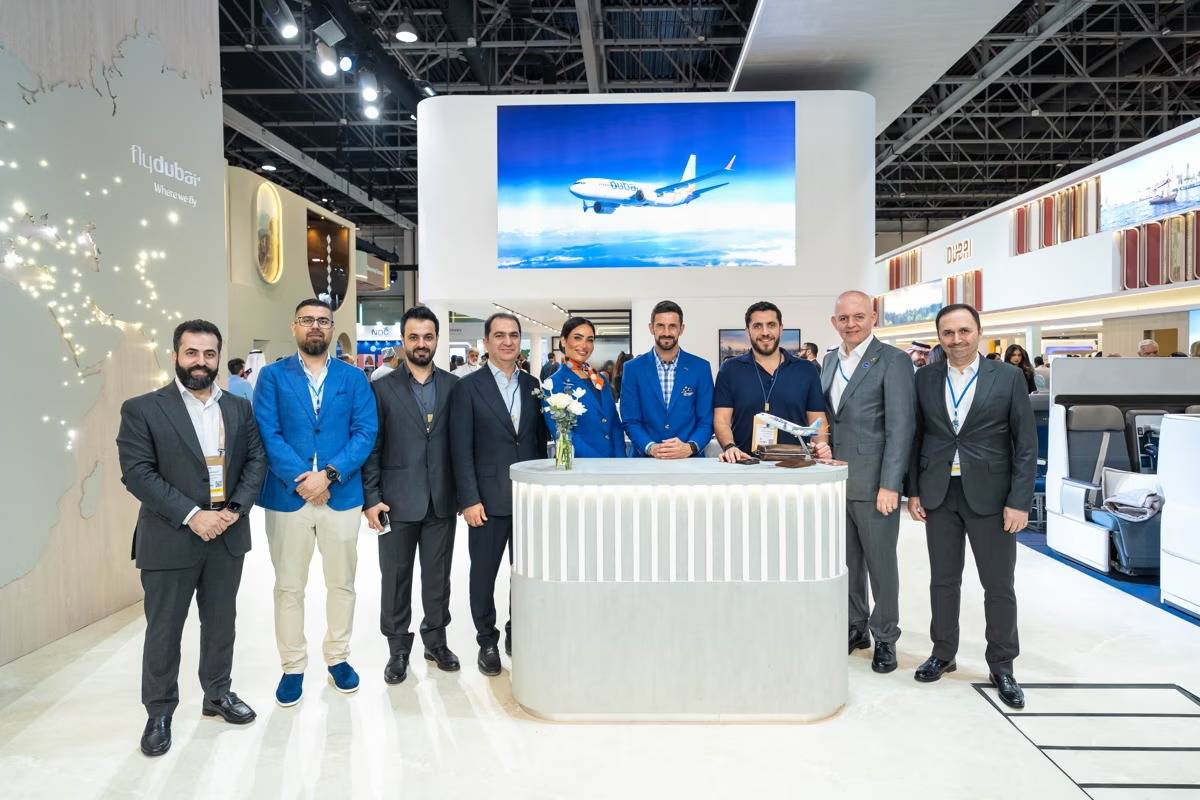
DUBAI – flydubai recorded strong engagement from the global travel trade at Arabian Travel Market (ATM) 2026, hosting more than 850 travel agents and buyers at its stand during the four-day event.
The visitors represented 50 markets across the airline’s network, spanning the Middle East and GCC, Africa, Central Asia, Europe and Southeast Asia.
The participation highlighted continued industry interest in the carrier’s expanding network and product offering.
Trade engagement
Ghaith Al Ghaith, Chief Executive Officer of flydubai, said the level of engagement at ATM reflected continued confidence in Dubai’s tourism ecosystem and hospitality sector.
He said flydubai was proud to showcase Dubai and highlight the reach of its network, adding that the airline would continue strengthening industry partnerships and supporting tourism growth in Dubai and the markets it serves.
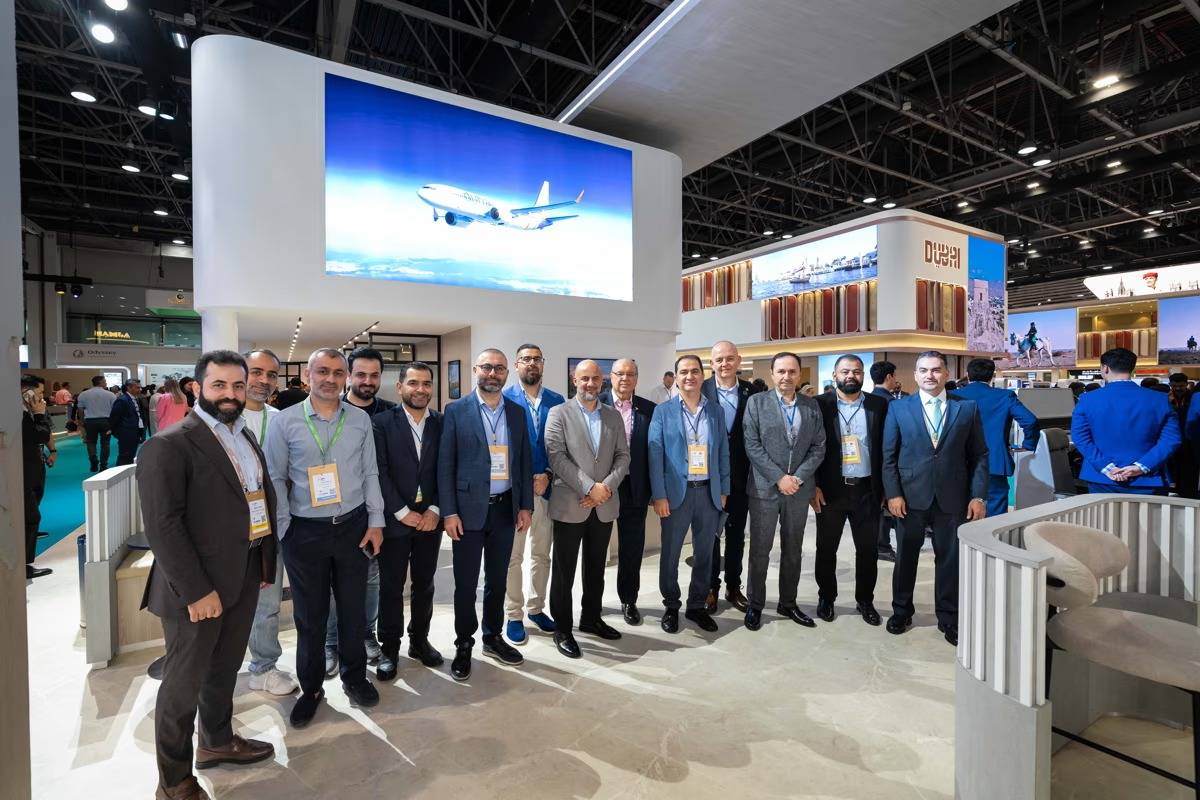
During the event, travel agents experienced flydubai’s services and explored Dubai’s wider tourism offering. The airline said the interaction reinforced its role in facilitating travel flows and expanding connectivity to key international markets.
flydubai’s network
flydubai’s network currently spans more than 130 destinations across 56 countries. Its operations are supported by a fleet of more than 95 Boeing 737 aircraft.
ATM 2026 is being held at Dubai World Trade Centre from 14 to 17 September, bringing together airlines, tourism boards and travel industry decision-makers from more than 160 countries. The event provides a platform for partnerships and collaboration across the region’s travel and tourism sectors.
16 Sep, 2026
16 Sep, 2026
From Russia to India: How Bahi Ajman Palace, Coral Beach Resort Sharjah are attracting global travellers
DUBAI – The mood at Arabian Travel Market (ATM) Dubai 2026 is distinctly more energetic than Iftikhar Hamdani had expected. For the Area General Manager overseeing Bahi Ajman Palace Hotel and Coral Beach Resort Sharjah, the crowded halls are not simply a reflection of the scale of the annual travel trade gathering, but a signal of how strongly international tourism is moving through the Northern Emirates. And behind the meetings, networking and destination pitches, his two properties are entering the final quarter with occupancy running at more than 95%.
“We are here at ATM 2026 and I'm so happy to see the crowd, very vibrant crowd. And this is one of the amazing events,” Hamdani said while speaking to TravelsDubai at ATM Dubai 2026.
The event had originally been scheduled for May before being moved to September, but Hamdani said the turnout had exceeded his expectations. “It was a long-awaited event,” he said. “It was supposed to be in May, but happening in September. But seeing the crowd, it's more than expectation.”
For Bahi Ajman Palace and Coral Beach Resort Sharjah, however, the most significant development is taking place beyond the exhibition floor. Hamdani said business on the books for both properties had reached more than 95% occupancy, with the summer driven strongly by staycation demand and the current period increasingly supported by international travellers.
“We had amazing business during the summertime with the staycation,” he said. “And complemented now with the Russian market, with the international long-haul travellers [who] have started in Ajman and Sharjah.”
https://www.travelsdubai.com/02-May-2025/looking-for-the-ultimate-summer-escape-discover-bahi-ajman-and-coral-beach-resorts
Making the most of ATM 2026
The shift is particularly visible in the range of nationalities now feeding the two beachfront properties.
Hamdani identified Russia, Belarus, Kazakhstan, wider Central Asia, India and China among the markets showing strong activity, describing international long-haul travellers as increasingly drawn towards Ajman and Sharjah.
“The international long-haul travellers, especially from Russia, Belarus, Kazakhstan, Central Asia, India or China, are flocking into the Northern Emirates and particularly in Sharjah and Ajman,” he said.
The comments underline the increasingly international character of demand for the two properties. Rather than relying exclusively on domestic or short-haul Gulf traffic, the hotels are seeking to deepen relationships with international travel trade partners and broaden their distribution across established and emerging feeder markets.
That is also central to the strategy at ATM 2026.
Bahi Ajman Palace Hotel and Coral Beach Resort Sharjah, both managed by Hospitality Management Holding (HMH), are being represented through a triple-stand presence, engaging visitors through Hospitality Management Holding, the Ajman Tourism, Culture and Media Department and the Sharjah Commerce and Tourism Development Authority. The arrangement gives the hotels access not only to hotel buyers and tour operators but also to the destination-led conversations taking place around Ajman and Sharjah.
The focus is on strengthening business-to-business relationships, developing distribution channels and pursuing agreements with travel trade partners across the GCC, Europe and CIS markets.
For international visitors, the proposition is also closely tied to the character of the two emirates. Both properties combine beachfront accommodation with access to destinations that offer a different pace and setting from Dubai's established tourism circuit.
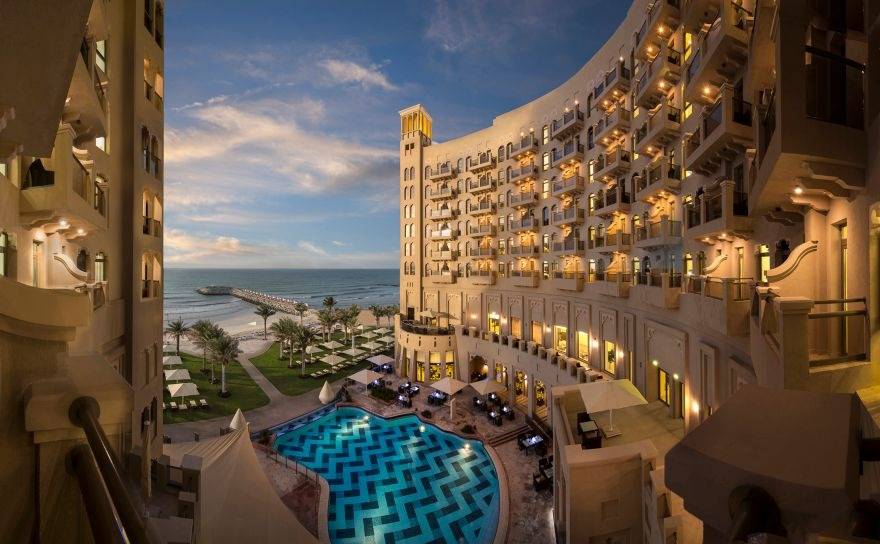
Bahi Ajman Palace is a five-star beachfront property overlooking the Arabian Gulf, with 254 rooms, suites and serviced residences alongside restaurants, leisure facilities and meeting spaces. The hotel is positioned within easy reach of both Dubai International Airport and Sharjah International Airport.
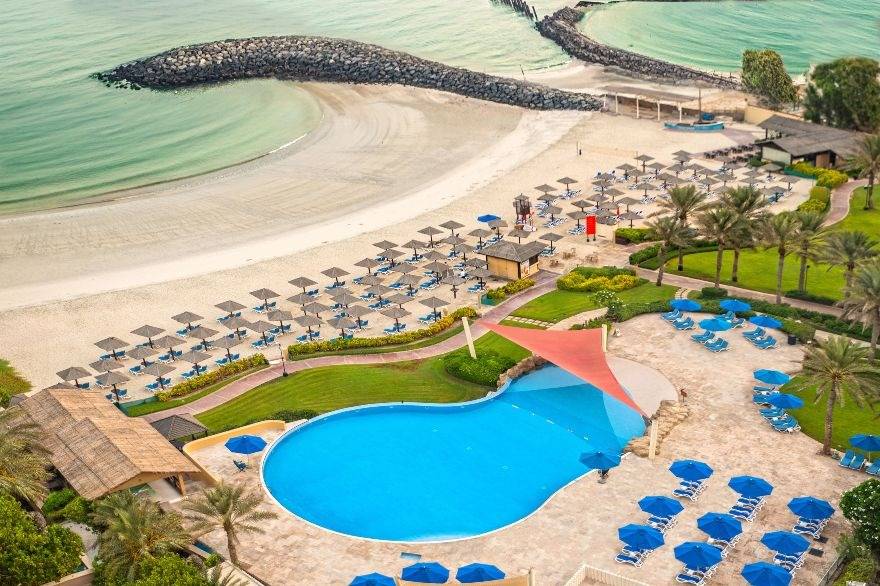
Coral Beach Resort Sharjah adds another established beachfront base in the Northern Emirates, strengthening HMH's presence in a destination increasingly promoted around its cultural, eco-tourism and leisure experiences.
At ATM, the hotels are therefore selling more than rooms. The proposition is about connecting accommodation with destination experiences, particularly for international travellers looking beyond the most familiar UAE itineraries.
https://www.travelsdubai.com/26-Jun-2026/bahi-ajman-palace-hotel-celebrates-major-wins-middle-east-chef-f-b-excellence-awards-2026
Beyond Dubai
Hamdani's assessment of the current market also points to a wider evolution in traveller behaviour.
International visitors arriving in the UAE have a much broader choice of destinations and hotel experiences than in previous years, while the Northern Emirates are increasingly able to compete by combining beachfront settings, family-oriented hospitality, cultural attractions and comparatively accessible locations.
For Bahi Ajman Palace, the private beachfront setting and family-friendly positioning form a central part of the product. Coral Beach Resort Sharjah similarly brings together beach, leisure, accommodation, dining and events within a destination that has been building its international tourism profile.
The changing source-market mix is particularly important because it creates a more diversified demand base. The Russian market, for example, is arriving alongside travellers from Belarus, Kazakhstan and other Central Asian markets, while India and China remain important long-haul markets for the UAE's wider tourism sector.
Hamdani said the strength of current bookings gives him confidence about the immediate months ahead.
“Both the hotels have amazing business and the occupancy is really very good in September,” he said. “The last quarter looks very healthy.”
The performance follows a period in which staycation demand had provided a substantial summer base. Earlier in 2026, the two properties had also forecast occupancy of around 90% for the Eid Al Adha period amid strong domestic demand.
That combination of domestic, regional and international business is becoming increasingly significant for Northern Emirates hospitality as hotels seek to balance seasonal patterns with a broader year-round source-market mix.
https://www.travelsdubai.com/07-May-2026/bahi-ajman-palace-coral-beach-resort-sharjah-project-90pc-eid-al-adha-occupancy-amid-staycation-boom
Sustainability in action
If the commercial conversation at ATM is about markets, contracts and occupancy, Hamdani is equally keen to discuss what happens inside the hotels once guests arrive.
Sustainability has become a defining part of the operational strategy at both properties, with the hotels having introduced technologies aimed at reducing waste, water consumption and reliance on single-use materials.
Bahi Ajman Palace previously introduced atmospheric water-generation technology capable of producing up to 365,000 litres of drinking water annually from air humidity. The project was designed to eliminate the need for single-use plastic bottles, with the hotel using reusable glass bottles as part of the system. HMH says the initiative avoids approximately 730,000 plastic bottles from entering waste streams and cuts an estimated 33.58 metric tonnes of carbon emissions annually.
https://www.travelsdubai.com/03-Aug-2026/coral-beach-resort-sharjah-sets-sustainability-milestone-first-hotel-biodigester
Coral Beach Resort Sharjah has now taken the approach a step further with food waste.
The resort commissioned what has been described as Sharjah's first hotel biodigester, processing organic kitchen waste on site and converting it into nutrient-rich greywater for use in landscaped areas. The initiative forms part of the Sharjah Commerce and Tourism Development Authority's Food Waste Carbon Pilot Implementation.
For Hamdani, the significance lies in making sustainability measurable rather than treating it simply as a branding exercise.
“At Bahi Ajman Palace and Coral Beach Resort Sharjah, we are always leading to introduce new initiatives, new technologies,” he said.
The hotels had previously used atmospheric water generation and an on-site glass-bottle operation to reduce dependence on conventional bottled water. The latest initiative at Coral Beach Resort Sharjah addresses another major hospitality challenge: food waste.
“And now the new initiative we have launched in Coral Beach Resort Sharjah, and that is biodigester,” Hamdani said.
He said the system is processing around 300kg of waste every day that would otherwise have gone to landfill.
“With this digester machine, every day 300kg waste is no more going on a landfill,” he said. “And we are making this 300kg waste into grey water, which is a nutrient water which is food for our plants.”
The closed-loop approach means waste generated in the resort's kitchens can ultimately contribute to maintaining its landscaped areas. Independent reporting on the project confirms that the resulting greywater is being reused for irrigation and that the biodigester is intended to reduce landfill disposal, methane emissions and the carbon associated with transporting food waste.
The initiative also fits into a wider sustainability programme at Coral Beach Resort Sharjah, which includes its on-site water bottling operation, the Coralganic organic garden and measures aimed at reducing energy, water and other forms of waste.
https://www.travelsdubai.com/29-May-2025/bahi-ajman-palace-named-official-hospitality-partner-for-alleem-group
A wider green network
Hamdani's ambitions for sustainability extend beyond the two hotels themselves.
The biodigester project is part of a broader relationship with Sharjah's tourism authorities, and Hamdani said the hotel is participating in Sustain Sharjah while describing the biodigester as a pilot project linked to Sharjah tourism.
“Our wish is to get actually more hotels to join our initiative and our club,” he said.
That collaborative approach has gained additional relevance this year with the launch of the Emirates Hospitality Sustainability Alliance (EHSA) at Coral Beach Resort Sharjah.
Launched by the Emirates Environmental Group in September 2026, EHSA brings together hospitality leaders, sustainability professionals and industry stakeholders to share expertise and pursue measurable environmental action. Its areas of focus include energy and water consumption, waste and food waste, procurement, supply chains, resource efficiency and consumer behaviour.
For hotels, the importance of such cooperation is increasingly practical. Sustainability measures can require capital expenditure and operational changes, but technologies such as food-waste tracking, water generation and biodigesters can also affect consumption, disposal and operating costs.
Hamdani has previously spoken about the commercial dimension of such measures. In an interview earlier this year, he said the properties' efforts around kitchen waste, electricity and water had contributed to a reduction of almost 30% in utility bills compared with the previous year.
That makes sustainability a particularly relevant part of the ATM conversation, where buyers and hotel operators are increasingly discussing not only the guest proposition but also the operational credentials behind it.
Beyond sales exercise
At ATM 2026, Hamdani's immediate priority remains firmly commercial. The three-stand presence provides the hotels with multiple touchpoints for meetings with international travel companies, while the destination presence allows the properties to position their hotel offerings within the broader Ajman and Sharjah tourism story.
The objective is to establish new relationships, strengthen existing distribution networks and identify partners capable of generating business from international leisure markets.
For Hamdani, the strong September performance provides a useful backdrop to those discussions.
“Both the hotels have amazing business and the occupancy is really very good in September,” he said, while pointing to the growing contribution from Russia, Belarus, Kazakhstan, Central Asia, India and China.
The distinction between domestic staycation business and international leisure demand is becoming particularly important – the former helped maintain momentum through the summer, while the latter is now providing additional depth as the high season approaches.
That is reflected in Hamdani's assessment of the final quarter. “I hope that the business is coming really strong in the last quarter, not only for the Northern Emirates, but overall in the UAE,” he said.
For the two hotels, the ATM agenda therefore extends well beyond a conventional hotel sales exercise. It brings together a strong current occupancy position, a widening international source-market base, destination-led promotion and a sustainability programme increasingly built around measurable operational changes.
https://www.travelsdubai.com/25-Apr-2026/bahi-ajman-palace-hotel-s-iftikhar-hamdani-hails-bold-tourism-relief-plan
ATM Dubai 2026: Etihad Airways and Etihad Rail team up to connect UAE by air and rail
DUBAI – Etihad Airways and Etihad Rail have signed a memorandum of understanding at Arabian Travel Market 2026 in Dubai to explore integrated air and rail travel across the United Arab Emirates (UAE).
The agreement focuses on improving connectivity for travellers arriving through Abu Dhabi and continuing to destinations across the country.
Proposed initiatives include airport shuttle services, combined booking options and enhanced passenger facilities.
Integrated journeys
Under the agreement, the two companies will examine dedicated shuttle services linking Abu Dhabi's Zayed International Airport with the Mohammed Bin Zayed City Passenger Station, which connects to the UAE's national railway network.
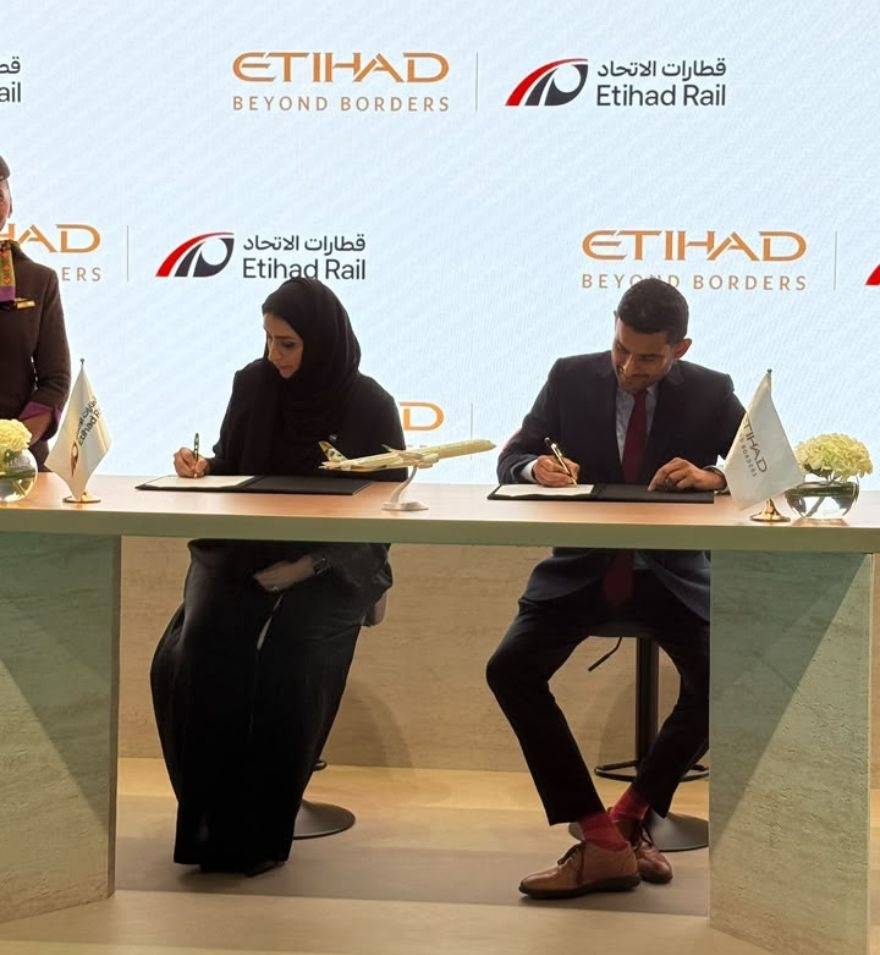
They will also study integrated air and rail booking options, alongside passenger services at railway stations, as the organisations look at ways to create smoother connections between aviation and rail travel.
The proposed links are intended to support international visitors travelling beyond Abu Dhabi while contributing to tourism growth and the UAE's wider economic diversification plans.
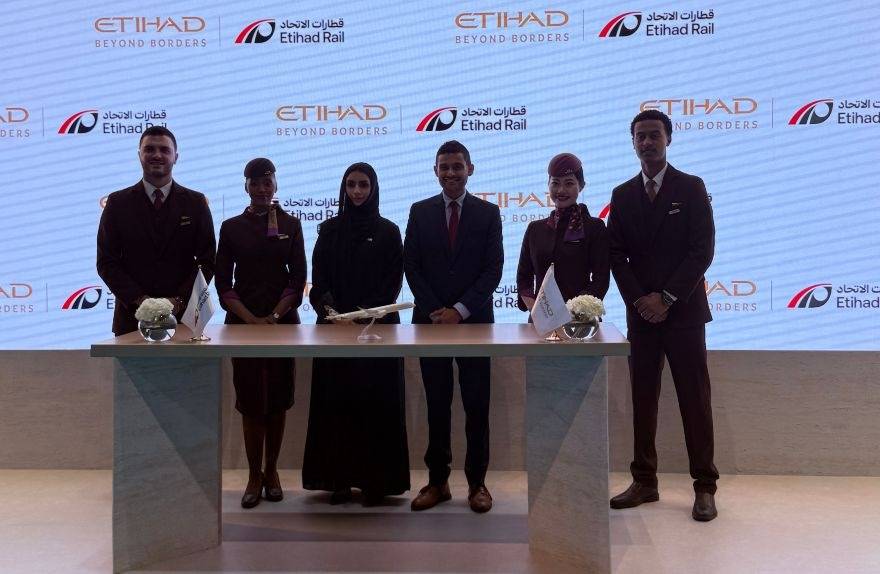
Arik De, chief revenue and commercial officer at Etihad Airways, said the partnership would explore opportunities to connect air travel with destinations across the UAE while enhancing convenience for travellers.
Etihad Rail expansion
Etihad Rail launched passenger services earlier this year, expanding the national railway network's role in connecting cities and regions across the UAE.
Azza Al Suwaidi, chief operating officer at Etihad Rail, said the company had continued strengthening the railway's role since the launch of passenger services.
The MoU does not confirm a launch date for the proposed shuttle or integrated booking services, which remain under exploration.
15 Sep, 2026
15 Sep, 2026
Emirates makes a big ATM 2026 splash with 11 new global deals in Dubai
DUBAI – Emirates has signed 11 partnership agreements on the second day of Arabian Travel Market 2026 in Dubai, expanding cooperation with seven destinations while developing new opportunities across customer segments, travel distribution and specialist mobility.
The agreements span tourism promotion, employee benefits, support for Overseas Filipino Workers, premium leisure travel and marine crew movements. The airline has also strengthened cooperation with partner carriers, with a new reciprocal codeshare arrangement with Kuwait Airways set to broaden access to destinations across both networks.
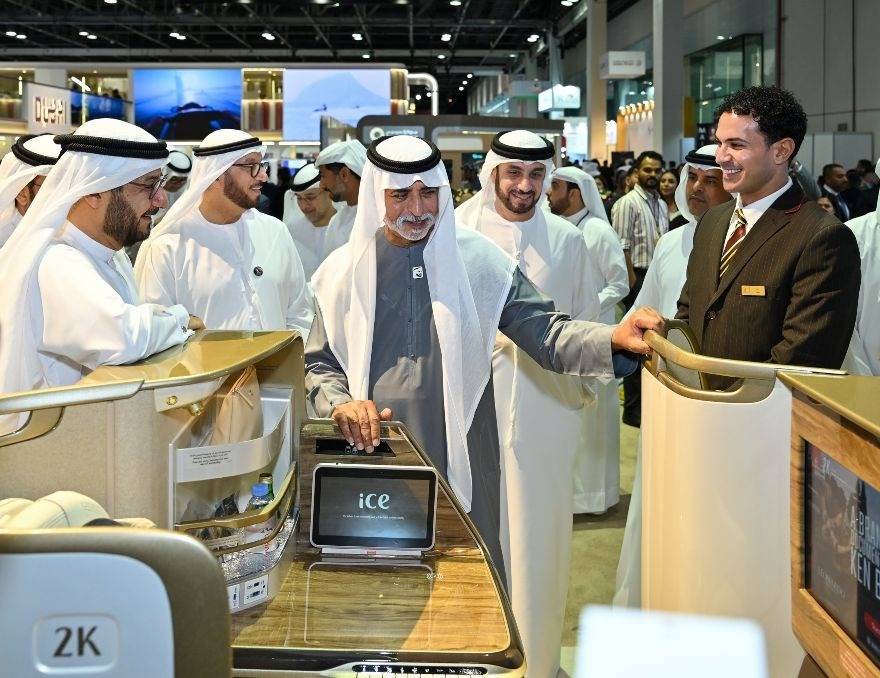
Sheikh Nahyan bin Mubarak Al Nahyan, UAE Minister of Tolerance and Coexistence, visited the Emirates stand during the second day of ATM, where he toured the airline’s product showcases. Senior Emirates executives briefed him on the carrier’s latest cabin innovations and developments aimed at enhancing the passenger experience.
Sri Lanka
Emirates and the Sri Lanka Tourism Promotion Bureau have renewed a partnership first established in 2022, with the airline set to continue promoting the island nation across its global network of almost 140 destinations.
The agreement is designed to support international visitor growth through marketing campaigns, tailored excursions, trade incentives and familiarisation trips for media and travel-trade representatives.
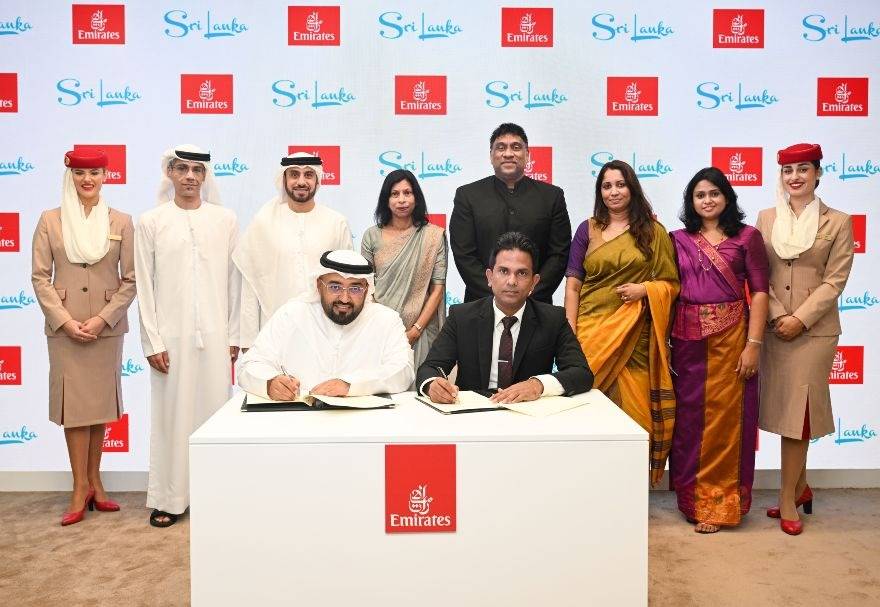
The two organisations will also work on special packages aimed at customers in key feeder markets, giving travel partners additional ways to present Sri Lanka’s attractions.
The partnership follows a strong year for Sri Lanka’s tourism industry. The country welcomed more than 2.3 million international tourists last year, representing a 15.1 per cent increase from about two million in the previous year.
Emirates will use its international network and established trade relationships to increase awareness of Sri Lanka and support further visitor flows.
Ras Al Khaimah
Emirates and the Ras Al Khaimah Tourism Development Authority signed a Memorandum of Understanding to stimulate visitor traffic to the emirate from selected markets across the airline’s network.
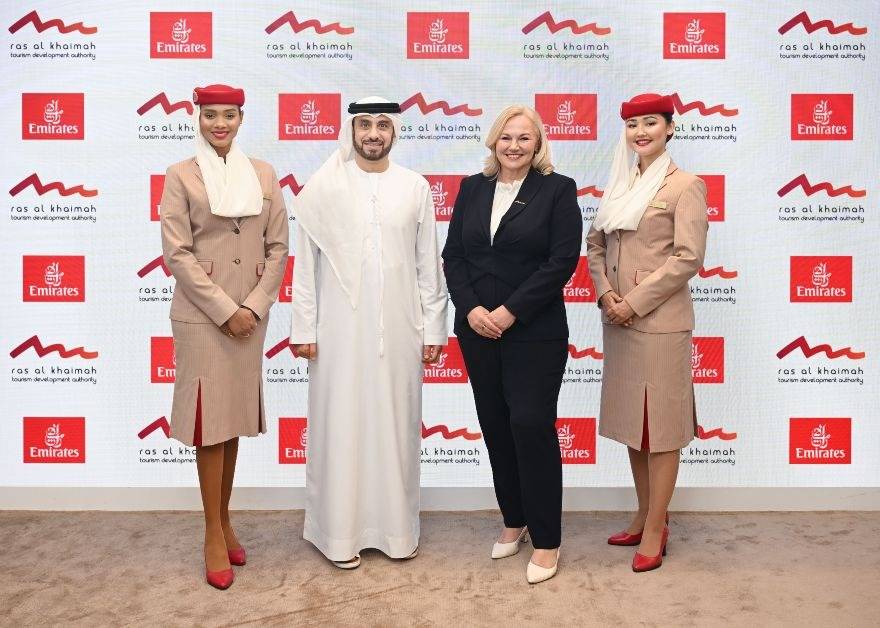
The partnership will explore joint marketing and advertising campaigns, alongside media and trade familiarisation programmes. RAKTDA will support selected visits through curated ground experiences designed to showcase the emirate’s tourism attractions and activities.
The two sides will also consider multi-market promotional campaigns in Ras Al Khaimah’s target markets and develop bespoke products and packages for Emirates customers.
These offerings could be promoted through Dubai Experience on the Emirates website, while incentives for tour operators and the wider travel trade will also be explored.
The collaboration is intended to give international visitors greater access to Ras Al Khaimah while encouraging travellers to discover a broader range of experiences across the UAE.
Japan
Emirates and the Japan National Tourism Organization have signed a new MoU aimed at strengthening tourism promotion and encouraging travel between Japan, Dubai and the wider Middle East.
The agreement builds on Emirates’ growing presence in Japan, where the airline operates direct services to Narita, Haneda and Kansai airports.
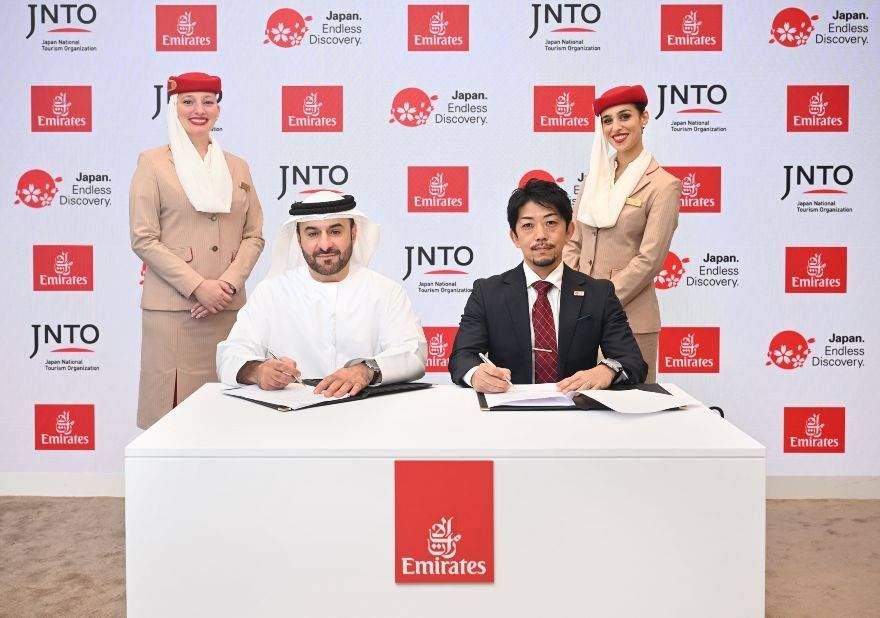
Its Japanese operations are expected to reach 28 weekly flights in October 2026. Emirates has also expanded capacity through Airbus A380 deployments and introduced Chauffeur-Drive services at Narita and Kansai.
The airline has further strengthened its local presence by opening a Travel Store in Osaka.
Through the new partnership, Emirates and JNTO will work to raise awareness of Japan among travellers across the airline’s network, respond to growing demand and deepen connections between Japan and markets in the Middle East and beyond.
Maldives
Emirates has renewed its partnership with the Maldives Marketing and Public Relations Corporation to jointly promote inbound tourism to the archipelago.
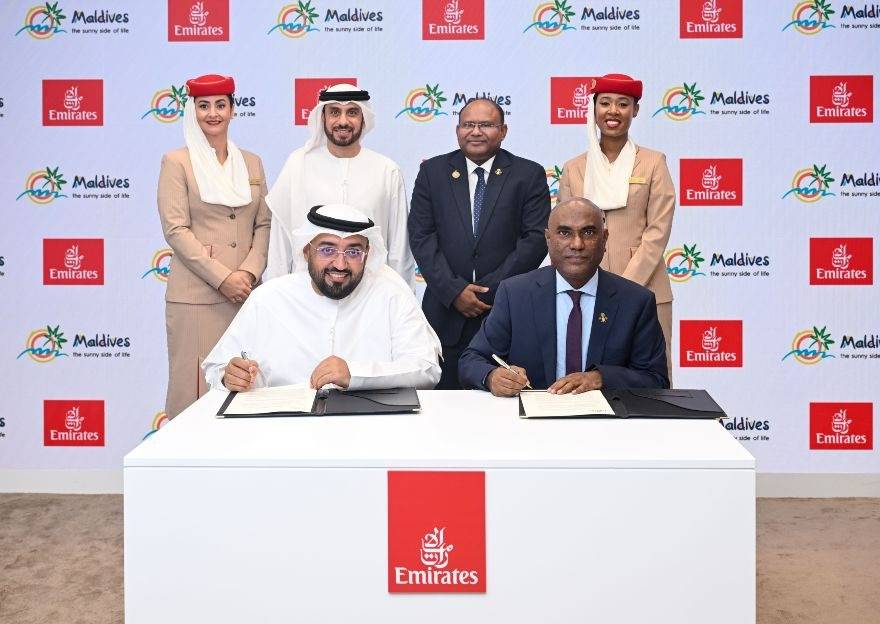
The airline has connected the Maldives with its West Asia and Indian Ocean network since 1987 and will continue using its global reach of almost 140 destinations to attract visitors from major source markets.
The partnership will focus on promoting the Maldives internationally and supporting the continued expansion of visitor arrivals.
According to the Ministry of Tourism and Environment’s Tourism Statistics 2025 report, air arrivals to the Maldives increased by almost 10 per cent last year to 2.25 million.
Emirates has supported the destination’s tourism growth by connecting it with markets including the US, UK and Russia, while the renewed agreement will seek to build further demand through joint promotional activity.
Filipino workers
Emirates has signed an agreement with the Overseas Workers Welfare Administration to strengthen support for Overseas Filipino Workers and their families.
The partnership will explore cooperation in welfare and social protection, repatriation assistance, reintegration and livelihood programmes, corporate social responsibility and community engagement.
It will also include support for OWWA outreach activities across the Middle East.
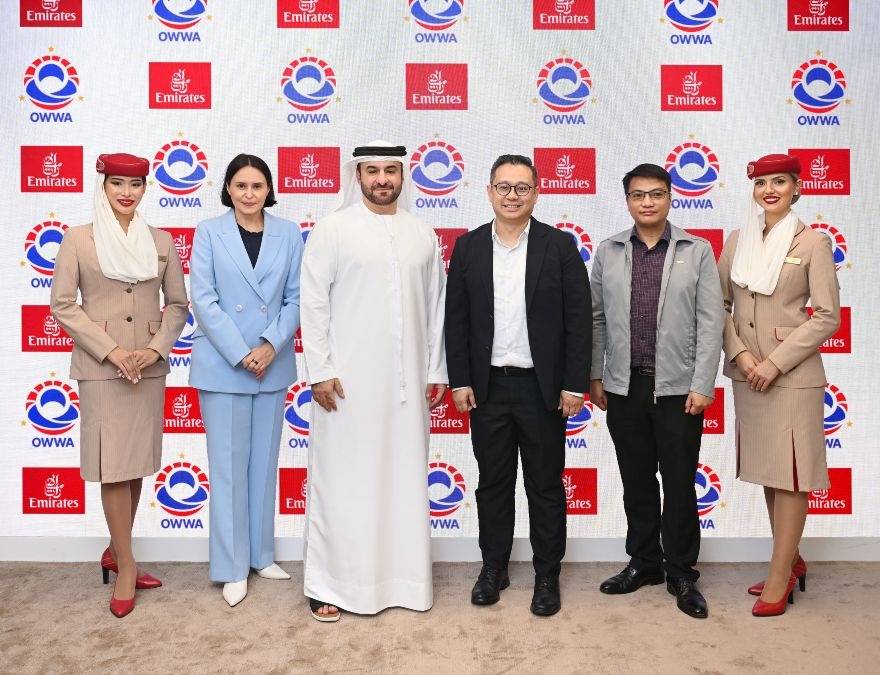
The agreement recognises the contribution of Filipino workers to Dubai and the wider UAE and creates a framework for Emirates and OWWA to explore initiatives addressing the needs of overseas workers.
According to the Philippine Statistics Authority’s 2024 Survey on Overseas Filipinos, the UAE is the second-largest destination for Filipino workers globally, with an estimated 271,000 OFWs.
The scale of financial flows between the UAE and the Philippines also underlines the importance of the community. Bangko Sentral ng Pilipinas data showed cash remittances from the UAE reached US$750.3 million in the first half of 2026, up 4.3 per cent from US$719.6 million during the same period last year.
Sharjah Police
Emirates and Sharjah Police have signed a Memorandum of Understanding formalising a partnership that will provide exclusive travel-related benefits for Sharjah Police employees and support the organisation’s events.
Sharjah Police will promote Emirates through its communication channels and events, creating opportunities for greater employee engagement and increased visibility for both organisations.
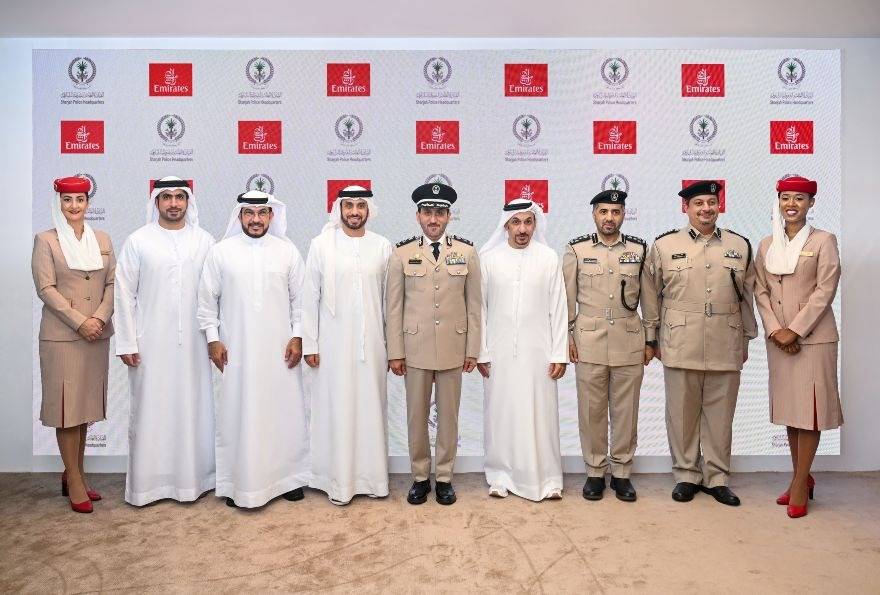
The MoU was signed by Adnan Kazim, Emirates’ Deputy President and Chief Commercial Officer, and Major General Dr Ali Ahmed Bu Al Zoud, Director General of the General Department of Resources and Support Services.
The agreement adds an institutional dimension to Emirates’ partnerships in the UAE, combining travel benefits with cooperation around events and communications.
DERTOUR Group
Emirates and DERTOUR Group are expanding their long-standing relationship across Europe through an agreement focused on distribution, premium leisure travel and closer commercial cooperation.
The partnership will broaden the availability of Emirates products across DERTOUR’s sales channels while accelerating the adoption of New Distribution Capability.
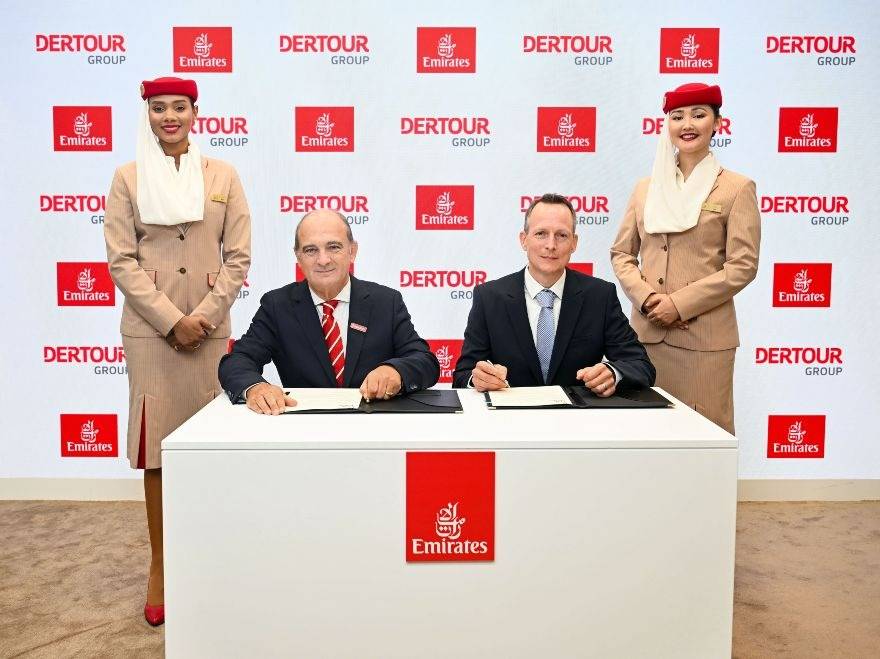
The agreement is also intended to provide customers with enhanced content and booking options, making Emirates products more accessible through DERTOUR’s distribution network.
Premium leisure travel will be another major focus, with the partners planning exclusive experiences and initiatives supporting travel advisers.
Joint marketing and communications will complement the commercial relationship, while both organisations will pursue new growth opportunities across Central, Eastern and Northern Europe.
Emilia-Romagna
Emirates has signed strategic partnerships with Bologna Welcome and Parma Welcome to promote Italy’s Emilia-Romagna region to international travellers.
The agreements will combine coordinated marketing campaigns with trade engagement, media outreach and familiarisation trips aimed at increasing awareness of the region in international markets.
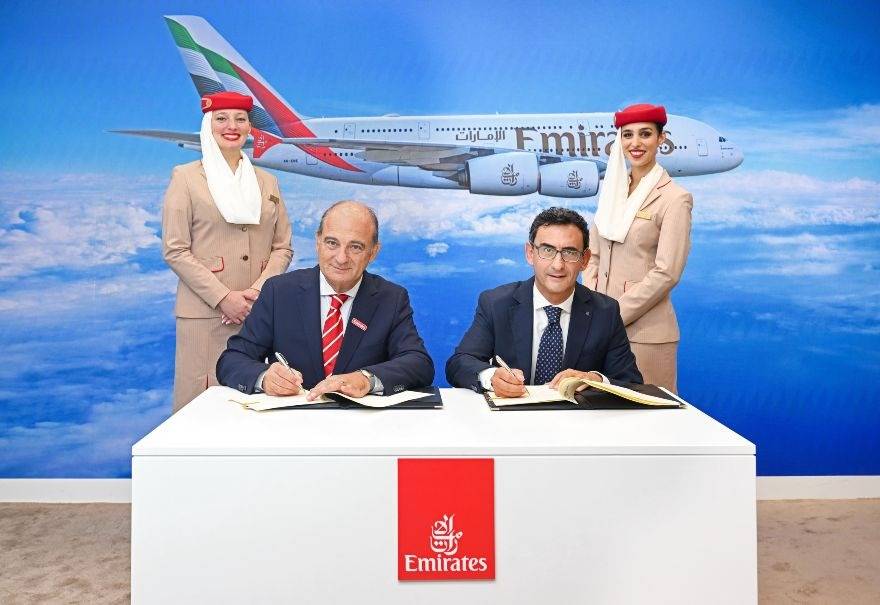
Promotional activity will highlight Emilia-Romagna’s cultural heritage, gastronomy and lifestyle experiences, while also showcasing its business offering.
The partnerships give Emirates another platform to promote Italy beyond its major cities, connecting international travellers with a region known for its cultural and culinary attractions.
Marine crews
Emirates has signed an MoU with Cisalpina Tours International, one of Italy’s leading travel management companies, to develop a dedicated framework for marine crew movements.
The agreement expands a long-standing relationship into one of the travel industry’s more specialised segments. Cisalpina is part of MSC Group, the global cruise and shipping operator and long-standing Emirates partner.
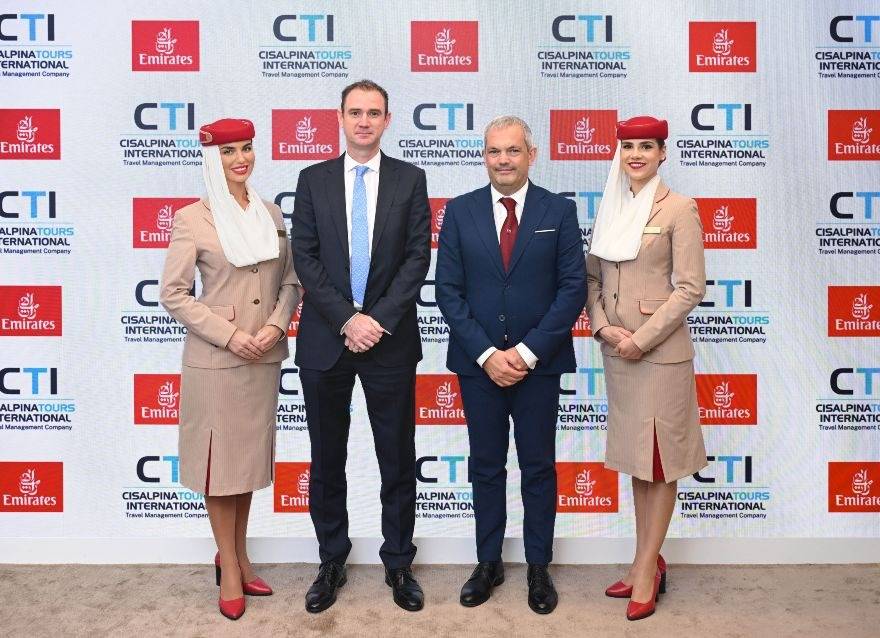
With more than 50 years of experience, Cisalpina brings specialist knowledge of maritime travel and manages cruise crew traffic and marine logistics alongside its corporate travel and MICE operations.
Under the agreement, Emirates will be positioned as a preferred airline partner for marine crew travel and mobility services.
The two companies will explore joint commercial opportunities across the Emirates network, combining their expertise in crew travel solutions and sharing market insights covering crew travel flows, port developments and wider industry changes.
The information will support joint planning as the partners seek to develop travel solutions for maritime personnel.
Kuwait Airways
Emirates and Kuwait Airways have agreed to expand their existing interline relationship into a reciprocal codeshare partnership, creating wider travel options for customers of both airlines.
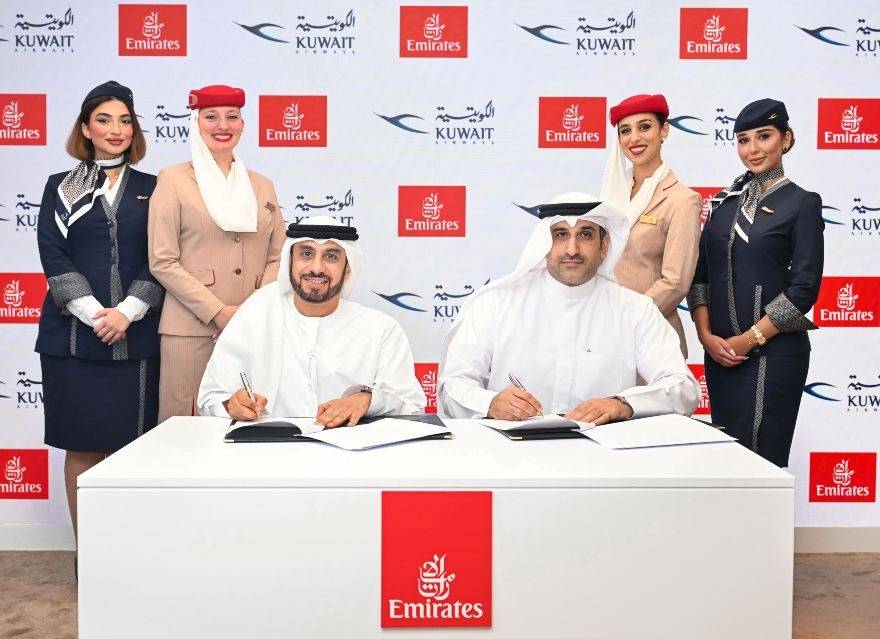
Under the arrangement, Kuwait Airways passengers will gain access to a broader selection of destinations through Emirates’ network via Dubai.
Customers will be able to book multi-sector journeys on a single ticket and benefit from through-checked baggage to their final destination, simplifying connections across the combined networks.
Emirates customers will receive reciprocal access to Kuwait Airways services and destinations, strengthening connectivity between the two carriers.
The agreement marks a significant expansion of the airlines’ existing cooperation and gives travellers more options for connecting through the respective networks.
https://www.travelsdubai.com/14-Sep-2026/atm-dubai-2026-emirates-expands-global-tourism-push-seven-new-deals
Etihad Escapes takes travel beyond flights with hotels and Abu Dhabi experiences
DUBAI – Etihad Airways has unveiled Etihad Escapes, a new travel platform designed to extend its customer experience beyond the flight and make it easier for travellers to organise more of their journeys in one place.
The platform was announced at Arabian Travel Market (ATM) 2026 in Dubai and will launch in October, initially allowing passengers with an Etihad flight booking to add hotel accommodation through Etihad.com.
Etihad plans to expand the service through 2027, bringing flights, hotels, loyalty and other travel services into a more integrated digital experience.
Hotel bookings
At launch, Etihad Escapes will allow guests who have already booked an Etihad flight to add a hotel to their journey directly through the airline's website. The move is intended to simplify trip planning by allowing customers to arrange accommodation without having to build their itinerary across multiple platforms.
The service will progressively expand so customers can search and book hotels independently, before combining flights and accommodation within an integrated booking journey.
Antonoaldo Neves, Chief Executive Officer of Etihad Airways, said the platform would help the airline build a deeper relationship with guests beyond the flight while creating a more personalised travel experience.
Future phases will extend Etihad Escapes into the Etihad app, while introducing greater personalisation, Etihad Guest loyalty integration and a wider selection of travel experiences and ancillary services.
Abu Dhabi tourism
Etihad is also positioning the platform as a way to connect its expanding global network with Abu Dhabi's tourism offering. Miral Destinations is joining as a launch partner, helping connect travellers with experiences and leisure destinations across the emirate and supporting the development of travel packages.
Etihad said the platform will be developed through its own capabilities and strategic partnerships. Expedia Group B2B is powering the hotel inventory, while Juniper Travel Technology is supporting the technology infrastructure. Further travel suppliers and partners are expected to join as the platform develops.
Neves said Etihad Escapes could help bring more visitors to Abu Dhabi, encourage them to experience more of the emirate and support its tourism ambitions. Abu Dhabi is targeting 39.3 million visitors and Dh90 billion in tourism GDP by 2030.
Wider market
The platform also gives Etihad an opportunity to participate in spending that takes place beyond the flight itself. The global holiday market is valued at approximately $2.7 trillion and is forecast to grow by 6.5% to 2030.
Etihad said its growing network and customer base will provide a foundation for Etihad Escapes to capture a larger share of the overall travel journey. The airline expects the platform to create additional revenue opportunities while supporting visitor growth, destination spending and stronger route economics for Abu Dhabi.
15 Sep, 2026
15 Sep, 2026
ATM Dubai 2026: Germany targets GCC travel rebound as visitor stays reach 1.2 million
DUBAI – Germany is highlighting the strength and long-term potential of the GCC outbound travel market as Arabian Travel Market (ATM) Dubai 2026 enters its second day, with the German National Tourist Office GCC showcasing the country’s year-round attractions and tourism offering.
Germany recorded 1.2 million overnight stays by GCC visitors in 2025, representing a 9% increase compared with 2022. GCC travellers also spent a combined €3 billion in Germany last year, with expenditure per trip and per person more than 30% above the average recorded among overseas visitors.
The figures were presented during a GNTO GCC press conference held on the opening day of ATM 2026, which is taking place from 14 to 17 September at Dubai World Trade Centre (DWTC). Germany’s presence at the travel trade show is focused on strengthening partnerships across the region, showcasing experiences beyond the traditional peak seasons and preparing for a recovery in GCC visitor numbers following disruptions to Gulf air traffic.
GCC demand
Yamina Sofo, Director of the Marketing & Sales Office at GNTO GCC, an affiliate of the German National Tourist Board (GNTB), said visitor numbers and travel expenditure from GCC markets had shown steady growth between 2022 and 2025.
She noted that Germany started 2026 positively, recording 68,455 overnight stays from GCC visitors in January, a 4.7% increase. However, the pace moderated during the remainder of the first half of the year amid exceptional disruption to air traffic across the Gulf, which affected passenger flows and direct travel to Germany.
Sofo said the figures nevertheless continued to demonstrate Germany’s appeal among GCC travellers and the resilience of demand from the region.
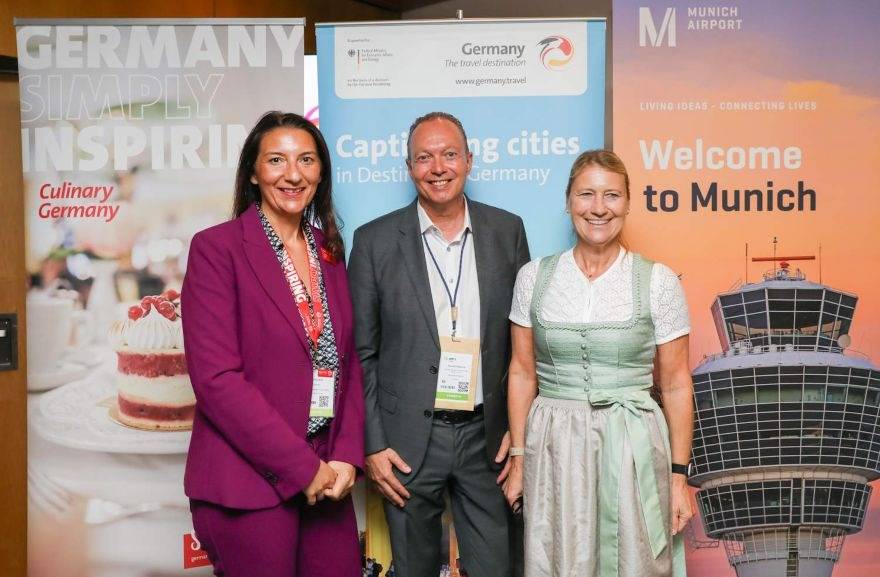
At ATM 2026, the GNTO GCC is using its participation to present Germany as a destination for all seasons, while supporting its local tourism partners and highlighting the range of experiences available to visitors from the Gulf.
The GCC currently ranks as Germany’s third-strongest overseas market, underlining the importance of the region to the country’s tourism sector. The tourism office is also preparing for a recovery as flight schedules normalise and previously deferred travel demand returns.
Germany’s co-participants at this year’s ATM include Visit Berlin, Lufthansa Group, Value Retail Management GmbH, representing Ingolstadt Village and Wertheim Village, Munich Airport and Studiosus Incoming.
Munich gateway
Munich Airport is plcing particular emphasis on its growing links with the Middle East through its new 95,000-square-metre Terminal 1 Pier.
The new facility has been designed with the needs of travellers from the Middle East in mind and can accommodate up to six million additional passengers. It will become the primary home at Munich Airport for airlines operating routes to and from the region and the passengers using those services.

The airport’s connectivity with the Gulf has become an important component of its long-haul network. Around 1.6 million passengers travelled on routes between Munich and the Gulf in 2025, accounting for 18% of the airport’s total long-haul traffic.
Munich Airport currently has 15 airlines connecting it with 15 destinations across 10 countries in the wider MENA region, providing a significant network for travellers heading to Bavaria and other parts of Germany.
The new terminal facility is also being complemented by a dedicated initiative for Arab travellers. The Bavarian-Arab Society has established a new office at Munich Airport, providing a point of contact for Arab passengers while promoting cultural understanding and offering personalised support services.
Corinna Born, Director International Media Relations at Munich Airport, said the airport and the German National Tourist Board remained focused on strengthening connectivity, hospitality and cultural ties between Germany and the Arab world.
The partnership is also intended to position Germany and Bavaria for a broad range of GCC travel segments, including family holidays, leisure trips, medical tourism and luxury travel.
Year-round offer
Germany’s tourism campaigns for 2026 and 2027 are designed to underline the diversity of experiences available across the country throughout the year.
The programme covers sustainable travel, nature, urban culture, gastronomy and seasonal experiences, alongside a series of major cultural events and anniversaries.
The Simply Feel Good campaign will spotlight destinations and travel experiences featuring sustainability initiatives. Next Stop: Travel Destination Germany will focus on the country’s cities and contemporary culture, while Culinary Germany will promote regional cuisine, fine dining and sustainable gastronomy.
For travellers seeking outdoor experiences, Family & Friends in Nature will highlight Germany’s hiking and cycling trails, national parks and other nature-based activities. The Season’s Greetings from Germany campaign will focus on traditional Christmas markets and winter experiences, giving GCC visitors another reason to explore the country outside the summer period.
Culture will form another major part of Germany’s tourism calendar.
Among the upcoming highlights is the 150th anniversary of the Wagner Festival in Bayreuth. In 2027, Germany will mark BTHVN 2027, commemorating 200 years since Beethoven’s death.
The country will also host documenta 16 in Kassel, one of the world’s leading contemporary art exhibitions, while the International Garden Exhibition (IGA) 2027 in the Ruhr region will bring together gardens, nature, culture and sustainable urban development.
The campaigns collectively cover a wide range of interests, from city breaks and cultural tourism to outdoor activities, food, sustainability and seasonal travel.
ATM Dubai 2026
Germany’s presence at ATM 2026 provides a platform for tourism organisations, airlines, attractions and destination partners to engage with travel professionals from the GCC and wider international markets.
The German delegation is using the event to promote the country’s year-round tourism proposition while strengthening relationships with regional travel trade partners.
The participation comes as the GCC continues to represent a high-value source market for Germany. The €3 billion spent by GCC travellers in 2025, combined with expenditure per trip and per person exceeding the average for overseas visitors by more than 30%, highlights the market’s significance beyond visitor volumes alone.
Germany’s 1.2 million GCC overnight stays last year also represented a continued rise from 2022, reinforcing the country’s position as the region’s third-strongest overseas market.
For Munich Airport, the focus at ATM extends to the infrastructure supporting that demand, with the new Terminal 1 Pier providing additional capacity and a dedicated Middle East-oriented gateway.
The airport, which has operated at its current location since 1992, is one of Europe’s major air traffic hubs and connects Bavaria with destinations around the world. Its operator, Flughafen München GmbH, is owned by the Free State of Bavaria with a 51% stake, the Federal Republic of Germany with 26% and the City of Munich with 23%.
Around 37,000 employees work across the Munich Airport campus, which comprises approximately 470 companies.
The Germany stand is located in the Europe Hall at EU5150 throughout ATM 2026, which continues at Dubai World Trade Centre until 17 September.
From Prague to Karlovy Vary: Czechia brings ‘feel free’ travel experiences to ATM Dubai 2026
DUBAI – Czechia is using Arabian Travel Market (ATM) Dubai 2026 to showcase a broader side of the Central European destination, moving beyond its famous capital to highlight wellness, gastronomy, nature and lesser-known regions.
CzechTourism, together with the Embassy of the Czech Republic in the UAE, is presenting the country’s tourism offering to Middle East travel professionals during the 33rd edition of the event, which runs from 14 to 17 September at Dubai World Trade Centre.
As ATM 2026 enters its second day, the Czech presence is putting particular emphasis on its new global ‘feel free’ campaign and the freedom travellers have to shape their journeys around their interests.
Travel freedom
The campaign positions Czechia as a destination where visitors can combine different experiences within a single trip, from historic architecture and cultural attractions to outdoor adventures, local food and long-established spa traditions.
At ATM Dubai, CzechTourism is bringing together destination representatives and private-sector partners to demonstrate how the country can cater to different types of travellers. Its presentation covers culture and architecture, spa and wellness, gastronomy, cycling, hiking and other outdoor activities, while also encouraging visitors to explore regions beyond the established tourist circuit.
The destination’s culinary credentials are gaining fresh international attention. MICHELIN included Czechia among its 16 Best Places to Travel in 2026 for Food Lovers, with the country’s first nationwide MICHELIN Guide helping broaden the spotlight beyond Prague. The 2025 guide features 79 MICHELIN-selected restaurants, including one Two-Star restaurant, eight One-Star establishments and 18 Bib Gourmands.
This growing food reputation is being presented alongside new hotels, wellness concepts and attractions across the country, strengthening Czechia’s positioning as a year-round destination for international visitors.
Beyond Prague
While Prague remains one of Czechia’s best-known attractions, the destination’s ATM showcase is also drawing attention to places such as Karlovy Vary, Český Krumlov, Telč and Olomouc.
Karlovy Vary, one of the country’s best-known spa destinations, forms part of the Great Spa Towns of Europe UNESCO World Heritage property. The town is also known for its healing mineral waters and spa traditions, while its Grandhotel Pupp has gained international recognition through its association with The Grand Budapest Hotel.
South Moravia is another focus, combining vineyards, local produce, cultural attractions and the regional capital Brno. Nearby, the Lednice-Valtice Cultural Landscape offers another major heritage attraction. South and Central Bohemia also provide opportunities to combine historic towns, countryside, lakes, cycling routes and regional gastronomy.
Czechia currently has 17 properties inscribed on the UNESCO World Heritage List, including historic centres, cultural landscapes and the natural component of the Ancient and Primeval Beech Forests of the Carpathians and Other Regions of Europe.
The country’s wider tourism appeal also includes more than 1,200 castles and chateaux, traditional thermal and spa experiences, glassmaking and crystal design, forests, rolling hills and natural lakes.
CzechTourism at ATM 2026
CzechTourism is using ATM 2026 to strengthen connections with travel partners across the UAE and wider Middle East, a market it describes as increasingly important for the destination.
Barbara Andelová, International Marketing Manager for New Markets at CzechTourism, said the organisation’s focus in 2026 is to inspire more travellers while demonstrating the breadth of experiences available across the country, including wellness, culture, gastronomy, nature and premium travel.
The Czech delegation also includes industry partners Axxos Hotels & Resorts and Jachymov Spa, allowing travel trade visitors to engage directly with tourism businesses and discover accommodation and wellness options.
VFS Global is also continuing its partnership with CzechTourism, which has lasted more than seven years. Its tourism services team is supporting Czechia’s engagement across the Middle East as the destination seeks to expand awareness and develop new opportunities with regional travel partners.
Josef Koutský, Ambassador of the Czech Republic to the UAE, said the country’s ATM participation provides another opportunity to build on Czechia-UAE relations and strengthen partnerships across the wider Middle East.
15 Sep, 2026
15 Sep, 2026
Etihad Guest unveils new Jaywan Royal benefits with up to 10% off fares
DUBAI – Etihad Guest and Al Etihad Payments have introduced a new set of exclusive benefits for Jaywan Royal cardholders, giving UAE-based travellers additional value when booking flights with Etihad Airways.
The agreement was signed at Arabian Travel Market 2026 in Dubai and builds on the airline's growing partnership with the UAE's national domestic card scheme.
The latest deal follows Etihad's move in August to become the first airline in the world to accept Jaywan as a payment method on etihad.com. It also marks the next stage of a partnership first outlined through a Memorandum of Understanding signed by the two organisations in October last year.
Fare benefits
Etihad Guest members using an eligible Jaywan Royal Card can receive up to 10% off Etihad-operated flights when booking Comfort or Deluxe fares directly through etihad.com.
The offer combines fare savings with additional airport benefits. Eligible Jaywan Royal cardholders will receive Priority Access in Abu Dhabi, covering check-in, boarding and baggage, adding a range of airport privileges to their travel experience.
Etihad Guest is the first airline loyalty programme to introduce benefits specifically for Jaywan cardholders. The arrangement is designed to reward UAE-based travellers who use the country's national domestic card scheme while also extending the benefits available through Etihad's loyalty programme.
To qualify, customers must be logged into their Etihad Guest account when making a booking. They must purchase an eligible Comfort or Deluxe fare using an eligible Jaywan Royal Card, with the offer subject to applicable terms and conditions.
Mark Potter, Managing Director of Etihad Guest at Etihad Airways, said the agreement brings together loyalty across the two brands and provides additional value to UAE-based members.
“This agreement recognises loyalty across both brands, rewarding that loyalty with real value on every booking,” he said.
Potter added that the combination of exclusive Comfort and Deluxe fares with a smoother airport experience would provide a practical addition to the guest journey.
Payment partnership
Andrea Cianchetti, Chief Products Officer at Al Etihad Payments, said the latest agreement builds on the momentum created when the partnership with Etihad was finalised in August, as well as the MoU signed in October.
He said Jaywan was designed to deliver value for UAE customers, while the Etihad partnership adds travel benefits to the Jaywan Royal proposition.
The latest agreement comes as Jaywan continues to expand its role within the UAE's domestic payments ecosystem. The scheme is operated by Al Etihad Payments, a subsidiary of the Central Bank of the UAE, and is designed around the everyday payment needs of people in the country.
UAE-based Etihad Guest members can select Jaywan at checkout when booking flights through etihad.com across Etihad's full route network.
Full terms and conditions for the member benefits are available on Etihad's website.
ATM Dubai 2026 reveals what will drive GCC tourism forward
DUBAI – Preparedness and international collaboration took centre stage as policymakers from the Gulf, Central Asia, Europe and the United Nations examined the resilience and future direction of tourism at Arabian Travel Market (ATM) 2026 in Dubai.
The opening day of the 33rd edition brought senior decision-makers together to assess how the sector has responded to geopolitical challenges while exploring opportunities for longer-term growth.
ATM 2026 is being held at Dubai World Trade Centre until Thursday, 17 September.
Building resilience
Abdulla bin Touq Al Marri, UAE Cabinet Member and Minister, Economy and Tourism, and Shaikha Al Nuwais, Secretary-General, UN Tourism, delivered welcome addresses on the Global Stage on the first day of the event, following opening remarks by Hugh Jones, CEO of RX Global.
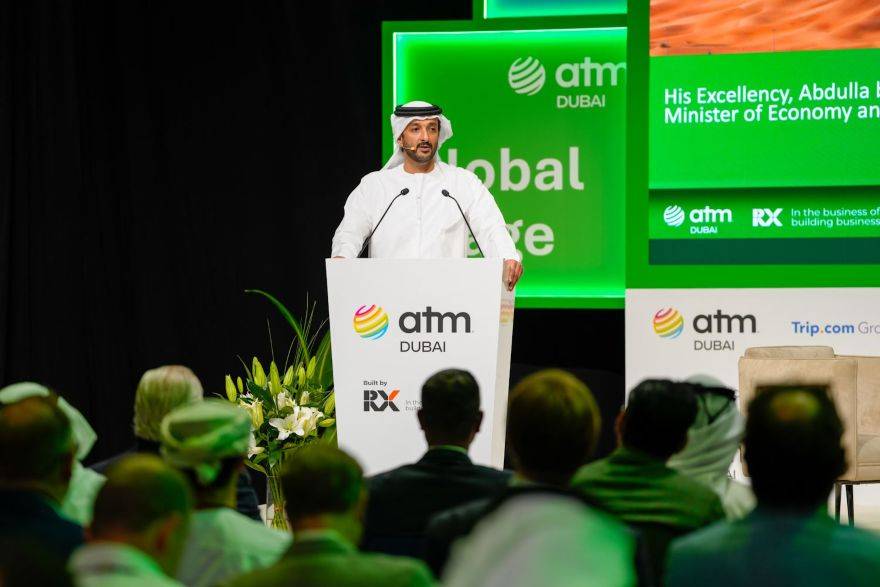
Addressing the UAE’s response to recent geopolitical challenges, Al Marri highlighted the foundations built by the country’s tourism and wider economic sectors over the past five decades.
“Everyone talks about tourism resiliency; I talk about tourism foundations,” he said, pointing to the development undertaken over 50 years as a key factor behind the UAE’s ability to navigate recent challenges.
Al Nuwais placed preparedness and relationships at the centre of effective crisis management, stressing the importance of establishing cooperation and trust before disruption occurs.
She said countries that manage crises effectively are those that prepare in advance, build relationships early, share information and establish trust. According to Al Nuwais, such preparation enables destinations to respond more effectively when new challenges emerge.
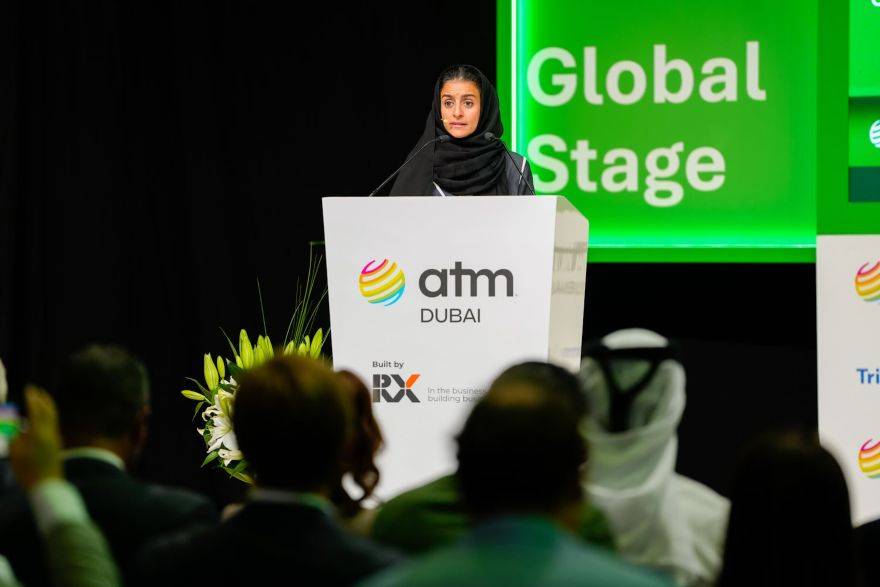
The two speakers later joined Fatima Jaafar Al Sairafi, Minister of Tourism, Kingdom of Bahrain; Apostolos Tzitzikostas, Commissioner for Sustainable Transport and Tourism at the European Commission; and Abdulaziz Akkulov, Chairman of the Tourism Committee of the Republic of Uzbekistan, for a ministerial debate moderated by Khanh Linh Vu, Principal Advisor to the Secretary-General at UN Tourism.
Tzitzikostas used the session to reaffirm the European Union’s support for the UAE and Gulf countries, describing them as partners and allies. He also pointed to signs of recovery in tourism activity, saying recent figures indicated a turnaround and a return to a stronger growth path.
Gulf opportunity
Tourism’s growing contribution to regional economies was another major focus of the discussion. Al Sairafi said tourism contributes more than 11% of GDP across Gulf countries, compared with a global average of around 10%.
She said the figure demonstrates the established position of Gulf countries within the global tourism landscape while highlighting further potential for the sector to expand across the region.
Akkulov drew comparisons between the approaches adopted by GCC countries and Uzbekistan, highlighting his country’s partnerships with Azerbaijan and UN Tourism. He also outlined efforts to position Uzbekistan as a regional hub for cooperation across the tourism industry.
The discussion underscored the role of cross-border partnerships as destinations seek to strengthen their ability to respond to disruption while continuing to develop tourism infrastructure, connectivity and visitor experiences.
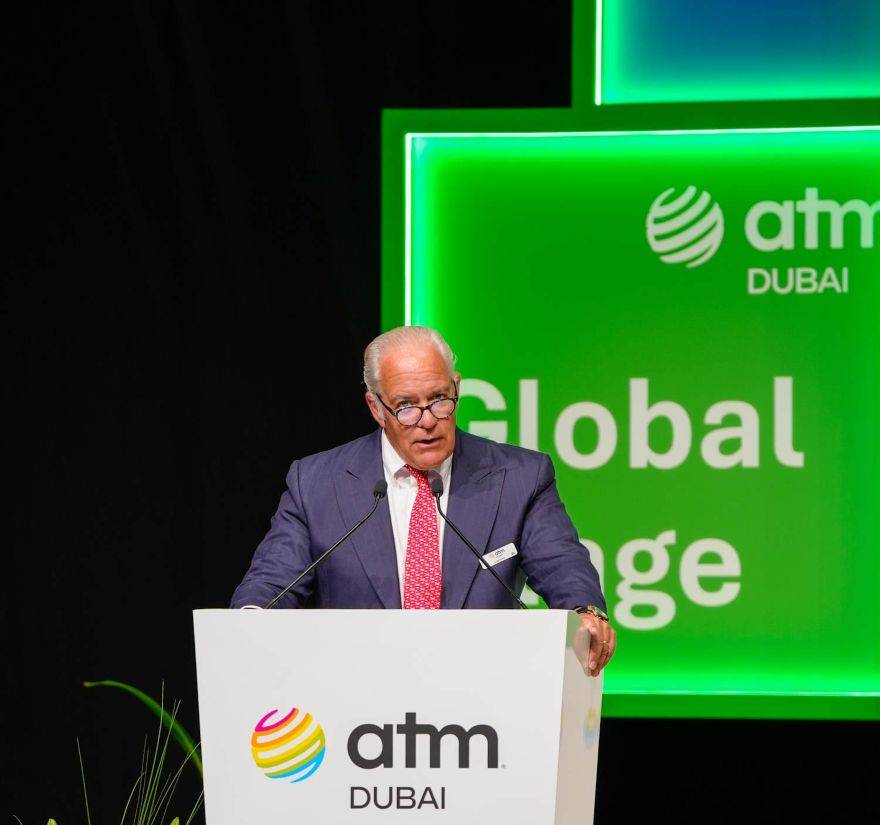
Danielle Curtis, Regional Portfolio Director, UAE, RX Global, said the opening-day discussions demonstrated the importance of travel and tourism to the regional economy. She highlighted the GCC’s collective response to geopolitical challenges and described preparedness and collaboration as important elements of market resilience.
Tourism 2040
ATM 2026 is being held under the theme Travel 2040: Driving New Frontiers Through Innovation and Technology, with the programme examining the forces expected to shape the industry over the coming years.
Artificial intelligence, digital transformation, smart mobility and changing traveller expectations are among the issues being explored during the event. The Global Stage hosted seven sessions on the opening day, covering topics including live experiences and the development of technology-powered luxury tourism for international travellers.
The event’s programme brings together tourism leaders, policymakers and industry representatives from across global markets to examine new opportunities and changing dynamics within travel.
Now in its 33rd edition, ATM remains a major international travel and tourism event in the Middle East, providing a platform for industry stakeholders to develop partnerships, exchange knowledge and explore new business opportunities.
https://www.travelsdubai.com/15-Sep-2026/atm-dubai-2026-expect-day-2-packed-opening
15 Sep, 2026
15 Sep, 2026
Sheikh Hamdan visits ATM 2026 as global travel industry gathers in Dubai
DUBAI – His Highness Sheikh Hamdan bin Mohammed bin Rashid Al Maktoum, Crown Prince of Dubai, Deputy Prime Minister and Minister of Defence of the UAE, and Chairman of the Executive Council of Dubai, yesterday visited the 33rd edition of Arabian Travel Market (ATM), currently taking place at Dubai World Trade Centre.
Running until 17 September, ATM 2026 has brought together travel trade companies, organisations and institutions from the UAE and around the world, creating a major platform for tourism leaders, experts and industry stakeholders to explore new opportunities and developments shaping global travel.
His Highness Sheikh Hamdan bin Mohammed bin Rashid Al Maktoum was briefed by Helal Saeed Almarri, Director General of the Dubai Department of Economy and Tourism and Director General of the Dubai World Trade Centre Authority, on the event's key highlights and its role in bringing together leaders and experts from across the travel and tourism sector.
ATM Dubai 2026
His Highness Sheikh Hamdan bin Mohammed bin Rashid Al Maktoum said Dubai's hosting of ATM 2026 reinforces the emirate's position as a leading global destination while demonstrating its ability to convene diverse tourism stakeholders under one roof.
“We welcome all our guests and participants in the 33rd edition of Arabian Travel Market, a global platform that reflects Dubai’s leading role in catalysing new growth for the travel and tourism industry and underscores its ability to convene global industry leaders, experts and those shaping its future.”
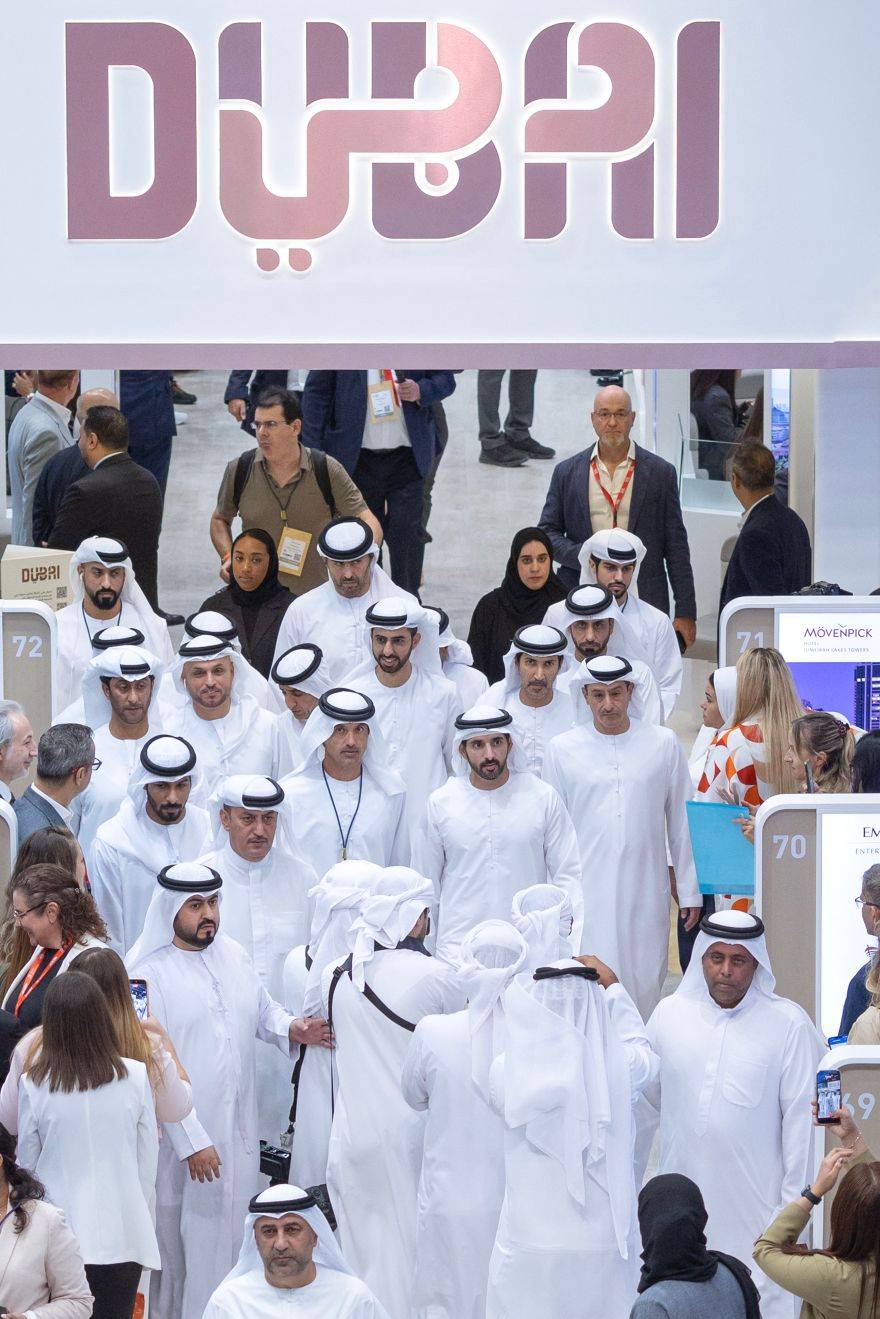
His Highness Sheikh Hamdan bin Mohammed bin Rashid Al Maktoum added that Dubai will continue to play a pivotal role in shaping the future of travel and tourism globally, guided by an ambitious vision that anticipates opportunities and keeps pace with rapid changes across the sector.
He further shared that the emirate looks forward to ATM contributing to greater cooperation, knowledge exchange and new partnerships supporting the future of tourism in the UAE and worldwide.
Touring ATM
During the visit, His Highness Sheikh Hamdan bin Mohammed bin Rashid Al Maktoum toured several pavilions representing participating entities and companies.
These included the Dubai Department of Economy and Tourism, Emirates, flydubai, the Ministry of Economy and Tourism, Emirates and Al Rais Travel.
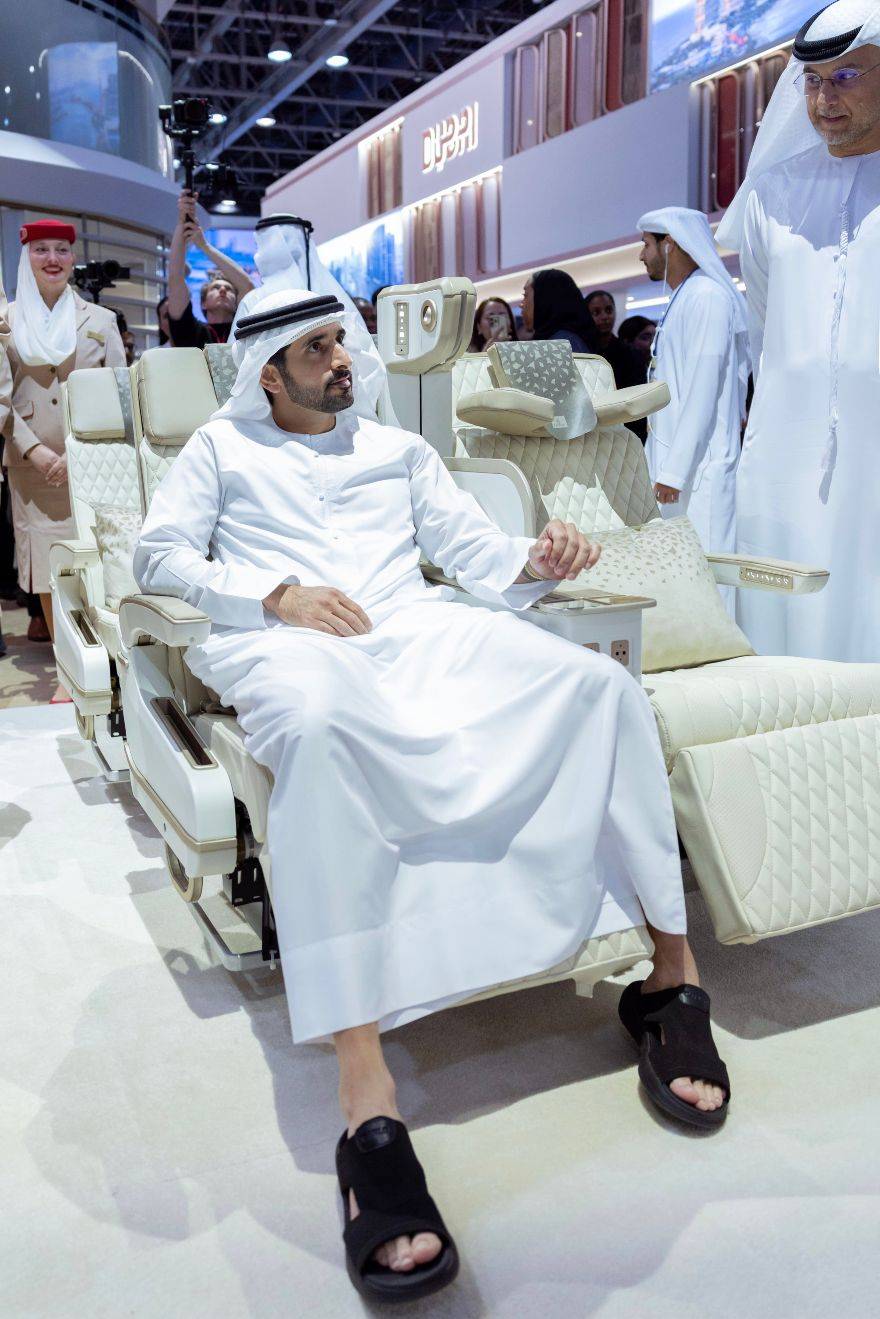
His Highness Sheikh Hamdan bin Mohammed bin Rashid Al Maktoum reviewed a range of products, initiatives, services and projects aimed at enhancing the travel experience and supporting the continued development of the tourism sector.
The visit also highlighted opportunities to establish new partnerships, strengthen cooperation and increase travel and tourism flows between the UAE and international markets.
Travel 2040
Held under the theme “Travel 2040: Driving New Frontiers Through Innovation and Technology,” ATM 2026 is examining how technology, changing traveller expectations and new approaches to business are transforming global tourism.
Artificial intelligence and digital transformation are among the key areas receiving attention at this year's event, alongside the partnerships and investment required to build a stronger and more resilient travel industry.
The event provides an integrated platform for tourism stakeholders to expand engagement, develop partnerships and strengthen business relationships across international markets.
Etihad unveils new A330 cabins and a bigger First Class push at ATM Dubai
ABU DHABI – Etihad Airways has unveiled the next stage of its guest experience at Arabian Travel Market in Dubai, putting its new Airbus A330 cabin at the centre of its Beyond Borders proposition.
The new aircraft interior makes its world debut at the event with redesigned First, Business and Economy cabins, alongside a new design language that Etihad plans to introduce progressively across its expanding fleet.
The Abu Dhabi-based airline is also expanding the role of First Class across its network, building on the response to its A321LR, which introduced First suites and fully lie-flat Business seats to a single-aisle aircraft. The latest A330 represents the next step, bringing a three-cabin premium offering to regional and medium-haul routes.
Etihad says Beyond Borders will extend beyond aircraft interiors, linking cabins with lounges, ground services, dining, amenities, wellbeing and connectivity as part of a more consistent journey for guests.
New A330
The new Airbus A330 will enter service from September 2027, with 15 aircraft scheduled to join Etihad's fleet over a five-year period.
The aircraft will support the airline's continued expansion across regional and medium-haul markets, particularly on routes where demand for premium travel, capacity and flexibility is increasing. Its three-cabin layout will include First, Business and Economy, allowing Etihad to offer its full premium proposition on a wider selection of routes.

At the front of the aircraft, four First suites form an intimate cabin designed around privacy and personal space. Each suite features a closing door, while the layout also provides room for a companion to dine or socialise during the flight.

Etihad is equipping each First suite with a 32-inch screen, wireless charging, dedicated compartments and personal storage. A personal powder station will also be provided, stocked with premium amenities that guests can use during their journey and take with them afterwards.

The First experience is designed around a combination of personalisation, hospitality and dining, with Etihad positioning the cabin as part of a wider end-to-end premium service rather than simply a seat onboard.

Business Class will feature 24 fully lie-flat seats. Every seat faces forwards and provides direct aisle access, while sliding doors add another layer of privacy.

Each Business seat comes with a 17.3-inch screen, wireless and wired charging, a large table and dedicated personal storage. The configuration is intended to provide passengers with greater privacy and flexibility throughout the flight.
Economy will contain 252 seats in a bright, calm cabin. Passengers will receive Etihad's bespoke fixed-wing headrest, embossed with the airline's logo, alongside 13.3-inch 4K touchscreens and personal charging facilities.

A dedicated Extra Legroom section will provide 32 seats with four inches of additional pitch, giving passengers another seating option within the Economy cabin.

The A330's combination of capacity and three-cabin configuration is expected to make it an important part of Etihad's regional and medium-haul network, including services across Europe, Asia and the Middle East.
First expands
First Class is a central part of Etihad's latest product strategy, with the airline planning to increase the number of First seats available across its fleet over the next five years.
The A321LR has already demonstrated how the carrier can introduce a premium First experience on aircraft traditionally associated with shorter and medium-range operations. Its First suites and fully lie-flat Business seats have helped distinguish the aircraft within Etihad's single-aisle network.
A 20-inch 4K touchscreen for the journey, Giorgio Armani loungewear, and a full turndown service for the night. The Etihad A321LR First, considered down to the smallest detail. pic.twitter.com/LweKbimcMk
— Etihad (@etihad) September 14, 2026
The airline says guests have actively chosen flights operated by the A321LR, prompting it to build further on the concept.
At ATM, Etihad is also showing how the Beyond Borders design language will be carried across the A321LR in First, Business and Economy. The objective is to create a more recognisable experience across different aircraft while retaining products tailored to individual aircraft types and routes.
Across the wider fleet, First will continue to expand through new aircraft and retrofit programmes.
Etihad's A380 flagship First Apartments and The Residence will remain the signature premium products on its superjumbo aircraft. A mock-up of The Residence is also on display at Arabian Travel Market, giving visitors a closer look at one of the airline's most distinctive offerings.
The wider expansion of First marks a significant shift in the way Etihad is positioning its premium cabins, with the airline seeking to make the experience available to more guests and on more routes.
Beyond Borders
Beyond Borders also introduces a new design language intended to connect Etihad's aircraft and premium spaces.
The concept is rooted in Abu Dhabi and draws inspiration from the emirate's landscape, architecture and transformation. Etihad describes the design story as moving from "sand to superstructure", reflecting the development of Abu Dhabi while creating a contemporary and distinctly Etihad interior.
The new cabins use bright, serene spaces alongside bespoke details. Sconce lighting draws inspiration from Etihad's distinctive facet pattern, while genuine leather seating and precision perforation feature in the premium cabins.
The design also incorporates subtle technology and functionality. In First Class, seat numbers are discreetly projected onto the floor, providing a visual touch while helping passengers identify their suites.
Etihad is extending the design philosophy beyond the aircraft itself. Shared elements across lounges and onboard spaces are intended to create continuity as passengers move through different stages of their journey.
That approach forms a key part of Beyond Borders, which the airline says will increasingly connect its physical products with hospitality, technology, dining, wellbeing and service.
https://www.travelsdubai.com/31-Aug-2026/beyond-borders-etihad-airways-unveils-new-campaign-celebrating-abu-dhabi-born-ambition
US$20bn investment
Etihad is backing the transformation with a US$20 billion investment in new aircraft and customer experience.
The programme includes a US$1 billion fleet retrofit investment, alongside the introduction of new aircraft such as the A330.
Chief Executive Officer Antonoaldo Neves said the A321LR had demonstrated what could be achieved by challenging conventional expectations for narrowbody flying, particularly through the introduction of First and fully lie-flat Business seats.
He said the new A330 takes the airline's next step by bringing the Beyond Borders concept to a new cabin while extending the design language to the A321LR.
The wider strategy is intended to create greater consistency across the guest journey, from the aircraft and seat to the airport experience, lounges, food, wellbeing, connectivity and service.
14 Sep, 2026
14 Sep, 2026
ATM Dubai 2026: Emirates expands global tourism push with seven new deals
DUBAI – Emirates has opened Arabian Travel Market 2026 with a major expansion of its tourism partnerships, signing seven Memoranda of Understanding with tourism authorities spanning the Indian Ocean, Europe, Southeast Asia and the UAE.
The agreements cover destinations including Seychelles, Mauritius, Madagascar, Sharjah, Malaysia, Finland and Western Norway, with the airline and tourism bodies set to work together on marketing, trade engagement, familiarisation trips and initiatives designed to increase visitor flows.
The airline also renewed strategic partnerships with Huawei and Dubai Duty Free, extending its focus beyond destination promotion to digital innovation, customer experience and airport retail.
The opening day of ATM also saw His Highness Sheikh Hamdan bin Mohammed bin Rashid Al Maktoum, Crown Prince of Dubai, Deputy Prime Minister and Minister of Defence, and Chairman of the Executive Council of Dubai, visit the Emirates stand. During the visit, His Highness Sheikh Hamdan sampled the airline’s new Premium Economy electric seat with privacy dividers and reviewed its design with senior Emirates leadership.
Seychelles
Emirates has renewed its partnership with the Seychelles Tourism Board and the Ministry of Tourism and Culture, extending a relationship that began in 2013.
The agreement is aimed at stimulating inbound traffic to the Seychelles through Emirates’ global network of nearly 140 destinations. Planned activities include joint marketing campaigns and familiarisation trips for media and travel-trade partners.
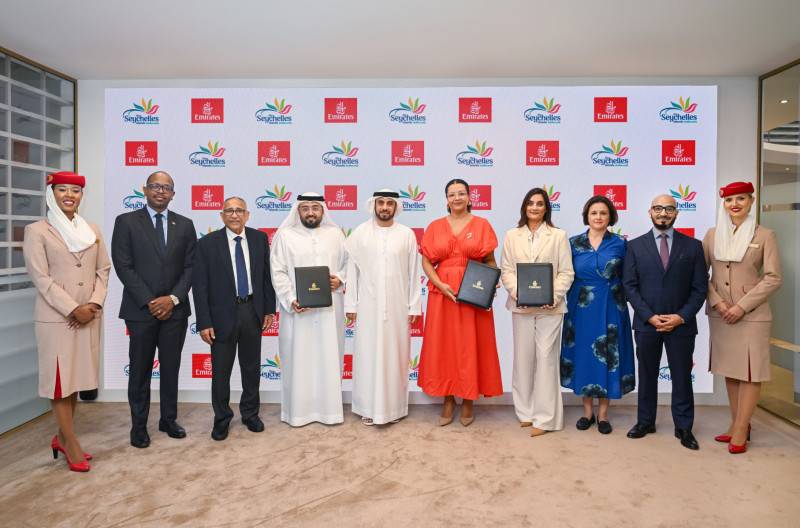
Emirates currently operates two daily flights to Mahé, providing connectivity for visitors travelling from a broad range of markets.
The partnership comes as the Seychelles records continued growth in visitor arrivals. Nearly 400,000 tourists visited the island nation in 2025, up 13 per cent from 353,000 in the previous year.
Through the renewed collaboration, Emirates and the Seychelles tourism authorities will seek to build further awareness of the destination in source markets and translate that interest into travel demand.
Mauritius
Emirates and the Mauritius Tourism Promotion Authority have renewed their agreement to promote tourism and trade in the island nation.
The airline has supported Mauritius’ tourism ambitions for more than two decades, helping the destination reach new source markets and supporting the growth of visitor arrivals.
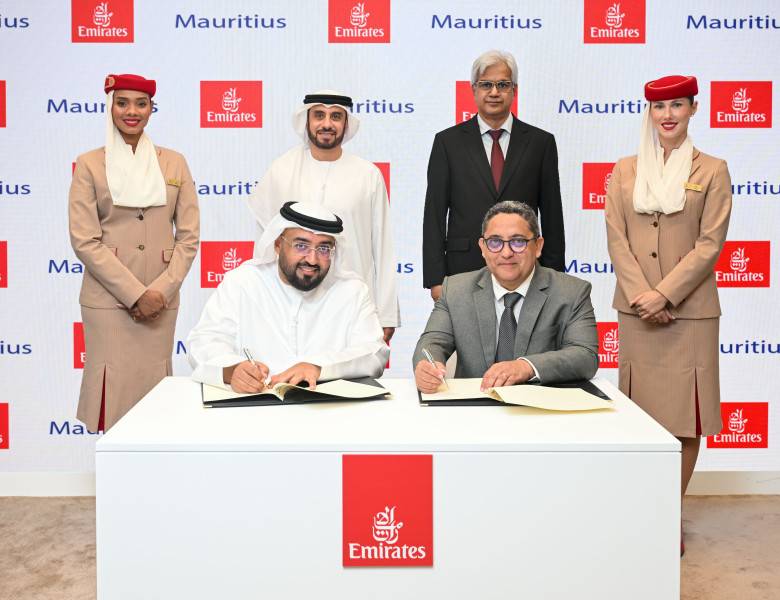
The renewed partnership will use Emirates’ network of agents in key markets to promote Mauritius, while the two sides will develop special packages aimed at different customer segments.
Joint familiarisation trips for media and travel-trade representatives will also form part of the collaboration, helping showcase the island’s tourism offering in important feeder markets.
Demand from the Middle East has been particularly strong. Tourist arrivals from Middle Eastern markets increased by 10.5 per cent during the first half of 2026 compared with the same period last year.
Emirates currently offers three daily flights to Mauritius, with weekly capacity to and from the destination standing at 19,096 seats in both directions.
Madagascar
Emirates has also partnered with Madagascar’s Ministry of Tourism and Handicrafts to support the Indian Ocean island’s ambitions to increase international visitor numbers.
The collaboration will contribute to Madagascar’s target of attracting one million tourists by 2028, with Emirates using its international network to promote the destination in key markets.
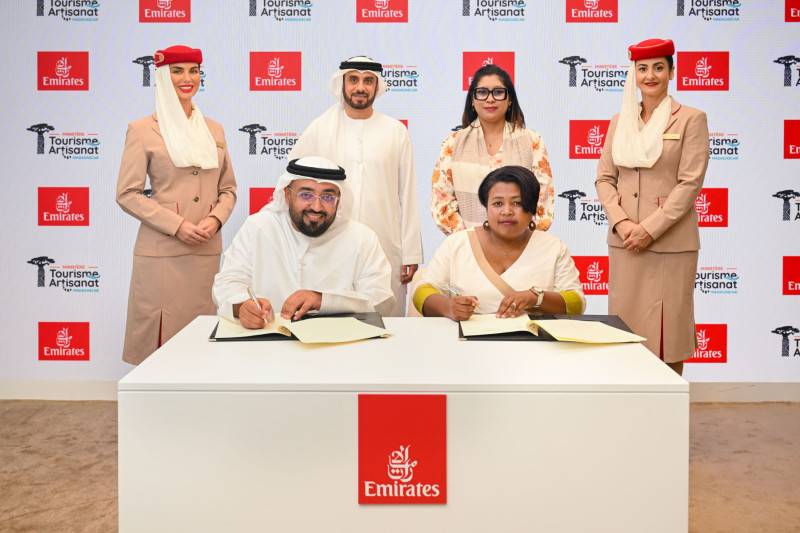
Joint advertising campaigns will be supported by cooperation with tour operators and travel agencies. The partners will also explore incentives and tailored travel packages designed to encourage bookings.
Familiarisation trips for media and travel-trade representatives will provide another route for promoting Madagascar’s attractions and tourism products to potential visitors and industry partners.
The agreement gives Madagascar access to Emirates’ extensive international reach as the country seeks to expand its tourism base and attract more travellers from overseas markets.
Sharjah
Emirates and the Sharjah Commerce & Tourism Development Authority have renewed their long-standing partnership to support tourism growth in Sharjah.
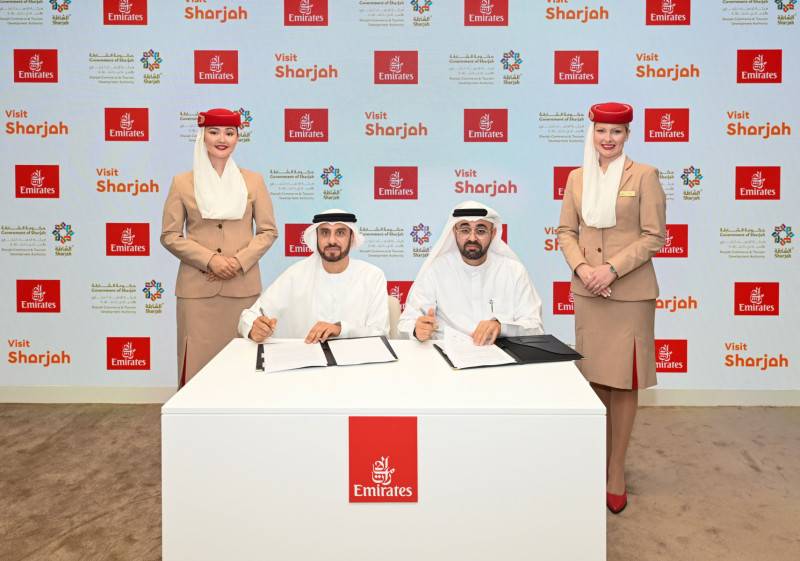
The Memorandum of Understanding was signed by Adnan Kazim, Emirates’ Deputy President and Chief Commercial Officer, and Khalid Jasim Al Midfa, Chairman of the Sharjah Commerce & Tourism Development Authority.
The two organisations have collaborated across key source markets including the GCC, India, China, the Far East Asia and Europe.
Their work has included joint sales calls, trade workshops, roadshows and familiarisation trips. Emirates has also supported Sharjah in markets where the emirate does not have local representation by connecting it with trade partners and helping facilitate further engagement.
The partnership also supports MICE activity and trade visits to Sharjah.
The renewed agreement forms part of Emirates’ wider approach to promoting inbound tourism across the UAE. The airline works with tourism authorities including Dubai’s Department of Economy and Tourism and the Department of Culture and Tourism Abu Dhabi to encourage international visitors to experience multiple destinations during their UAE stay.
Malaysia
Emirates and Tourism Malaysia have renewed their partnership through a one-year MoU supporting the Visit Malaysia 2026-2027 campaign.
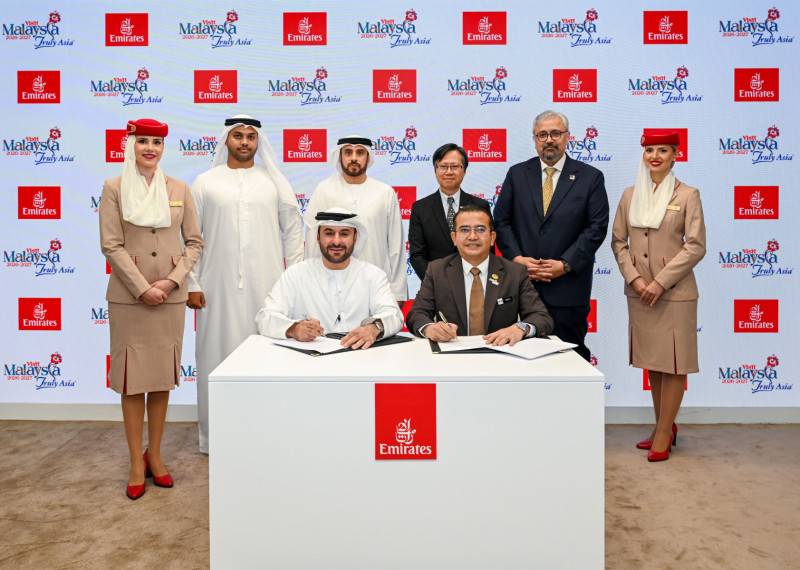
The campaign has set a target of 47 million foreign visitor arrivals, with Emirates set to support destination promotion across its international network.
The agreement will explore joint marketing and advertising initiatives, alongside familiarisation trips for media and travel-trade representatives.
Connectivity will play a central role in the partnership. Emirates operates 21 weekly flights between Kuala Lumpur and Dubai, while onward connections from Kuala Lumpur are available through its codeshare partnership with Batik Air.
The collaboration is designed to put Malaysia in front of travellers across Emirates’ global network while strengthening links between the destination and major international source markets.
Finland
Emirates and Visit Finland have signed an MoU to strengthen cooperation and encourage more international visitors to Finland.
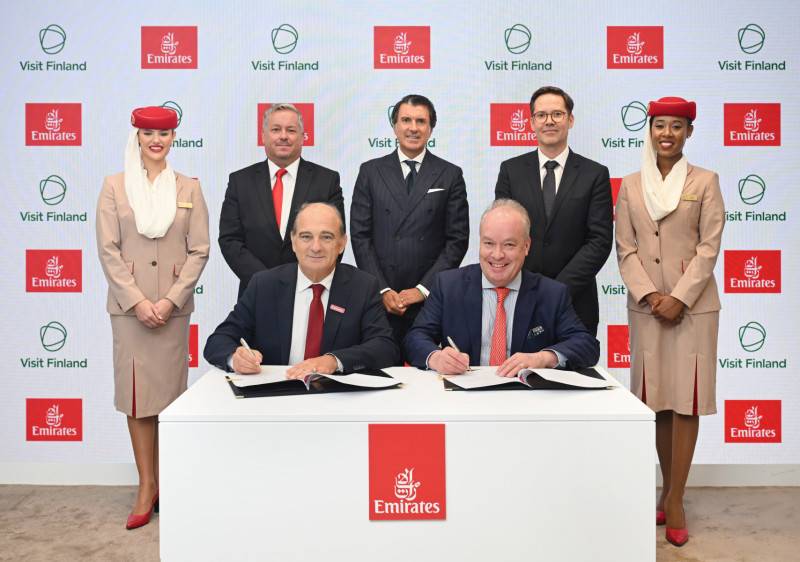
The agreement comes ahead of Emirates’ planned launch of services to Helsinki on October 1. The new route will establish year-round connectivity between Finland and the UAE, creating additional opportunities for tourism and travel between the two markets.
Under the partnership, Emirates and Visit Finland will explore promotional opportunities in strategic regions across the airline’s network, including East and Southeast Asia, West Asia, Australasia, major Middle Eastern hubs and Africa.
The partners will also develop programmes for trade partners and tour operators, giving the travel industry greater insight into Finland’s tourism offering.
Promotion will focus on year-round experiences across Finland’s four main regions. These include the summer landscapes of Lakeland, the islands and forests of the Coast and Archipelago, winter experiences in Lapland and Helsinki’s urban attractions, including its sauna culture.
The collaboration aligns with Finland’s National Tourism Strategy 2025-2028, which seeks to expand tourism while generating long-term economic and social value.
Fjord Norway
Emirates has signed an agreement with Fjord Norway, the official tourism board for Western Norway, to strengthen efforts to attract international visitors to the region.
The partnership will focus on promoting Western Norway through Emirates’ global network and using the airline’s international connectivity to support the region’s tourism ambitions.
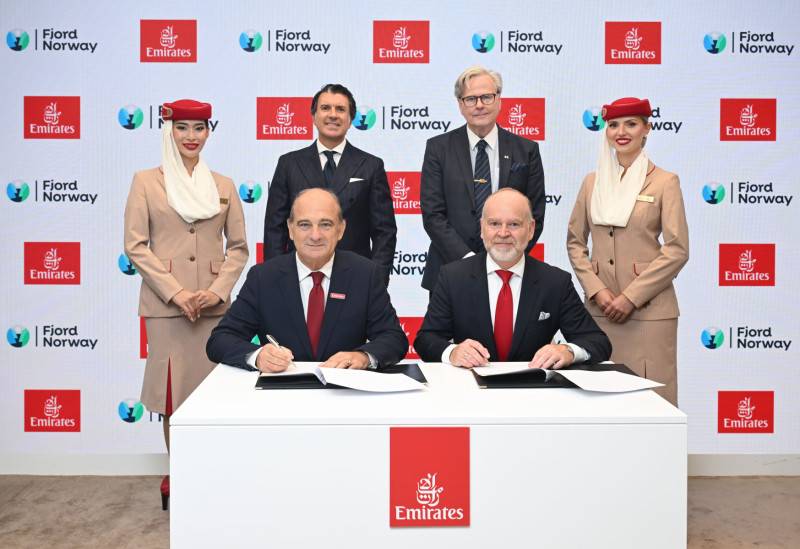
The agreement also highlights Emirates’ role in connecting travellers with destinations through its global network and travel offering.
Western Norway’s tourism board will work with the airline to raise awareness of the region among international audiences and support greater inbound visitor traffic.
Huawei
Alongside the seven tourism agreements, Emirates has renewed its long-standing strategic partnership with Huawei, reinforcing its focus on the Chinese market.
The relationship dates back to 2020 and has included the integration of the Emirates App into Huawei’s ecosystem as well as joint marketing initiatives.
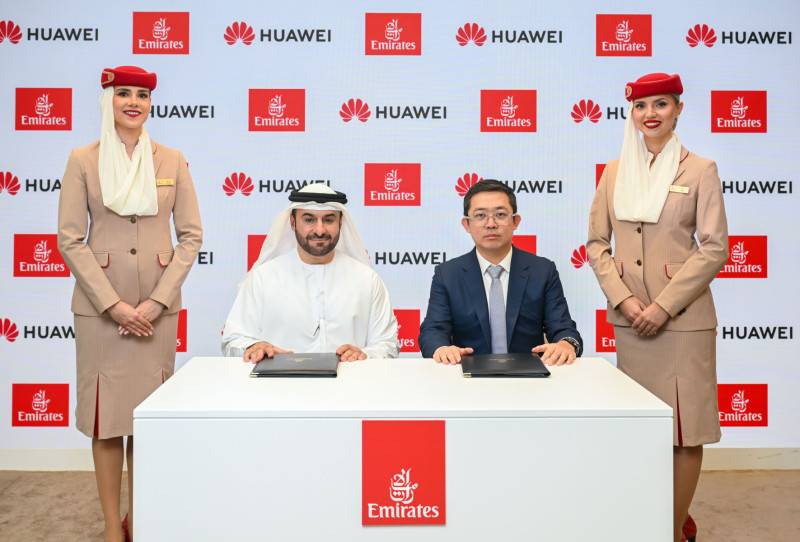
The renewed MoU will focus on strengthening brand engagement in China, developing more personalised digital travel solutions and exploring new opportunities in media.
The partnership forms part of Emirates’ broader expansion in China, where the airline has increased its network, restored Airbus A380 services and introduced its Premium Economy product.
The renewed cooperation will combine digital innovation with marketing activity as Emirates seeks to strengthen its relationship with Chinese customers across the travel journey.
Dubai Duty Free
Emirates has also signed an agreement with Dubai Duty Free to offer passengers exclusive deals at Dubai Duty Free outlets across Terminal 3 at Dubai International Airport.
The initiative will apply to Emirates passengers travelling to or through Dubai, giving them access to special offers while adding another element to the airport experience.
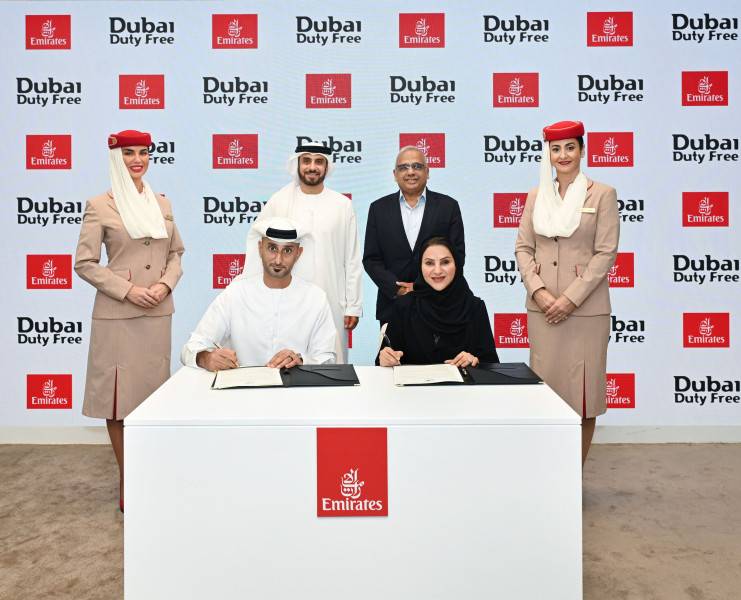
The agreement was signed by Mohammad Al Hashimi, Emirates’ Vice President, Commercial Products, Dubai, and Mona Al Ali, Dubai Duty Free’s Senior Vice President, Human Resources.
Adnan Kazim, Emirates’ Deputy President and Chief Commercial Officer, and Ramesh Cidambi, Dubai Duty Free’s Managing Director, attended the signing.
The partnership brings together the airline and one of the world’s largest airport retailers to support passenger engagement on the ground.
It also covers joint initiatives aimed at supporting Dubai’s tourism and aviation sectors and growing passenger traffic to and through the emirate across Emirates’ network.
ATM Dubai 2026: Sheikh Mohammed visits Arabian Travel Market
DUBAI – His Highness Sheikh Mohammed bin Rashid Al Maktoum, Vice President and Prime Minister of the UAE and Ruler of Dubai, visited Arabian Travel Market 2026 on Monday as the four-day global travel event opened at Dubai World Trade Centre.
The visit came as ATM 2026 brought together tourism authorities, airlines, global hospitality brands and technology companies from 80 countries to discuss the future of international tourism.
Sharing highlights from his visit, Sheikh Mohammed said Dubai welcomed around 7 million tourists during the first eight months of the year, while the emirate recorded 21 million hotel room bookings over the same period.
The figures underline continued demand for Dubai as an international tourism destination, with visitors drawn by its hospitality, attractions, business opportunities and diverse experiences.
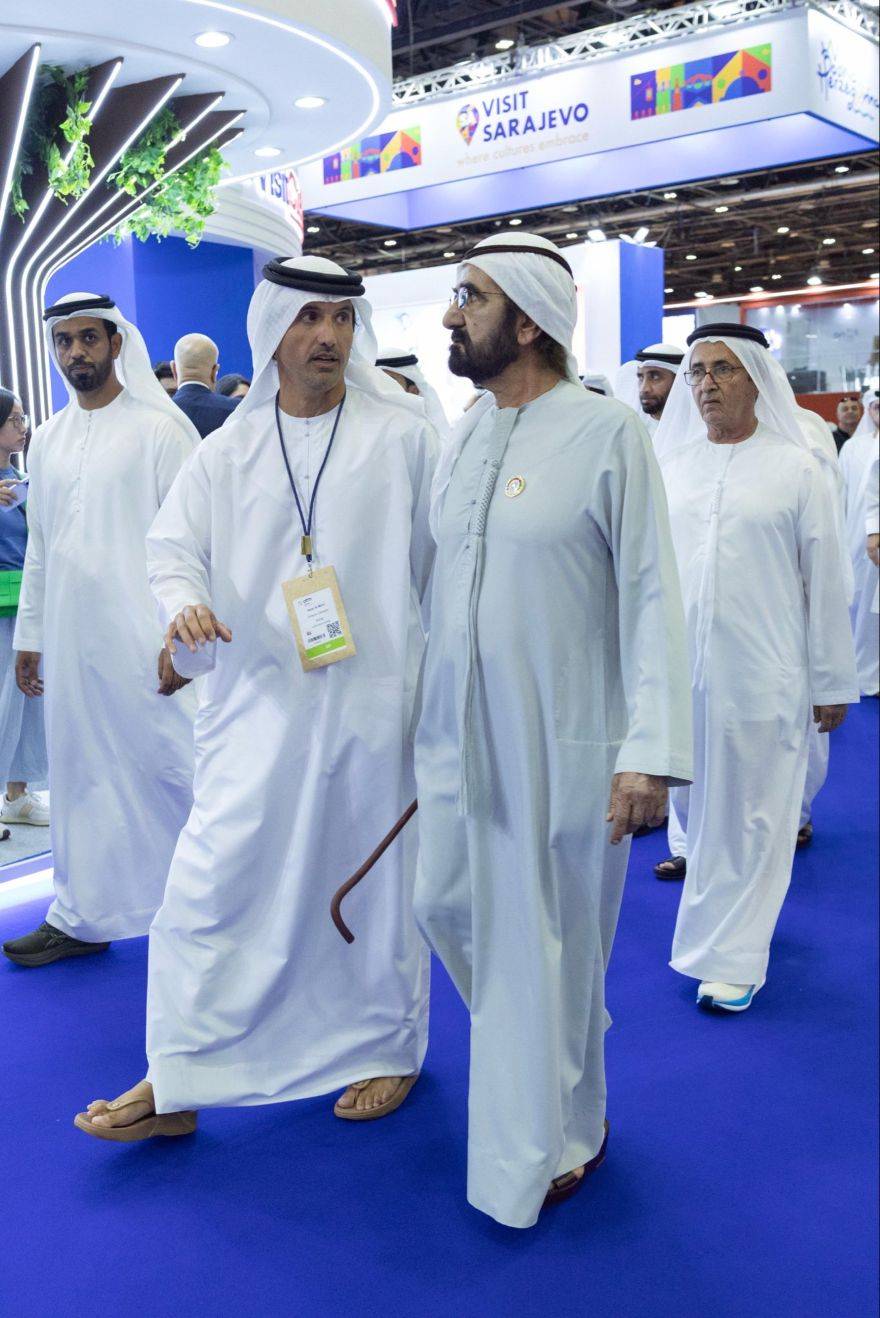
Sheikh Mohammed said Dubai welcomed everyone to the UAE and reaffirmed the emirate's commitment to strengthening its position among the world's leading and most prestigious tourist destinations.
He highlighted Dubai's generosity, diversity and vitality as key qualities supporting its appeal to visitors from around the world.
ATM Dubai 2026
The visit took place as ATM 2026 officially got underway under the theme “Travel 2040: Driving New Frontiers Through Innovation and Technology.”
The 33rd edition is bringing together destinations and travel industry leaders for four days of meetings, networking, showcases and discussions covering the future of tourism.
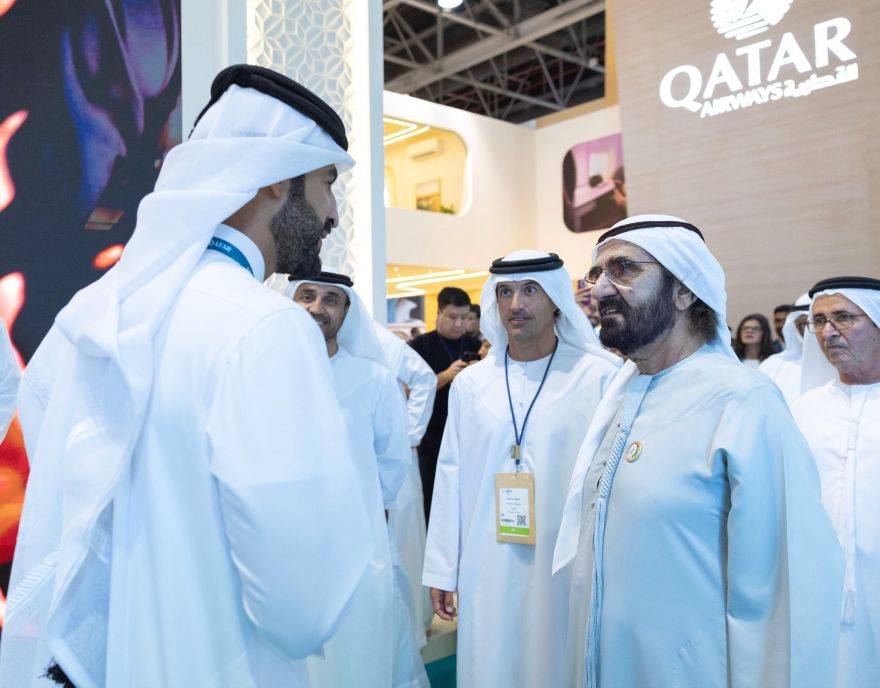
Technology is a major focus of this year's event, with ATM Travel Tech making its debut as a dedicated co-located show. Artificial intelligence, digital transformation, smart mobility, robotics, fintech and other emerging technologies are among the areas being explored across the event.
The gathering also provides Dubai with an opportunity to strengthen relationships with international tourism markets while showcasing its own tourism offering.
Dubai's global ambition
Sheikh Mohammed said the UAE would continue its efforts to establish the country as one of the world's best and most prestigious tourist destinations.
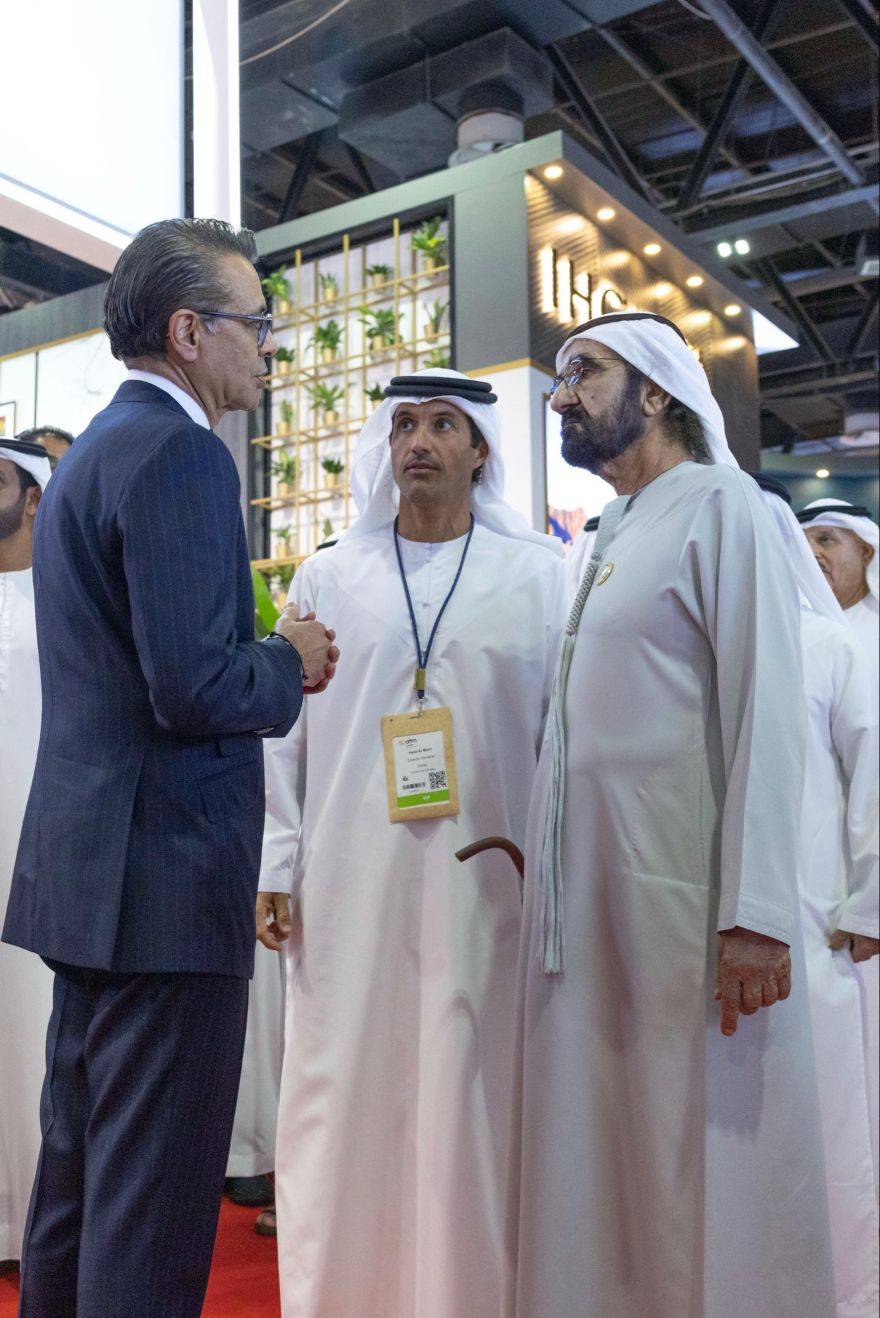
His comments come as Dubai continues to expand its tourism proposition through new attractions, hospitality projects, cultural experiences and major infrastructure developments.
ATM 2026 runs until 17 September, with thousands of travel professionals, exhibitors and tourism stakeholders expected to take part across the four-day event.
14 Sep, 2026
14 Sep, 2026
How to make your brand the talk of ATM Dubai 2026
ATM Dubai 2026 is back — and your brand deserves to be seen beyond the exhibition floor.
From 14 to 17 September 2026, Dubai World Trade Centre will bring together hundreds of travel, tourism and hospitality brands for Arabian Travel Market.
But once the event ends, one question remains: which brands will people remember?
TravelsDubai is offering professional media coverage for businesses exhibiting at ATM Dubai 2026, helping brands turn their presence at the event into visibility that reaches audiences beyond the people walking past their booth.
Our coverage packages can put your brand in the spotlight through:
- On-site interviews
Booth and exhibitor features
Reels and short-form videos
Social media stories
Post-event editorial coverage
Your ATM presence shouldn't end when visitors leave your stand.
With 1M+ Instagram views and 250K+ active users on TravelsDubai, your brand can connect with a wider travel-focused audience before, during and after the event.
Whether you're launching a new product, showcasing a destination, promoting a hospitality brand or looking to maximise your ATM 2026 presence, TravelsDubai can help bring your story to a broader audience.
Secure your media coverage with TravelsDubai and make your ATM 2026 presence count.
Dubai tourism hits strongest monthly visitor numbers since February as ATM 2026 opens
DUBAI – Dubai’s tourism industry is increasingly demonstrating its strength, with the city’s hotel sector delivering sustained performance growth, according to the latest data released by the Dubai Department of Economy and Tourism (DET) ahead of the opening day of Arabian Travel Market (ATM) 2026.
The performance through August reflects the strength of the systems, partnerships and diversified market base that Dubai and its partners have built over the years. It also highlights the continued investment and innovation across the industry as the emirate prepares for the final months of 2026.
Dubai tourism performance
Hotel occupancy reached 66% in August, representing 89% of the city’s occupancy level in August 2025 and continuing a steep climb from 36% occupancy in March 2026.
The sustained upward trajectory comes as Dubai’s hospitality sector continues to operate at significant scale. As a number of properties have begun implementing extensive renovation projects to further elevate the guest experience and strengthen future readiness, hotel room inventory approached 149,000 rooms by the end of August 2026.
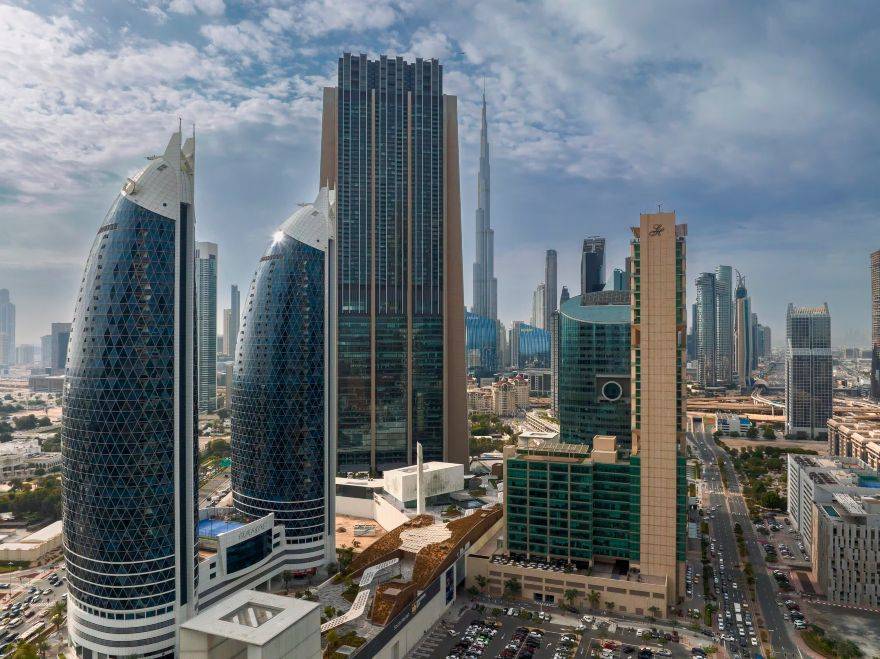
During the first eight months of the year, hotels across the emirate recorded 21.61 million occupied room nights, underscoring the scale of activity within Dubai’s accommodation sector.
The strong hotel performance was reflected in visitor numbers, with Dubai welcoming approximately 869,000 international overnight visitors in August 2026.
The August figure built on month-on-month, double-digit growth recorded since March and represented Dubai’s strongest monthly visitor volume since February 2026. Total international visitation reached 6.97 million across the first eight months of the year.
Diverse markets
Dubai continued to attract visitors from a broad mix of international source regions during the January to August period.
Western Europe remained the leading regional contributor, accounting for 20% of total visitation. South Asia followed with 17%, while the GCC contributed 16% and CIS and Eastern Europe accounted for 14%.
The diversified source market base provides DET and its partners with a broad international audience through which they can continue to stimulate demand across both established and emerging markets.
The performance also aligns with the objectives of the Dubai Economic Agenda, D33, which seeks to further consolidate Dubai’s position as a leading global destination for business and leisure while building a resilient and future-focused visitor economy.
Dubai’s tourism industry is increasingly demonstrating its strength, with the city’s hotel sector delivering sustained performance growth, according to the latest data released by the Dubai Department of Economy and Tourism (DET) on the opening day of Arabian Travel Market (ATM)… pic.twitter.com/bKqaiRoVdK
— Dubai Media Office (@DXBMediaOffice) September 13, 2026
Issam Kazim, CEO of Dubai Corporation for Tourism and Commerce Marketing (DCTCM), part of the Dubai Department of Economy and Tourism, said the city’s tourism sector had continued to deliver despite challenging conditions.
“The true grit of any city is tested not when the path is smooth, but during challenging times, and in line with our leadership’s direction, we do not wait for the perfect conditions to continue delivering,” Kazim said.
He said the results recorded so far in 2026 reflected the continued efforts of those contributing to Dubai’s visitor economy, including global hospitality and tourism partners and people across the city who contribute to the visitor experience.
Kazim added that Dubai’s tourism industry had performed strongly in recent months, supported by significant international visitor volumes, a consistently diverse source market mix, extensive hospitality infrastructure and an evolving destination offering.
ATM 2026
The 33rd edition of Arabian Travel Market is taking place from September 14 to 17 at Dubai World Trade Centre, bringing together the global travel and tourism community at a key point for the industry.
The event provides DET and its partners with an opportunity to strengthen relationships with the international travel trade, develop opportunities across key markets and showcase the continued evolution of Dubai as a tourism destination.
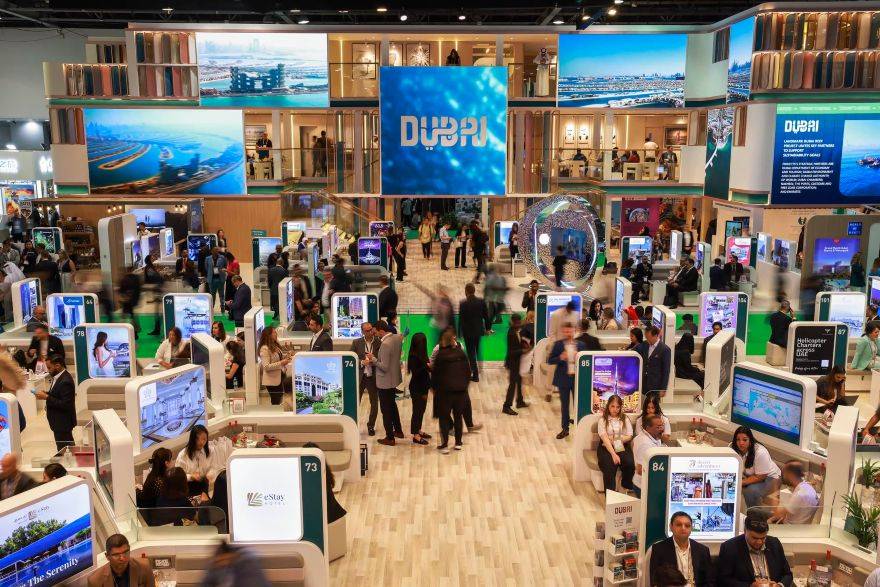
“Arabian Travel Market marks an important opportunity to build on that progress and support our industry,” Kazim said.
He said the event allows Dubai to engage with partners from around the world, understand developments in their respective markets and work together to identify emerging opportunities.
DET is joined at ATM 2026 by more than 115 co-exhibitors from across Dubai’s tourism ecosystem. The participating organisations include hotel groups, attractions, destination management companies and aviation partners, alongside government entities.
Their participation reflects the public-private partnership model underpinning Dubai’s tourism strategy and enables the emirate to present a broad and integrated destination offering to travel trade professionals from around the world.
The department is also hosting more than 300 international travel trade professionals from more than 40 countries through its ATM Hosted Buyers Programme.
The initiative provides buyers who promote and sell Dubai with first-hand exposure to the destination, while creating opportunities to meet tourism stakeholders directly, discover new products and experiences, and deepen their understanding of the city’s evolving visitor offering.
Destination offering
Across ATM 2026, DET and its partners are showcasing the continued development of Dubai’s tourism proposition across a wide range of sectors.
The offering spans hospitality, gastronomy, culture, entertainment, wellness, accessibility, sustainability and family experiences, reflecting the breadth of activities available to visitors.
Dubai’s focus for 2026 also includes strengthening global connectivity, further enhancing accessibility for autistic and sensory-sensitive visitors, and advancing initiatives such as Dubai Sustainable Tourism and Dubai Can.
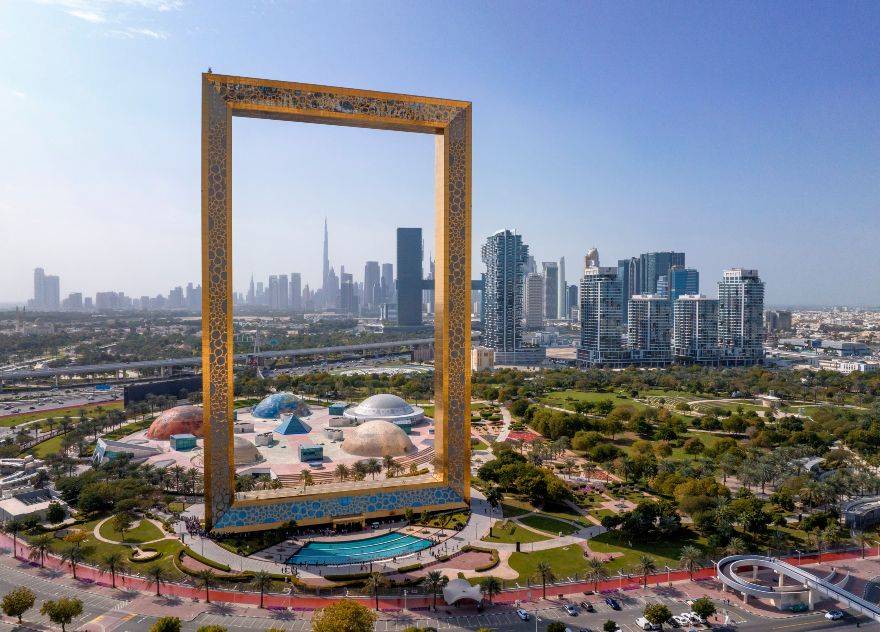
Throughout the year, DET has continued to expand the ways it reaches international audiences while strengthening advocacy for Dubai across key source markets.
Its activities include engagement with international travel trade representatives, market briefings and roadshows, international campaigns and partnerships tailored to priority markets.
Among the recent initiatives was the DET-driven ‘A Dubai Invite’, which empowered Dubai residents from almost 200 nationalities to invite family and friends to experience the city.
More than 90,000 residents applied for benefits through the programme, which was designed to support destination advocacy while strengthening Dubai’s reach through its diverse resident community.
Together, these activities are intended to recognise residents and partners as valuable ambassadors, maintain Dubai’s visibility, favourability and consideration, deepen relationships across priority markets and support future demand.
Support packages
Earlier this year, amid a regional situation that affected global travel, the Government of Dubai delivered a Dh2.5 billion package directly supporting the tourism, hospitality and entertainment sectors.
Dubai has also rapidly rescaled its global connectivity, spearheaded by Emirates, which has restored 97% of its global network.
At Dubai International Airport (DXB), load factors have continued to strengthen and are approaching 2025 levels, supporting the recovery in visitor flows and the wider tourism ecosystem.
The aviation network remains a central component of Dubai’s ability to attract visitors from a wide range of international markets, complementing the emirate’s extensive hotel inventory and diversified tourism offering.
At ATM 2026, DET’s programme will continue throughout the four-day event with meetings, partner engagements and industry discussions. The focus will remain on strengthening Dubai’s international tourism relationships, identifying opportunities across established and emerging markets and supporting future demand across the emirate’s tourism economy.
14 Sep, 2026
13 Sep, 2026
Arabian Travel Market 2026 opens tomorrow in Dubai with global tourism leaders set to gather
DUBAI – The 33rd edition of Arabian Travel Market (ATM) will open tomorrow at Dubai World Trade Centre (DWTC), bringing together the international travel and tourism community for four days of business, networking, knowledge exchange and collaboration.
The event will take place from 14 to 17 September, with destinations, tourism authorities, airlines, hospitality brands, technology companies, buyers and industry professionals gathering in Dubai. This year’s programme will focus strongly on innovation, technology, resilience and the forces expected to shape the next phase of global tourism.
Held under the theme ‘Travel 2040: Driving New Frontiers Through Innovation and Technology’, ATM 2026 will examine developments transforming the tourism sector, including artificial intelligence, digital transformation, changing traveller expectations, destination resilience, smart mobility and sustainable long-term growth.
Danielle Curtis, Regional Portfolio Director - UAE, RX Global, said the event would bring the global travel and tourism industry back together in Dubai while highlighting the continued evolution of both the sector and ATM itself.
“This year is particularly significant as we see continued evolution across both the industry and ATM itself,” Curtis said, pointing to the debut of ATM Travel Tech, an expanded focus on innovation and a conference programme examining emerging trends and opportunities across global tourism.
She added that recent challenges facing the industry had reinforced the value of bringing its international community together in person, with the event expected to generate new conversations, partnerships and commercial opportunities.
https://www.travelsdubai.com/10-Sep-2026/atm-2026-dubai-bring-global-travel-leaders-together-new-era-tourism
Tech takes centre stage
Technology will be one of the major areas of focus at ATM 2026, with the debut of ATM Travel Tech as a dedicated co-located show.
The new event will feature more than 180 exhibitors from 30 countries across two dedicated halls, bringing technology companies, innovators and industry leaders together to explore solutions and partnerships changing the travel ecosystem.
At its centre will be the 850-square-metre Tech & Innovation Hub, which will showcase developments in artificial intelligence, virtual and augmented reality, robotics, fintech and green technologies.
The Hub will also feature the Future Stage, where technology leaders, entrepreneurs, researchers and innovators will discuss how emerging technologies are reshaping travel. Sessions will cover artificial intelligence and automation, data and digital transformation, fintech, immersive technology, robotics and next-generation travel platforms.
The Future Stage will open with Dr Marwan Alzarouni, CEO, AI at the Dubai Department of Economy and Tourism (DET), examining the role of artificial intelligence in reshaping the travel landscape.
The programme will also feature senior representatives from Sabre, Trip.com, Tripadvisor, Wego, MakeMyTrip, RateGain and Visa. Discussions will explore agentic AI, the future of online travel agencies, investment and consolidation, digital discovery and the changing travel supply chain.
Global industry debate
The wider conference programme will continue across the Global Stage and Experience Hub, bringing together industry leaders, policymakers, researchers and technology specialists throughout the four-day event.
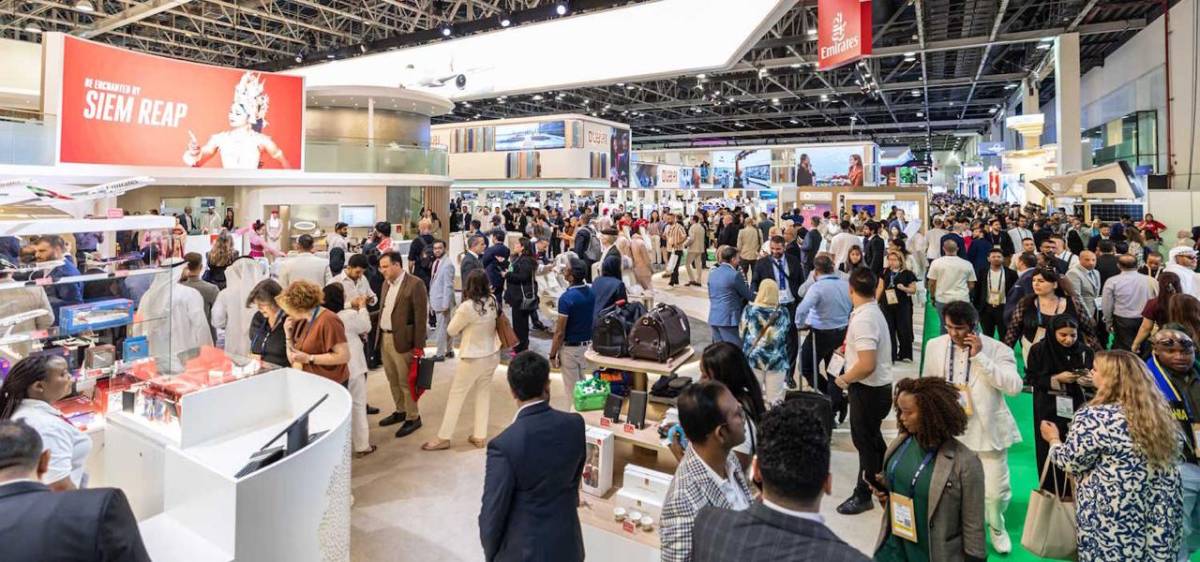
The Global Stage will begin with the Ministerial Debate: Building A Resilient Industry Through Collaboration. The session will bring senior tourism figures together to discuss rebuilding traveller confidence, strengthening the GCC’s global tourism position and establishing the foundations for a resilient future for the sector.
Speakers will include H.E. Abdulla bin Touq Al Marri, UAE Minister of Economy and Tourism; H.E. Shaikha Al Nuwais, Secretary General, UN Tourism; Fatima Jaafar Al Sairafi, Minister of Tourism; and Apostolos Tzitzikostas, EC Commissioner, UN Tourism.
Research and market intelligence will also feature prominently, with organisations including Tourism Economics, an Oxford Economics company, Euromonitor International, STR and Dragon Trail International set to share research and practical insights.
Their sessions will focus on changing market conditions and the opportunities available to tourism businesses as traveller behaviour and industry dynamics continue to evolve.
Curtis said research from ATM’s partners continued to point to resilience in travel demand, while innovation was creating new ways for destinations and businesses to respond to changing traveller expectations.
New ATM identity
ATM 2026 will also introduce a refreshed brand identity across the event, reflecting the exhibition’s continued development beyond the traditional trade-show floor.
The updated identity is intended to reflect ATM’s evolution as a year-round platform connecting communities, ideas and commercial opportunities across the global travel and tourism ecosystem.
Now in its 33rd edition, Arabian Travel Market continues to bring together the international travel community in the Middle East, providing a platform for destinations, businesses and industry professionals to develop partnerships, exchange knowledge and explore new commercial opportunities.
Registration for ATM 2026 is live, with visitor, media and exhibitor registration available through the event’s official channels.
https://www.travelsdubai.com/13-Sep-2026/bahi-ajman-palace-coral-beach-sharjah-target-global-leisure-markets-atm-2026-dubai
Bahi Ajman Palace, Coral Beach Sharjah target global leisure markets at ATM 2026 in Dubai
DUBAI – Bahi Ajman Palace Hotel and Coral Beach Resort Sharjah are stepping up their international business-to-business expansion at Arabian Travel Market (ATM) 2026, targeting key feeder markets and new trade partnerships.
The Northern Emirates properties are using the major travel industry event to strengthen distribution networks, secure new contracts and tap into rising international leisure demand. Their focus includes the GCC, Europe and CIS regions, with meetings aimed at tour operators and other strategic trade partners.
Global outreach
The hotels are also seeking to position Ajman and Sharjah as attractive beachfront destinations for international travellers while highlighting their approach to sustainable operations. Iftikhar Hamdani, Area General Manager for Bahi Ajman Palace Hotel and Coral Beach Resort Sharjah, said the event comes at an important time as global travel continues to rebound.
According to Hamdani, the properties are showcasing how sustainability initiatives can support commercial growth, with measures including AI-powered food-waste tracking and closed-loop biodigesters. The hotels are also highlighting the cultural attractions and beachfront settings of Ajman and Sharjah as part of their offering to international travel trade partners.
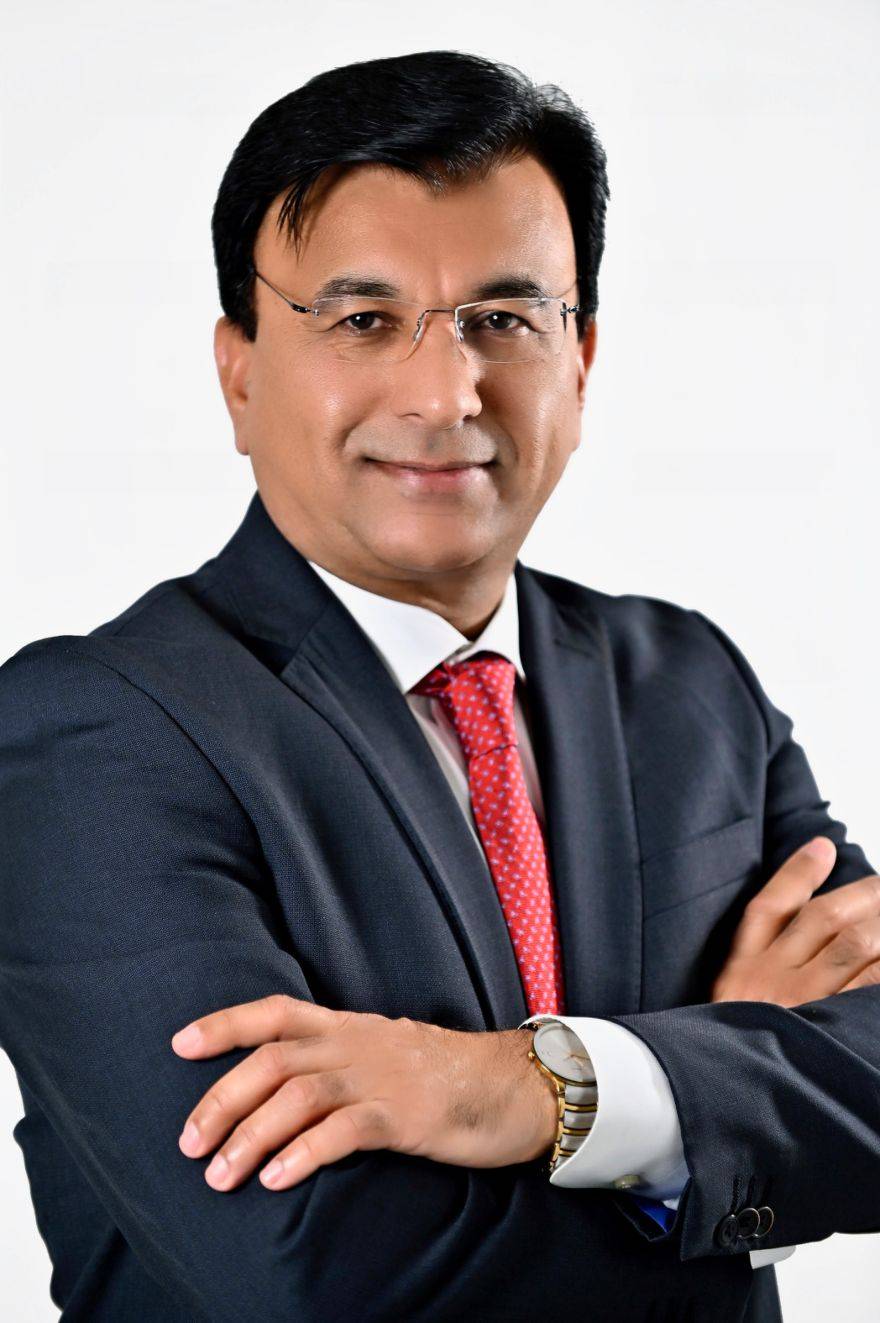
The properties are maintaining a triple-stand presence at ATM 2026 to increase accessibility for industry visitors and support destination-focused engagement. Alongside the Hospitality Management Holding (HMH) stand, representatives are engaging with visitors through the Ajman Tourism, Culture and Media Department and the Sharjah Commerce and Tourism Development Authority stands.
The strategy gives the two properties an opportunity to pursue trade agreements while connecting their hotel offerings with wider destination marketing efforts in the Northern Emirates. Discussions are centred on strengthening relationships with tour operators, expanding distribution channels and securing business from priority international markets.
https://www.travelsdubai.com/29-Jan-2025/uae-s-first-water-from-air-bottling-plant-launched-at-bahi-ajman-palace-hotel
Hotels portfolio
Bahi Hotels and Resorts, managed by HMH, was launched in Ajman in 2012 as the region's first alcohol-free hotel brand. The upscale five-star brand includes Bahi Ajman Palace Hotel, a private beachfront property offering accommodation, dining, leisure, spa and meeting facilities.
Coral Hotels and Resorts, also managed by HMH, was launched in 2003 as the Middle East's first dry hotel chain. The four- and five-star brand operates properties across key destinations in the Middle East and North Africa, serving leisure, family, business and long-stay travellers.
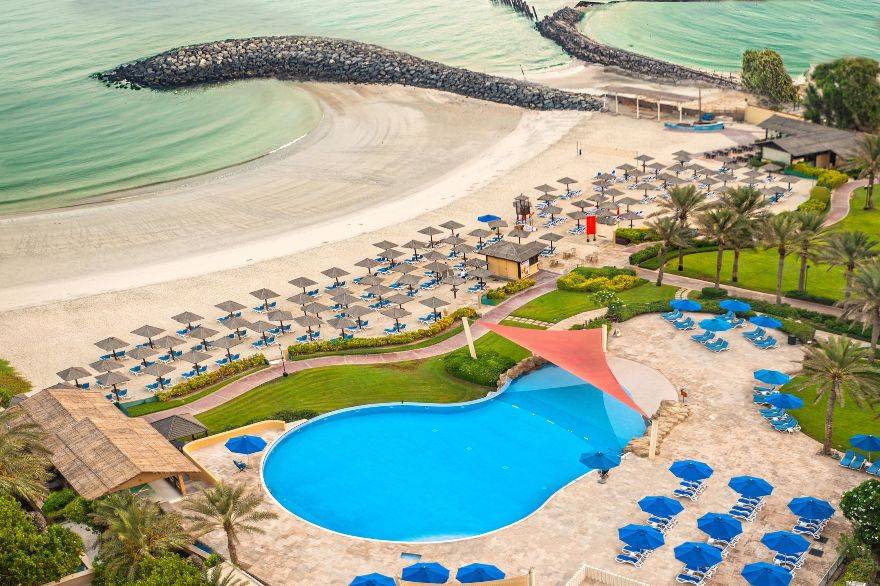
Its portfolio includes Coral Beirut Al Hamra Hotel, Coral Muscat Hotel & Apartments, Coral Al Ahsa Hotel, Coral Jubail Hotel, Coral Al Khobar Hotel, Coral Khartoum Hotel, Coral Port Sudan Hotel, Coral Dubai Deira Hotel and Coral Beach Resort Sharjah.
The properties offer a mix of accommodation, dining, leisure and business facilities, with Coral Beach Resort Sharjah strengthening the group's presence in the Northern Emirates.
https://www.travelsdubai.com/12-Sep-2026/heritage-luxury-here-s-ajman-will-showcase-atm-2026-dubai
13 Sep, 2026
12 Sep, 2026
GDRFA Dubai at ATM 2026: Red Carpet, Click and Travel, flexible visas and more to feature this year
DUBAI – Visitors to Arabian Travel Market (ATM) 2026 will get an insight into how Dubai is using biometric technology, digital services and flexible visa options to make travel more seamless.
The General Directorate of Identity and Foreigners Affairs-Dubai (GDRFA Dubai) will present an integrated range of immigration and travel services at the four-day exhibition.
ATM 2026 is taking place at Dubai World Trade Centre from September 14 to 17. GDRFA Dubai’s participation will focus on services designed to facilitate mobility, expand options for visitors to the UAE and improve the passenger experience from arrival at Dubai’s ports through to departure.
Among the main services being showcased are the Red Carpet biometric passenger clearance service, Click and Travel mobile passport control, the UAE’s five-year multiple-entry tourist visa, a 60-day entry visa for eligible travellers and the ALSAADA Card programme, which provides offers and discounts through a network of partners.
Major General Talal Ahmed Al Shanqaiti, Assistant Director-General for Airports at GDRFA Dubai, said the exhibition would provide an opportunity to introduce the travel and tourism community to solutions developed to facilitate different stages of the visitor journey.
“In collaboration with our partners, we continue to develop faster and more flexible services and provide options tailored to travellers’ needs,” he said. He added that the approach reflects Dubai’s readiness to provide a seamless, safe and integrated travel experience while supporting the growth and sustainability of the tourism sector.
https://www.travelsdubai.com/07-Sep-2026/dubai-rolls-mobile-biometric-airport-system-processing-passengers-15-seconds
Biometric travel
A major feature at the GDRFA Dubai stand will be the Red Carpet service, which uses biometric verification technology to identify passengers and complete passport control procedures without requiring them to repeatedly present travel documents.
The service is designed to simplify border-control procedures while improving operational efficiency and speeding up passenger processing. It forms part of Dubai’s wider use of smart technologies to create a more convenient airport experience.
GDRFA Dubai will also showcase Click and Travel, a mobile passport control service that gives passport control officers the ability to complete travellers’ entry and departure procedures using mobile devices during peak periods and emergencies.
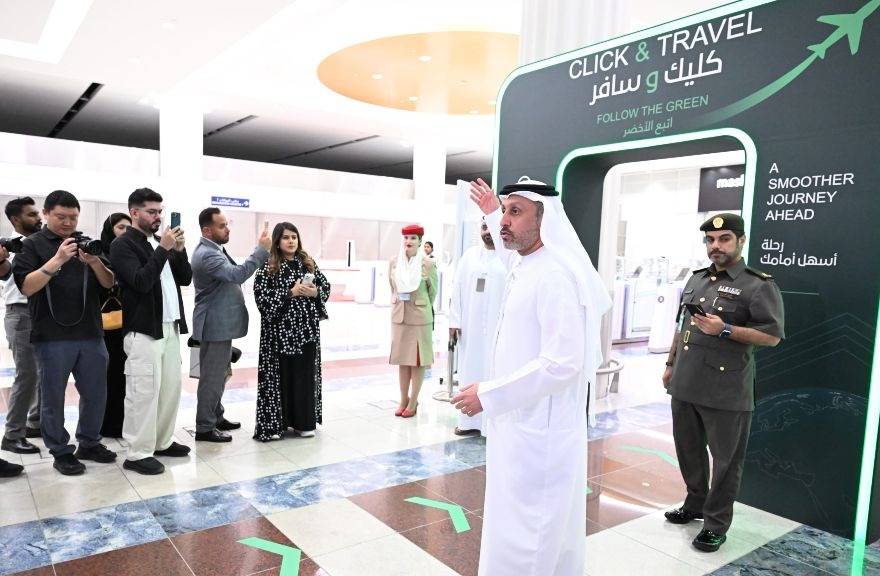
The system combines biometric technology with automated pre-screening of passenger data and secure connectivity to relevant systems. This provides officers with greater operational flexibility while helping support the smooth movement of passengers through Dubai’s airports.
Together, the two services demonstrate how biometric identification, digital processing and mobile technology are being used across different stages of the passenger journey.
https://www.travelsdubai.com/24-Jul-2026/dubai-airport-introduces-new-tool-verify-smart-gates-access-immigration
Flexible visas
Visitors to the stand will also be able to learn more about the UAE’s five-year multiple-entry tourist visa, which allows eligible travellers to enter the country multiple times without requiring a sponsor or host in the UAE.
The visa is designed to provide greater flexibility for travellers planning repeat visits, subject to the approved regulations, conditions and requirements.
GDRFA Dubai will also highlight the 60-day entry visa available to nationals of certain countries residing abroad. Eligible travellers can use the service as a flexible option for visiting the UAE, with issuance remaining subject to the applicable entry requirements and conditions.
The visa services will give tourism and travel industry representatives attending ATM an opportunity to understand the options available to different categories of visitors and the requirements associated with each service.
ALSAADA benefits
Another feature at the exhibition will be the ALSAADA Card, showcased by the Events and Quality of Life Department.
The programme allows tourists arriving through Dubai’s ports of entry to access exclusive offers and discounts from a wide network of partners. The benefits cover sectors including tourism, travel, dining, retail, health and beauty, vehicle services and other areas.
Visitors can also learn how to activate the ALSAADA app using their passport details and explore offers available during their stay in Dubai.
Throughout ATM 2026, specialised GDRFA Dubai teams will be available at the stand to explain the features of the services, provide information on how travellers can benefit from them and respond to enquiries from members of the public.
Representatives of tourism and travel companies will also be able to engage with the teams and learn more about the immigration, passenger and visitor-focused services being presented at the exhibition.
GDRFA Dubai’s stand will be open to visitors daily from 10am to 6pm throughout Arabian Travel Market 2026 at Dubai World Trade Centre.
Dubai set to unveil new tourism developments and experiences at ATM 2026
DUBAI – Dubai’s tourism sector is set to take centre stage at Arabian Travel Market (ATM) 2026 as the emirate steps up its focus on growth, investment and international partnerships.
The Dubai Department of Economy and Tourism (DET), together with its public and private sector partners, will participate in the 33rd edition of the event at Dubai World Trade Centre from September 14 to 17. The gathering will bring together travel industry stakeholders from around the world as Dubai seeks to strengthen its position as a leading destination for business and leisure.
More than 115 co-exhibitors from Dubai’s public and private sectors will join DET at the Dubai stand. The participants will include hotels, destination management companies, tour operators and other tourism partners, while government entities represented will include the Dubai Civil Aviation Authority, Dubai Culture and Arts Authority, Dubai Health Experience, Dubai Municipality and the General Directorate of Identity and Foreigners Affairs - Dubai.
Global connections
ATM remains a key part of DET’s annual engagement with the international travel industry, providing a platform for businesses and tourism stakeholders to exchange insights, build partnerships and explore emerging opportunities.
Issam Kazim, CEO of the Dubai Corporation for Tourism and Commerce Marketing (DCTCM), part of DET, said the annual gathering had become an important event for the global travel community in Dubai.
He highlighted the contribution of public and private sector partners to strengthening competitiveness, supporting business and creating new opportunities for growth. Kazim also said the event would help Dubai strengthen international partnerships, exchange expertise and accelerate innovation as the tourism sector moves into a new phase of growth and investment.
A key feature of DET’s participation will be the Hosted Buyers Programme, which is expected to welcome more than 300 travel trade professionals and over 40 travel media representatives from 40 countries. Participants will have the opportunity to experience Dubai’s hospitality offering and engage with tourism businesses operating across the emirate.
Major projects
DET will use the event to highlight new and upcoming developments that are expected to shape Dubai’s tourism proposition, including the planned Dh128 billion passenger terminal at Dubai World Central, also known as Al Maktoum International Airport.
The department will also showcase projects linked to the Dubai 2040 Urban Master Plan. These include the Palm Jebel Ali master plan, Hatta Development Plan and Jebel Ali Beach Development Project.
Specialised sessions and meetings will give international travel trade representatives an opportunity to explore how these developments could support new tourism packages and programmes for both new and returning visitors.
Teams from the Dubai College of Tourism and Dubai Sustainable Tourism will also present their programmes and contributions to the wider tourism ecosystem.
Culture and cuisine
The Dubai stand will feature the emirate’s cultural and culinary identity alongside its tourism and infrastructure developments. With support from Dubai Culture, works by Emirati artist Mariam Abbas will provide a showcase of Dubai’s contemporary art scene.
Visitors will also be able to sample products from local brands including Karam Coffee, Estekanah Chai and Camelicious. The newly published Emirati cuisine guide Salt and Sand will be presented at the event, highlighting the variety of Dubai’s culinary culture.
DET’s preparations for ATM 2026 have also included continued engagement with tourism stakeholders and international markets. A City Briefing held in June brought together more than 1,700 leaders from Dubai’s tourism ecosystem to review progress and align priorities.
The department also launched A Dubai Invite, encouraging residents to invite family and friends to visit the city. Its wider international outreach includes roadshows and continued collaboration with Beautiful Destinations on the Beautiful Destinations Academy, Powered by Dubai.
The participation at ATM forms part of Dubai’s broader ambitions under the Dubai Economic Agenda D33 to reinforce its standing as a global destination for business and leisure and as a preferred city to visit, live and work in.
12 Sep, 2026
12 Sep, 2026
From heritage to luxury: Here’s what Ajman will showcase at ATM 2026 in Dubai
DUBAI – Ajman is set to put its tourism, cultural heritage and growing hospitality offering in the spotlight at Arabian Travel Market (ATM) 2026 in Dubai.
The Ajman Department of Tourism, Culture & Media will participate in the four-day event at Dubai World Trade Centre from 14 to 17 September.
Under the theme ‘Travel 2040: Driving New Frontiers Through Innovation and Technology’, the emirate will present its destination offering to tourism professionals, industry leaders and potential partners from regional and international markets.
The participation will focus on showcasing Ajman as an authentic and future-ready destination, while highlighting its diverse attractions, distinctive visitor experiences and expanding tourism ecosystem. The department will also use the event to strengthen industry relationships, explore new partnerships, diversify source markets and support the emirate’s longer-term tourism ambitions.
Inside the stand
Visitors to Ajman’s stand will encounter a mix of media, cultural and interactive experiences designed to highlight the emirate’s identity and development.
One of the featured installations will be ‘From the Memory of Ajman’, a dedicated media corner displaying a curated collection of archival photographs. The images will document key milestones in Ajman’s history and development, giving visitors a visual look at the journey behind the emirate’s modern identity.
An interactive zone will introduce visitors to Ajman’s tourism experiences, while the Craftsmen Majlis will provide a dedicated cultural space focused on traditional crafts and local heritage. The presentation is designed to connect traditional craftsmanship with a contemporary visitor experience while highlighting the UAE’s wider cultural legacy.
Tourism partners
Ajman’s presence will also bring together a broad cross-section of its tourism ecosystem, underlining cooperation between government bodies, hospitality businesses, tourism operators and the private sector.
Participating hospitality and tourism entities include Ajman Saray, a Luxury Collection Resort; Al Zorah Beach Resort; Fairmont Ajman; Bahi Ajman Palace Hotel; Dusit Ajman Resort & Villas; Wyndham Garden Hotel; Radisson Blu Hotel; Zarya Wellness Spa Management Company FZE; and Ewan Ajman Suites Hotel.
The wider delegation will include Ajman Chamber, Bronz Tourism, MUSANDAM ADVENTURE Travel, Arabian Oryx Travel and Tourism LLC, Flash Horizon and Rida International Tourism & Travel.
According to Mahmood Khaleel Alhashmi, Director General of the Ajman Department of Tourism, Culture and Media, the ATM platform will allow the emirate to engage with leading tourism partners and industry specialists while presenting a destination proposition built around its identity, heritage, evolving experiences, innovation and technology.
The department has also highlighted cooperation between government entities, tourism establishments and the private sector as an important part of developing Ajman’s tourism ecosystem and strengthening its appeal across priority international markets.
At ATM 2026, these elements will come together through the emirate’s stand, offering industry visitors a closer look at Ajman’s heritage, hospitality, leisure experiences and emerging tourism opportunities.
ATM 2026 in Dubai to bring global travel leaders together for a new era of tourism
DUBAI – Dubai will once again become a focal point for the global travel and tourism industry when Arabian Travel Market (ATM) 2026 opens at Dubai World Trade Centre from September 14 to 17.
The 33rd edition of the international event is set to bring together destinations, tourism authorities, airlines, hotels, travel technology companies, suppliers, buyers and industry professionals from across the world.
Organised by RX Global, ATM 2026 will focus on strengthening commercial relationships and examining how innovation, technology and changing traveller expectations will shape the sector towards 2040.
The event's official press conference, held at Crowne Plaza Dubai Marina today, brought together RX Global and ATM's strategic partners, including the Dubai Department of Economy and Tourism (DET), Emirates, IHG Hotels & Resorts and Al Rais Travel, to outline plans for this year's edition.
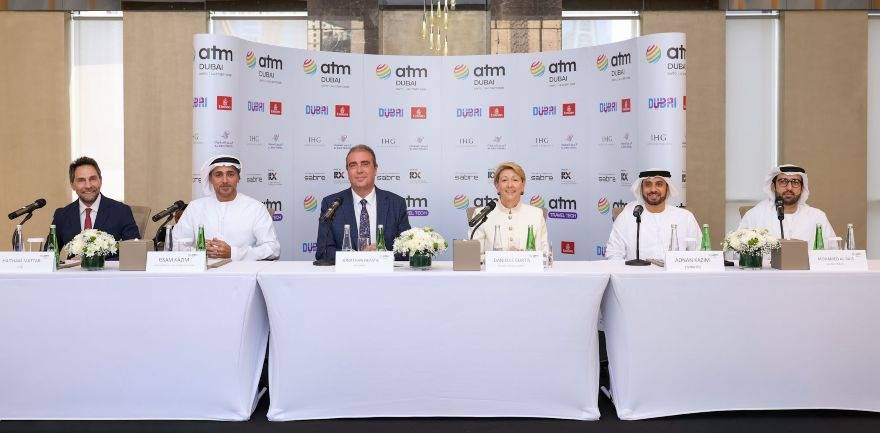
ATM 2026
Held under the theme Travel 2040: Driving New Frontiers Through Innovation and Technology, ATM 2026 will explore the technologies, trends and partnerships influencing the future of global travel. The programme comes as the industry continues to navigate changing market conditions, evolving customer expectations and rapid advances in digital technology.
ATM organisers said preparations for the event have been shaped by ongoing engagement with exhibitors, buyers, partners and other stakeholders, allowing the show to respond to changing industry requirements while continuing to provide opportunities for business, networking and knowledge exchange.
A global gathering
The exhibition will feature destinations, tourism authorities, airlines, hospitality groups, travel technology companies, tourism suppliers and professionals representing markets from around the world. Alongside individual destinations and businesses, the event will highlight the interconnected nature of the global tourism industry and the importance of partnerships in maintaining commercial activity and sharing knowledge.
Confidence, resilience and collaboration will be among the key themes running through the 2026 edition. The event will examine the impact of artificial intelligence, digital transformation, smart mobility and evolving traveller expectations on tourism, while also looking at the commercial opportunities emerging from these changes.
Danielle Curtis, Regional Portfolio Director, UAE, RX Global, said the industry had been required to adapt during the past few months and thanked customers and partners for their trust, understanding and flexibility.
She said ATM had listened closely to the needs of its customers and adapted where necessary to provide support as circumstances changed. Curtis added that bringing the global travel community together was particularly important this year, with the event focused both on immediate industry priorities and the innovation and opportunities expected to shape the future of travel.
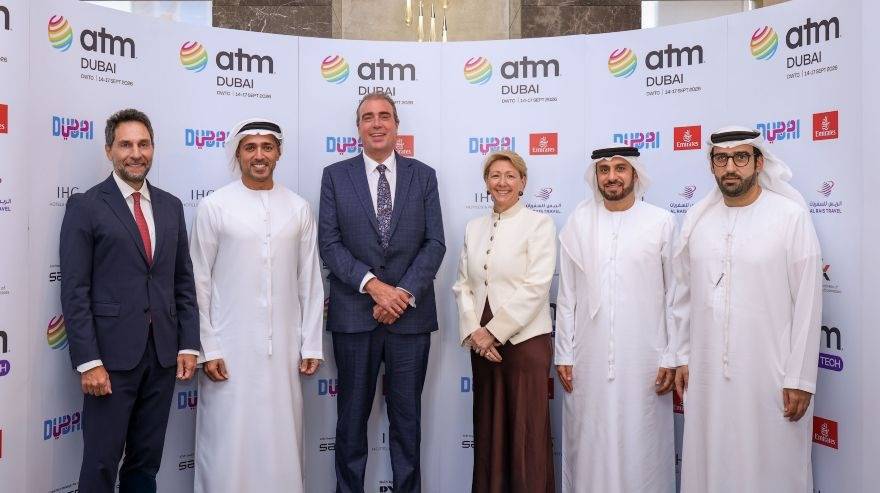
Dubai's role as an international meeting point for the travel sector was also highlighted by Issam Kazim, CEO of Dubai Corporation for Tourism and Commerce Marketing (DCTCM), part of DET.
Kazim said hosting ATM at an important moment for global travel reflected Dubai's position as a trusted meeting point where government and private-sector partners work together to maintain confidence, enable business and create new opportunities.
He linked the event to the wider objectives of the Dubai Economic Agenda, D33, which aims to double the size of Dubai's economy and further strengthen the emirate's position as a leading global destination for business and leisure.
Kazim said platforms such as ATM were important for strengthening international partnerships and accelerating innovation across the visitor economy, adding that Dubai was looking forward to welcoming the global travel community once again.
Focus on technology
Technology will take a more prominent position at ATM 2026 with the launch of ATM Travel Tech, a dedicated co-located exhibition designed to focus on the rapidly changing travel technology landscape.
Sabre will join ATM Travel Tech as its official strategic partner. The technology-focused programme will sit alongside the Tech & Innovation Hub, which will showcase developments spanning artificial intelligence, immersive technologies, robotics, fintech and smart mobility.
The new elements reflect the central role technology is expected to play in the industry's development towards 2040. From the way travellers search and book journeys to how airlines, hotels and destinations manage operations and personalise experiences, digital tools are increasingly influencing the travel ecosystem.
Ramzi Al-Qassab, Managing Director for META, EE, CIS, PK at Sabre and ATM Travel Tech Strategic Partner, said the travel industry was dealing with economic and geopolitical uncertainty while also facing significant technological opportunities.
He said Sabre's role was to provide airlines, agencies and hoteliers with intelligence and technology to manage current challenges while preparing for future developments. Al-Qassab described ATM as a platform where the industry could come together to navigate uncertainty and balance immediate requirements with longer-term opportunities.
Al Rais Travel will also bring a technology-led development to the event with the launch of its new AlRaisTravel.com platform. Mohamed Al Rais, Executive Director of Al Rais Travel, said the platform will feature Voice AI and Chat AI aimed at making travel planning faster, easier and more personalised.
The company will also strengthen its presence in medical tourism by connecting travellers with healthcare providers around the world.
Al Rais Travel has operated since 1977 and has developed alongside Dubai's tourism and travel sector. Al Rais said the company's participation in ATM 2026 would combine its experience and established partnerships with new technology as it looks towards the next phase of travel.
Industry outlook
The ATM 2026 conference programme will bring policymakers, tourism leaders, researchers and technology specialists together across the Global Stage, Future Stage and Experience Hub.
Sessions will examine a broad range of issues affecting the travel industry, including artificial intelligence, destination resilience, hospitality, aviation, business events, luxury travel, accessibility, sustainability and investment.
The programme will also consider the changing expectations of today's experience-led traveller and how businesses can respond to demand for more relevant, seamless and technology-enabled journeys.
Research from ATM's official knowledge partners, including Tourism Economics, Euromonitor International and Dragon Trail International, will support discussions across the conference programme.
For hospitality businesses, the focus on technology comes as hotel supply continues to expand across the Middle East. Haitham Mattar, Managing Director, India, Middle East & Africa, IHG Hotels & Resorts, said the region continued to demonstrate strong long-term fundamentals for travel and hospitality, supported by investment in tourism, infrastructure, destination development and international connectivity.
Mattar said the next phase of growth would involve converting investment and expanding hotel supply into sustainable, long-term demand. He highlighted technology and data as tools that can help businesses better understand travellers, reduce friction throughout the guest journey and deliver more relevant experiences.
He said ATM's emphasis on innovation and technology was timely as the industry considers how these capabilities can contribute to responsible growth through 2040 and beyond.
Emirates at ATM 2026
Emirates is also preparing to use ATM 2026 as a platform to deepen relationships and develop new commercial opportunities across the travel sector.
Adnan Kazim, Deputy President and Chief Commercial Officer, Emirates, said ATM had long been an important fixture on the airline's industry calendar, providing an opportunity to strengthen relationships with partners and give visitors a first-hand experience of its latest products.
The airline will use this year's event to further joint tourism initiatives and partnerships with organisations serving specialised traveller segments, while continuing to strengthen its long-standing relationships.
Kazim said destination growth and access to new customer segments required cooperation across the industry, with partnerships playing a central role in creating opportunities for tourism businesses and destinations.
The presence of Emirates alongside DET, IHG Hotels & Resorts, Al Rais Travel and Sabre reflects the broad range of organisations involved in shaping the event's agenda, from destination development and aviation to hospitality, travel distribution and technology.
ATM 2026 is expected to provide a platform for these sectors to engage directly with buyers, policymakers, suppliers and potential partners during four days at Dubai World Trade Centre.
https://www.travelsdubai.com/10-Sep-2026/emirates-brings-electric-premium-economy-seat-new-experiences-atm-2026-dubai
A platform for networking
RX Global said ATM has continued to expand as an international platform for travel and tourism, with the 2026 edition recording 16% year-on-year growth and attracting more than 55,000 travel professionals from 166 countries.
Now in its 33rd year, the event has developed beyond a traditional exhibition floor, with forums, experiences and networking opportunities extending across the week. Its programme is designed to connect travel communities, facilitate commercial relationships and create opportunities for businesses operating across different parts of the tourism ecosystem.
Jonathan Heastie, Portfolio Director, Travel Sector, RX Global, said the organiser's focus was on ensuring its events evolve in line with the industries and communities they serve.
For ATM, he said this meant responding to changes across the travel sector while continuing to deliver value for customers. He added that the 2026 theme reflected the need to look beyond immediate priorities towards the innovation and opportunities expected to influence the industry in the years ahead.
Registration for ATM 2026 is live, with separate registration options available for visitors and media, while businesses interested in exhibiting can make enquiries through the event organisers.
10 Sep, 2026
10 Sep, 2026
Emirates brings electric Premium Economy seat and new experiences to ATM 2026 in Dubai
DUBAI – Emirates is set to showcase its latest Premium Economy experience at Arabian Travel Market 2026 in Dubai, giving travel industry visitors a first look at an electrically powered seat with a full-height adjustable privacy divider.
The airline will present the new A350 Premium Economy seat during the region’s leading travel and tourism exhibition, which runs from 14 to 17 September.
The Emirates stand will also feature signature cabin products, sustainability projects, retail collections and opportunities for industry partners to explore new business collaborations.
New cabin
The new A350 Premium Economy seat introduces a full-height privacy divider, described by Emirates as an industry first, alongside electrically powered functionality and a range of passenger-focused features.
The seat includes preset lounge and meal seating positions, the airline’s industry-first U-Dream leather headrest, wireless charging and USB-C power charging. Passengers will also have access to a 13.3-inch 4K HDR screen.
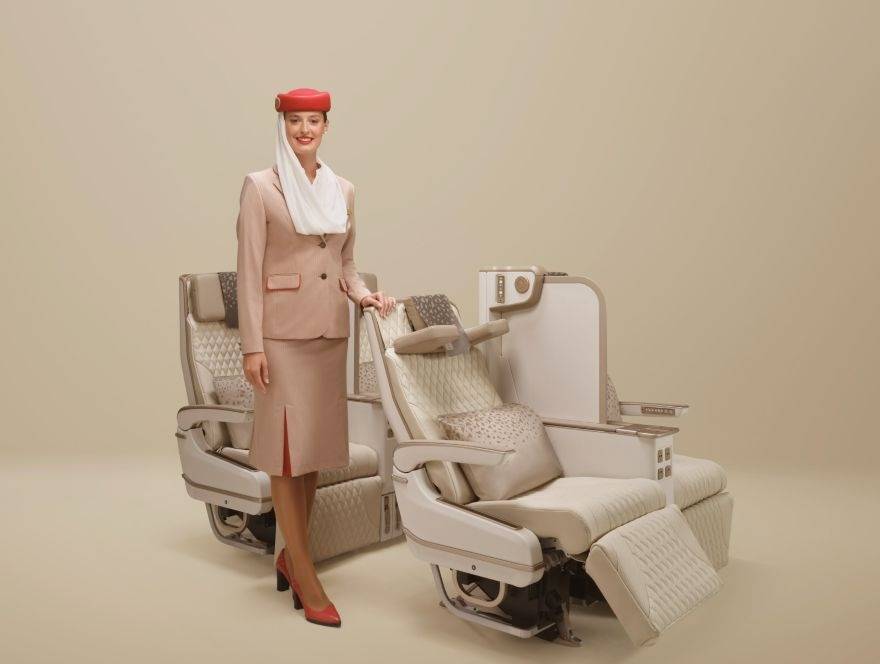
The onboard experience is complemented by a welcome drink, amenity kits, dishes served on Royal Doulton China and an extensive speciality beverage selection.
https://www.travelsdubai.com/03-Sep-2026/emirates-unveils-world-s-first-electric-premium-economy-seat-full-height-privacy-screen
Visitors to the Emirates stand will be able to experience several other products from the airline’s fleet, including the A380 Shower Spa and Onboard Lounge, the Boeing 777 Game Changer First Class Suite, the A350 Business Class seat and the A350 Economy Class seat featuring the U-Dream headrest.
The stand will also highlight Emirates’ community and sustainability work, including sustainable vertical farming through Bustanica, projects supported by the Emirates Airline Foundation, Aircrafted by Emirates and conservation initiatives in Australia’s Wolgan Valley and the Dubai Desert Conservation Reserve.
Emirates SkyCargo’s wildlife protection initiatives will also feature, alongside the airline’s community partnerships through sponsored events, clubs and leagues.
https://www.travelsdubai.com/20-Jul-2026/emirates-unveils-world-first-u-dream-headrest-transform-economy-class-comfort
Collector showcase
The Emirates Official Store will give visitors access to travel accessories, limited-edition merchandise and collectible aircraft models, including its new 1:200 scale snap-fit range.
Replica Airbus A380, Airbus A350 and Boeing 777 models will be available in classic and new tailfin designs, as well as special liveries including Arsenal Champions 2026, UAE Fly The Flag, US Open and Destination Dubai.
The collection covers 21 aircraft, with each box colour-coded according to its model type and livery, allowing collectors to mix and match designs.
Another highlight will be the Emirates Signature Series, featuring signed sports jerseys from more than a decade of partnerships with organisations including UAE Team Emirates, Real Madrid, AC Milan and Arsenal. The jerseys are authenticated by The Bootroom Collection and presented in custom boxes with certificates of authenticity and security holograms.
The latest Aircrafted by Emirates collection will also debut at ATM. Made from reclaimed leather, the collection includes duffle bags, vanity pouches and toiletry bags featuring the diamond-quilted detailing inspired by the airline’s First and Business Class seats. The products will be available through the Emirates Official Store.
Proceeds from the Emirates Signature Series and Aircrafted by Emirates will support the Emirates Airline Foundation’s humanitarian work, which has helped thousands of underprivileged and vulnerable children worldwide.
Emirates at ATM 2026
The Emirates stand will include meeting spaces capable of accommodating more than 130 visitors and industry partners at any one time.
During ATM 2026, the airline plans to seal deals and strengthen cooperation with more than 30 partners, including tourism boards, technology companies and travel organisations. The partnerships will focus on new B2B and B2C segments while creating additional opportunities for visitors to Dubai and the wider travel ecosystem.
The Emirates stand will be located in the Sheikh Saeed Hall at ATM.
Sharjah brings culture, adventure and digital experiences to ATM 2026 in Dubai
DUBAI – Sharjah is set to unveil a new Visit Sharjah pavilion at Arabian Travel Market (ATM) 2026 in Dubai, offering visitors an interactive look at the emirate’s tourism landscape, upcoming projects and future-focused initiatives.
The Sharjah Commerce and Tourism Development Authority (SCTDA) will lead the emirate’s participation, bringing together more than 30 government and private-sector entities under one platform. The event will take place from September 14 to 17 at Dubai World Trade Centre, giving Sharjah an opportunity to present its tourism offering to international industry professionals, investors and travel markets.
The pavilion has been designed around an experience-led concept that combines Sharjah’s cultural and natural identity with digital technology. Visitors will be able to explore attractions across Sharjah City, the Central Region and the East Coast, while discovering how the emirate is developing its tourism infrastructure, experiences and hospitality offering. The participation comes under ATM 2026’s theme, “Travel 2040: Driving New Frontiers Through Innovation and Technology”, placing innovation, technology and future travel trends at the centre of discussions.
Visit Sharjah
The new Sharjah Pavilion - Visit Sharjah will serve as the focal point of the emirate’s presence at the four-day travel exhibition. Rather than presenting individual attractions separately, the pavilion brings the emirate’s different tourism assets together through a unified identity and interactive visitor journey.
Its concept is designed to take visitors through the three broad geographical areas that define Sharjah’s tourism offering. Sharjah City will showcase the emirate’s cultural and heritage character, while the Central Region will focus on desert landscapes, adventure and outdoor experiences. The East Coast will highlight mountains, marine attractions and natural environments.
At the heart of the pavilion will be a 360-degree immersive digital experience combining large-scale visual displays, spatial audio and interactive lighting. The installation will transport visitors virtually to some of Sharjah’s prominent natural and cultural destinations, as well as major events, including the Sharjah Light Festival.
The pavilion will also feature expansive digital spaces, screens and tourism-storytelling platforms, alongside dedicated areas for participating partners. The combination is intended to provide travel trade professionals and visitors with a more interactive way of discovering the emirate's destinations and experiences.
The technology-driven presentation will cover a broad spectrum of Sharjah's tourism proposition, including heritage, nature, adventure, family and leisure activities, hospitality and events. The pavilion will therefore offer an overview of how the emirate is positioning its tourism sector across different visitor interests and international markets.
Sharjah Pavilion at ATM 2026
Sharjah’s participation will also focus on developments shaping the emirate’s tourism sector beyond individual attractions. The programme includes the presentation of new initiatives, projects and services intended to support the growth of tourism while maintaining the emirate’s cultural and environmental identity.
SCTDA Chairman Khalid Jasim Al Midfa said the participation reflects cooperation between public and private entities and Sharjah’s efforts to develop a more competitive and sustainable tourism sector. He also highlighted the importance of adapting to rapid changes taking place across the global travel and tourism industry.
The emirate is expected to use the exhibition to promote its combination of culture, heritage, nature, adventure, hospitality, family entertainment and events. The platform will also be used to explore opportunities created by technology and innovation for improving visitor experiences and building a more integrated tourism ecosystem.
International tourism markets and institutions will form another important part of the participation, with the event providing an opportunity to expand partnerships and establish new strategic relationships. Sharjah will also use its presence to highlight its readiness for future tourism demand and changing traveller expectations.
Major projects
One of the key developments to be highlighted is the Sharjah International Airport expansion project, which is being positioned as an important part of the emirate’s future tourism infrastructure.
The expansion is expected to support increased airport capacity and wider international air connectivity, while facilitating access for visitors arriving in Sharjah. Its development is linked to anticipated growth in travel and tourism and forms part of broader efforts to strengthen the infrastructure supporting the sector.
Hospitality and accommodation developments will also feature in Sharjah’s ATM programme. The emirate is highlighting strategic partnerships involving major UAE institutions and real-estate developers, including Emaar Properties and Eagle Hills.
These collaborations are supporting the development of hospitality projects and the expansion and diversification of accommodation options in Sharjah. They are also aimed at attracting established brands and international expertise to the emirate’s tourism market.
The partnerships form part of the wider development of Sharjah’s tourism ecosystem, with accommodation, hospitality facilities and supporting infrastructure being developed alongside the emirate’s existing cultural, environmental and leisure attractions.
Press conference
A major event within Sharjah’s ATM 2026 programme will be a press conference at the pavilion on Wednesday, September 16, at 1pm.
Al Midfa will attend alongside senior officials and representatives of the government and private-sector organisations participating in the Sharjah Pavilion. The session will provide details of the latest developments in the emirate’s tourism sector and introduce future initiatives and projects.
The programme will cover a wide range of tourism segments, including ecotourism, adventure tourism and annual events and programmes attracting visitors from different markets. It will also address development projects aimed at strengthening tourism infrastructure and improving the integration of services and facilities across Sharjah.
The press conference will additionally provide an update on partnerships supporting the hotel, accommodation and hospitality sectors, as well as collaborations involving major UAE institutions and developers.
Who is attending
More than 30 government and private-sector entities are expected to form part of Sharjah’s integrated participation, with the pavilion bringing together organisations involved in aviation, culture, heritage, conservation, sports, hospitality and tourism development.
Participating organisations include Sharjah International Airport, Sharjah Museums Authority, Environment and Protected Areas Authority, represented by Sharjah Safari, and the Sharjah Institute for Heritage.
The Sharjah Sports Council, Sharjah Broadcasting Authority, Sharjah Asset Management and Sharjah Classic Cars Club will also participate.
The line-up further includes the Sharjah International Marine Sports Club, the Sharjah Training Centre for Airports Science under the Department of Civil Aviation Sharjah, and Air Arabia.
Together with SCTDA, these organisations will present different aspects of Sharjah’s tourism and visitor ecosystem, ranging from museums, heritage and wildlife conservation to aviation, sports, marine activities, transport-related services and destination development.
The participation gives the emirate a single platform at ATM 2026 to present its tourism regions, experiences, infrastructure projects and partnerships, while the new Visit Sharjah pavilion will provide the central setting for the digital and interactive showcase.
8 Sep, 2026
4 Sep, 2026
ATM 2026: Shaza Hotels targets regional growth and new partnerships at Arabian Travel Market
DUBAI – Shaza Hotels is preparing for a strong presence at Arabian Travel Market (ATM) 2026, taking place in Dubai from 14 to 17 September, where the hospitality group will showcase the evolving proposition of Shaza Hotels and Mysk by Shaza and engage with owners, investors, developers and travel industry partners from across the region and international markets.
The event comes at an important stage in the group’s development as Shaza Hotels looks to build on the distinctive positioning of its two brands and pursue new opportunities in markets where culturally relevant hospitality, meaningful guest experiences and strong regional understanding are increasingly valued. For the group, ATM will provide a strategic platform to present its portfolio while advancing conversations around future development, management opportunities and partnerships.
Shaji Abu Salih, Vice President of Business Development & Growth, Shaza Hotels and Mysk by Shaza, said Arabian Travel Market is one of the most important meeting points for the industry, bringing together owners, investors, destinations, operators and travel partners shaping the next chapter of tourism and hospitality.
“We come to ATM with a clear ambition for growth, but equally with a strong understanding of what Shaza Hotels and Mysk by Shaza stand for. As travellers become more discerning, we believe there is considerable opportunity for hospitality concepts that have a genuine sense of identity, understand their markets and create experiences that feel relevant to the people they serve,” he said.
Brand identity
Inspired by the cultures and traditions of the Silk Route, Shaza Hotels brings together contemporary luxury and a hospitality philosophy centred around generosity, family, culture and thoughtful service.
Discover Shaza at #ATMDubai ✨
— Shaza Hotels (@ShazaHotels) September 2, 2026
Meet us at Stand HC 1240 and discover a world of authentic hospitality and memorable experiences.
???? Dubai World Trade Centre
???? 14–17 September#ShazaHotels #IAMSHAZA #ArabianTravelMarket pic.twitter.com/UfKpqbThmG
Mysk by Shaza complements the group’s luxury offering with a distinctive collection of hotels and retreats shaped by their individual destinations and experiences. Together, the two brands allow the group to address different hospitality opportunities while retaining a strong connection to culture, place and the human dimension of travel.
Guests increasingly value space, privacy, flexibility, wellness, thoughtful dining and opportunities for cultural discovery, alongside experiences that allow families to spend meaningful time together without requiring every generation to follow the same itinerary.
Family experiences
“Hospitality today has to understand why people are travelling, not simply where they are travelling,”
added Shaji. “For families in particular, the most memorable stays are those that create opportunities to reconnect while giving each generation the freedom to experience the destination in its own way.”
Rather than pursuing growth for scale alone, the group’s development approach focuses on opportunities where its brands can bring a differentiated proposition to owners and travellers.
Purposeful growth
“Growth has to be purposeful,” Shaji continued. “For an owner, a hotel brand must have a compelling proposition and a clear understanding of its audience. For a guest, it must deliver something worth remembering. Our focus is on bringing those two priorities together.”
ATM 2026: Chinese outbound travel gathers pace as MENA destinations prepare for tourism recovery
DUBAI – The Middle East and North Africa (MENA) tourism industry is positioning itself for the gradual return of Chinese visitors as outbound travel from China continues to recover despite recent geopolitical disruptions.
New research released ahead of Arabian Travel Market (ATM) 2026 suggests that while travel to the Middle East has been temporarily affected, Chinese outbound demand remains resilient, creating fresh opportunities for destinations across the region.
The findings, published by Dragon Trail International, the Official Research Partner of ATM, indicate that tourism organisations are increasingly focusing on rebuilding traveller confidence and refining their marketing strategies to capture renewed demand. The research comes ahead of ATM 2026, which will take place at Dubai World Trade Centre from September 14 to 17.
Chinese outbound tourism has continued to strengthen throughout 2026, with official figures and industry surveys pointing to sustained demand despite external challenges.
Demand rising
According to the research, 77 percent of surveyed travel agents reported higher demand for outbound travel during the first half of 2026 compared with the same period last year. Meanwhile, 70 percent said demand for outbound summer travel had increased year-on-year.
Official data from China's National Immigration Administration also reinforced the positive outlook, showing that border crossings by mainland Chinese citizens rose by 10.7 percent during the first six months of 2026.
Although geopolitical developments in the Middle East temporarily reduced travel demand for the region, official Chinese government travel advisories covering GCC countries have now been lifted.
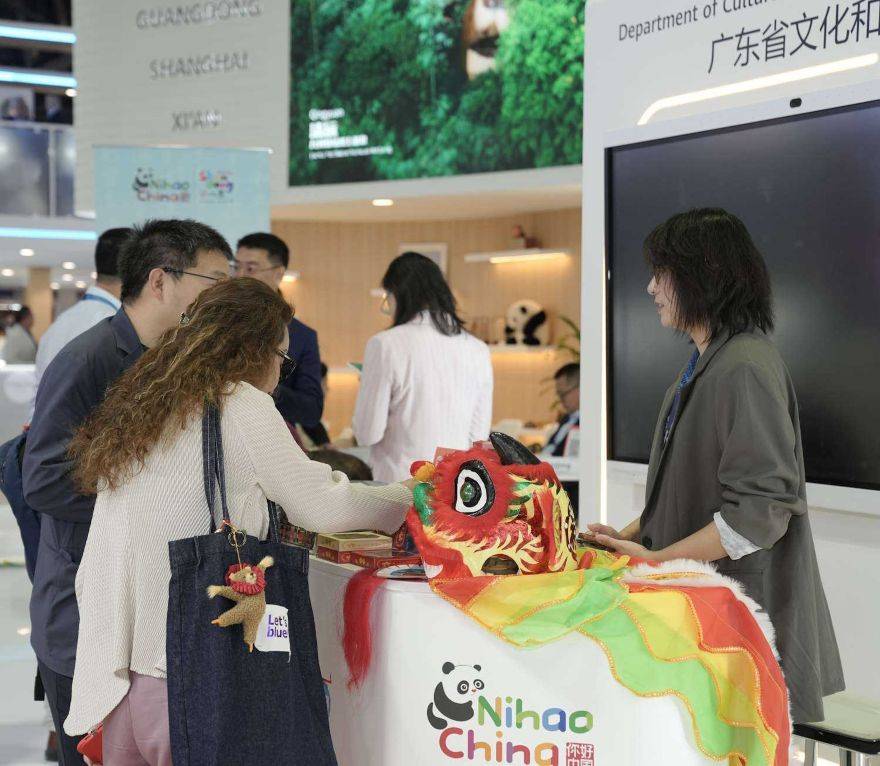
Dragon Trail International believes recovery will be gradual, as Chinese travellers continue to place significant importance on safety and security when planning overseas trips. However, provided regional stability continues, market momentum is expected to strengthen further into 2027.
Danielle Curtis, Regional Portfolio Director, UAE at RX Global, said China remains one of the world's most influential outbound tourism markets despite the recent slowdown in travel to the Middle East.
She said destinations that understand changing traveller behaviour and adapt their marketing strategies accordingly will be best positioned to benefit as consumer confidence returns. Curtis added that Arabian Travel Market provides an important platform for the industry to access market intelligence, strengthen partnerships and prepare for the next phase of tourism growth.
Key segments
Research conducted specifically for ATM 2026 identifies luxury travel as the segment most likely to recover first across MENA destinations.
Around 42 percent of Chinese travel agents surveyed said high-net-worth travellers offer the strongest recovery potential. The study also pointed to growing opportunities in the fully independent traveller (FIT) market, cited by 40 percent of respondents.
Group travel and younger travellers were each identified by 38 percent of respondents as promising segments that destinations should target as confidence gradually improves.
The research also revealed changing booking patterns among Chinese travellers. Shorter booking windows have become increasingly common, while more travellers are opting for single-destination itineraries instead of multi-country trips.
Among destinations across the MENA region, Chinese travel agents identified Türkiye as having the strongest growth potential following the introduction of visa-free travel for Chinese visitors.
Saudi Arabia and the UAE also continue to enjoy strong long-term prospects, particularly within the premium and luxury tourism market, according to respondents.
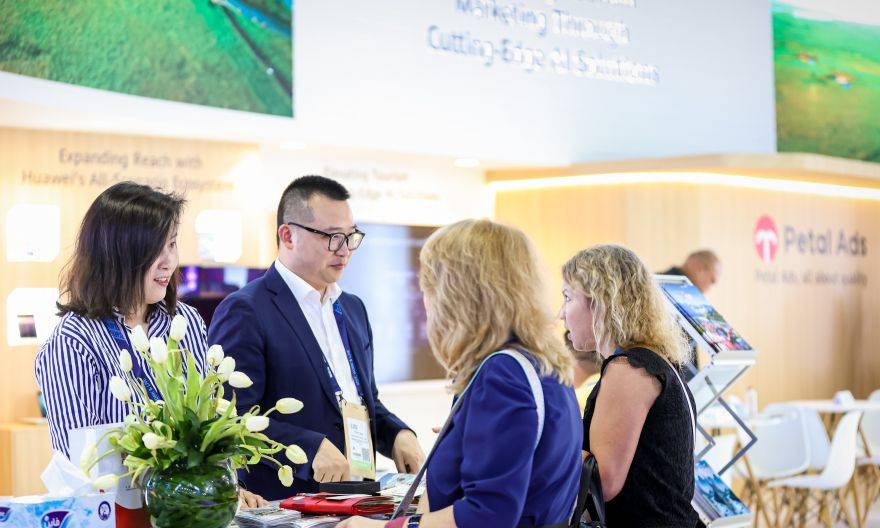
Sienna Parulis-Cook, Director of Marketing and Communications at Dragon Trail International, said Chinese outbound tourism continues to demonstrate remarkable resilience despite a range of external challenges.
She said recent geopolitical developments had affected travel demand to the Middle East, but overall outbound travel from China continues to grow strongly, creating significant opportunities for destinations that can successfully rebuild traveller confidence.
Parulis-Cook added that the latest research was designed to help tourism organisations across the MENA region better understand how Chinese travel preferences are evolving so they can refine marketing strategies and accelerate recovery.
ATM 2026
Dragon Trail International will unveil further exclusive market intelligence during ATM 2026 through a dedicated session titled Welcoming Back the Chinese Tourism Market: Insights for the Middle East.
The presentation, to be held on the Future Stage, will examine the destinations attracting the greatest interest from Chinese consumers, the communication channels that have the strongest influence on travel decisions and the experiences travellers are increasingly seeking across the MENA region.
The findings are expected to provide destinations, tourism organisations and travel businesses with practical strategies for engaging one of the world's most valuable outbound travel markets as competition intensifies.
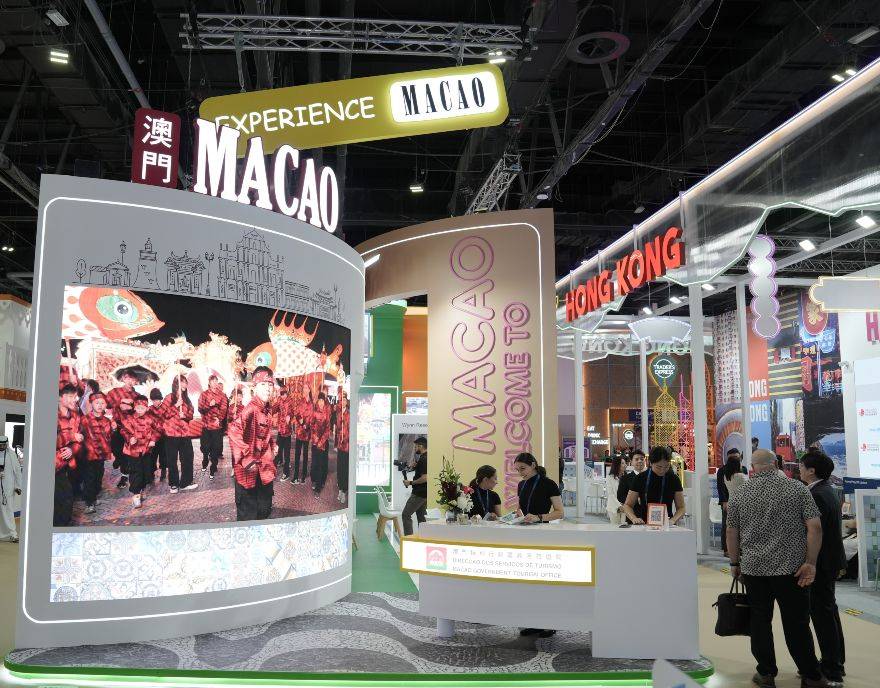
ATM 2026 will also feature several exhibitors from China, including the Macao Government Tourism Office, China Cultural Center in the UAE, DerbySoft Inc., The Garden Hotel Company Ltd., Guangzhou, China Highlights International Travel Service Co., Ltd. and HeyTrip International Limited.
Organisers said this year's edition marks a significant expansion in exhibition hall space, reflecting strong global demand for participation. Asia's presence at the event is projected to increase by 14 percent compared with the previous edition.
Held under the theme "Travel 2040: Driving New Frontiers Through Innovation and Technology", ATM 2026 will bring together destinations, tourism organisations, industry leaders and innovators to examine the trends shaping the future of global travel, while reinforcing Dubai's position as a global hub for tourism collaboration, innovation and industry resilience.
6 Aug, 2026
24 Jun, 2026
Dubai prepares for ATM 2026 as world tourism leaders gather to shape Travel 2040 vision
DUBAI – The Arabian Travel Market (ATM) 2026 will bring the global travel and tourism industry together in Dubai to explore the future of the sector, with a strong focus on resilience, innovation, technology and long-term growth.
The event will take place from 14th to 17th September 2026 at Dubai World Trade Centre (DWTC), bringing together exhibitors, buyers, policymakers, tourism authorities, researchers and industry leaders from around the world.
The upcoming edition will highlight Dubai’s position as a globally connected destination and a key meeting point for the international tourism community, as the sector continues adapting to changing market conditions. ATM 2026 will provide a platform for discussions around business continuity, destination preparedness, traveller confidence and the evolving opportunities shaping the global travel ecosystem.
The revised dates for the event reflect a collaborative approach designed to provide greater flexibility for participants while creating stronger opportunities for networking, partnerships and business engagement across the travel industry.
Travel 2040
Held under the theme “Travel 2040: Driving New Frontiers Through Innovation and Technology”, ATM 2026 will examine how the tourism sector can prepare for future challenges while embracing emerging technologies and new models of travel.
The event’s conference programme will explore key areas including crisis management, destination resilience, aviation continuity, digital transformation, sustainability and strategies for long-term tourism development. Sessions across the Global Stage, Future Stage and Experience Hub will bring together government representatives, tourism experts, technology leaders and industry decision-makers to discuss how destinations can improve adaptability and strengthen their ability to respond to global disruptions.
Research-driven discussions will also provide insights into changing traveller behaviour, global mobility patterns, destination competitiveness and future demand. Industry research partners including STR, Tourism Economics, an Oxford Economics company, GSIQ and ICCA will contribute strategic analysis to support discussions around the direction of international tourism.
Danielle Curtis, Regional Portfolio Director - UAE at RX Global, said ATM’s role as a platform for the travel and tourism community to reconnect, strengthen partnerships and drive meaningful dialogue remains a priority as collaboration becomes increasingly important across the sector.
She highlighted that supported by Dubai’s infrastructure, operational capabilities and strong coordination between public and private sectors, ATM 2026 will continue bringing the global tourism community together while supporting future industry growth.
Dubai tourism
Dubai’s tourism ecosystem will remain central to ATM 2026, with the emirate continuing to demonstrate operational strength through its aviation, hospitality and events sectors.
Hoor Al Khaja, Senior Vice President, International Operations at Dubai Corporation for Tourism and Commerce Marketing (DCTCM), part of the Dubai Department of Economy and Tourism (DET), said Dubai’s approach has been shaped by long-term planning, agility and collaboration between government entities and industry stakeholders.
She noted that Dubai has remained open, operational and welcoming during recent regional developments, reinforcing confidence among travellers, businesses and international partners. The city continues to provide a platform for major global events and meetings across important sectors, including tourism.
Dubai’s connectivity has also remained a key factor in supporting tourism confidence. Air traffic operations in the UAE fully resumed on 2 May, while Qatar, Bahrain and Kuwait also reopened their airspace. Emirates has restored 96% of its global network, operating to 13 destinations across seven countries with more than 1,300 weekly frequencies. Etihad Airways, flydubai and Qatar Airways are also continuing to restore their schedules.
International confidence has further strengthened following updated travel guidance from several countries. The UK government lifted its travel warning for the UAE, while Australia adjusted its travel advice for several Middle Eastern destinations, including the UAE, reflecting improved regional conditions and supporting future travel planning.
GCC hospitality market
The resilience of the wider GCC hospitality market will also be a key discussion point at ATM 2026. Research from STR, the event’s official research partner, shows hotel occupancy levels across major GCC markets have continued recovering steadily, supported by domestic demand and the ongoing operation of essential tourism infrastructure.
Dubai has maintained stable hospitality performance during this period, supported by its diversified tourism economy, advanced infrastructure and coordinated approach across government and private sector stakeholders.
ATM 2026 will examine how destinations with strong connectivity, established tourism networks and proactive planning can continue strengthening their position as international travel demand evolves.
Stephen Dutton, Global Insight Manager - Travel at Euromonitor International, will deliver a keynote session titled “The State of Travel: Inflation, Polycrisis & the New Travel Reality.”
Ahead of the event, Dutton said travel spending reached record levels in 2025, surpassing GDP growth in many markets and demonstrating continued consumer demand for international experiences. He noted that travel has increasingly become a priority for consumers despite economic and geopolitical pressures, with travellers continuing to seek meaningful experiences around the world.
Arabian Travel Market 2026
ATM 2026 will continue serving as a meeting point for the global travel community, connecting tourism organisations, airlines, hospitality brands, technology companies and destination representatives.
The event will focus on how innovation and collaboration can support the next phase of tourism development, with discussions covering digital solutions, evolving traveller expectations, sustainability and the role of technology in shaping future journeys.
Through its conference programme and industry engagement platforms, ATM 2026 will bring together global voices to explore how the travel sector can strengthen resilience, improve preparedness and create new opportunities in an increasingly connected world.
ATM 2026 Dubai shifts to September: What drove the surprise date change?
DUBAI – Dubai is set to host a major shift in the global travel calendar as Arabian Travel Market 2026 confirms revised dates.
The leading tourism exhibition will now take place from 14th to 17th September 2026, moving from its previously scheduled slot. The change has been announced following extensive consultation with exhibitors, partners and wider industry stakeholders. Organisers say the adjustment reflects a continued effort to align the event more closely with the needs of the international travel sector.
Arabian Travel Market, organised by RX Global, will once again be staged at the Dubai World Trade Centre. The revised dates are expected to strengthen participation from global buyers, exhibitors and tourism boards, offering improved scheduling flexibility across key markets.
Revised dates
RX Global confirmed that the decision follows sustained dialogue with industry participants, with feedback highlighting the need for an optimised calendar placement.
Danielle Curtis, Regional Portfolio Director – UAE, said the move reflects ongoing collaboration across the travel ecosystem, aimed at maximising business and networking outcomes. She noted that the updated timing is designed to ensure stronger global attendance and more effective engagement across all event segments.
Industry input
Organisers emphasised that exhibitor and partner feedback played a central role in shaping the new schedule. Strategic partners including Dubai Department of Economy and Tourism, IHG, Al Rais Travel and Dubai World Trade Centre supported the adjustment process. The collaboration underscores ATM’s positioning as a key meeting point for airlines, hospitality groups, technology providers and destination representatives seeking long-term partnerships.
Arabian Travel Market
The 33rd edition of ATM will continue under the theme “Travel 2040: Driving New Frontiers Through Innovation and Technology”, highlighting future-focused developments across the sector. A strong emphasis will be placed on ATM Travel Tech and the Tech & Innovation Zone, where AI applications, fintech solutions, immersive travel experiences and smart mobility systems will be showcased.
The conference programme will include the Global Stage, Future Stage and Experience Hub, bringing together tourism leaders and analysts for sessions on destination resilience, aviation innovation and digital transformation. Tourism Economics, an Oxford Economics company, is among the confirmed contributors, presenting insights on regional travel trends and market shifts shaping the Middle East tourism landscape.
Thousands of industry professionals are expected to attend the September edition, with organisers positioning Dubai as a central hub for global tourism dialogue and commercial exchange.
22 May, 2026
22 May, 2026
22 May, 2026
Over 30 deals and a new cabin experience: How Emirates made its mark at ATM Dubai 2026
DUBAI – Emirates wrapped up Arabian Travel Market (ATM) Dubai 2026 with more than 30 agreements signed or renewed during the four-day industry event, extending its network of partnerships across tourism, business and emerging travel segments.
The airline's presence at the show also put its latest onboard products firmly in the spotlight, with its new electrically powered Premium Economy seat making its public debut. Thousands of visitors passed through the Emirates stand, where they could experience the new seat alongside some of the airline's flagship cabin products.
At this year's Arabian Travel Market, we didn't just talk about the future of flying better. We showed it. ✈️ pic.twitter.com/uStj4KQrct
— Emirates (@emirates) September 17, 2026
From tourism authorities spanning 16 countries to organisations representing education, medical travel, sport and the maritime sector, the agreements reflected Emirates' efforts to develop new sources of passenger demand while strengthening established markets.
New Premium Economy seat
The new Premium Economy seat became one of the main attractions at the Emirates stand, offering ATM visitors their first public opportunity to try the electrically powered product.
Thousands of guests sat in the seats and explored their functions, giving visitors a closer look at the cabin experience Emirates is developing for Premium Economy passengers. The stand also featured the A380 Shower Spa and Onboard Lounge, the Boeing 777 Game Changer First Class Suite and A350 Business and Economy Class seats fitted with the U-Dream headrest.
The product showcase provided a cross-section of Emirates' current and forthcoming cabin experience, bringing several of its distinctive onboard features together at one of the industry's biggest annual travel gatherings.
Tourism ties
Partnership activity formed another major part of Emirates' ATM presence, with agreements spanning Africa, Europe, Asia and the UAE.
In Africa, Emirates signed new agreements with the Kenya Tourism Board and Mozambique's ANDITUR. In Europe, it partnered with Visit Finland ahead of the launch of its Helsinki service on October 1, as well as Fjord Norway, Bologna Welcome and Parma Welcome. Emirates Holidays also signed an agreement with the Spain Tourism Office.
Across West and Southeast Asia, the airline reached agreements with Tourism Malaysia, the Japan National Tourism Organization, Sri Lanka Tourism Promotion Bureau, Maldives Marketing and Public Relations Corporation, Seychelles Tourism Board and the Ministry of Tourism and Culture, and Mauritius Tourism Promotion Authority.
Emirates also renewed its partnership with Madagascar's Ministry of Tourism and Handicrafts. In the UAE, it renewed its relationship with the Sharjah Commerce & Tourism Development Authority and signed a new agreement with the Ras Al Khaimah Tourism Development Authority.
The partnerships are designed to support destination promotion and strengthen the links between international air connectivity and visitor arrivals.
https://www.travelsdubai.com/14-Sep-2026/atm-dubai-2026-emirates-expands-global-tourism-push-seven-new-deals
New travel deals
Beyond conventional leisure and corporate travel, several agreements announced at ATM were focused on specific communities and fast-growing travel segments.
In education, Emirates partnered with the Knowledge and Human Development Authority to support Dubai's ambition of becoming a global study destination. It also signed with ICEF to become a preferred global airline partner for education travel.
https://www.travelsdubai.com/17-Sep-2026/dubai-students-get-new-emirates-travel-perks-special-fares-extra-baggage
The airline expanded its presence in medical and wellness tourism through an agreement with the Medical Tourism Association, covering longevity and wellness travel alongside traditional medical travel.
https://www.travelsdubai.com/17-Sep-2026/medical-tourists-will-soon-able-link-flights-treatment-care-emirates
Sports travel was another area of expansion. Through a partnership with Cutting Edge, Emirates will develop travel packages for fans attending major cricket, football, motorsport, golf and tennis fixtures.
The airline also strengthened its links with the maritime sector through agreements with Cisalpina Tours International and MSC Cruises. These cover seafarer rotations, dedicated crew fares and enhanced baggage allowances.
https://www.travelsdubai.com/15-Sep-2026/emirates-expands-global-reach-11-new-deals-atm-dubai-2026
Wider connections
A further group of agreements extended Emirates' reach through business communities, technology platforms and travel distribution channels.
The airline signed agreements with the Overseas Workers Welfare Administration, Finnish and Vietnamese Business Councils, Huawei, Dubai Duty Free, Alibaba Fliggy, DERTOUR Group, Emirates Islamic and Al Etihad Payments. The latter partnership will bring Jaywan to Emirates bookings.
Emirates and Kuwait Airways also agreed to expand their interline partnership into a reciprocal codeshare, broadening the connectivity available through their respective networks.
The collection of agreements came as Emirates continues to rebuild its operations following earlier disruption. The airline said it is now operating at approximately 93% of its pre-disruption capacity, with ATM providing a platform for discussions around the continuing development of Dubai's tourism and aviation ecosystem.
Industry recognition
Emirates also collected a series of awards during ATM 2026.
At the 2026 World Travel Awards Middle East, the airline received four honours: Middle East's Leading Airline, First Class 2026; Middle East's Leading Airline Brand 2026; Middle East's Leading Airline Lounge, First Class 2026; and Middle East's Leading Airline Rewards Programme 2026.
It was also named Best Long-Haul Airline at the inaugural Independent Travel Awards 2026 and received the Al Rehla Golden Travel Award in the UAE.
22 May, 2026
22 May, 2026
22 May, 2026
22 May, 2026
22 May, 2026
22 May, 2026
22 May, 2026
22 May, 2026
22 May, 2026
22 May, 2026
22 May, 2026
22 May, 2026
22 May, 2026
22 May, 2026
22 May, 2026
Etihad unveils new A330 cabins and a bigger First Class push at ATM Dubai
ABU DHABI – Etihad Airways has unveiled the next stage of its guest experience at Arabian Travel Market in Dubai, putting its new Airbus A330 cabin at the centre of its Beyond Borders proposition.
The new aircraft interior makes its world debut at the event with redesigned First, Business and Economy cabins, alongside a new design language that Etihad plans to introduce progressively across its expanding fleet.
The Abu Dhabi-based airline is also expanding the role of First Class across its network, building on the response to its A321LR, which introduced First suites and fully lie-flat Business seats to a single-aisle aircraft. The latest A330 represents the next step, bringing a three-cabin premium offering to regional and medium-haul routes.
Etihad says Beyond Borders will extend beyond aircraft interiors, linking cabins with lounges, ground services, dining, amenities, wellbeing and connectivity as part of a more consistent journey for guests.
New A330
The new Airbus A330 will enter service from September 2027, with 15 aircraft scheduled to join Etihad's fleet over a five-year period.
The aircraft will support the airline's continued expansion across regional and medium-haul markets, particularly on routes where demand for premium travel, capacity and flexibility is increasing. Its three-cabin layout will include First, Business and Economy, allowing Etihad to offer its full premium proposition on a wider selection of routes.
At the front of the aircraft, four First suites form an intimate cabin designed around privacy and personal space. Each suite features a closing door, while the layout also provides room for a companion to dine or socialise during the flight.
Etihad is equipping each First suite with a 32-inch screen, wireless charging, dedicated compartments and personal storage. A personal powder station will also be provided, stocked with premium amenities that guests can use during their journey and take with them afterwards.
The First experience is designed around a combination of personalisation, hospitality and dining, with Etihad positioning the cabin as part of a wider end-to-end premium service rather than simply a seat onboard.
Business Class will feature 24 fully lie-flat seats. Every seat faces forwards and provides direct aisle access, while sliding doors add another layer of privacy.
Each Business seat comes with a 17.3-inch screen, wireless and wired charging, a large table and dedicated personal storage. The configuration is intended to provide passengers with greater privacy and flexibility throughout the flight.
Economy will contain 252 seats in a bright, calm cabin. Passengers will receive Etihad's bespoke fixed-wing headrest, embossed with the airline's logo, alongside 13.3-inch 4K touchscreens and personal charging facilities.
A dedicated Extra Legroom section will provide 32 seats with four inches of additional pitch, giving passengers another seating option within the Economy cabin.
The A330's combination of capacity and three-cabin configuration is expected to make it an important part of Etihad's regional and medium-haul network, including services across Europe, Asia and the Middle East.
First expands
First Class is a central part of Etihad's latest product strategy, with the airline planning to increase the number of First seats available across its fleet over the next five years.
The A321LR has already demonstrated how the carrier can introduce a premium First experience on aircraft traditionally associated with shorter and medium-range operations. Its First suites and fully lie-flat Business seats have helped distinguish the aircraft within Etihad's single-aisle network.
A 20-inch 4K touchscreen for the journey, Giorgio Armani loungewear, and a full turndown service for the night. The Etihad A321LR First, considered down to the smallest detail. pic.twitter.com/LweKbimcMk
— Etihad (@etihad) September 14, 2026
The airline says guests have actively chosen flights operated by the A321LR, prompting it to build further on the concept.
At ATM, Etihad is also showing how the Beyond Borders design language will be carried across the A321LR in First, Business and Economy. The objective is to create a more recognisable experience across different aircraft while retaining products tailored to individual aircraft types and routes.
Across the wider fleet, First will continue to expand through new aircraft and retrofit programmes.
Etihad's A380 flagship First Apartments and The Residence will remain the signature premium products on its superjumbo aircraft. A mock-up of The Residence is also on display at Arabian Travel Market, giving visitors a closer look at one of the airline's most distinctive offerings.
The wider expansion of First marks a significant shift in the way Etihad is positioning its premium cabins, with the airline seeking to make the experience available to more guests and on more routes.
Beyond Borders
Beyond Borders also introduces a new design language intended to connect Etihad's aircraft and premium spaces.
The concept is rooted in Abu Dhabi and draws inspiration from the emirate's landscape, architecture and transformation. Etihad describes the design story as moving from "sand to superstructure", reflecting the development of Abu Dhabi while creating a contemporary and distinctly Etihad interior.
The new cabins use bright, serene spaces alongside bespoke details. Sconce lighting draws inspiration from Etihad's distinctive facet pattern, while genuine leather seating and precision perforation feature in the premium cabins.
The design also incorporates subtle technology and functionality. In First Class, seat numbers are discreetly projected onto the floor, providing a visual touch while helping passengers identify their suites.
Etihad is extending the design philosophy beyond the aircraft itself. Shared elements across lounges and onboard spaces are intended to create continuity as passengers move through different stages of their journey.
That approach forms a key part of Beyond Borders, which the airline says will increasingly connect its physical products with hospitality, technology, dining, wellbeing and service.
https://www.travelsdubai.com/31-Aug-2026/beyond-borders-etihad-airways-unveils-new-campaign-celebrating-abu-dhabi-born-ambition
US$20bn investment
Etihad is backing the transformation with a US$20 billion investment in new aircraft and customer experience.
The programme includes a US$1 billion fleet retrofit investment, alongside the introduction of new aircraft such as the A330.
Chief Executive Officer Antonoaldo Neves said the A321LR had demonstrated what could be achieved by challenging conventional expectations for narrowbody flying, particularly through the introduction of First and fully lie-flat Business seats.
He said the new A330 takes the airline's next step by bringing the Beyond Borders concept to a new cabin while extending the design language to the A321LR.
The wider strategy is intended to create greater consistency across the guest journey, from the aircraft and seat to the airport experience, lounges, food, wellbeing, connectivity and service.
22 May, 2026
22 May, 2026
22 May, 2026
22 May, 2026
Dubai tourism hits strongest monthly visitor numbers since February as ATM 2026 opens
DUBAI – Dubai’s tourism industry is increasingly demonstrating its strength, with the city’s hotel sector delivering sustained performance growth, according to the latest data released by the Dubai Department of Economy and Tourism (DET) ahead of the opening day of Arabian Travel Market (ATM) 2026.
The performance through August reflects the strength of the systems, partnerships and diversified market base that Dubai and its partners have built over the years. It also highlights the continued investment and innovation across the industry as the emirate prepares for the final months of 2026.
Dubai tourism performance
Hotel occupancy reached 66% in August, representing 89% of the city’s occupancy level in August 2025 and continuing a steep climb from 36% occupancy in March 2026.
The sustained upward trajectory comes as Dubai’s hospitality sector continues to operate at significant scale. As a number of properties have begun implementing extensive renovation projects to further elevate the guest experience and strengthen future readiness, hotel room inventory approached 149,000 rooms by the end of August 2026.
During the first eight months of the year, hotels across the emirate recorded 21.61 million occupied room nights, underscoring the scale of activity within Dubai’s accommodation sector.
The strong hotel performance was reflected in visitor numbers, with Dubai welcoming approximately 869,000 international overnight visitors in August 2026.
The August figure built on month-on-month, double-digit growth recorded since March and represented Dubai’s strongest monthly visitor volume since February 2026. Total international visitation reached 6.97 million across the first eight months of the year.
Diverse markets
Dubai continued to attract visitors from a broad mix of international source regions during the January to August period.
Western Europe remained the leading regional contributor, accounting for 20% of total visitation. South Asia followed with 17%, while the GCC contributed 16% and CIS and Eastern Europe accounted for 14%.
The diversified source market base provides DET and its partners with a broad international audience through which they can continue to stimulate demand across both established and emerging markets.
The performance also aligns with the objectives of the Dubai Economic Agenda, D33, which seeks to further consolidate Dubai’s position as a leading global destination for business and leisure while building a resilient and future-focused visitor economy.
Dubai’s tourism industry is increasingly demonstrating its strength, with the city’s hotel sector delivering sustained performance growth, according to the latest data released by the Dubai Department of Economy and Tourism (DET) on the opening day of Arabian Travel Market (ATM)… pic.twitter.com/bKqaiRoVdK
— Dubai Media Office (@DXBMediaOffice) September 13, 2026
Issam Kazim, CEO of Dubai Corporation for Tourism and Commerce Marketing (DCTCM), part of the Dubai Department of Economy and Tourism, said the city’s tourism sector had continued to deliver despite challenging conditions.
“The true grit of any city is tested not when the path is smooth, but during challenging times, and in line with our leadership’s direction, we do not wait for the perfect conditions to continue delivering,” Kazim said.
He said the results recorded so far in 2026 reflected the continued efforts of those contributing to Dubai’s visitor economy, including global hospitality and tourism partners and people across the city who contribute to the visitor experience.
Kazim added that Dubai’s tourism industry had performed strongly in recent months, supported by significant international visitor volumes, a consistently diverse source market mix, extensive hospitality infrastructure and an evolving destination offering.
ATM 2026
The 33rd edition of Arabian Travel Market is taking place from September 14 to 17 at Dubai World Trade Centre, bringing together the global travel and tourism community at a key point for the industry.
The event provides DET and its partners with an opportunity to strengthen relationships with the international travel trade, develop opportunities across key markets and showcase the continued evolution of Dubai as a tourism destination.
“Arabian Travel Market marks an important opportunity to build on that progress and support our industry,” Kazim said.
He said the event allows Dubai to engage with partners from around the world, understand developments in their respective markets and work together to identify emerging opportunities.
DET is joined at ATM 2026 by more than 115 co-exhibitors from across Dubai’s tourism ecosystem. The participating organisations include hotel groups, attractions, destination management companies and aviation partners, alongside government entities.
Their participation reflects the public-private partnership model underpinning Dubai’s tourism strategy and enables the emirate to present a broad and integrated destination offering to travel trade professionals from around the world.
The department is also hosting more than 300 international travel trade professionals from more than 40 countries through its ATM Hosted Buyers Programme.
The initiative provides buyers who promote and sell Dubai with first-hand exposure to the destination, while creating opportunities to meet tourism stakeholders directly, discover new products and experiences, and deepen their understanding of the city’s evolving visitor offering.
Destination offering
Across ATM 2026, DET and its partners are showcasing the continued development of Dubai’s tourism proposition across a wide range of sectors.
The offering spans hospitality, gastronomy, culture, entertainment, wellness, accessibility, sustainability and family experiences, reflecting the breadth of activities available to visitors.
Dubai’s focus for 2026 also includes strengthening global connectivity, further enhancing accessibility for autistic and sensory-sensitive visitors, and advancing initiatives such as Dubai Sustainable Tourism and Dubai Can.
Throughout the year, DET has continued to expand the ways it reaches international audiences while strengthening advocacy for Dubai across key source markets.
Its activities include engagement with international travel trade representatives, market briefings and roadshows, international campaigns and partnerships tailored to priority markets.
Among the recent initiatives was the DET-driven ‘A Dubai Invite’, which empowered Dubai residents from almost 200 nationalities to invite family and friends to experience the city.
More than 90,000 residents applied for benefits through the programme, which was designed to support destination advocacy while strengthening Dubai’s reach through its diverse resident community.
Together, these activities are intended to recognise residents and partners as valuable ambassadors, maintain Dubai’s visibility, favourability and consideration, deepen relationships across priority markets and support future demand.
Support packages
Earlier this year, amid a regional situation that affected global travel, the Government of Dubai delivered a Dh2.5 billion package directly supporting the tourism, hospitality and entertainment sectors.
Dubai has also rapidly rescaled its global connectivity, spearheaded by Emirates, which has restored 97% of its global network.
At Dubai International Airport (DXB), load factors have continued to strengthen and are approaching 2025 levels, supporting the recovery in visitor flows and the wider tourism ecosystem.
The aviation network remains a central component of Dubai’s ability to attract visitors from a wide range of international markets, complementing the emirate’s extensive hotel inventory and diversified tourism offering.
At ATM 2026, DET’s programme will continue throughout the four-day event with meetings, partner engagements and industry discussions. The focus will remain on strengthening Dubai’s international tourism relationships, identifying opportunities across established and emerging markets and supporting future demand across the emirate’s tourism economy.
22 May, 2026
22 May, 2026
22 May, 2026
22 May, 2026
22 May, 2026
22 May, 2026
22 May, 2026
22 May, 2026
22 May, 2026
ATM 2026: Shaza Hotels targets regional growth and new partnerships at Arabian Travel Market
DUBAI – Shaza Hotels is preparing for a strong presence at Arabian Travel Market (ATM) 2026, taking place in Dubai from 14 to 17 September, where the hospitality group will showcase the evolving proposition of Shaza Hotels and Mysk by Shaza and engage with owners, investors, developers and travel industry partners from across the region and international markets.
The event comes at an important stage in the group’s development as Shaza Hotels looks to build on the distinctive positioning of its two brands and pursue new opportunities in markets where culturally relevant hospitality, meaningful guest experiences and strong regional understanding are increasingly valued. For the group, ATM will provide a strategic platform to present its portfolio while advancing conversations around future development, management opportunities and partnerships.
Shaji Abu Salih, Vice President of Business Development & Growth, Shaza Hotels and Mysk by Shaza, said Arabian Travel Market is one of the most important meeting points for the industry, bringing together owners, investors, destinations, operators and travel partners shaping the next chapter of tourism and hospitality.
“We come to ATM with a clear ambition for growth, but equally with a strong understanding of what Shaza Hotels and Mysk by Shaza stand for. As travellers become more discerning, we believe there is considerable opportunity for hospitality concepts that have a genuine sense of identity, understand their markets and create experiences that feel relevant to the people they serve,” he said.
Brand identity
Inspired by the cultures and traditions of the Silk Route, Shaza Hotels brings together contemporary luxury and a hospitality philosophy centred around generosity, family, culture and thoughtful service.
Discover Shaza at #ATMDubai ✨
— Shaza Hotels (@ShazaHotels) September 2, 2026
Meet us at Stand HC 1240 and discover a world of authentic hospitality and memorable experiences.
???? Dubai World Trade Centre
???? 14–17 September#ShazaHotels #IAMSHAZA #ArabianTravelMarket pic.twitter.com/UfKpqbThmG
Mysk by Shaza complements the group’s luxury offering with a distinctive collection of hotels and retreats shaped by their individual destinations and experiences. Together, the two brands allow the group to address different hospitality opportunities while retaining a strong connection to culture, place and the human dimension of travel.
Guests increasingly value space, privacy, flexibility, wellness, thoughtful dining and opportunities for cultural discovery, alongside experiences that allow families to spend meaningful time together without requiring every generation to follow the same itinerary.
Family experiences
“Hospitality today has to understand why people are travelling, not simply where they are travelling,”
added Shaji. “For families in particular, the most memorable stays are those that create opportunities to reconnect while giving each generation the freedom to experience the destination in its own way.”
Rather than pursuing growth for scale alone, the group’s development approach focuses on opportunities where its brands can bring a differentiated proposition to owners and travellers.
Purposeful growth
“Growth has to be purposeful,” Shaji continued. “For an owner, a hotel brand must have a compelling proposition and a clear understanding of its audience. For a guest, it must deliver something worth remembering. Our focus is on bringing those two priorities together.”
22 May, 2026
22 May, 2026
22 May, 2026