

World’s largest aircraft engineering complex breaks ground at Dubai South in US$5.1bn investment push
New facility strengthens UAE’s long-term aviation infrastructure expansion plans
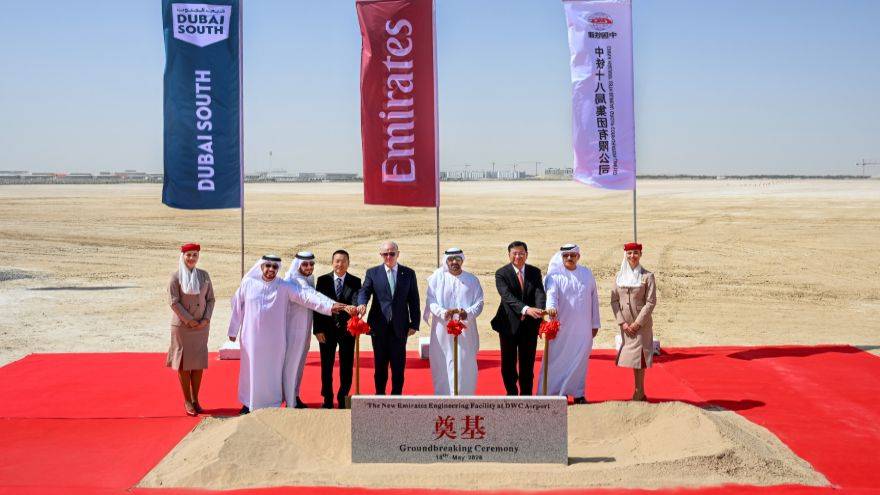
DUBAI – Emirates has officially broken ground on a US$5.1 billion engineering complex at Dubai South, marking a major expansion in the airline’s maintenance and aviation services capabilities.
The development is aimed to become the world’s most advanced maintenance, repair and overhaul (MRO) facility once completed. It further reinforces Dubai’s ambition to remain a global hub for aviation infrastructure and engineering excellence.
The project is being developed within the wider aviation ecosystem surrounding Dubai South, near Al Maktoum International Airport.
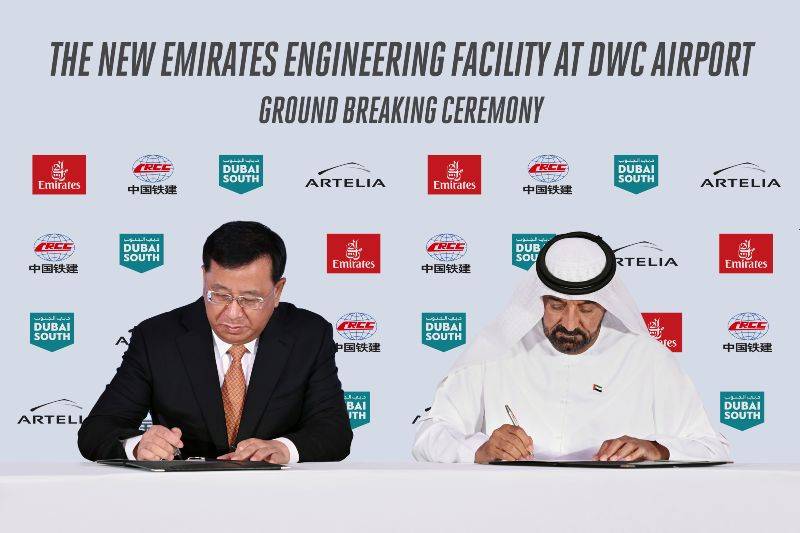
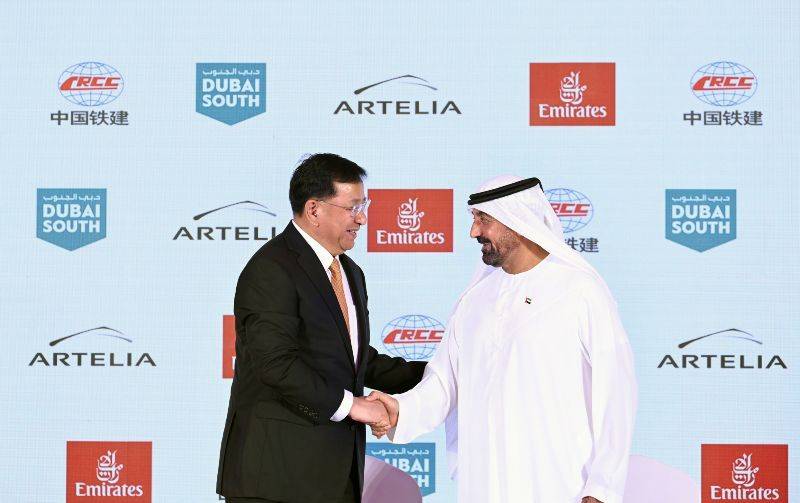
Emirates airline said the new facility represents a strategic investment in its long-term engineering and operational independence. The complex will significantly expand the airline’s ability to perform heavy maintenance, parts production and specialised aircraft services under one integrated system. Construction has been awarded to China Railway Construction Corporation Limited, with consultancy support from Artelia. The project also reflects wider collaboration between UAE and Chinese industrial partners, strengthening infrastructure ties across large-scale aviation developments.
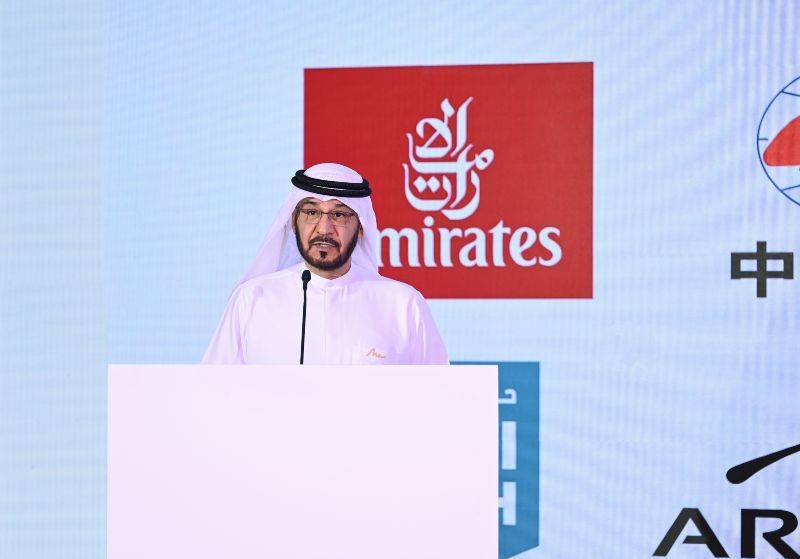
The groundbreaking ceremony was attended by senior UAE aviation leaders and international partners, highlighting the strategic importance of the project. Among those present were Sheikh Ahmed bin Saeed Al Maktoum, Sir Tim Clark, and Khalifa Al Zaffin of Dubai Aviation City Corporation and Dubai South.
Emirates engineering complex
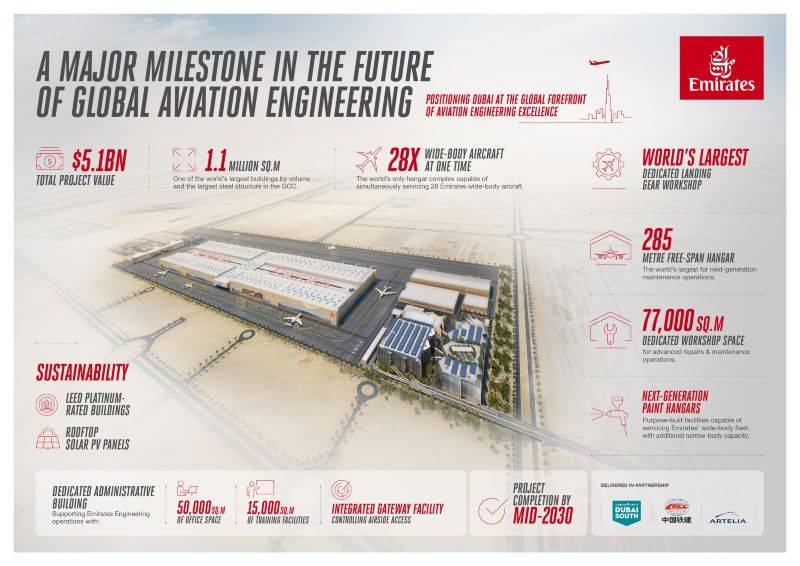
The new engineering complex spans an extraordinary 1.1 million square metres, making it one of the largest built structures globally by volume. It will also be the largest steel structure in the GCC region. At full capacity, the facility will be capable of simultaneously handling 28 wide-body aircraft, positioning it among the most advanced aircraft maintenance hubs in the world.
A defining feature of the development is its free-span hangar, which will stretch 285 metres, making it the largest of its kind globally. The site will also include two dedicated paint hangars designed to service Emirates’ wide-body fleet, with additional capability for narrow-body aircraft. These structures are designed to support increasingly complex maintenance cycles as global aviation demand continues to grow.
Key facilities
The engineering centre will house the world’s largest dedicated landing gear workshop, reinforcing its role as a global MRO leader. It will also feature 77,000 square metres of workshop space dedicated to repair and maintenance operations. In addition, 380,000 square metres will be allocated to storage and logistics functions, enabling large-scale operational efficiency across aircraft servicing workflows.
The facility is designed as a fully integrated aviation engineering ecosystem. A dedicated administrative building will provide 50,000 square metres of office space, alongside 15,000 square metres of training facilities for engineering and technical staff development. A secure gateway system will manage airside access, ensuring controlled movement between operational zones and aircraft servicing areas.

The complex is expected to initially support heavy maintenance operations and manage overflow demand from Emirates’ existing engineering centre at Dubai International Airport, ensuring operational continuity during peak maintenance cycles.
Sustainability drive
Sustainability has been embedded into the design of the facility from the outset, with all buildings targeting LEED Platinum certification. Solar panels will be installed across multiple rooftops within the complex to reduce energy consumption and support cleaner operational practices. These measures align with Dubai’s wider environmental strategy for large-scale infrastructure development.
The engineering complex is expected to set new standards for environmentally conscious aviation infrastructure in the region. Energy-efficient systems, advanced materials and integrated resource management will be incorporated throughout the site. The development also aligns with Dubai’s long-term economic vision under the D33 agenda, aimed at strengthening sustainable industrial growth and global competitiveness.
Construction is scheduled for completion by mid-2030, with phased operational readiness expected thereafter. Once fully active, the facility will play a central role in supporting Emirates’ expanding fleet requirements and Dubai’s growing position as a global aviation engineering powerhouse.