

Get ready to explore 13.8 billion years of Earth’s story inside Abu Dhabi’s new museum
Opening next month with prehistoric wonders led by the mighty Stan the T-Rex
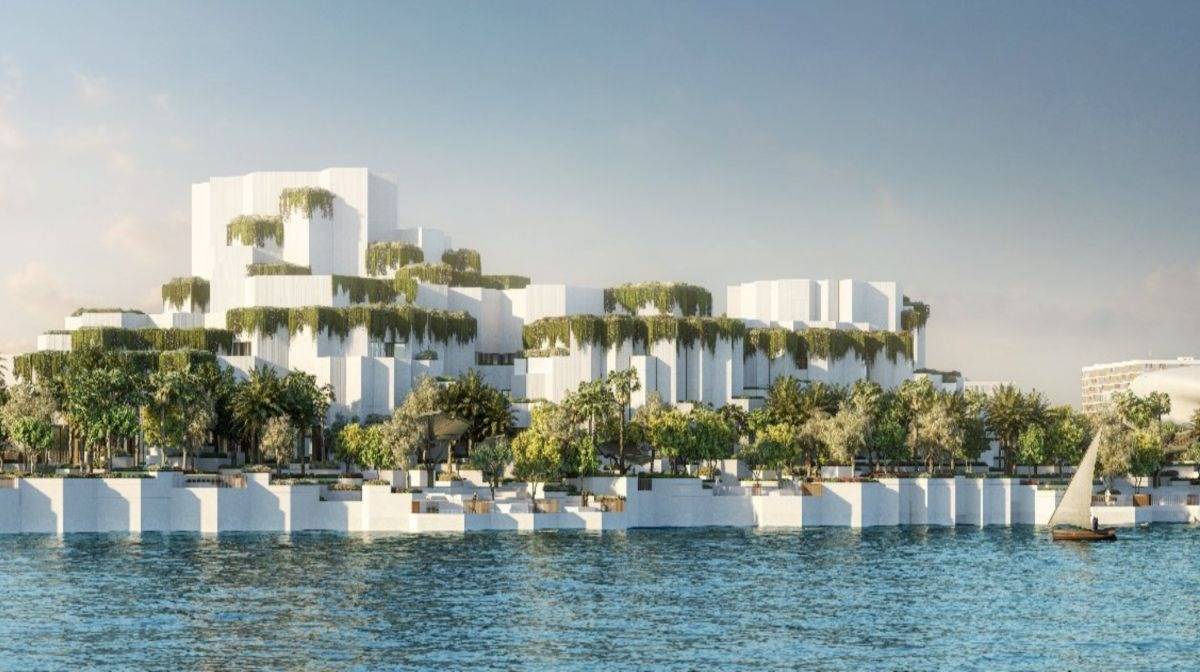
ABU DHABI – The Natural History Museum Abu Dhabi will open its doors to the public on 22 November 2025 in the Saadiyat Cultural District, marking a major milestone for the UAE’s cultural and scientific landscape.
At 35,000 square metres, it will be the largest museum of its kind in the region and a global destination for nature, science, and education. Visitors will embark on an immersive journey through 13.8 billion years of natural history, from the Big Bang to the rise of humanity, and the continuing evolution of life on Earth.
Designed to spark curiosity and inspire scientific exploration, the museum invites visitors to explore the past and contemplate the planet’s future through exhibits that blend storytelling, research, and interactive technology.
What can visitors expect?
Among the museum’s most remarkable highlights is Stan, one of the world’s most complete and best-preserved Tyrannosaurus rex skeletons. Standing as a formidable symbol of prehistoric life, Stan ruled the Earth around 67 million years ago. Alongside it will be a 25-metre female blue whale specimen—the largest known animal in Earth’s history – illustrating the scale of life’s diversity across eras. Completing this trio of marvels is the Murchison Meteorite, a celestial relic that carries grains formed seven billion years ago, predating our Solar System itself.
.@dctabudhabi has announced Natural History Museum Abu Dhabi will open on 22 November 2025. The 35,000sqm museum at @SCDabudhabi features immersive exhibitions spanning 13.8 billion years of natural history and highlights the region’s unique contribution to the natural world. pic.twitter.com/zDliOz7KLC
— مكتب أبوظبي الإعلامي (@ADMediaOffice) October 21, 2025
The museum’s narrative extends beyond global natural history, giving a prominent place to the story of the Arabian Peninsula. Among its most fascinating discoveries is Stegotetrabelodon emiratus, an extinct elephant species that roamed the region millions of years ago. Distinguished by tusks in both upper and lower jaws, this ancient creature offers rare insight into the evolutionary journey of elephants and the natural heritage of Abu Dhabi’s desert landscapes.
Natural History Museum Abu Dhabi
According to Mohamed Khalifa Al Mubarak, Chairman of the Department of Culture and Tourism – Abu Dhabi, the museum presents “the story of life on Earth, framed for the first time through an Arabian lens.” The galleries will integrate the fauna, flora, and geological history of the region, underlining the UAE’s role in the global story of evolution and sustainability.
Beyond exhibitions, the museum is also envisioned as a centre for research and education, contributing to international scientific studies in fields such as zoology, palaeontology, marine biology, molecular research, and earth sciences. Through its learning programmes, it aims to inspire younger generations to engage with the natural sciences and drive global sustainability efforts.
Designed by acclaimed Dutch architecture firm Mecanoo, the museum’s structure rises from the Saadiyat Island landscape like a natural rock formation. Its fluid silhouette mirrors the geological beauty of the Earth, reinforcing its mission to connect people with nature. Inside, a network of galleries will chronicle the evolution of life and ecosystems.
Permanent galleries include The Story of Earth, The Evolving World, Our World, Resilient Planet, and Earth’s Future, alongside thematic side galleries such as The PalaeoLab, The Life Sciences Lab, Arabia’s Climate, Beyond the Horizon, and The Human Story. Visitors will also experience the Interactive Theatre, a multisensory space transporting audiences through time via immersive visual storytelling.
Special exhibitions
To mark its grand opening, the museum will debut two major international exhibitions. The first, The March of the Triceratops, will present the world’s only touring Triceratops herd, giving visitors a rare encounter with these iconic three-horned dinosaurs. The second, the 61st Wildlife Photographer of the Year, will showcase some of the most powerful and evocative nature photography from around the globe.
Together, these exhibitions will launch the museum’s international programme and reinforce Abu Dhabi’s commitment to fostering cultural and scientific exchange on a global scale.
Set within a cultural landscape that already includes Louvre Abu Dhabi, teamLab Phenomena Abu Dhabi, and the upcoming Zayed National Museum and Guggenheim Abu Dhabi, the Natural History Museum adds another dimension to Saadiyat Cultural District. As the emirate’s newest beacon of discovery, it will bring the story of our planet – and our place within it – to life for generations to come.