

Dubai welcomes Nobel Prize winners for World Laureates Summit 2026
Three-day summit focuses on science-driven global policy solutions
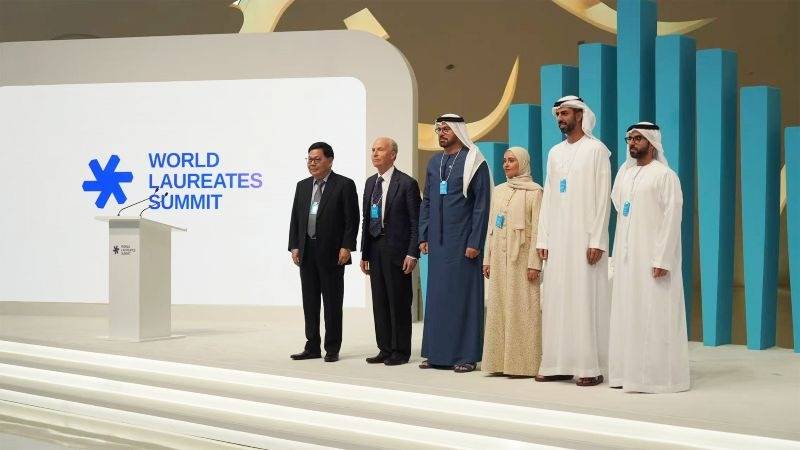
DUBAI – Dubai is set to host the World Laureates Summit from February 1, 2026, bringing together more than 150 leading scientists, including Nobel Prize winners and recipients of the world’s most prestigious scientific awards.
The three-day summit, held alongside the World Governments Summit 2026, offers a unique platform where scientific insight meets global decision-making, reinforcing the central role of basic science in addressing humanity’s pressing challenges.
Organised jointly by the World Laureates Association (WLA) and the World Governments Summit (WGS), the summit ranks among the largest and most distinguished gatherings of scientific minds worldwide. It convenes Nobel laureates, Turing Award recipients, Wolf Prize winners, Lasker Award recipients, Fields Medallists, Breakthrough Prize honourees, and other internationally recognised figures to deliberate on long-term, multidisciplinary cooperation.
Science and policy
The Summit’s theme, “Basic Sciences: Scientific Consensus for Addressing the Challenges of Humanity,” underscores the importance of grounding global policy, technological advancement, and economic systems in rigorous scientific principles. Discussions will span artificial intelligence, machine learning, quantum sciences, nanotechnology, biotechnology, genomics, data science, cryptography, neurotechnology, brain sciences, energy, and advanced materials.
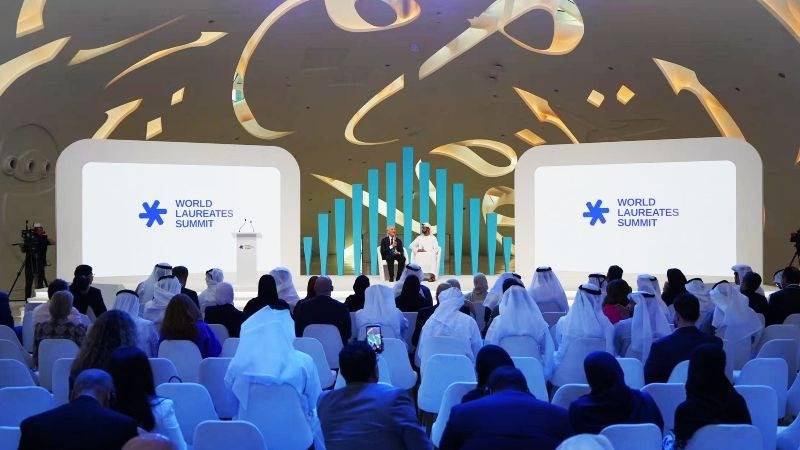
Omar Sultan Al Olama, UAE Minister of State for Artificial Intelligence, Digital Economy and Remote Work Applications, and Vice Chairman of the World Governments Summit Foundation, said, “Hosting the World Laureates Summit alongside the World Governments Summit reflects the UAE leadership’s deep belief that science and knowledge are among the most powerful drivers for building a better future for humanity. By bringing the world’s leading scientists together with policymakers and decision-makers, we aim to translate scientific insight into action and ensure that global governance is guided by rigorous scientific thinking.”
He added, “By uniting scientific wisdom and decision-making under one roof, we seek to establish a global reference that helps protect humanity’s civilisational achievements and guides future policies toward sustainable, evidence-based progress.”
Nobel perspectives
Professor Roger D. Kornberg, Nobel Laureate in Chemistry (2006) and Chairman of the World Laureates Association, described the Summit as a wake-up call. “Global policy cannot move forward effectively without strong scientific foundations, and science itself cannot thrive without supportive political will. The UAE’s commitment to this vision reflects both courage and foresight – recognising that basic science must inform the decisions that shape humanity’s future,” he said.
He added, “At a time of urgent global challenges, this Summit offers scientists a rare opportunity to contribute directly to long-term thinking about civilisation, prosperity, and human progress.”
The Summit is designed to move beyond short-term policy cycles, promoting integration across scientific disciplines while connecting basic research with global governance.
Vision 2050
During the Summit, the WLA will release a white paper titled “Vision 2050 for a Scientific Civilisation.” The document outlines a framework for a continuously evolving scientific civilisation, addressing challenges accelerated by artificial intelligence and transformative developments in energy and human health.
Additionally, the Association will unveil three annual flagship initiatives: a global university ranking, a science cities ranking, and an annual review of scientific developments, charting where new knowledge is generated and how it evolves.
Daily forums
Day One will feature the Opening Ceremony and the Mobius Forum, including sessions on AI, transformational technologies, new energy, and scientific discovery.
Day Two will host nine specialised forums covering brain sciences, genomics, life sciences, physics, university and hospital leadership, blockchain in science, carbon materials, and nuclear physics.
The summit will conclude on Day Three with the Young Scientists Forum and joint sessions with the World Governments Summit, enabling interaction between scientists, heads of state, ministers, and international leaders.
Who is participating?
Among the participating Nobel laureates and eminent scientists are Professor Omar Yaghi (Nobel Prize in Chemistry 2025; Wolf Prize 2018), Professor Joel Mokyr (Nobel Prize in Economics 2025), Dr John Clauser (Nobel Prize in Physics 2022), Professor David W.C. MacMillan (Nobel Prize in Chemistry 2021), Professor Ardem Patapoutian (Nobel Prize in Physiology or Medicine 2021), and Professor Gregg L. Semenza (Nobel Prize in Physiology or Medicine 2019).
University presidents and chancellors from leading institutions across Europe, North America, Asia, and the Middle East will also attend, alongside 187 distinguished WLA members, including 78 Nobel laureates and recipients of the Turing, Wolf, Lasker, Fields, and Breakthrough awards. Members represent over 25 countries and a wide range of disciplines, from chemistry and physics to medicine, economics, and computer science.
The World Laureates Association is dedicated to advancing basic science, fostering international collaboration, and supporting the next generation of scientists, reinforcing science as a shared global endeavour.