

Abu Dhabi makes GCC history with first successful separation of Nigerian conjoined twins
Mercy and Goodness separated in groundbreaking surgery after months of care
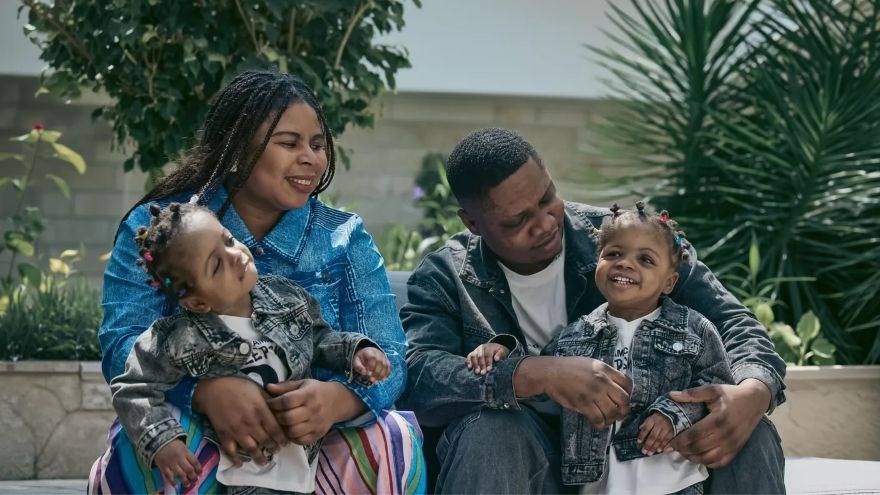
ABU DHABI – The UAE capital has marked a historic achievement in healthcare by successfully hosting the Gulf region’s first surgical separation of craniopagus twins, a rare and highly complex procedure involving twins joined at the head.
The life-changing operation was performed at PureHealth’s SEHA Sheikh Khalifa Medical City (SKMC), where a multidisciplinary team of specialists spent months planning and executing one of the most challenging surgeries in modern medicine.
The patients, 15-month-old Nigerian sisters Mercy and Goodness, were born with their heads joined at the top, sharing fused skulls as well as intertwined brain tissue and blood vessels. Their condition required extraordinary surgical precision, advanced medical technology and extensive international collaboration. Following the final procedure, the sisters were able to see one another face-to-face for the first time and play side by side, marking a significant milestone in their recovery journey.
A global mission
The separation involved more than 60 doctors, surgeons and healthcare professionals from the UAE, the United Kingdom, Brazil and Nigeria over a six-month period. The team included neurosurgeons, craniofacial surgeons, paediatricians, anaesthetists, radiologists, nurses and rehabilitation specialists, all working together to ensure the safest possible outcome.
Under the supervision of the Department of Health – Abu Dhabi (@DoHSocial), PureHealth has successfully performed the GCC’s first craniopagus twins separation in Abu Dhabi. This historic milestone further reinforces the UAE’s position as a global leader in healthcare, where… pic.twitter.com/6KOT8DQs3j
— PureHealth (@PureHealthae) June 5, 2026
A key role in the project was played by Gemini Untwined, a charity specialising in the treatment and research of craniopagus twins. The organisation coordinated clinical expertise and helped bring together specialists from several countries to support the operation in Abu Dhabi.
The girls underwent four carefully staged surgeries designed to gradually separate their shared anatomy while minimising risks. Each stage required meticulous planning and coordination, reflecting the complexity of a condition seen only in a handful of cases worldwide.
For several months, the twins remained in Abu Dhabi as preparations continued. Medical teams carried out a series of intricate procedures and assessments, ensuring every aspect of the operation was planned in detail before the final separation was attempted.
Advanced technology
The success of the procedure was supported by some of the most sophisticated technologies currently available in medicine. Surgeons relied on advanced imaging systems, augmented reality simulations and 3D printing to create detailed maps of the twins’ shared vascular and neural structures.
These technologies enabled specialists located in different countries to collaborate within a shared virtual environment, allowing them to visualise and rehearse key aspects of the operation before entering the operating theatre.
Cooperation with Gemini Untwined also enabled the use of mixed reality-guided implant design and artificial intelligence-enhanced surgical planning. Complex modelling undertaken at the Zayed Centre for Research at Great Ormond Street Hospital helped surgeons better understand the twins’ anatomy and refine their approach.
According to the medical teams involved, these innovations improved patient safety, reduced the need for skin grafts and contributed to what has been described as the fastest recorded separation of vertically conjoined twins. Specialists said the achievement establishes a new benchmark in complex paediatric neurosurgery.
Following the successful separation, surgeons reconstructed the girls’ skulls using customised 3D-printed titanium grafts. The procedure represented another major technical challenge and was crucial in ensuring long-term recovery and protection of the brain.
Reem bint Ebrahim Al Hashimy, Minister of State for International Cooperation, described the operation as a powerful example of what can be achieved when medical excellence is combined with compassion and international cooperation.
She said the achievement reflected Abu Dhabi’s commitment to delivering healthcare that transforms lives and highlighted the emirate’s ability to bring together world-class talent, cutting-edge innovation and humanitarian values. She also praised PureHealth’s philanthropic initiatives, which played a significant role in making the project possible.
Al Hashimy noted that the successful separation of Mercy and Goodness demonstrated the UAE’s growing status as a global healthcare leader, where advanced medical expertise and compassionate care work hand in hand. She said the case reinforced the country’s commitment to ensuring access to life-changing treatment regardless of geographical boundaries.
Mansoor Ibrahim Al Mansoori, Chairman of the Department of Health – Abu Dhabi, said the accomplishment reflected the emirate’s advanced healthcare infrastructure, specialist capabilities and commitment to innovation.
He stated that the operation added to Abu Dhabi’s record in handling highly complex medical cases and underscored its position as a leading destination for specialised healthcare services. According to Al Mansoori, the achievement also demonstrated how strategic partnerships and shared expertise can improve health outcomes for communities around the world.
Recovery journey
Farhan Malik, Founder and Managing Director of PureHealth Group, said the story of Mercy and Goodness reflected the organisation’s core purpose of putting patients first and creating meaningful human impact through healthcare.
He praised the dedication of medical teams who worked around the clock during every phase of treatment, from pre-operative planning and surgery to intensive monitoring, rehabilitation and post-operative care. Malik also acknowledged the support provided by the UAE’s leadership in strengthening the country's healthcare sector and enabling advanced medical programmes.
The operation was led by Professor Noor Ul Owase Jeelani MBE, Founder of Gemini Untwined and Consultant Paediatric Neurosurgeon at Great Ormond Street Hospital for Children. He described the case as a rare and remarkable success achieved through the combined efforts of international experts, the resilience of the twins and the determination of their family.
Professor Jeelani highlighted the support provided by Abu Dhabi and PureHealth throughout the process, including hosting the twins and their parents during months of treatment. He said the case demonstrated how global collaboration and knowledge-sharing can produce life-changing outcomes that might otherwise be impossible.
The integration of multidisciplinary teams under PureHealth’s unified healthcare system ensured seamless coordination throughout the girls’ treatment. Every stage, from surgical planning and risk assessment to rehabilitation and long-term recovery, was carefully managed through close cooperation among specialists.
Today, Mercy and Goodness remain in the UAE, where they are continuing intensive rehabilitation aimed at developing motor skills and adapting to independent movement. Medical teams are closely monitoring their progress as they learn to navigate life separately for the first time.
Their recovery programme focuses on helping them build strength, coordination and confidence before eventually returning home to Nigeria.