

Foldable iPhone, iPhone 18 Pro and more: What to expect from Apple’s September 9 “Surprise and Shine” event
A leadership change, premium-focused lineup and delayed models could reshape Apple’s launch strategy
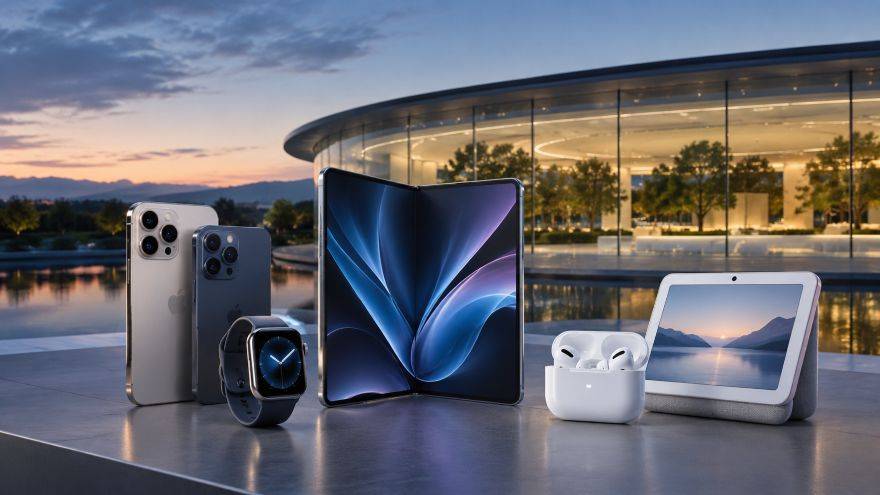
DUBAI – Apple’s September 9 “Surprise and shine” event could mark one of the company’s biggest product launches in years, with the first foldable iPhone expected to take centre stage alongside the iPhone 18 Pro and iPhone 18 Pro Max.
Apple has officially confirmed the event for September 9 at 10 am Pacific Time, but it has not revealed which products will be unveiled. The event will be streamed through Apple’s website, Apple TV and YouTube.
For Apple, however, the significance goes beyond a new iPhone generation. The event is expected to be the first major product launch under new CEO John Ternus, while the company could also use the occasion to demonstrate how its artificial-intelligence strategy is beginning to move from software announcements into everyday hardware.
The foldable iPhone could steal the show
The biggest expected announcement is Apple’s first foldable iPhone, widely referred to in leaks as the iPhone Ultra or iPhone Fold.
Reports suggest Apple is taking a book-style approach rather than designing a clamshell phone. The device is expected to have an outer OLED display of roughly 5.3 to 5.5 inches that opens into a much larger 7.6- to 7.8-inch internal display. A titanium-based construction and an extremely thin profile have also been widely reported.
The display could be the phone's defining feature. Apple is reportedly targeting a dramatically reduced, potentially almost invisible crease, addressing one of the most persistent complaints about foldable phones.
The biometric system could also depart from Apple's recent approach. Instead of Face ID, the foldable is expected to use Touch ID integrated into the power button. Current reports also point to two rear cameras rather than the triple-camera arrangement found on Apple's conventional Pro models.
Price could be the biggest obstacle. Estimates in the material surrounding the launch put the starting price somewhere between $2,000 and $2,500, with some predictions placing the most likely price above $2,200. That would make the foldable an ultra-premium device rather than a mainstream replacement for the regular iPhone.
iPhone 18 Pro and Pro Max: familiar design, major internal changes
The iPhone 18 Pro and iPhone 18 Pro Max are expected to form the more conventional part of Apple's September lineup.
The most important upgrades are reportedly inside the phones. Both Pro models are expected to use Apple's next-generation A20 Pro chip, with reports pointing to a 2-nanometre manufacturing process. A new Apple-designed C2 modem is also expected, while the Pro Max could receive improved thermal management to sustain demanding workloads such as gaming and video recording.
The cameras could receive one of the more meaningful upgrades in years. Reports suggest Apple is working on a variable-aperture or mechanical-aperture main camera, potentially allowing users to control the amount of light entering the lens and achieve more natural depth-of-field effects instead of relying entirely on computational photography.
The display could also receive a smaller Dynamic Island, while new colour options have been reported for the Pro models.
Battery capacity is another expected area of improvement, particularly on the Pro Max. Current reports have suggested capacities in the region of 5,391mAh to 5,567mAh, although such figures remain unconfirmed until Apple publishes official specifications.
Apple may change the traditional iPhone launch cycle
One of the more consequential changes may be what Apple doesn't announce.
Reports suggest the standard iPhone 18, iPhone 18e and a second-generation iPhone Air could be held back until spring 2027, leaving the September launch focused on the premium Pro models and the new foldable.
The reported reason is partly supply-related. Strong demand for the iPhone 17 family, semiconductor constraints and a broader memory shortage driven by the AI boom have reportedly increased component costs. Counterpoint Research associate director David Naranjo told MarketWatch that Apple may be concentrating on premium models to protect revenue and margins.
If accurate, the move would represent a significant departure from Apple's traditional September strategy, effectively turning the event into a premium-focused iPhone launch.
Apple Watch could bring AI closer to the wrist
The iPhone is unlikely to be the only major hardware category on stage.
The Apple Watch Series 12 is expected to bring a new generation of hardware and potentially stronger AI integration. Leaks have pointed to new case options, including ceramic finishes, while an always-on heart-rate capability and an AI-enhanced Siri experience have also been reported.
The Apple Watch Ultra 4 is expected to follow Apple's established rugged and fitness-oriented formula, with improvements to sensors, battery performance and internal hardware rather than a radical redesign.
Apple has already previewed a new Siri powered by Apple Intelligence at WWDC26, making the September event an opportunity to show how those capabilities work across its hardware ecosystem.
AirPods and Apple's home ambitions
Apple could also use the event to expand its audio and smart-home portfolio.
Reports have pointed to new AirPods, potentially including an AirPods 5 model with additional health-related capabilities. A refreshed Apple TV and a faster HomePod mini have also been mentioned in pre-event reports.
The more interesting possibility is a new Apple smart-home hub.
Bloomberg reporting cited in the supplied material points to a roughly 7-inch device designed to combine smart-home controls, FaceTime and facial recognition. Such a product would represent a much more direct attempt by Apple to establish a permanent presence in the home.
The AI question may be as important as the hardware
Behind all of these products is Apple's attempt to make Apple Intelligence a more visible part of its ecosystem.
The company is expected to highlight an upgraded Siri capable of understanding information across apps and performing more complex, multistep actions. Apple Intelligence relies on a combination of on-device processing, Private Cloud Compute and third-party models when appropriate.
That makes the September event more than a hardware refresh. Apple is effectively trying to show how its AI strategy, new chips and new product categories fit together.
A new era under John Ternus
Perhaps the most important backdrop is Apple's leadership transition.
John Ternus became CEO on September 1, according to the supplied reporting, meaning the September 9 event comes only days into his tenure.
A foldable iPhone would be Apple's first major new iPhone form factor since the iPhone X era. Combined with AI-focused products and a potentially different iPhone release strategy, it could make “Surprise and shine” less about another annual upgrade and more about signalling where Apple goes next.
For consumers, the biggest question may ultimately be simple: Is Apple's first foldable good enough to justify a price potentially exceeding $2,000?