

How UAE’s $1 trillion market cap is reshaping global investment flows
ADX foreign investment jumps 78% in first five months of 2025
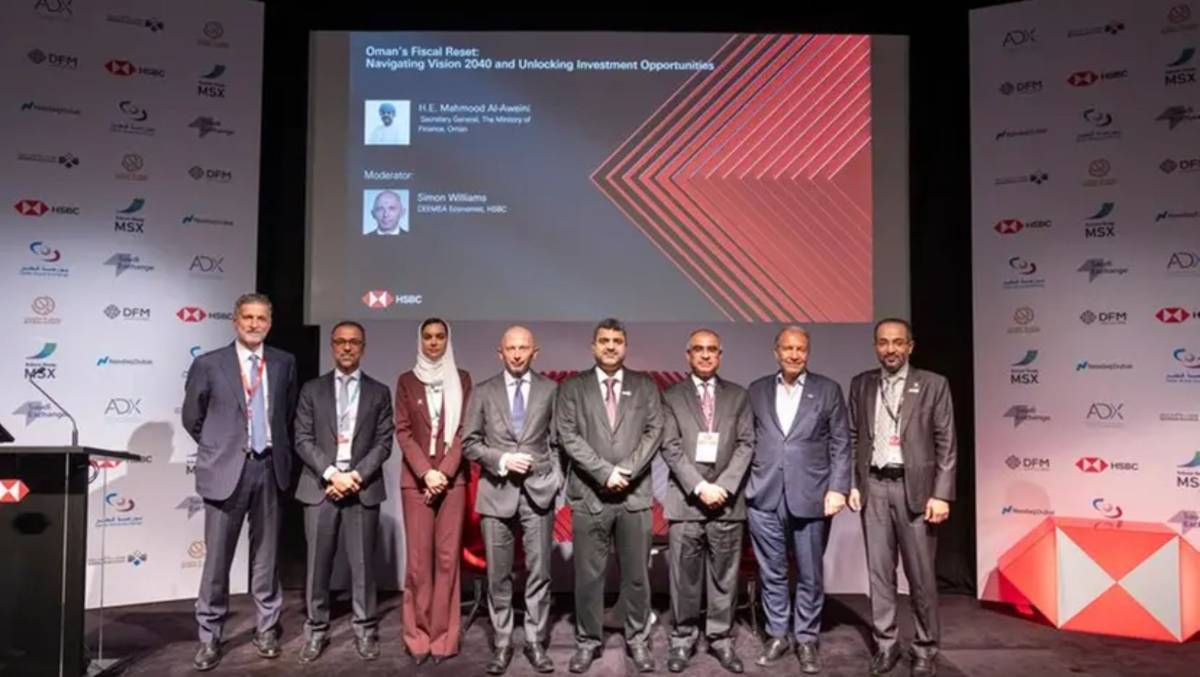
DUBAI: More than 300 institutional investors from across the world convened in London this week for the HSBC GCC Exchanges Conference, where they met over 100 corporates from the Middle East alongside representatives of all seven Gulf Cooperation Council (GCC) stock exchanges.
The high-profile gathering comes amid ongoing global tariff uncertainty, which is reshaping capital flows and prompting investors to seek more stable, diversified options.
The Gulf region, with its maturing capital markets and robust economic reforms, continues to attract increasing interest from global funds.
Investor focus shifts
Now in its fourth year, the four-day event highlighted the resilience and growth potential of GCC markets. Key themes included expanding IPO pipelines, increasing depth in both sovereign and corporate bond markets, and the rise of private credit platforms. A key spotlight was placed on the UAE’s rapid rise as a capital markets powerhouse. By the end of 2024, the country had reached a market capitalisation of US$1 trillion, with strong indications that its robust IPO pipeline will continue to attract international allocations.

The event underscored how the region’s financial liberalisation and government-led privatisation efforts are aligning with global investor demand for more resilient and diversified options. GCC capital markets showed strength in the first quarter of 2025, with IPO proceeds surging 33% compared to the same period in 2024, even as global issuances slowed. Mergers and acquisitions also posted their highest quarterly volume in three years, bolstered largely by activity in the UAE and Saudi Arabia.
UAE’s strong showing
Nabeel Albloushi, Head of Markets & Securities Services for MENAT at HSBC, commented, “Global investors are recalibrating for resilience and the GCC’s balance sheet strength and sophisticated financial markets ecosystem make it a capital magnet. The UAE offers one of the most compelling growth stories.” According to him, the percentage of Global Emerging Markets funds with UAE exposure surged from 35% to 65% since mid-2021. “The breadth of sectors coming to the market – from retail and logistics to renewables – not only reflects deepening investor confidence but also gives global institutions the diversity they seek,” he added.
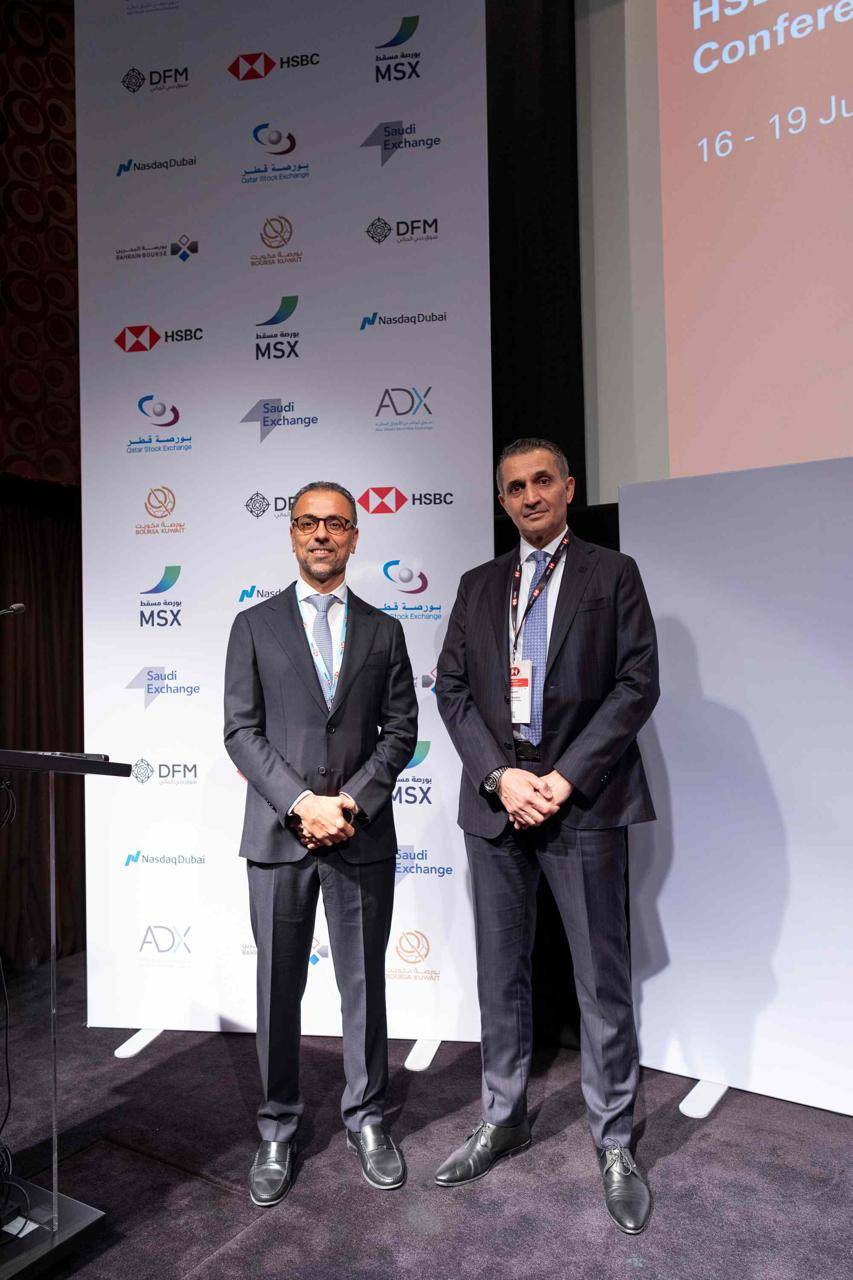
Abdulla Salem Alnuaimi, Group CEO of Abu Dhabi Securities Exchange (ADX), noted: “Our participation in the HSBC GCC Exchanges Conference in London underscores the growing role ADX is playing as a primary gateway for global capital flows into the country.” In the first five months of 2025 alone, net foreign investment in ADX stood at around Dh11 billion (US$3 billion), a 78% rise from the same period in 2024. Foreign trading values at ADX have risen more than 347% over the last five years, with institutional investors showing keen interest in sectors like energy, logistics, tech, and financial services.
He further stated, “Our listed companies are among the most prominent in the region, supported by strong financial fundamentals and high transparency. ADX continues to offer global investors unique and diversified opportunities for growth and stability.”
Dubai’s market momentum
Also present at the event was Hamed Ali, CEO of Dubai Financial Market (DFM) and Nasdaq Dubai. He shared that Dubai’s capital markets are gaining increased international prominence, supported by economic stability and a clear long-term growth narrative. “At this year’s HSBC GCC Exchanges Conference, we are showcasing the strength and diversity of our listed ecosystem,” he said. DFM’s total market capitalisation stands at Dh951 billion, making it an increasingly attractive destination for global investors seeking dynamic opportunities in the region.
Prominent UAE speakers at the event included Khalid Alqasimi, Deputy Chief of Mission at the UAE Embassy in London, Hesham Heikal, CFO of Emaar Properties, Faisal Falaknaz, CFO & Sustainability Officer at Aldar Properties, and Areeb Pasha, CFO of Dubizzle.
For the first time, HSBC integrated Emerging Market Macro Strategists into the event, facilitating targeted dialogues with GCC stakeholders. This move reflects the growing appetite among EM investors to increase exposure to the Gulf region, spurred by strong GDP growth forecasts compared to broader emerging markets.
HSBC’s regional footprint
HSBC is the largest international banking organisation in the Middle East, North Africa, and Türkiye (MENAT), operating across nine regional markets. These include Algeria, Bahrain, Egypt, Kuwait, Oman, Qatar, Saudi Arabia, Türkiye, and the UAE. In Saudi Arabia, HSBC holds a 31% stake in Saudi Awwal Bank (SAB) and a 51% stake in HSBC Saudi Arabia, its investment banking arm in the Kingdom. As of 31 December 2024, HSBC held assets of US$73 billion in the MENAT region.