

Inside Dubai Customs’ high-tech fight against drugs: 406kg seized and hundreds of operations foiled
New era of smart inspections transforms the fight against illicit trafficking
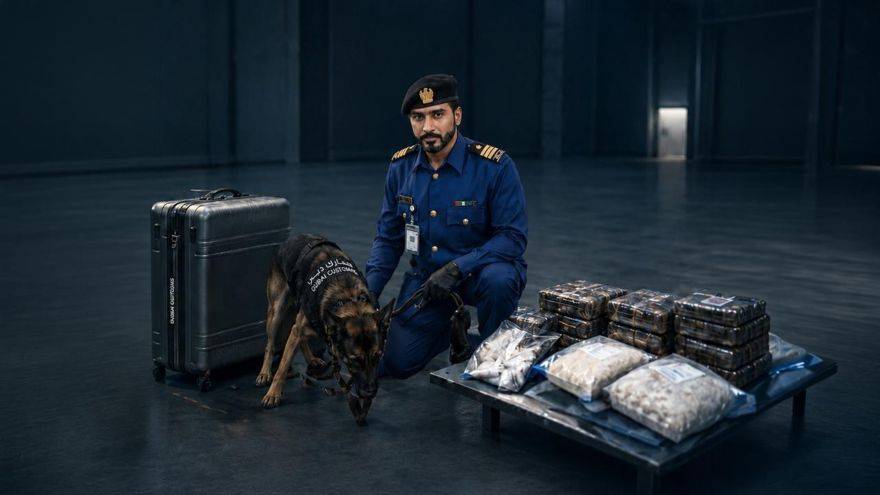
DUBAI – Dubai Customs has positioned itself as a global force in combating drug trafficking, revealing that its inspection and targeting teams intercepted 502 smuggling attempts and seized 406 kilograms of narcotic and psychotropic substances during the first five months of 2026.
The operations also prevented more than 2.3 million narcotic tablets from entering circulation, reflecting the scale of efforts focused on protecting communities and safeguarding legitimate trade.
The announcement coincides with the International Day Against Drug Abuse and Illicit Trafficking, highlighting Dubai Customs’ expanding role in addressing a challenge that extends beyond border security. Drug trafficking has become a global issue linked to organised crime networks, economic risks and social harm, requiring advanced monitoring systems, international cooperation and rapid intelligence-led responses.

Dubai Customs’ approach has evolved from traditional inspection methods into a comprehensive security framework that combines artificial intelligence, big data analytics, advanced detection technologies and specialist expertise. The organisation now operates a proactive system designed to identify risks, analyse shipment patterns and disrupt smuggling attempts before prohibited substances reach communities.
Fight against drugs
Abdulla bin Damaithan, Chairman of the Ports, Customs and Free Zone Corporation, said Dubai Customs’ achievements reflect the vision of the UAE leadership in creating a secure environment that supports both community protection and the growth of legitimate trade.
He highlighted that Dubai’s position as a global centre for commerce requires continuous development of customs capabilities, investment in national expertise and the adoption of smart technologies capable of addressing increasingly sophisticated cross-border threats.
According to him, the Ports, Customs and Free Zone Corporation continues to strengthen cooperation between relevant entities while enhancing regulatory systems designed to protect society, support economic security and maintain the integrity of global supply chains.
He noted that Dubai Customs’ success in preventing drug smuggling attempts demonstrates the effectiveness of a security framework built on risk analysis, innovation and partnerships with local and international organisations. The efforts contribute to maintaining Dubai’s reputation as a trusted destination for trade and investment, where security remains a key foundation for sustainable development.
Seizure figures
The first five months of 2026 recorded significant operational activity across Dubai Customs’ inspection network.
January saw 107 seizures, resulting in the interception of 116.3 kilograms of narcotic substances and more than 1.2 million tablets. In February, teams recorded 89 seizures involving 79.2 kilograms of substances and 213,000 tablets.

March operations resulted in 57 seizures, with 30.3 kilograms and 727,000 tablets intercepted. April recorded the highest number of seizures during the period, with 115 cases involving 109.3 kilograms and 61,900 tablets. May concluded the five-month period with 74 seizures, 71 kilograms of substances and more than 115,000 tablets stopped before reaching the market.
Across the full year of 2025, Dubai Customs recorded around 1,185 seizures involving narcotic and psychotropic substances, demonstrating the continued scale of enforcement operations and the evolving nature of its security response.

Dr Abdulla Busenad, Director General of Dubai Customs, said every intercepted shipment represents more than a security achievement, as preventing illegal substances from entering the country helps protect families, young people and economic stability.
He reaffirmed Dubai Customs’ commitment to innovation, technology and developing human capabilities, stressing that community protection begins at border points and that effective customs security supports long-term development.
He added that Dubai Customs has supported several international customs administrations in preventing drug smuggling attempts, strengthening Dubai’s role as a partner in global efforts against transnational organised crime.
Human expertise
Mohammed Al Ghaffari, Executive Director of the Customs Inspection Division at Dubai Customs, said strengthening security at customs entry points remains a strategic priority as criminal networks continue to develop new methods of concealment and transportation.
He explained that technology alone cannot deliver effective protection without skilled inspectors capable of applying experience, intuition and risk analysis during real-time operations.
Dubai Customs’ inspection strategy combines trained personnel, advanced smart systems and data-driven analysis to improve detection capabilities across shipments, travellers and transport vehicles. Continuous training programmes help inspectors maintain high professional standards and respond to changing smuggling techniques.
The customs inspector remains a central element of the security system, supported by technologies designed to improve accuracy, efficiency and speed while maintaining the smooth movement of legitimate trade.
Smart protection
Dubai Customs’ advanced systems play a central role in identifying and stopping high-risk consignments.
The Siyaj system represents one of the organisation’s major smart security initiatives, combining artificial intelligence, advanced detection devices, environmentally friendly electric vehicles and specialised teams operating across customs entry points. The system is also supported by the K9 Customs Dog Unit, adding another layer of detection capability.
Through integrated monitoring and analysis, Siyaj enables faster identification of suspicious activity while improving response times during inspections.
The Shahin project further supports Dubai Customs’ vision of creating smarter customs operations. The system enhances inspection procedures, manages shipment flows and allows resources to be focused on consignments requiring closer examination while supporting faster clearance for low-risk cargo.
It also strengthens the electronic sealing system used for shipments, helping maintain cargo integrity, improve monitoring during transportation and storage, and reduce opportunities for tampering.
Major operations
Several major cases demonstrate Dubai Customs’ ability to counter increasingly complex smuggling methods.
Operation Black Tank resulted in the interception of 147.4 kilograms of narcotics arriving through sea freight from an Asian country. The substances were concealed inside a specially designed tank in an attempt to avoid detection.
Operation Ampoules led to the seizure of 102 kilograms of Nalbuphine arriving through air cargo from an Asian country. The operation followed detailed surveillance and intelligence work that enabled teams to identify and stop the shipment.
Both operations highlighted the importance of intelligence gathering, specialised inspection techniques and coordinated action in disrupting organised smuggling networks.
Behind these successes is an advanced risk analysis system powered by artificial intelligence and big data. The platform evaluates shipment information, identifies unusual patterns and analyses risk indicators before consignments reach physical inspection points.