

Dubai approves Dh1 billion incentive package to accelerate growth and support businesses
New GDP methodology enhances accuracy of economic performance data
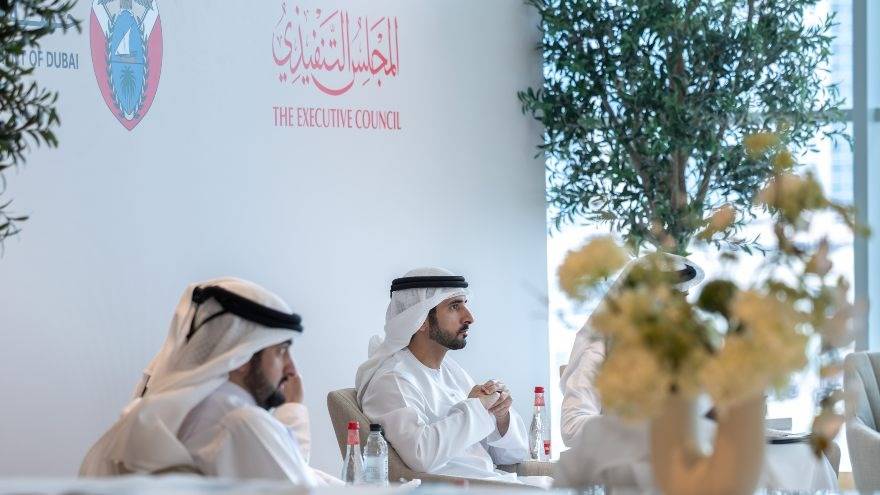
DUBAI – Dubai has unveiled a sweeping set of economic and social measures anchored by a Dh1 billion incentive package, as the emirate pushes forward with plans to strengthen resilience, boost investor confidence, and support its workforce.
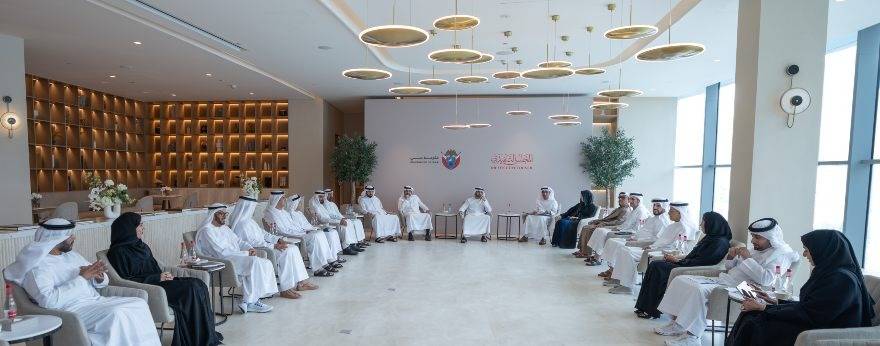
The decisions were approved during a meeting of The Executive Council chaired by His Highness Sheikh Hamdan bin Mohammed bin Rashid Al Maktoum. The meeting also reviewed Dubai’s latest economic performance and endorsed multiple long-term strategies spanning trade, social development, and labour welfare.
The high-level session brought together senior leadership, including Sheikh Maktoum bin Mohammed bin Rashid Al Maktoum and Sheikh Ahmed bin Mohammed bin Rashid Al Maktoum, reinforcing alignment with the UAE’s broader national vision under President and Ruler of Abu Dhabi Sheikh His Highness Mohamed bin Zayed Al Nahyan and Vice President, Prime Minister, and Ruler of Dubai His Highness Sheikh Mohammed bin Rashid Al Maktoum. Officials emphasised that the latest measures reflect Dubai’s commitment to maintaining its position as a leading global economic hub built on transparency, flexibility, and strong governance.
Economic boost
The Dh1 billion incentive package is set to roll out from 1 April 2026 and will remain in effect for a period of three to six months. It is designed to ease financial pressures on businesses and individuals while enhancing liquidity across key sectors. Authorities confirmed that a range of government fees will be deferred for three months, providing immediate relief to companies navigating evolving market conditions.
Among the most notable measures is the postponement of 100 percent of hotel sales fees and the Tourism Dirham for three months, a move aimed at strengthening cash flow within the hospitality and tourism sectors. In parallel, customs clearance grace periods will be extended from 30 days to 90 days, with the possibility of further extensions subject to compliance with applicable tax regulations.
Additional steps include streamlining procedures for issuing and renewing residency permits, making it easier for skilled professionals to live and work in Dubai. Officials noted that these incentives are structured to reinforce the emirate’s appeal as a destination for global talent while supporting business continuity.
Growth data
Dubai’s economic performance figures for the fourth quarter of 2025 were also reviewed during the meeting, revealing a growth rate of 6.4 percent. For the full year, the emirate recorded GDP growth of 5.4 percent, with total output reaching Dh937 billion. The figures underscore sustained momentum across sectors despite global economic uncertainties.
In a parallel development, The Executive Council approved an updated methodology for measuring Dubai’s GDP. The revised framework expands the scope of economic surveys and introduces broader statistical coverage to capture a more accurate picture of economic activity. It also incorporates enhanced databases designed to reflect real-time performance more effectively, strengthening the credibility and transparency of official data.
Trade reforms
A key initiative approved during the session was the Virtual Warehouses Initiative, overseen by Dubai Customs. In its initial phase, the programme will facilitate temporary imports into the emirate, ensuring the smooth movement of goods, including high-value items such as artwork.
Under a newly introduced temporary admission declaration, artwork imports will be exempt from customs duties and financial guarantees, while duties on privately owned artworks will be suspended for up to three years. The initiative also removes geographical restrictions and simplifies extension procedures, reducing administrative complexity for traders and collectors.
A notable feature is the introduction of virtual copies of artworks, enabling continuous high-tech tracking. The system builds on Dubai Customs’ Art Flow pilot project and is expected to deliver both financial and operational efficiencies. Officials said the initiative strengthens Dubai’s position as a global hub for art trade and high-value asset management, particularly among high-net-worth individuals.
Social strategy
The Dubai Empowerment Strategy was also endorsed, with oversight assigned to the Community Development Authority. The initiative aligns closely with the Dubai Social Agenda 33 and builds on the achievements of the Dubai Empowerment Programme.
To date, the programme has supported 1,200 young Emiratis, created more than 7,000 job opportunities, and engaged over 400 partner entities. The new strategy seeks to further elevate living standards, enhance financial stability, and promote sustainable employment among Emirati families.
Authorities highlighted a dual-track approach targeting both job seekers and individuals pursuing home-based entrepreneurship. The strategy also places strong emphasis on cross-sector collaboration, bringing together government entities, private businesses, and community organisations to deliver integrated support systems.
Worker welfare
The meeting also approved the Health and Safety Strategy for Workers’ Accommodation, marking a significant step towards improving living and working conditions across the emirate. The strategy sets ambitious targets, including achieving 100 percent access to essential services for workers and full compliance with health and safety regulations by 2033.
The framework aligns with the Dubai 2040 Urban Master Plan and adheres to international standards set by the International Labour Organization. Officials indicated that the initiative will play a key role in promoting sustainable urban development while safeguarding worker welfare.
His Highness Sheikh Hamdan underscored that the approved measures reflect Dubai’s broader commitment to supporting individuals, families, and businesses alike. He reiterated that the emirate continues to demonstrate resilience and adaptability, backed by a clear vision and a policy framework designed to respond effectively to changing global dynamics.