

Peace over war: Azerbaijan, Armenia leaders receive Zayed Human Fraternity Award in Abu Dhabi
Regional rivals recognised after Washington-brokered agreement ends decades of conflict
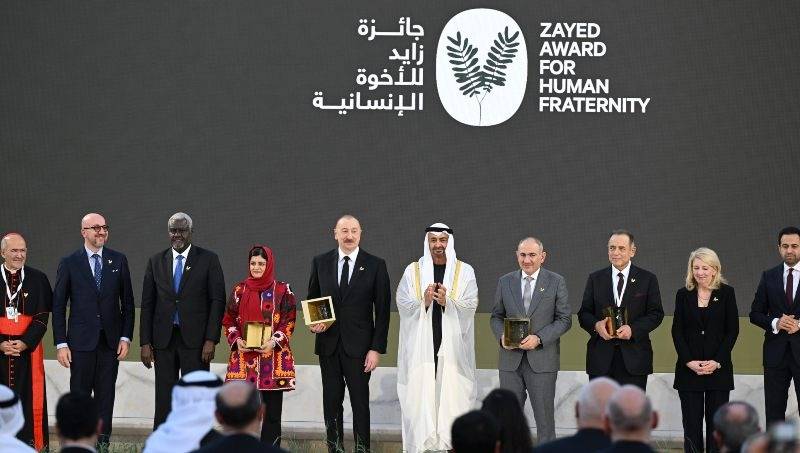
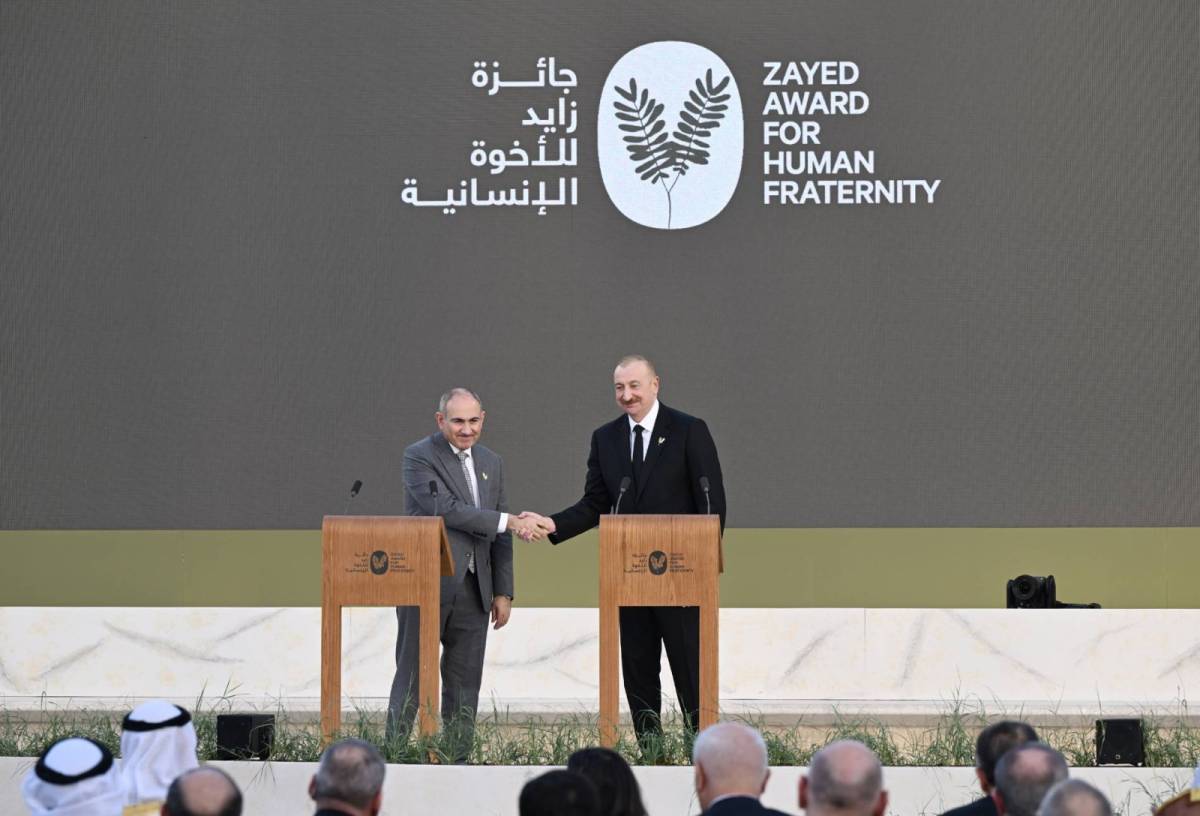
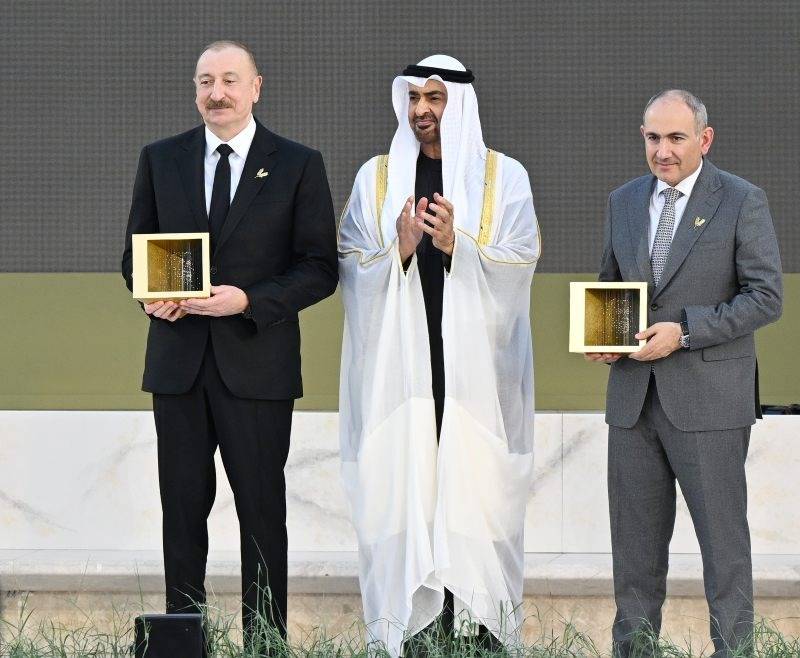
ABU DHABI – Armenian Prime Minister Nikol Pashinyan and Azerbaijani President Ilham Aliyev were jointly awarded the Zayed Award for Human Fraternity at a ceremony in Abu Dhabi on Wednesday, marking a rare moment of international recognition for reconciliation between two long-time rivals.
The award was presented as part of the UAE’s observance of the International Day of Human Fraternity on February 4. It acknowledged the leaders’ roles in concluding a peace agreement that brought an end to one of the most protracted conflicts in the post-Soviet space.
The ceremony took place at the UAE capital in the presence of senior officials, diplomats, and international figures, with UAE President and Ruler of Abu Dhabi His Highness Sheikh Mohamed bin Zayed Al Nahyan also attending in person.

The award’s judging committee cited the Armenian and Azerbaijani leaderships’ decision to prioritise dialogue and diplomacy after more than three decades of hostility, culminating in a historic peace agreement signed in Washington on August 8, 2025, under US mediation.
That agreement formally concluded a conflict spanning around 35 years, rooted in disputes following the collapse of the Soviet Union. Speaking on the sidelines of the ceremony, President Aliyev described the transition as unprecedented for both nations. “We were at war for more than 30 years. Now we are living in peace. We are learning how to live in peace. It is a special feeling,” he said.
Azerbaijan-Armenia peace
The ceremony opened with the UAE national anthem, followed by a short film outlining the mission and legacy of the Zayed Award for Human Fraternity, which was established in honour of the late Sheikh Zayed bin Sultan Al Nahyan. Mohamed Abdelsalam, Secretary-General of the Muslim Council of Elders, delivered the opening address, emphasising the award’s focus on tangible contributions to peace and human dignity.
Congratulatory video messages were delivered by several world leaders, including Turkiye’s President Recep Tayyip Erdogan and his wife Emine Erdogan, Kazakhstan’s President Kassym-Jomart Tokayev, Uzbekistan’s President Shavkat Mirziyoyev, Pakistan’s Prime Minister Shehbaz Sharif, Kyrgyzstan’s President Sadyr Zhaparov, Lebanon’s President Joseph Aoun, and Jordan’s King Abdullah II.
President Erdogan described the agreement between Armenia and Azerbaijan as a turning point for the South Caucasus, praising what he called the “courageous steps” taken by President Aliyev and the “resolute approach” shown by Prime Minister Pashinyan. He said the deal had the potential to open “a new page in the future of the Caucasus” and reaffirmed Türkiye’s support for initiatives aimed at regional stability.
President Tokayev said the award recognised leadership that chose “peace over the logic of confrontation” and noted that progress between Baku and Yerevan demonstrated that even entrenched conflicts could be resolved through dialogue. He highlighted Kazakhstan’s role in hosting key negotiation stages and said the outcome strengthened confidence in diplomacy as a viable tool for international relations.
Uzbek President Shavkat Mirziyoyev echoed those remarks, stating that the agreement illustrated how compromise and political responsibility could lay foundations for long-term regional stability. He described the award as confirmation of a “new spirit of friendship and cooperation” emerging in the South Caucasus.
Prime Minister Shehbaz Sharif said the recognition reflected the UAE’s role as a global hub for diplomacy and praised President Aliyev’s leadership in pursuing peace after decades of conflict. He described the agreement with Armenia as a landmark step that embodied the values of solidarity and shared humanity promoted by the award.
Similar sentiments were expressed by President Sadyr Zhaparov, who said the Washington agreement was not only a diplomatic milestone but a historic achievement strengthening trust and security in the region. He referenced earlier peace efforts in the Caucasus and Central Asia, noting that negotiated settlements had proven more durable than prolonged confrontation.
UAE’s role for peace
In his address, President Aliyev thanked the judging committee and described the award as deeply symbolic. He paid tribute to Sheikh Zayed’s legacy, crediting the UAE’s leadership for fostering a culture of dialogue and coexistence. He also acknowledged the roles played by Pope Leo XIV and Grand Imam Ahmed Al-Tayeb in advancing interfaith understanding.
President Ilham Aliyev was presented with the Zayed Award for Human Fraternity.https://t.co/Sf40w8pTQJ pic.twitter.com/0C6FgA2L85
— Ilham Aliyev (@presidentaz) February 4, 2026
Aliyev confirmed that since the Washington summit hosted by US President Donald Trump, Armenia and Azerbaijan had experienced six months of uninterrupted peace. He said restrictions on cargo transit through Azerbaijan to Armenia had been lifted and that energy cooperation had begun, including exports of oil products. According to Aliyev, trade relations were expanding and discussions were ongoing on future cooperation.
He also highlighted Abu Dhabi’s role in the peace process, noting that the final round of negotiations prior to the Washington summit had taken place in the UAE capital in July 2025. He described the award ceremony as a reflection of that diplomatic journey.
Addressing the gathering, Prime Minister Pashinyan said it would once have been unthinkable for Armenian and Azerbaijani leaders to receive an international peace award together. He said the recognition confirmed that both countries had turned a page on the conflict and described the award as encouragement from the international community to continue building trust.
Honored to receive the Zayed Award for Human Fraternity together with President Aliyev in recognition of the peace agreement between Armenia & Azerbaijan.
— Nikol Pashinyan (@NikolPashinyan) February 4, 2026
Grateful to the Judging Committee, to His Highness Sheikh Mohamed bin Zayed Al Nahyan & to all who supported this path. pic.twitter.com/WjyfXldaei
Pashinyan also thanked President Trump for his role in facilitating the peace agreement and expressed appreciation to the UAE leadership for hosting the ceremony and supporting initiatives promoting reconciliation.
Zayed Award for Human Fraternity
The 2026 edition of the Zayed Award for Human Fraternity also honoured Afghan women’s rights advocate Zarqa Yaftali and the Palestinian humanitarian organisation Taawon, represented by Nabil Qaddumi. His Highness Sheikh Mohamed bin Zayed Al Nahyan presented the awards, and the ceremony concluded with a group photograph of the laureates.
Congratulatory letters were sent by Pope Leo XIV and Ahmed Al-Tayeb, both of whom underlined the urgency of human fraternity amid ongoing global conflicts. Pope Leo XIV described the Armenian-Azerbaijani peace as evidence that deeply rooted divisions could be healed through sustained commitment, while Al-Tayeb called the agreement an inspiring model for coexistence at a time of mounting international tensions.
The ceremony coincided with the UAE’s marking of the International Day of Human Fraternity, which commemorates the 2019 signing of the Human Fraternity Document in Abu Dhabi. Since then, the UAE has launched initiatives including the Abrahamic Family House and the annual Global Tolerance and Human Fraternity Conference, reinforcing its role as a platform for dialogue and peacebuilding.