

UAE: Etihad Rail moves over 350 passengers amid regional travel disruptions
Coordinated train transfer eases travel disruption for residents and nationals
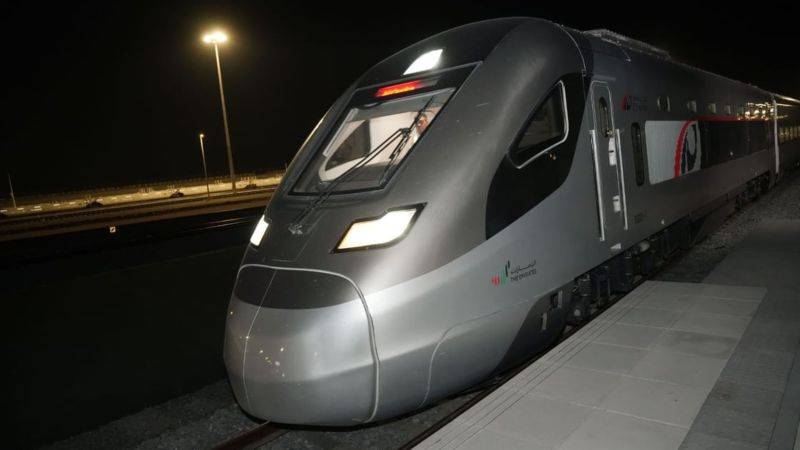
ABU DHABI – In response to current regional developments and resulting travel disruptions, Etihad Rail, in coordination with and under the direct supervision of the Emergencies, Crises and Disasters Management Centre Abu Dhabi (ADCMC), operated exceptional passenger services between Al Ghuwaifat Station in the Al Dhafra region and Al Faya Station in Abu Dhabi.
The initiative enabled the safe and efficient transport of over 350 passengers, ahead of the official launch of the passenger rail service, highlighting the UAE’s capacity to respond effectively to evolving circumstances.
The operation supported a coordinated transfer process following the temporary suspension of certain flight services. It was carried out in cooperation with competent authorities in Saudi Arabia, enhancing procedural integration and expediting implementation in line with the highest standards of safety and operational discipline. This formed part of a structured national response to current regional developments, ensuring residents and nationals could continue their travel plans without undue delay.
Seamless operations
The service was delivered through a structured and carefully managed mechanism, with immediate activation of approved safety protocols and emergency plans to ensure smooth and secure operations. The necessary technical and human resources were allocated effectively, maintaining continuity of performance without any disruption to freight services across the national railway network. Freight operations continued as scheduled, adhering strictly to the relevant official directives.
As part of national readiness efforts, Etihad Rail, in cooperation with the Emergency, Crisis and Disaster Management Centre Abu Dhabi and the relevant authorities, operated three passenger train services on an exceptional basis to facilitate the return of UAE citizens and… pic.twitter.com/Ju883GqXZz
— Etihad Rail (@Etihad_Rail) March 4, 2026
Matar Saeed Al Nuaimi, Director General of ADCMC, stated that the initiative demonstrates the national ecosystem’s ability to respond swiftly to regional developments. “It reflects the strategic importance of the UAE’s national railway network and its high levels of efficiency, reliability and operational readiness under varying conditions,” he said.
He added: “The operation of the passenger service prior to its official launch demonstrates a high degree of institutional flexibility, based on the effective redeployment of available capabilities to address societal priorities, without compromising long-term operational plans or the UAE’s logistical security. It confirms the national ecosystem’s capacity to take timely and well-considered operational decisions, grounded in real-time risk assessments in light of current circumstances.”
Technical readiness
Eng. Mohammed Al Shehhi, Chief Projects Officer at Etihad Rail, emphasised the technical and operational preparedness of the national railway network. “We are proud to operate these passenger services as an exceptional response to the current regional situation and in line with the directives of our leadership to strengthen national efforts aimed at ensuring the stability of nationals and residents in the UAE,” he stated.
He noted that the operation highlights the flexibility of the network’s operating systems and the competence of the national workforce, which delivered services with a high degree of efficiency and adaptability, without affecting other logistical operations across the railway network. “In our commitment to facilitating the movement of individuals, we have scheduled a number of additional services. Operations will continue as required, in close coordination with the competent authorities, until air traffic resumes and flights return to their regular schedules,” he added.
National coordination
The exceptional operation demonstrates that Abu Dhabi’s response framework functions through a proactive model grounded in institutional integration and the rapid activation of alternatives when required. It showcases the UAE’s ability to manage the implications of current regional developments efficiently and with stability, while maintaining continuity of vital services.