

How Emirates turned A380 and Boeing 777 parts into Arsenal’s iconic crest
A 2.4-metre illuminated sculpture took 34 days to build in Dubai
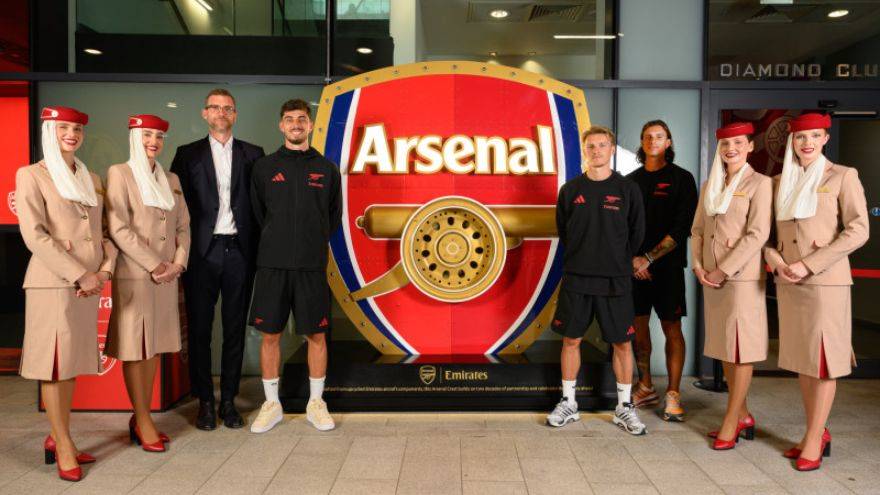
DUBAI – Emirates and Arsenal have unveiled a striking new sculpture made from upcycled components taken from Airbus A380 and Boeing 777 aircraft, bringing aviation engineering and football heritage together at Emirates Stadium in London.
Standing 2.4 metres high, The Aircrafted Arsenal Crest was designed and built by Emirates Engineering specialists in Dubai before being transported to the UK. The illuminated installation marks 20 years of the Emirates and Arsenal partnership, which has now been extended through to 2033.
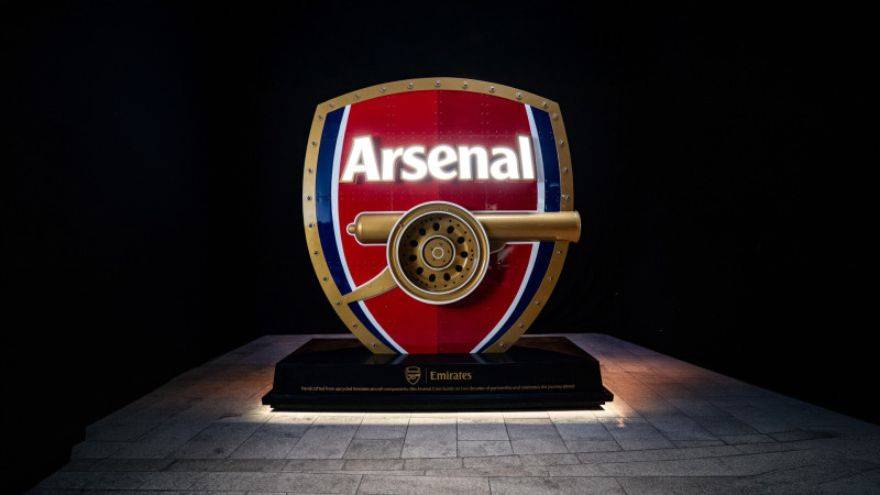
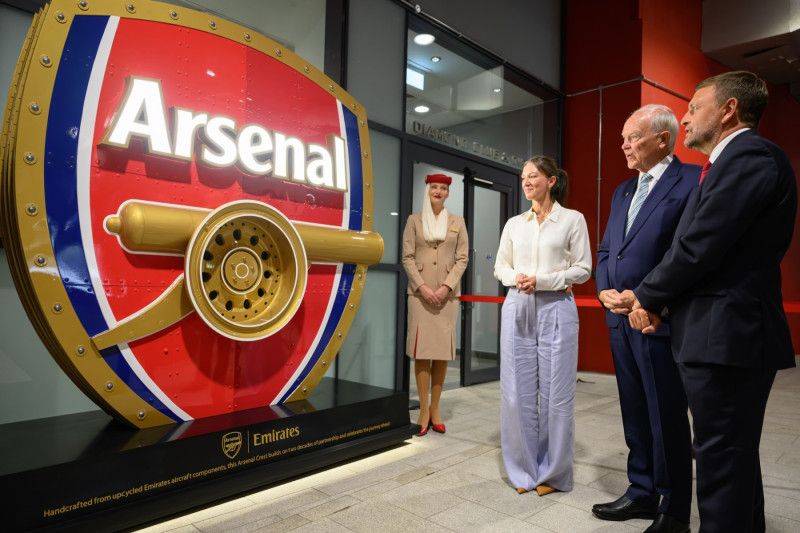
The sculpture transforms aircraft materials that once formed part of Emirates’ fleet into a three-dimensional version of one of football’s most recognisable symbols. It was unveiled at Emirates Stadium by Sir Tim Clark, President of Emirates Airline, and Richard Garlick, Chief Executive of Arsenal, ahead of Arsenal’s match against Borussia Dortmund at the Emirates Cup.
Aircraft reborn
The Aircrafted Arsenal Crest was created in just 34 days by a 15-member team comprising engineers, designers, mechanics, technicians and painters. Working at Emirates Engineering in Dubai, the team selected aircraft components based on their strength, shape and potential for transformation.
The materials were then cleaned, cut, curved, machined, riveted and assembled to create the sculpture. The process allowed components from commercial aircraft to be repurposed into a permanent installation celebrating one of English football’s most historic clubs.
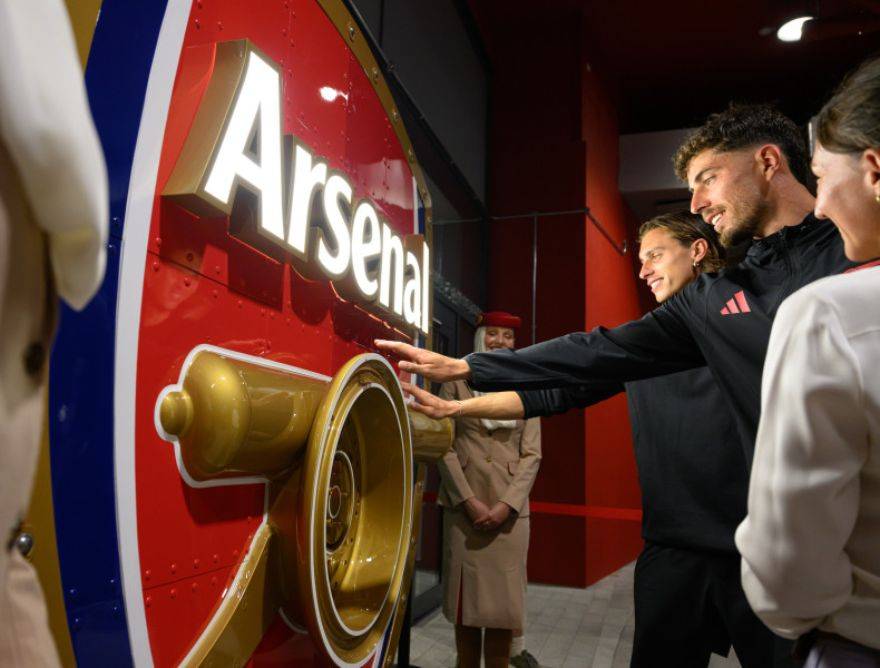
At the heart of the sculpture is Arsenal’s famous cannon, a symbol that has featured in every version of the club’s emblem since 1905 and is closely associated with the team’s nickname, The Gunners.
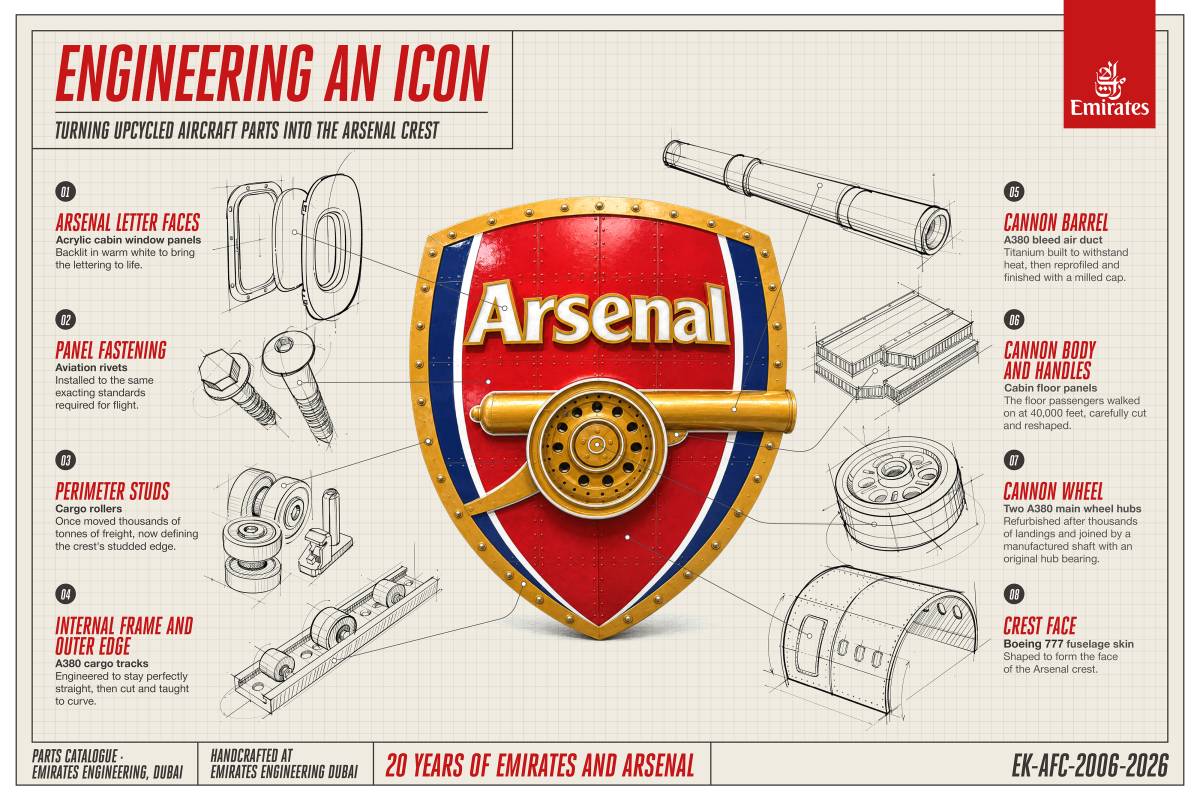
An Airbus A380 main landing gear wheel hub has been used to form the centre of the cannon’s wheel. A section of titanium bleed air duct from an A380 was cut and reshaped to create the cannon barrel, while lightweight composite floor panels were built up to form its three-dimensional body.
The shield surrounding the cannon has also been constructed from aircraft material. Sheets of aluminium fuselage skin from a Boeing 777 were adapted to create the face of the shield, while aircraft cargo tracks were repurposed to form its outer edge and internal structure.
Cargo floor panels and roller components from aircraft have been incorporated elsewhere in the installation, extending the use of aviation materials throughout the sculpture rather than limiting the transformation to its most prominent features.
Built in Dubai
The project was designed and manufactured in-house by Emirates Engineering’s Aircraft Material Upcycling team in Dubai. The specialists worked with individual aircraft components and adapted them to meet the shape and structure required for the Arsenal crest.
Once the materials had been prepared and assembled, the sculpture was painted according to Arsenal’s official colour specifications. Its design was then completed with an integrated lighting system that gives the installation its illuminated appearance.
The Arsenal lettering was individually shaped from aircraft windows and fitted with warm white lighting. Additional lighting beneath the sculpture’s plinth illuminates the installation and its specially constructed black tiled base.
The completed Crest was transported from Dubai to London on an Emirates SkyCargo freighter before being installed at Emirates Stadium.
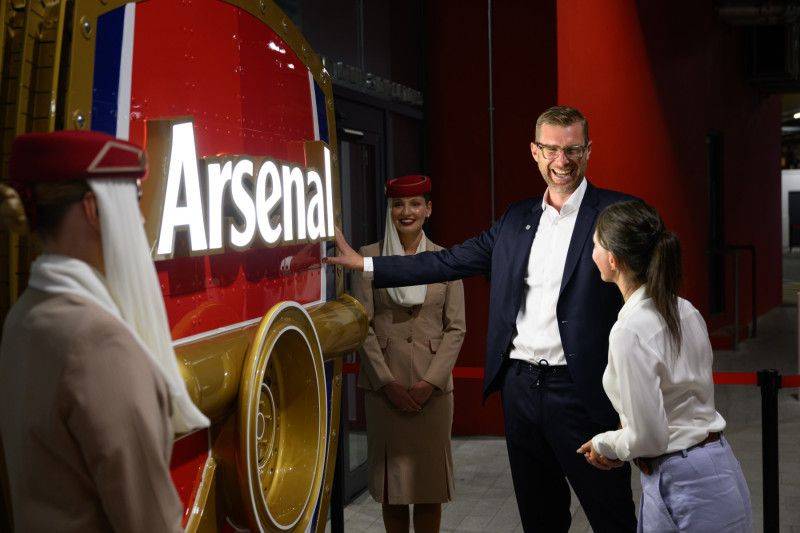
The project creates a physical link between Arsenal’s industrial heritage and Emirates’ aviation background. The club was founded as Royal Arsenal in 1886 by workers at the Royal Arsenal munitions factory in Woolwich, south-east London, while Emirates has built its identity around aviation engineering, aircraft operations and technological development.
The cannon itself provides another connection between the two histories. Its long-standing presence in Arsenal’s identity has made it one of the most recognisable features associated with the club, and its reconstruction using an A380 landing gear hub places an Emirates aircraft component directly inside the football symbol.
20-year partnership
The unveiling comes as Emirates and Arsenal mark the 20th anniversary of their partnership. The relationship began in 2006 and has since become one of the longest-running commercial partnerships in football.
Emirates has held the naming rights to Arsenal’s stadium since the club moved to its current home in 2006. The airline also remains the club’s front-of-shirt and training kit partner.
The latest extension takes the partnership through to 2033. It will continue Emirates’ position as Arsenal’s front-of-shirt, training kit and stadium naming rights partner, extending what is described as the Premier League’s longest-running front-of-shirt partnership.
The timing of the new sculpture also follows Arsenal’s Premier League-winning season, providing an additional backdrop to the anniversary celebrations as the club begins its next chapter with Emirates.
The Aircrafted Arsenal Crest was conceived specifically to mark the partnership milestone rather than as a temporary promotional installation. Following its unveiling, it will remain permanently displayed in Emirates’ hospitality space at Emirates Stadium.
Aviation meets football
The sculpture reflects the extensive range of aircraft materials that can be repurposed after their original aviation use. Rather than presenting the components as separate pieces, Emirates Engineering incorporated them into a single structure designed around Arsenal’s crest.
The A380 landing gear hub provides one of the most distinctive elements, forming the centre of the cannon wheel. The use of titanium ducting for the barrel and composite aircraft flooring for the cannon body adds different materials and engineering characteristics to the central symbol.
The Boeing 777 also contributes to the structure through its aluminium fuselage skin, while cargo systems and floor components have been incorporated into the shield and other sections.
Lighting gives the finished installation a prominent presence inside Emirates Stadium, with the illuminated Arsenal lettering and under-plinth lighting highlighting the aircraft-derived construction.
Sir Tim Clark said the 20-year anniversary provided an opportunity to create a permanent object that represented both organisations, while Richard Garlick described the sculpture as a tribute to the relationship between the club and airline.
The unveiling took place ahead of Arsenal’s Emirates Cup fixture against Borussia Dortmund, bringing the anniversary project into the club’s home stadium as preparations continued for the new season.
With the sculpture now installed, components that once formed part of Emirates’ A380 and Boeing 777 aircraft have become part of Arsenal’s visual identity at Emirates Stadium, where The Aircrafted Arsenal Crest will remain on permanent display through the next phase of the partnership.