

Global banks and FinTech giants back Dubai’s long-term financial future
International firms cite stability, regulation and connectivity advantages
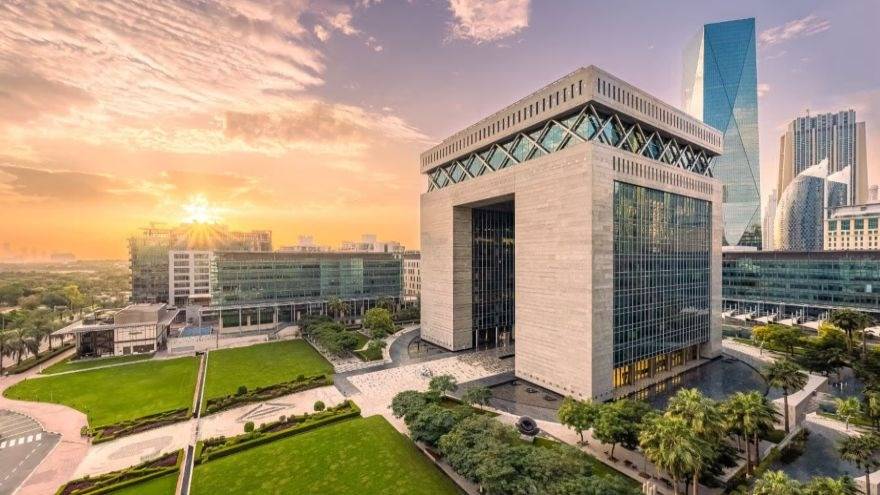
DUBAI – Global financial institutions, wealth managers, insurers and FinTech firms have reaffirmed their confidence in Dubai and the UAE, as the Dubai International Financial Centre (DIFC) highlighted the resilience and long-term strength of its ecosystem amid ongoing regional uncertainty.
The financial hub said global clients operating across banking, insurance, wealth management and innovation sectors continue to view Dubai as a stable gateway to growth across the Middle East, Africa and South Asia (MEASA). Senior executives from some of the world’s largest financial institutions stressed that current geopolitical developments have not weakened their commitment to the UAE, but instead reinforced Dubai’s strategic importance as a globally connected financial centre.
DIFC also pointed to Dubai’s rise to seventh place globally in the latest Global Financial Centres Index in March, marking the emirate’s highest-ever ranking and underlining sustained international confidence in its financial ecosystem.
Essa Kazim, Governor of DIFC, said countries across the Middle East had been navigating a period of uncertainty together over recent weeks, adding that the true strength of DIFC lies in its clients and wider business community.
He said the Centre’s long-term appeal is rooted in a shared belief in the opportunities offered by Dubai and the UAE to access 77 markets across the MEASA region, while supporting the emirate’s ambition to become one of the world’s top four global financial centres.
Arif Amiri, Chief Executive Officer of DIFC Authority, said firms operating within the Centre continue to view Dubai as a strategic base for growth.
According to Amiri, institutions across sectors have not responded to recent developments with retreat, but with renewed confidence in DIFC’s legal framework, regulatory environment and global connectivity.
Banking growth
Banking and capital markets continue to form a major pillar of the DIFC ecosystem, which is home to 290 banking and capital markets firms, including 17 of the world’s 19 global systemically important banks.
Executives from major institutions including Citi, Julius Baer and Standard Chartered described DIFC as a critical bridge connecting global capital flows with regional opportunities.
Ebru Pakcan, Middle East and Africa Cluster and Banking Head at Citi, said the changing geopolitical environment has made cross-border capabilities, liquidity access and client proximity increasingly important.
Pakcan noted that Citi has maintained a continuous presence in the Middle East for more than six decades and has witnessed DIFC evolve into a strategic platform linking clients, capital and investment opportunities across the MEASA region.
She said DIFC allows the bank to support sovereign issuances, corporate funding requirements, treasury operations and liquidity management from a central regional base connected to global markets.
Regis Burger, Head of Middle East and Africa and Chief Executive Officer of Julius Baer Middle East Ltd, said the UAE’s foundations as a global financial centre remain firmly intact.
Burger highlighted the country’s business-friendly regulatory framework, tax-efficient environment, international connectivity and world-class infrastructure as factors continuing to attract entrepreneurs, institutions and investors from around the world.
He also noted that Julius Baer was the oldest organisation within DIFC, having established itself at the Centre during its earliest years after recognising the region’s long-term wealth creation potential.
Burger said the Middle East is expected to witness a historic transfer of nearly $1 trillion in wealth across generations by 2030, increasing demand for specialised wealth management and succession planning services.
He added that wealthy families and entrepreneurs continue to demonstrate confidence in Dubai’s future trajectory despite current uncertainty, with many maintaining relocation and investment plans linked to the UAE.
Rola Abu Manneh, Chief Executive Officer for UAE, Middle East and Pakistan at Standard Chartered, said the UAE entered the current environment from a position of economic strength supported by solid balance sheets, robust institutions and a well-regulated financial system.
She said business activity across the UAE remains active, with companies continuing to use the country as a regional base to access both international and regional opportunities.
Insurance expansion
DIFC also highlighted strong momentum within the insurance industry, where gross written premiums have doubled during the past four years to exceed $4.2 billion.
The Centre said insurance and risk management firms increasingly view Dubai as a major international hub capable of supporting businesses facing increasingly complex global risks.
Omar Gemei, Senior Executive Officer of Marsh McLennan DIFC and Head of Global Placement and Bowring Marsh for India, the Middle East and Africa, said Dubai has become a leading international destination for insurance and risk management operations.
Gemei said the city brings together insurers, brokers and risk professionals within a business-friendly environment supported by strong regulation and deep understanding of global market trends.
He added that DIFC has played a major role in accelerating sector growth by attracting global firms while supporting innovation and regional market access.
According to Gemei, continued investment by Dubai in infrastructure, regulation and talent development is further strengthening the emirate’s position within the global insurance landscape.
Wealth momentum
Dubai’s growing status as a wealth management hub has also strengthened DIFC’s position within the global financial industry.
The emirate currently hosts the highest concentration of wealth of any Middle Eastern city, while global advisory firm Henley & Partners reported that the UAE attracted more millionaires than any other country in the world during 2026.
More than 500 wealth and asset management firms now operate from DIFC, reflecting increasing global interest in the UAE’s wealth ecosystem.
Peter Clark, Chief Executive Officer of Bentley Reid, said periods of economic and political uncertainty historically demonstrate the importance of maintaining long-term investment perspectives rather than reacting to short-term volatility.
Clark said Bentley Reid quickly recognised the UAE’s economic strengths after entering DIFC, citing the country’s favourable fiscal environment, pro-business culture, diversified economy, global connectivity and quality of life.
He noted that wealthy individuals and ultra-high-net-worth families within the firm’s network largely continue to view Dubai positively, with few seeing current events as a threat to the emirate’s long-term growth story.
While some families planning relocations to the UAE have opted to delay their arrival until regional conditions stabilise further, Clark said most continue to maintain confidence in Dubai as a preferred global destination.
The executive added that current conditions reinforce the value of experienced wealth management partners capable of guiding clients through periods of uncertainty.
Indian asset management giant ICICI Prudential Asset Management Company also recently expanded into DIFC after establishing an office in the Centre earlier this year.
Nimesh Shah, Managing Director and Chief Executive Officer of ICICI Prudential Asset Management Company, said Dubai and DIFC align naturally with the company’s global ambitions due to their strong regulatory ecosystem, international connectivity and access to institutional investors.
He said the move reflects confidence in India’s long-term growth prospects while supporting stronger relationships with international investors seeking India-focused investment opportunities.
Digital assets
DIFC said momentum also continues to build within digital assets and FinTech, with the Centre positioning itself at the forefront of developing clear laws, regulations and operating frameworks for emerging industries.
Blockchain and digital payments firms highlighted Dubai’s regulatory clarity and infrastructure as major advantages supporting growth.
Ripple established its Middle East and Africa headquarters in DIFC in 2020 and recently announced a further expansion of its regional presence.
Reece Merrick, Managing Director for Middle East and Africa at Ripple, said the UAE has significantly strengthened its global position as a financial and digital assets hub during the company’s time in Dubai.
Merrick said the UAE’s forward-looking regulatory framework has helped create one of the world’s leading ecosystems for digital assets, supported by institutional capital access and a mature financial environment.
According to Merrick, the UAE has established a benchmark not only for the wider region but globally in terms of digital assets regulation and industry development.
Dubai-based PropTech platform Stake also credited DIFC with playing a major role in supporting its growth trajectory.
Manar Mahmassani, Co-Founder and Co-Chief Executive Officer of Stake, said the company launched in Dubai in 2021 during a period of heightened global uncertainty and has since become the world’s largest fractional investment platform.
Mahmassani said DIFC provided the company with an ideal launch environment, combining regulatory credibility, co-working infrastructure, innovation networks and direct proximity to the Dubai Financial Services Authority.
He added that the Centre offers FinTech firms the governance standards, regulatory certainty and access to capital partners required to build internationally recognised businesses.
FinTech confidence
Digital payments company Taptap Send also reaffirmed its commitment to DIFC and Dubai as a regional base for expansion.
Michael Faye, Chief Executive Officer of Taptap Send, said DIFC provides ambitious FinTech companies with access to deep talent pools, international connectivity and infrastructure aligned with global standards.
Faye said the company’s mission of connecting underserved communities to the global financial system closely aligns with Dubai’s own ambitions to position itself as one of the world’s leading international hubs.
The broader message emerging from global financial institutions operating within DIFC reflects continued confidence in Dubai’s resilience, regulatory stability and long-term economic direction despite a challenging international backdrop.
Across banking, insurance, wealth management, digital assets and financial technology, firms continue to deepen their regional operations through Dubai, citing the emirate’s internationally recognised legal environment, global market access and strategic position connecting East and West.