

What travellers need to know about US birth tourism initiative
Enforcement drive focuses on fraud and organised facilitation networks
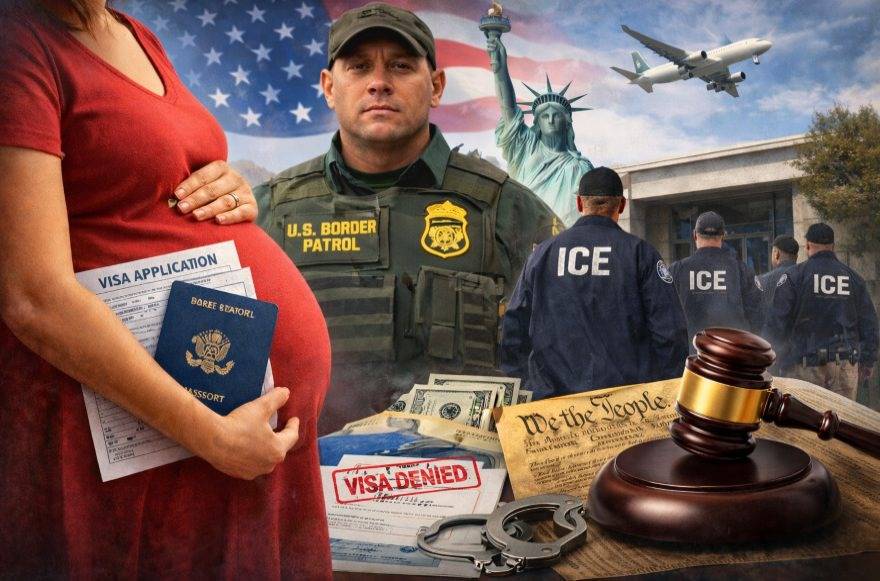
DUBAI – The United States has launched a renewed enforcement push targeting so-called birth tourism, placing the practice under heightened scrutiny as part of a broader immigration agenda.
The initiative, introduced under President Donald Trump’s administration, directs federal investigators to identify networks that facilitate travel for the purpose of giving birth on US soil. According to Reuters, the move signals a more coordinated national effort to examine visa misuse and related fraud.
While giving birth in the United States remains legal, authorities are sharpening their focus on how travellers enter the country and whether visa rules are being followed. The development comes amid wider debates over citizenship rights and immigration policy, with legal challenges already under way in federal courts.
Birth Tourism Initiative
The enforcement effort, referred to internally as a “Birth Tourism Initiative”, has been rolled out by US Immigration and Customs Enforcement (ICE). Investigative agents across the country have been instructed to prioritise cases linked to organised schemes that assist pregnant foreign nationals in travelling to the US.
The initiative is being spearheaded by ICE’s Homeland Security Investigations unit, which is tasked with identifying fraud, financial crimes and networks that exploit legal immigration channels. According to Reuters, internal communications show that authorities aim to dismantle organised operations rather than target individuals acting independently.
Officials maintain that while childbirth itself is not unlawful, misrepresentation on visa applications or misuse of travel documents can lead to criminal charges. These may include fraud or conspiracy offences, depending on the circumstances of each case.
Visa rules
A key regulation shaping enforcement was introduced in 2020 during Trump’s first term. It prohibits applicants from using temporary tourist or business visas if their primary purpose is to obtain US citizenship for a child through birth.
Under this rule, consular officers may deny visas if they suspect that travel is intended mainly for childbirth linked to citizenship benefits. Applicants are required to demonstrate legitimate travel purposes, and failure to do so can result in refusal.
Travellers should also be aware that overstaying visas or providing inaccurate information during the application process can trigger further penalties. Authorities have emphasised that compliance with visa conditions is central to avoiding legal risks.
There is no official count of how many people travel to the US each year specifically for birth tourism. However, estimates cited by the Centre for Immigration Studies suggest that between 20,000 and 25,000 such births occurred annually during 2016-2017. Separate analyses have placed the figure higher in earlier years.
By comparison, the United States recorded approximately 3.6 million total births in 2025, indicating that birth tourism represents a relatively small proportion of overall births.
Despite limited data, the issue has become a focal point in political and legal discussions. The US Constitution’s 14th Amendment has long guaranteed citizenship to individuals born on American soil, regardless of their parents’ nationality or immigration status.
President Trump has sought to challenge this interpretation. On his first day in office in 2025, he signed an executive order directing agencies not to recognise citizenship for children born in the US if neither parent is a citizen or lawful permanent resident. The move marked a significant departure from longstanding legal precedent.
Multiple federal courts have since blocked the order, and the matter has reached the US Supreme Court, where arguments were heard recently. Government lawyers have argued that the current system has encouraged the growth of a global birth tourism industry.
Enforcement cases
Previous prosecutions highlight how authorities approach such cases. In 2019, US federal prosecutors charged more than a dozen individuals in connection with so-called “birth houses” operating in Southern California.
One of the key defendants, Dongyuan Li, pleaded guilty and was sentenced to 10 months in prison. Another individual, Chao Edwin Chen, received a three-year sentence but had already left the United States before serving it.
Investigators said the schemes involved providing accommodation, visa coaching and logistical support to clients, often in exchange for fees ranging from $15,000 to $50,000. These services sometimes included guidance on how to navigate visa interviews and remain in the country beyond authorised stays.
What it means for travellers
For travellers, the renewed focus means stricter scrutiny at every stage of the journey, from visa application to entry at US ports. Authorities are likely to examine travel intent more closely, particularly for applicants in advanced stages of pregnancy.
The US Department of Homeland Security has stated that it remains committed to identifying violations linked to birth tourism, even as it acknowledges that childbirth itself is not prohibited. The emphasis, officials say, is on safeguarding the integrity of immigration systems.
As enforcement expands, the initiative is expected to bring greater attention to how immigration laws intersect with long-established citizenship practices, shaping the experience of travellers seeking entry into the United States.