

Elon Musk becomes world’s first trillionaire
SpaceX listing triggers historic surge and reshapes global tech wealth
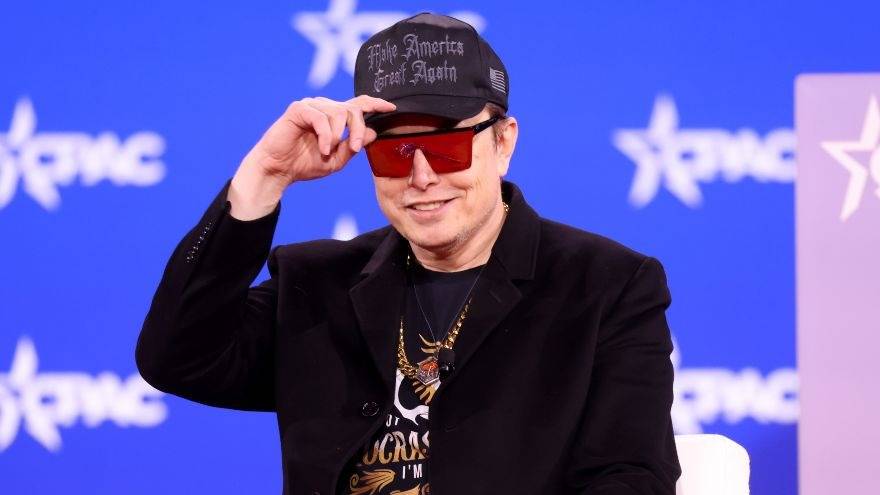
DUBAI – US businessman Elon Musk has been reported as the world’s first trillionaire on paper following a dramatic surge in SpaceX’s market value during its landmark Nasdaq debut.
The listing has placed his sprawling business empire back in the global spotlight, stretching from rockets and satellites to electric vehicles, artificial intelligence and brain-computer interfaces.
His net worth is estimated at around $1.11 trillion according to the Bloomberg rich list, driven largely by soaring valuations in his closely held companies.
???? ???????????????????????????????????????????????? https://t.co/UhyAyQ8sEz
— Elon Musk (@elonmusk) June 12, 2026
SpaceX
SpaceX marked its entry into public markets with what is described as the largest initial public offering in Nasdaq history, raising around $75 billion from investors and underwriters. The company was valued at approximately $2.2 trillion as trading began, with shares opening at $150, briefly climbing to $176.50 before closing near $161. Elon Musk joined the ceremonial listing remotely from Starbase in Texas, while President Gwynne Shotwell rang the opening bell in New York, reflecting two decades of aerospace development and commercial launches.
The surge in valuation significantly boosted Musk’s wealth, with his 42% stake in SpaceX forming the largest portion of his fortune. The company’s portfolio extends beyond rockets into Starlink satellite internet services and emerging AI-linked ventures, with long-term plans including orbital infrastructure and lunar operations. Despite its rapid expansion, SpaceX has reported multi-billion-dollar operational losses in recent years, reflecting heavy investment in launch systems, reusable rocket technology and advanced computing projects.
Tesla
Tesla remains a cornerstone of Musk’s financial empire, with the electric vehicle manufacturer continuing to play a central role in global automotive markets. Musk has led the company since 2008, steering it from a niche EV producer into a multi-trillion-dollar enterprise at its peak valuations. However, the firm has recently faced intensified competition in the electric vehicle sector, particularly from Chinese manufacturers such as BYD.
Beyond electric cars, Tesla has expanded into autonomous driving technology, energy storage systems and robotics, with Musk repeatedly highlighting future ambitions centred on self-driving fleets and AI-integrated transport. The company’s market value remains in the trillion-dollar range, underpinning a substantial portion of Musk’s overall wealth, alongside options and long-term equity holdings worth hundreds of billions of dollars.
Neuralink
Neuralink, founded by Musk in 2016, represents one of the most experimental branches of his business portfolio. The neurotechnology company is focused on developing brain-computer interfaces aimed at treating neurological conditions and eventually enabling direct communication between humans and machines. Clinical trials have already begun, with a limited number of participants receiving implants for conditions such as spinal cord injuries.
The company remains in an early-stage research phase, but Musk has positioned it as a long-term platform for merging biological intelligence with artificial systems, placing it firmly within his broader vision of advanced human-computer integration.
The Boring Company
The Boring Company is Musk’s infrastructure venture focused on underground tunnelling and transport systems designed to reduce surface congestion in major cities. One of its most visible projects is the Las Vegas Loop, which uses underground tunnels for Tesla-based transport services around the city’s convention areas.
While expansion plans have been announced for locations including Dubai and other international cities, the company has faced regulatory scrutiny and technical challenges in scaling its operations. It remains a smaller but strategically symbolic part of Musk’s diversified empire.
X and xAI
Musk’s acquisition of the social media platform X, formerly Twitter, has been integrated with his artificial intelligence ambitions through xAI, forming a combined ecosystem of data, communication and AI development. The platform has become a testing ground for Grok, xAI’s chatbot technology, which is positioned as a competitor in the rapidly evolving AI sector.
Both X and xAI have reported significant operating losses, reflecting heavy investment in infrastructure and AI model training. However, Musk has continued to push integration across his companies, linking data flows, digital platforms and AI systems into a unified long-term strategy.