

Radisson Hotel Group launches sustainability roadmap to help events cut their environmental impact
New framework addresses gaps in implementation across meetings
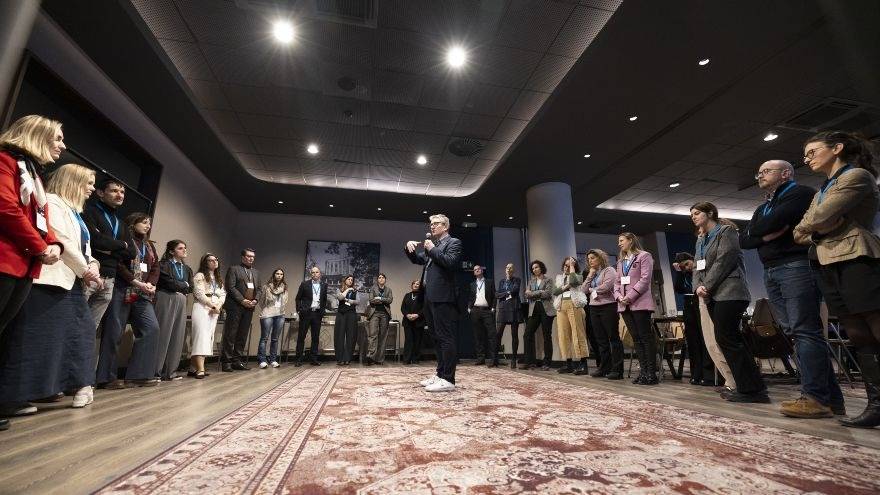
DUBAI – Sustainability is becoming an increasingly important priority for the meetings and events industry, but many organisations are still struggling to turn commitments into practical action.
New findings show that 66 percent of associations consider sustainability highly important, yet fewer than 34% have embedded it into their operations. Only 3% report having an advanced sustainability programme.
To address this gap, Radisson Hotel Group (RHG) and GDS-Movement have launched Accelerating Sustainable & Regenerative Events: A Guide for Associations & PCOs, a practical roadmap aimed at helping associations and Professional Congress Organizers (PCOs) build sustainability into event planning, delivery and reporting.
The guide was unveiled to industry stakeholders in Brussels and draws on insights from destinations participating in the GDS-Index, a benchmarking and performance improvement programme focused on destination sustainability.
Closing the gap
For associations, sustainability can be particularly challenging because their event portfolios often span multiple destinations, venues, suppliers and planning cycles. This makes it difficult to apply consistent standards and reporting methods across congresses, conferences and other meetings.
The new guide identifies several barriers that can prevent organisations from moving from sustainability ambitions to implementation. These include concerns over costs, limited access to reliable sustainability data, fragmented supplier networks and a lack of practical frameworks that can be incorporated into event planning.
Rather than treating sustainability as a collection of individual initiatives, the roadmap emphasises collaboration between associations, destinations, venues and suppliers. It sets out approaches designed to make sustainability efforts measurable and repeatable across different events and locations.
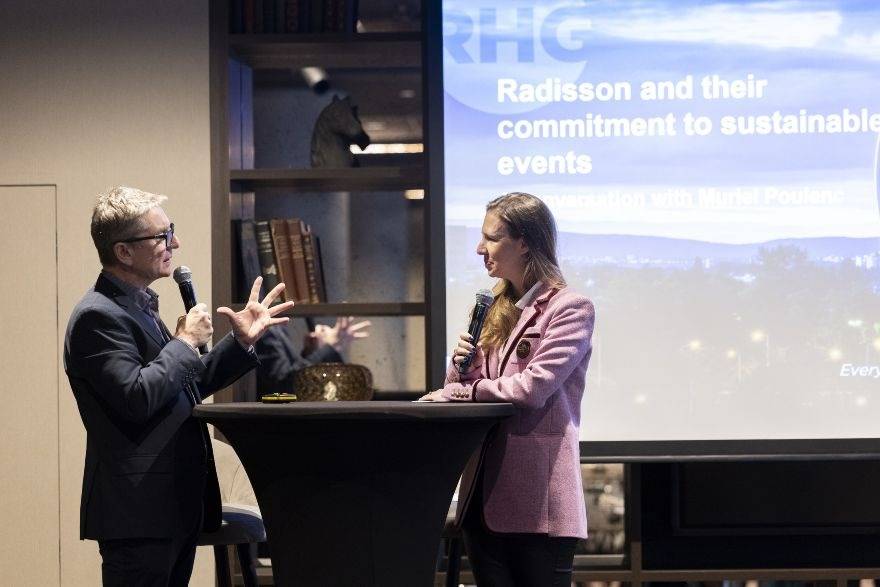
Inge Huijbrechts, Chief Sustainability and Security Officer at Radisson Hotel Group, said the industry faces an implementation challenge rather than a lack of awareness, adding that the guide aims to provide planners with practical tools, established frameworks and stronger collaboration models.
Destination data
Destinations are given a central role in the roadmap, particularly because they can provide event organisers with information to assess sustainability performance before selecting locations.
Through the GDS-Index, participating destinations are evaluated against 74 qualitative and quantitative indicators. These indicators are aligned with the United Nations Sustainable Development Goals (SDGs) and the Global Sustainable Tourism Council (GSTC) Destination Criteria.
The framework is intended to improve transparency and accountability while giving associations and PCOs more information when making decisions about where and how events should be organised.
GDS-Movement CEO and Chief Changemaker Guy Bigwood said destinations can help accelerate the transition towards sustainable and regenerative events by measuring and improving their own performance. He also highlighted collaboration between destinations, venues and suppliers as a key part of generating social, environmental and economic value.
Five key actions
The guide identifies five practical areas where associations and PCOs can strengthen sustainability across their events.
The first is to collaborate with destination partners earlier in the planning process, allowing sustainability considerations to influence decisions from the outset.
Organisers are also encouraged to prioritise certified suppliers and sustainability credentials, helping them identify partners with established environmental and sustainability practices.
A further focus is social impact and legacy, with event design encouraged to incorporate initiatives that create longer-term benefits for host communities rather than concentrating solely on the event itself.
The roadmap also recommends low-carbon mobility strategies for delegates and other stakeholders, addressing the environmental impact associated with travel and movement connected to events.
Finally, organisations are urged to introduce sustainability-linked measurement, reporting and incentive frameworks, creating ways to track progress and strengthen accountability over time.
Industry collaboration
The partnership between Radisson Hotel Group and GDS-Movement builds on wider efforts to make sustainability a more measurable and practical part of the meetings and events sector.
Radisson Hotel Group is continuing sustainability initiatives including Verified Net Zero and the implementation of Hotel Sustainability Basics across its portfolio. The group is also working with associations, destinations and industry partners on more responsible event delivery.
The new roadmap is designed to support organisations managing individual events as well as those overseeing recurring conferences, annual congresses and meetings across multiple destinations.