

From events to impact: Radisson Hotel Group unveils new vision for the future of healthcare meeting design
New framework focuses on smarter workflows and measurable outcomes
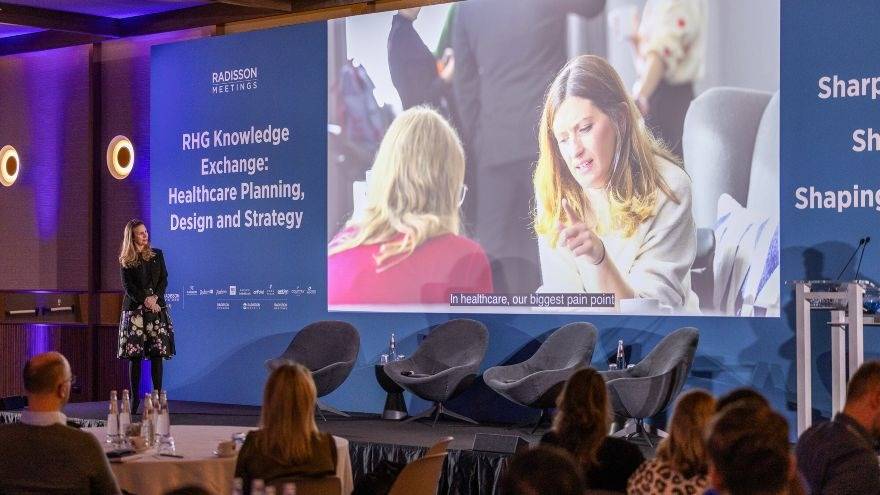
DUBAI – The Radisson Hotel Group (RHG) is highlighting a major transformation in healthcare meeting planning, with a new industry report outlining how the sector is moving beyond traditional event execution towards a more strategic approach focused on communication, collaboration and measurable outcomes.
The findings come from the Radisson Hotel Group Knowledge Exchange: Healthcare Planning, Design and Strategy Summit held in Florence, Italy, where experts explored how structured methodologies and intelligent planning can reshape the future of healthcare meetings.
Bringing together 75 professionals from pharmaceutical companies, healthcare agencies and venue production sectors, the two-day summit focused on practical workshops and collaborative discussions designed to turn industry insights into actionable strategies. The resulting report identifies healthcare meetings as increasingly important communication systems that require intentional design, continuous improvement and stronger measurement frameworks.
“Healthcare meetings are no longer simply logistical exercises; they are strategic communication platforms that can drive measurable educational, scientific, and organisational outcomes,” said Muriel Poulenc, Senior Director, Sales Strategy at Radisson Hotel Group. “Across the industry, we are seeing growing recognition that better outcomes require more than flawless execution. They require structured design, integrated workflows, and a more deliberate approach to how meetings are planned, delivered, and measured.”
New approach
The report highlights a growing shift towards the professionalisation of healthcare meeting design as regulatory demands, stakeholder expectations and operational complexity continue to increase. Rather than viewing meetings as individual events, industry leaders are increasingly treating them as carefully designed systems that support knowledge exchange, learning and decision-making across the healthcare ecosystem.
Building on discussions launched during the 2025 Knowledge Exchange, participants at the Florence summit worked on developing practical frameworks to improve meeting effectiveness, compliance and stakeholder engagement. The report emphasises that a structured approach can help organisations create more consistent experiences while improving the overall value generated from healthcare interactions.
A key finding is that the role of healthcare meeting planners is also changing. Instead of focusing solely on coordination and delivery, planners are increasingly becoming strategic decision architects who help shape workflows, align stakeholders and guide organisations through complex planning processes.
Planner evolution
Workshop discussions revealed that many challenges faced by healthcare meetings are linked not only to execution but also to fragmented decision-making. Delays, repeated work and inefficiencies often occur when teams lack clear structures, early alignment and coordinated planning processes.
The report suggests that involving planners earlier in the strategic lifecycle can improve decision-making and create more effective meeting structures. As meetings become more complex, planners are expected to contribute greater expertise in designing processes that connect objectives, participants and outcomes.
The summit also examined the growing role of artificial intelligence (AI) in healthcare meeting management. While AI adoption is increasing across the sector, discussions highlighted that technology alone cannot address underlying challenges without effective systems and workflows supporting its use.
Smarter systems
According to the report, many organisations continue to face fragmented processes and disconnected workflows, with around 40-60% of planning activity still focused on non-value-creating tasks. Participants identified workflow redesign, stronger governance and clearer decision structures as key areas for improvement.
Radisson Hotel Group highlighted methodologies such as Lean Six Sigma, Agile and Sprint thinking as potential tools to help organisations improve efficiency, reduce unnecessary complexity and create more measurable planning outcomes.
One of the report’s major areas of focus is the Meeting Flow Efficiency Ratio (MFER), a framework designed to assess the balance between productive planning activity and reactive work. The model aims to help organisations identify areas where workflow improvements can increase efficiency and create greater alignment between teams.
The report also promotes a shift from one-time event thinking towards a continuous engagement approach. This is particularly relevant as healthcare meetings continue to influence professional behaviour, with the report noting that 66% of healthcare professionals change their clinical practice or prescribing behaviour after attending industry-sponsored symposia.
Next phase
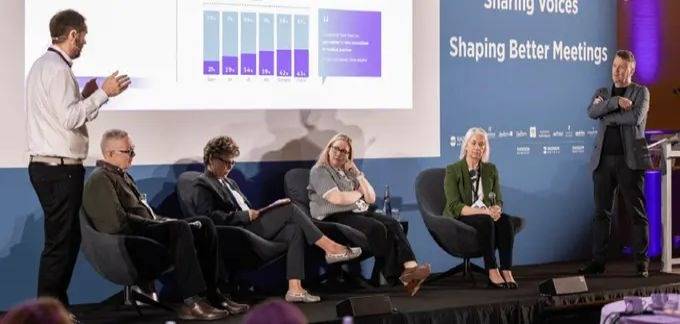
Senior leaders from Inizio Engage XD, MCI, Emota and Open Audience joined a panel discussion during the summit, reinforcing the report’s findings and examining the future direction of healthcare meetings.
Using industry data covering 2018 to 2026, the panel identified a key challenge facing the sector: structural inertia rather than structural failure. While attendance levels remain strong and investment continues, many traditional meeting formats have struggled to adapt to changing expectations, emerging technologies and evolving engagement models.
The report concludes that the next phase of healthcare meetings will be shaped by organisations that combine methodology, intelligent orchestration and strategic design.