

New Cybersecurity Master’s degree launched in Dubai: Fees, eligibility and course explained
First intake set for December with 15–20 students expected
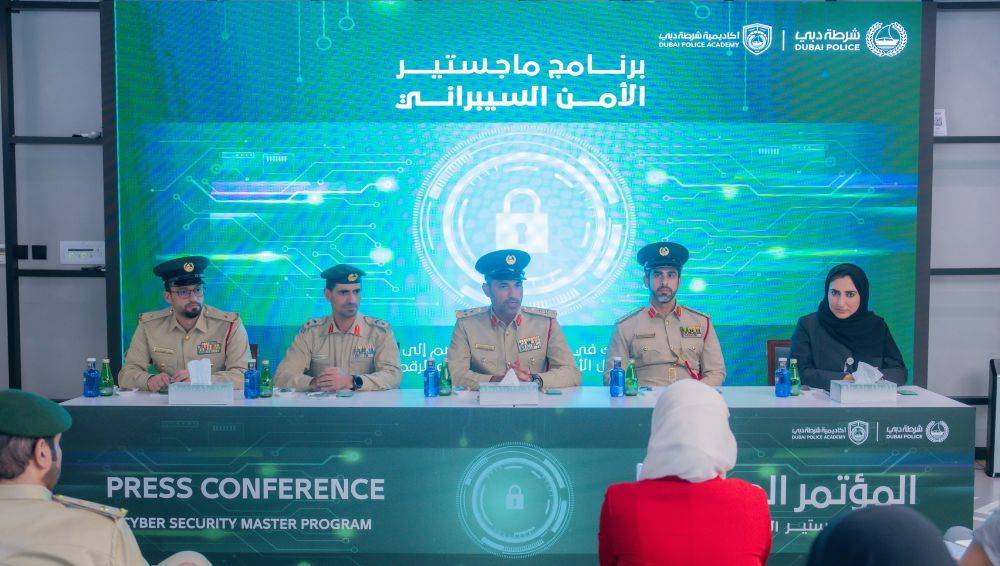
DUBAI Police Academy has introduced a new Master’s degree in Cybersecurity, marking the first such programme offered by a police academy in the Arab world.
The one-year course, set to begin in December, carries tuition fees of Dh60,000 and is open to both UAE citizens and residents.
Established in 1987, the Academy has produced over 8,000 graduates across bachelor’s, master’s, and doctorate programmes.
Master’s degree in Cybersecurity
The new degree is structured over three semesters and a summer term. It will cover four main areas: policies and management, digital forensics, digital infrastructure and security, and scientific research and publishing.
Dubai Police Academy launches a new Master’s degree in Cybersecurity, the first of its kind offered by a police academy in the region. Since its establishment in 1987, the Academy has graduated 8,038 students. It offers a wide range of academic programmes, including three… pic.twitter.com/7gziyb7HM4
— Dubai Media Office (@DXBMediaOffice) August 26, 2025
According to the Academy, the programme is designed to be highly practical, with a significant focus on real-world applications alongside theoretical study.
How to get admission?
Admission is selective, with candidates required to hold a recognised bachelor’s degree in law, security sciences, or a related field, backed by at least five years of professional cybersecurity experience.
A minimum GPA of 3.0 is needed, along with proof of English proficiency through IELTS, TOEFL, or an equivalent qualification.
Applicants will also undergo an academic test and personal interview before admission is confirmed.
What are the entry rules?
Eligibility extends to UAE nationals and residents meeting the academic and professional benchmarks. English proficiency must be demonstrated either through recognised test scores or by holding a degree from an English-medium university in a country where English is the official language. Only applicants who clear both the written and interview stages will be offered a place.
How does the programme work?
The Master’s requires the completion of 30 credit hours within one academic year, making it significantly shorter than traditional police academic degrees, which often span two to three years. Industry specialists will form the core faculty, ensuring that teaching remains closely tied to labour market needs. Practical training will be given prominence, complementing classroom learning.
What are the career prospects?
Dubai Police have long invested in digital crime prevention, with units like the Criminal Data Analysis Centre and the General Department of Criminal Investigations using AI and advanced e-tracking to disrupt cybercrime. Graduates from the new Master’s may find opportunities to contribute directly to such operations, with potential pathways into Dubai Police’s cybersecurity division for high-performing candidates.
Registration is now open on the Academy’s official website. The first intake is expected to include between 15 and 20 students.