

How and when to see the rare Blue Micromoon in UAE
Special viewing opportunities planned across Dubai this weekend
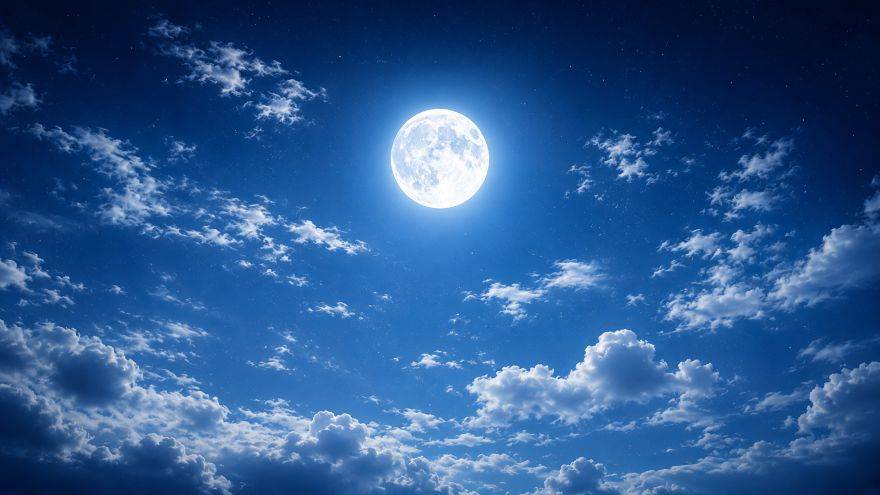
DUBAI – A rare lunar event is set to unfold above the United Arab Emirates (UAE) this weekend, giving residents and astronomy enthusiasts an opportunity to witness a phenomenon often referenced in everyday language but rarely seen in reality.
The Blue Micromoon of May 2026 combines two distinct celestial events into one spectacle, creating a notable moment for skywatchers across the Emirates.
The full moon will first become prominent on the evening of May 30, with peak illumination arriving at 3:45am UAE time on May 31. While the event may not transform the Moon into a vivid shade of blue, it remains one of the most unusual full moons of the year and a highlight for anyone planning a night under the stars.
Blue Moon
This month's full moon is classified as a Blue Moon because it is the second full moon to occur within the same calendar month. The lunar cycle lasts approximately 29.5 days, slightly shorter than most months in the Gregorian calendar. This mismatch occasionally allows two full moons to fit into a single month, with the second earning the Blue Moon designation.
Astronomers estimate that monthly Blue Moons occur only around seven times every 19 years, or roughly once every two to three years. The rarity of the event is the reason the phrase “once in a blue moon” became synonymous with something uncommon.
The upcoming lunar display also qualifies as a micromoon. This occurs when a full moon coincides with the Moon being near apogee, the farthest point in its orbit around Earth. As a result, the Moon appears slightly smaller and dimmer than a typical full moon.
For this event, the Moon will be approximately 406,093 kilometres from Earth, compared with its average distance of around 384,400 kilometres. Despite the difference, most observers will find it difficult to notice the reduced size without specialised measurements or direct photographic comparisons.
Blue, not blue
One of the biggest misconceptions surrounding a Blue Moon is that it appears blue in colour. In reality, the name has nothing to do with the Moon's appearance.
The term refers solely to the timing of the full moon within the calendar. Under normal atmospheric conditions, observers in the UAE can expect the familiar silver-white glow associated with a full moon.
Historically, the phrase “the moon is blue” dates back centuries and was once used to describe something considered impossible. Over time, the expression evolved and became linked to the rare lunar event recognised today.
A genuinely blue-coloured moon can occur, but only under exceptional atmospheric conditions. Large quantities of smoke, dust or volcanic particles in the atmosphere can scatter light in unusual ways. One of the most famous examples followed the eruption of Krakatoa in Indonesia in 1883, when reports emerged of blue-tinted moons being observed in different parts of the world.
Where to watch in UAE
For residents across the Emirates, the best viewing opportunities will arrive on the evening of May 30 and continue into the early hours of May 31. Clear horizons and locations away from heavy city lighting will provide the most impressive views.
The Moon will appear bright and prominent shortly after rising, making beaches, desert locations and open landscapes among the most favourable observation points. Stargazers do not need telescopes or binoculars to enjoy the event, although optical equipment can enhance details on the lunar surface.
The timing also aligns with organised astronomy activities in Dubai. Dubai Astronomy, in collaboration with SEE Institute, has announced a public observation session at The Sustainable City on May 31 from 8pm to 10pm. The event will feature guided telescope viewing, allowing participants to observe the Blue Moon in greater detail.
The 2026 event is particularly notable because the last calendar Blue Moon, in August 2023, coincided with a supermoon rather than a micromoon. Supermoons occur when a full moon appears near perigee, the closest point to Earth in its orbit, making the lunar disc appear slightly larger and brighter.
For skywatchers wondering when the next opportunity will arise, the calendar offers a lengthy wait. Following the May 2026 event, the next monthly Blue Moons are expected on December 31, 2028; September 30, 2031; July 31, 2034; and January 31, 2037.
The current Blue Moon also highlights the unusual relationship between lunar cycles and the calendar. Because February contains only 28 days in a common year and 29 in a leap year, it can never host a monthly Blue Moon. In some years, February has no full moon at all, a phenomenon known as a Black Moon. Such calendar quirks occasionally produce even rarer occurrences, including years featuring two Blue Moons.