

Vision Pakistan among winners of $1m Aga Khan Award for Architecture
Global recognition for innovative projects improving community resilience
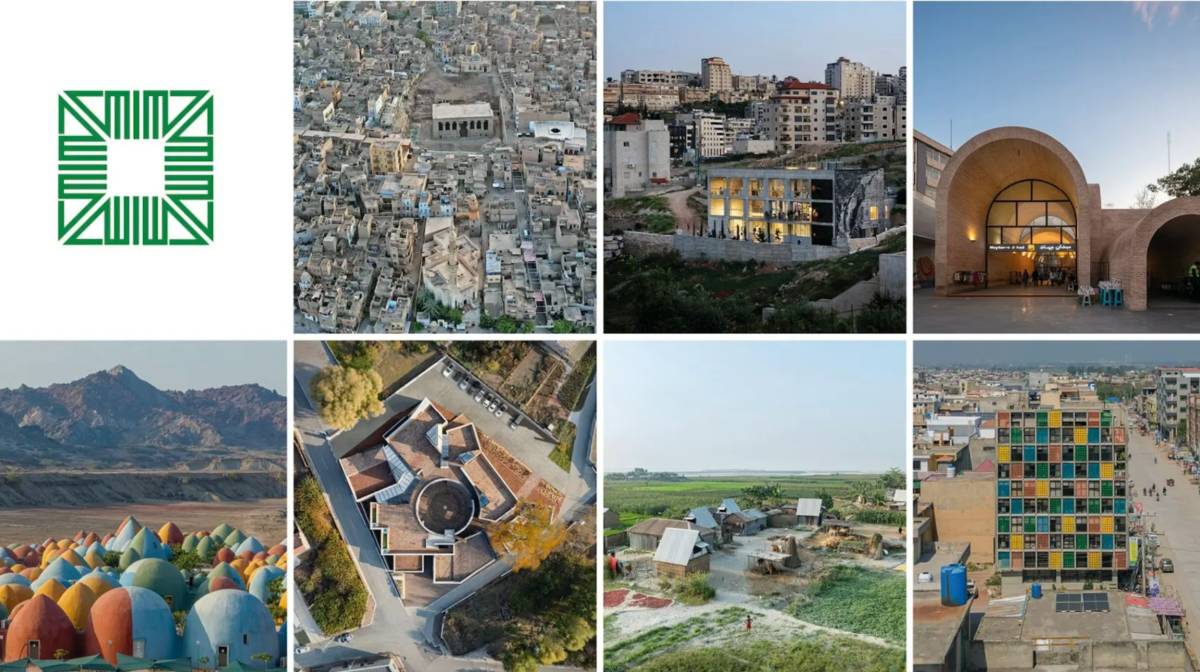
DUBAI – The independent Master Jury of the 16th Award Cycle (2023-2025) has announced the winners of the 2025 Aga Khan Award for Architecture (AKAA), selecting seven projects after extensive on-site reviews of shortlisted entries revealed in June.
The awardees highlight architecture’s power to advance pluralism, strengthen community resilience, foster social transformation, spark cultural dialogue and pioneer climate-responsive design.
The recipients will share the $1 million award, recognised as one of the most prestigious and generous prizes in the field. This cycle once again demonstrates architecture’s potential to serve both as a social catalyst and as a discipline engaging with the climate crisis, resource inequality and urban pressures faced worldwide.
Vision Pakistan, Islamabad, Pakistan

By DB Studios – a multistorey facility designed with joyful façades inspired by Pakistani and Arab craft traditions. It houses a charity dedicated to empowering disadvantaged youth through vocational training. The Jury praised the project for combining light-filled, spatially dynamic interiors with economic efficiency, while embodying a new educational model that merges optimism, heritage and innovation.
Khudi Bari, various locations, Bangladesh

By Marina Tabassum Architects – a replicable shelter system built with bamboo and steel to support communities displaced by climatic and geographic upheavals. The Jury highlighted its ecological ingenuity, noting its role in advancing bamboo as a mainstream sustainable material. Portable, adaptable and resilient, Khudi Bari offers a dignified housing solution to those most vulnerable to environmental change.
West Wusutu Village Community Centre, Hohhot, China
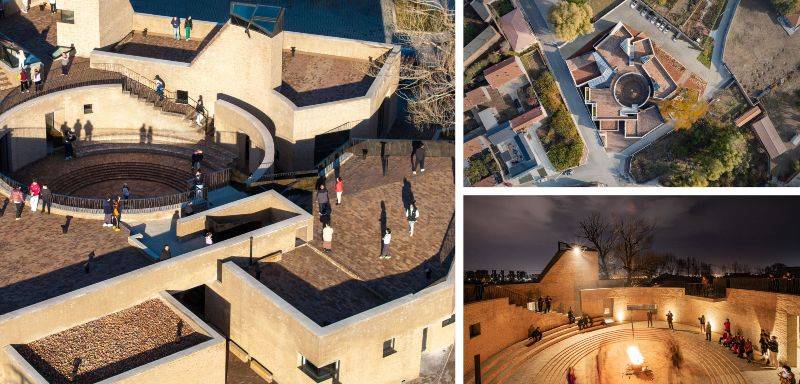
By Inner Mongolian Grand Architecture Design Co., Ltd – a community centre constructed from reclaimed bricks, providing cultural and social facilities for residents and artists alike. The Jury emphasised its ability to nurture inclusivity within a multi-ethnic society, including Hui Muslims, by creating a microcosm of shared life. The project bridges traditional materiality with contemporary community needs in a rural context.
Revitalisation of Historic Esna, Egypt

By Takween Integrated Community Development – a transformative project reviving a neglected historic city through innovative urban strategies, socioeconomic initiatives and physical interventions. The Jury recognised its success in regenerating cultural tourism while improving daily human conditions. Once overlooked, Esna now thrives as a vibrant heritage site, embodying a historic urban metabolism capable of adapting to modern demands.
Majara Residence and Community Redevelopment, Hormuz Island, Iran
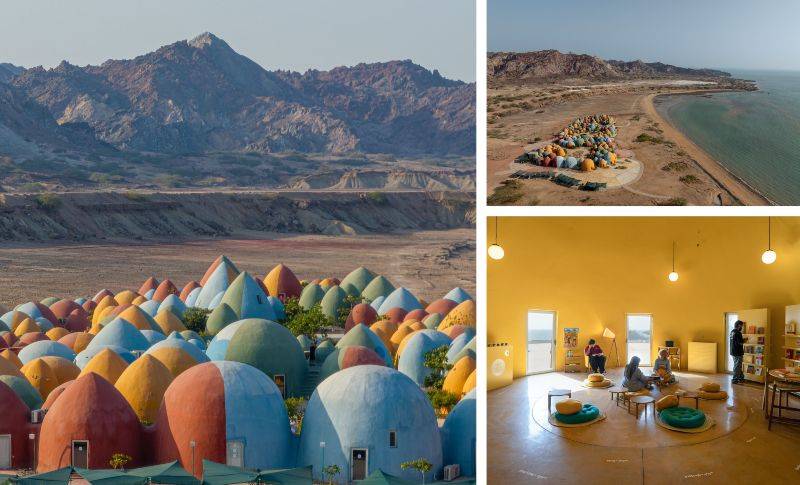
By ZAV Architects – a colourful complex whose domes mirror the ochre-rich soils of the island. Providing sustainable tourist accommodations, the project was commended by the Jury as a lively archipelago of diverse programmes that collectively foster an alternative tourism economy. Its striking forms blend environmental sensitivity with the exuberant identity of Hormuz Island’s landscape.
Jahad Metro Plaza, Tehran, Iran
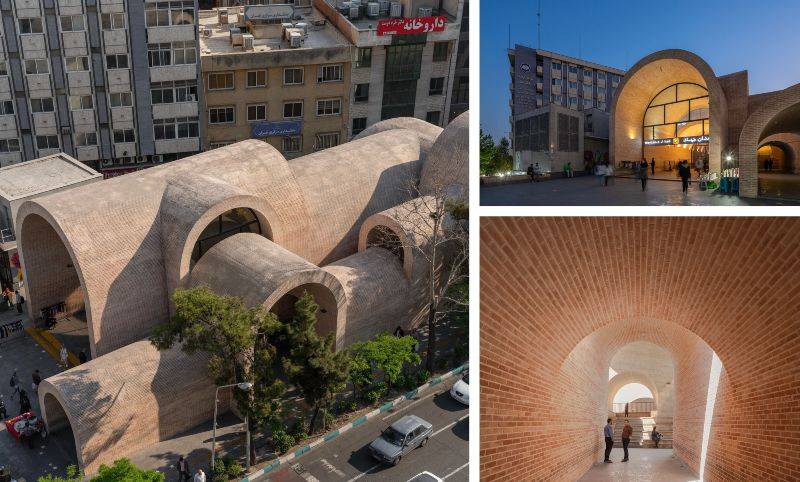
By KA Architecture Studio – a revitalisation of a once dilapidated metro station, now transformed into a bustling pedestrian hub. The Jury praised the use of local handmade brick for strengthening the connection to Iran’s architectural heritage. With warm textures and refined detailing, the plaza asserts its role as a contemporary urban monument in the capital city.
Wonder Cabinet, Bethlehem, Palestine

By AAU Anastas – a multipurpose, non-profit cultural hub designed with the collaboration of local artisans and contractors. Dedicated to craft, design and innovation, the space has become a beacon of cultural production. The Jury admired its role in expressing national identity, enabling learning, and promoting architecture as a medium of resilience and creative resistance.
Ceremony in Kyrgyz Republic
The prize-giving ceremony for this 16th cycle will be held on 15th September at the Toktogul Satylganov Kyrgyz National Philharmonic in Bishkek, Kyrgyz Republic. Alongside architects, the Award also honours the contributions of municipalities, clients, builders, engineers and master artisans.
Prince Rahim Aga Khan V, Chair of the AKAA Steering Committee, stated: “Inspiring younger generations to build with environmental care, knowledge and empathy is among the greatest aims of this Award. Architecture today must engage with the climate crisis, enhance education and nourish our shared humanity. Through it, we plant seeds of optimism – quiet acts of resilience that grow into spaces of belonging, where the future may thrive in dignity and hope.”
Architecture of hope
Founded in 1977 by Prince Karim Aga Khan IV, the Aga Khan Award for Architecture identifies and encourages projects addressing the aspirations of communities where Muslims are a significant presence. Since its inception, 136 projects have been awarded from nearly 10,000 documented. The Award focuses on architecture that balances physical, social and economic requirements with cultural meaning and environmental responsibility.
Farrokh Derakhshani, Director of the Award, remarked: “Architecture can – and must – be a catalyst for hope, shaping not only the spaces we inhabit but the futures we imagine. In an age defined by climate crisis, resource inequality and rapid urbanisation, the Aga Khan Award for Architecture celebrates projects that unite society, sustainability and pluralism to empower a more harmonious and resilient world.”
Aga Khan Award
The Aga Khan Award for Architecture is administered by the Aga Khan Trust for Culture, part of the Aga Khan Development Network (AKDN). Founded and guided His late Highness Karim Aga Khan IV, AKDN operates in more than 30 countries and employs around 96,000 people. Its annual non-profit development expenditure is approximately $1 billion, supporting initiatives in education, health, food security, microfinance, cultural heritage, disaster response and environmental protection. Its cultural and social agencies sustain over 1,000 programmes and institutions worldwide, some with histories stretching back over a century.