

Aga Khan Award reveals 2025 shortlist for $1 million architecture prize
19 projects in 15 countries, from Senegal to China
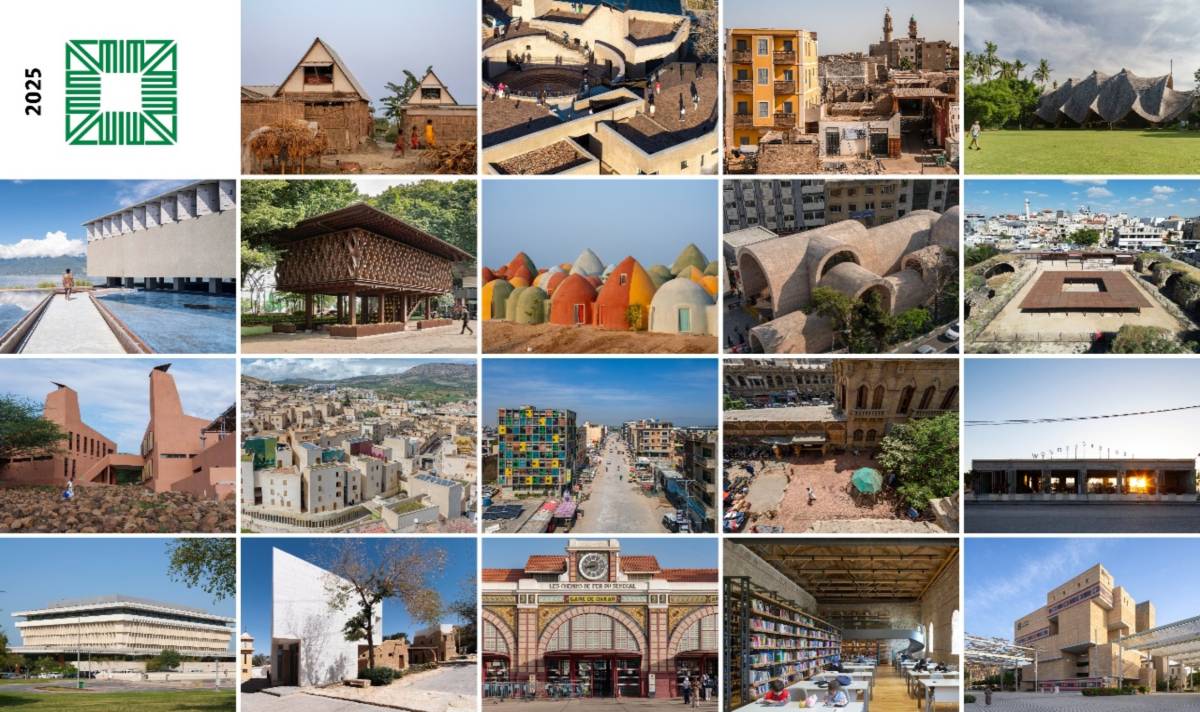
DUBAI: The Aga Khan Award for Architecture (AKAA) has announced 19 shortlisted projects for the 2025 Award cycle.
The projects will compete for a share of the $1 million prize, one of the largest in architecture.
The Aga Khan Award for Architecture was established by late Prince Karim Aga Khan IV in 1977 to identify and encourage building concepts that successfully address the needs and aspirations of communities in which Muslims have a significant presence. Since it was launched 48 years ago, 128 projects have received the award and nearly 10,000 building projects have been documented.
How were the projects chosen?
The 19 projects were selected by an independent Master Jury from 369 nominated entries for the 16th Award Cycle (2023–2025). The jury considered criteria such as cultural relevance, innovation, sustainability, and positive social impact.
Projects range from community centres and mosques to libraries, hotels, and public squares, spread across 15 countries: Bangladesh, China, Egypt, Indonesia, Iran, Israel, Kenya, Morocco, Pakistan, Palestine, Qatar, Saudi Arabia, Senegal, Türkiye, and the United Arab Emirates.
Each shortlisted entry underwent a rigorous on-site review by independent experts, including architects, planners, conservationists and engineers. The Master Jury will reconvene this summer to determine the final recipients.
Bangladesh
Khudi Bari, in various locations, by Marina Tabassum Architects, is a replicable solution for displaced communities affected by climatic and geographic changes, which can be easily disassembled and reassembled to adapt to the users' circumstances.
China
West Wusutu Village Community Centre, Hohhot, Inner Mongolia, by Zhang Pengju, provides social and cultural spaces for residents and artists, while addressing the religious needs of the local Hui Muslims. Built from reclaimed bricks, it comprises indoor and outdoor multifunctional spaces that foster community cohesion.
Egypt
Revitalisation of Historic Esna, by Takween Integrated Community Development, addresses cultural tourism challenges in Upper Egypt through physical interventions, socioeconomic initiatives, and innovative urban strategies, transforming Esna from a neglected site centred on the Temple of Khnum into a prospering historic city.
Indonesia
The Arc at Green School, in Bali, by IBUKU / Elora Hardy, is the produce of 15 years of bamboo experimentation at the Green School Bali. The Arc is a new community wellness centre designed on the existing foundations of a former temporary gymnasium. The structure bridges high-precision engineering and local craftsmanship.
Islamic Centre Nurul Yaqin Mosque, in Palu, Central Sulawesi, by Dave Orlando and Fandy Gunawan, is erected on the site of a former mosque destroyed by a tsunami in 2018. The new Islamic Centre serves as a space for gathering and worship. Open to the landscape, it is surrounded by a shallow reflective pool which can be drained to accommodate more people.
Microlibraries in various cities, by SHAU / Daliana Suryawinata, Florian Heinzelmann who initiated the project, engage with stakeholders at every level to offer quality public spaces in several Kampung and parks in Indonesia. Six have been built so far, and 100 are envisioned by 2045.
Iran
Majara Complex and Community Redevelopment, in Hormuz Island by ZAV Architects / Mohamadreza Ghodousi is famous for its colourful domes which provide sustainable accommodations for tourists who visit the unique landscape of Hormuz. Built by upskilled local workers, it also offers new facilities for the islanders who come there to socialise, pray, or use the library.
Jahad Metro Plaza in Tehran, by KA Architecture Studio, is built to supersede the poor-quality existing structures. It transformed the site into an appreciated landmark designed for pedestrians. Clad in local handmade brick, the arched vaults vary in height to allow light and air into the space they shelter.
Israel
Khan Jaljulia Restoration in Jaljulia by Elias Khuri, is an economical intervention, situated among the remains of a fourteenth century Khan. It reconnects the people to their cultural heritage by transforming the deserted historical site into a vibrant public space for communal activities.
Kenya
Campus Startup Lions, in Turkana by Kéré Architects is an educational and entrepreneurial hub which provides a space for technology-driven education, business incubation and community engagement. Built with local volcanic stone, the design integrates rainwater harvesting, solar energy and tall ventilation towers reminiscent of surrounding termite mounds.
Morocco
Revitalisation of Lalla Yeddouna Square in the medina of Fez, by Mossessian Architecture and Yassir Khalil Studio aims to reconnect to the riverfront, and enhances pedestrian circulation in the area. Existing structures were preserved and new spaces designed for the benefit of local residents, artisans, and visitors from around the world.
Pakistan
Vision Pakistan, in Islamabad by DB Studios / Mohammad Saifullah Siddiqui, accommodates a tailoring training centre operated by Vision Pakistan, a charity that aims to empower disadvantaged youths. Located in a dense area, this multistorey facility echoes the city's architecture from the 1960s while boasting flamboyant jaalis inspired by Pakistani and Arab crafts.
Denso Hall Rahguzar Project, in Karachi by Heritage Foundation Pakistan / Yasmeen Lari, a heritage-led eco-urban enclave, was created by using low-carbon materials, in response to the harsh climate of Karachi, prone to floods and heatwaves. The handcrafted terracotta cobbles absorb rainwater and irrigate the newly planted "forests", which in turn cool and clean the air.
Palestine
Wonder Cabinet, in Bethlehem by AAU Anastas, is a multi-purpose, non-profit exhibition and production space in Bethlehem, founded by the architects. Built with the input of local artisans and contractors, the three-floor concrete building is becoming a key hub for craft, design, innovation and learning.
Qatar
The Ned Hotel, in Doha by David Chipperfield Architects, a Middle Eastern brutalist architecture once hosted the Ministry of Interior, before being carefully adapted into a 90-room boutique hotel, therefore contributing to architectural regeneration in the area.
Saudi Arabia
Shamalat Cultural Centre, in Riyadh, by Syn Architects / Sara Alissa, Nojoud Alsudairi, is a cultural space on the periphery of Diriyah, developed from an old mud house transformed by artist Maha Malluh. Juxtaposing old and new, the centre offers a sensitive perspective on heritage conservation in the region, aiming to integrate historic spaces into everyday life.
Senegal
Rehabilitation and Extension of Dakar Railway Station, in Dakar by Ga2D, to accommodate the passengers of a new express railway line, creates a deliberate contrast between the old and new structures. Vehicular circulation was relegated at the back of the site, giving back the forecourt to pedestrian travellers.
Türkiye
Rami Library, by Han Tümertekin Design & Consultancy, the largest library in Istanbul. It took up quarters in the former Rami Barracks, a large single-storey structure with high volumes, built in the 18th century. A minimal intervention approach was chosen to preserve the original spatial qualities of the structure while accommodating new library functions.
United Arab Emirates
Morocco Pavilion Expo Dubai 2020, by Oualalou + Choi, has been designed to outlive the Expo 2020 and to be converted into a cultural facility. The pavilion pioneers the advancement of large-scale rammed earth construction methods. It obtained the gold LEED certification for its use of passive cooling strategies which keep mechanical air-conditioning to a bare minimum.
Who makes the decisions?
The Master Jury includes nine professionals from across the world:
- Azra Akšamija (MIT, USA)
- Noura Al Sayeh-Holtrop (Bahrain Authority for Culture)
- Lucia Allais (Columbia University, USA)
- David Basulto (ArchDaily, Chile/Germany)
- Yvonne Farrell (Grafton Architects, Ireland)
- Kabage Karanja (Cave_bureau, Kenya / Yale University)
- Yacouba Konaté (University of Abidjan, Ivory Coast)
- Hassan Radoine (Mohammed VI Polytechnic University, Morocco)
- Mun Summ Wong (WOHA, Singapore / National University of Singapore)
The Award is governed by a Steering Committee chaired by the Aga Khan. Other members include global academics, architects, and planners from institutions such as Harvard, Columbia, and MIT. Farrokh Derakhshani serves as the Director of the Award.
The Award recognises achievements across contemporary design, community improvement, social housing, historic preservation, and landscape enhancement. Eligible projects must be in use for at least one year and completed between 1 January 2018 and 31 December 2023. Any project commissioned by the Aga Khan or AKDN institutions is not eligible.
The Aga Khan Development Network (AKDN), which runs the Award, operates over 1,000 programmes in 30 countries, focusing on improving quality of life through initiatives in culture, education, health, the environment, and architecture. AKDN employs about 96,000 people and invests approximately $1 billion annually in non-profit development projects.