

Dubai Airports accelerates recovery with surge in flight movements after disruption
Airlines restore schedules as routing capacity gradually expands
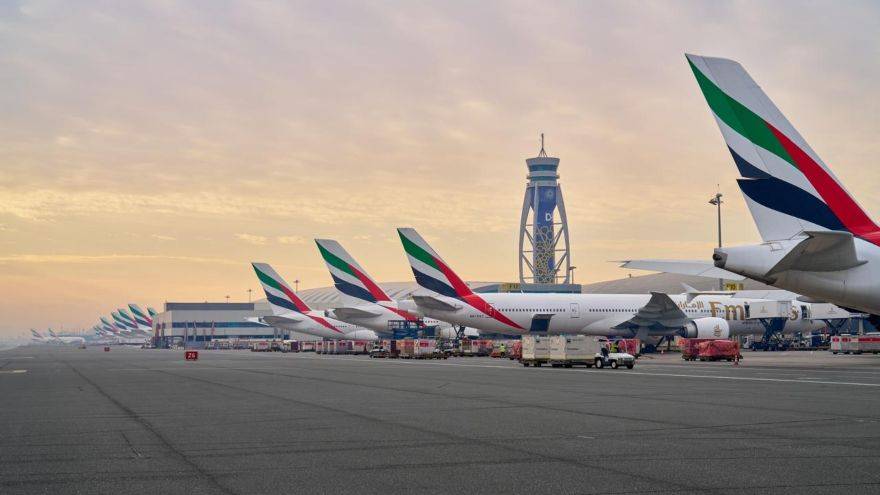
DUBAI – Dubai International Airport continued to sustain global connectivity through a period of regional disruption that significantly constrained airspace capacity across a key aviation corridor.
Despite weeks of operational pressure, the hub maintained services and is now moving swiftly into recovery mode.
With UAE airspace fully restored, Dubai Airports is increasing flight movements and enabling airlines to rebuild schedules in line with available regional routing capacity.
Recovery phase
Following the lifting of precautionary airspace restrictions, Dubai Airports has entered a new phase focused on scaling up operations. Daily flight movements are being ramped up, while airlines progressively reinstate routes that were previously disrupted or reduced.
Over the past two months, we’ve stayed focused on keeping the world moving. With #UAE airspace now fully restored, we are scaling up operations, increasing flight movements in line with available regional routing capacity and enabling airlines to progressively restore their… pic.twitter.com/dkSPtl2SOQ
— Dubai Airports (@DubaiAirports) May 4, 2026
Capacity remains linked to the availability of flight paths beyond the UAE, with ongoing coordination across neighbouring airspace to optimise traffic flows. The recovery is therefore being carefully managed, balancing demand with operational realities across the wider region.
This transition is being driven by collaboration across the oneDXB ecosystem, including airlines, service partners and aviation authorities. Home carriers Emirates and flydubai are playing a central role in restoring connectivity, alongside international operators.
System resilience
During the disruption, which began on 28 February and intensified through March, Dubai’s airports remained operational under continuously shifting conditions. Schedules, passenger flows and ground handling processes were constantly adjusted to align with available airspace.
Coordinated decision-making enabled the system to maintain safe and consistent operations despite severe constraints. Over this period, the airport community ensured continuity of service while preparing for a rapid return to higher capacity.
Paul Griffiths, CEO of Dubai Airports, described the situation as unprecedented for a major global hub. He noted that maintaining operations at DXB is critical, given the scale of international transfer traffic flowing through the Middle East.
Transfer demand
Dubai’s role as a global aviation hub is closely tied to transfer passengers. Of the 99.3 million journeys that could route through the region, around 70 percent are captured by Middle Eastern hubs, with DXB alone handling 32 percent of that traffic.
DXB welcomes 18.6 million guests in the first quarter of 2026. pic.twitter.com/SPCxxwFrkJ
— Dubai Media Office (@DXBMediaOffice) May 4, 2026
This segment is expected to recover quickly as conditions stabilise, supported by demand that cannot easily be absorbed by alternative hubs. The airport’s readiness to respond to improving conditions is seen as a key advantage in capturing returning traffic.
Looking ahead
Looking ahead, Dubai Airports’ outlook remains underpinned by strong demand fundamentals. As airspace capacity improves further, flight movements are being increased in coordination with airline and airspace partners.
The hub is well positioned to accommodate additional growth in the coming months, while maintaining operational stability. At the same time, long-term expansion at Al Maktoum International Airport continues to progress, supporting Dubai’s ambition to strengthen its position as a leading global aviation centre.