

Dubai launches two-year push to embed Agentic AI across private sector
Training, incubators and funds to support AI-driven business shift
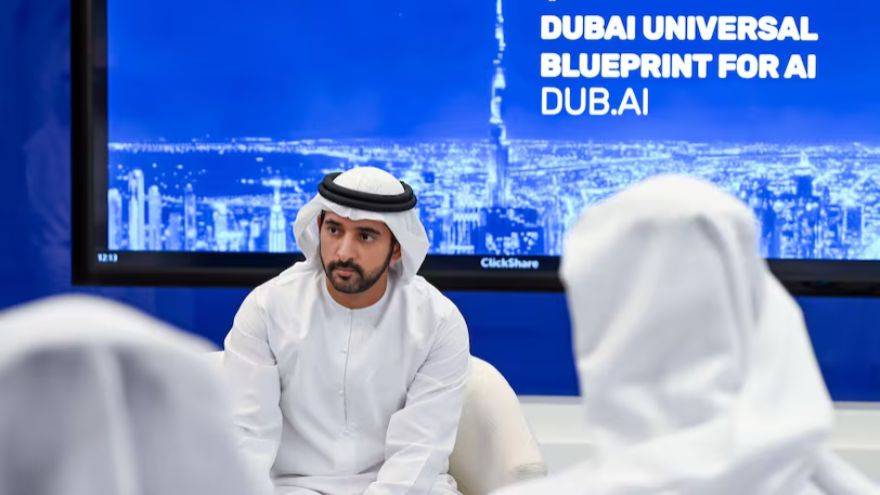
DUBAI – Dubai has unveiled a new initiative aimed at accelerating the adoption of advanced artificial intelligence across its private sector, signalling a significant step in the emirate’s broader digital transformation strategy.
The programme focuses on transitioning businesses towards what is described as Agentic AI, a form of artificial intelligence capable of self-executing and self-leading operations. The move comes under the directives of His Highness Sheikh Mohammed bin Rashid Al Maktoum and has been launched by His Highness Sheikh Hamdan bin Mohammed bin Rashid Al Maktoum.
The initiative outlines a structured, two-year roadmap designed to embed these technologies across companies operating in Dubai. It is positioned as part of a wider effort to strengthen the emirate’s economic competitiveness and establish it as a global leader in commercially applied artificial intelligence.
Under the directives of His Highness Sheikh Mohammed bin Rashid Al Maktoum , we are launching today a new initiative to transform towards Agentic AI (self-executing and self-leading artificial intelligence) in Dubai’s private sector.
— Hamdan bin Mohammed (@HamdanMohammed) May 4, 2026
Our goal is for Dubai to become the world’s…
AI shift
Agentic AI refers to systems that can make decisions, perform tasks, and adapt processes with minimal human intervention. Unlike conventional AI models that require constant input or supervision, these systems are designed to operate autonomously, reshaping workflows and decision-making across industries.
Dubai’s leadership has framed the adoption of such technologies as a critical next step in economic development. The initiative aims to transform private companies into self-innovating entities, capable of enhancing productivity, reducing operational costs, and expanding business output. This transition is expected to influence sectors ranging from finance and retail to logistics and advanced manufacturing.
The programme also reflects a broader recognition of data as a central economic asset. By leveraging data-driven systems, businesses are expected to gain faster insights, improve efficiency, and identify new revenue streams, aligning with Dubai’s ambition to lead in future-focused industries.
Two-year plan
At the core of the initiative is a two-year transformation programme that includes specialised training tracks for all business councils affiliated with the Dubai Chamber of Commerce. These training programmes are intended to equip companies with the technical expertise required to integrate Agentic AI into their operations.
The Dubai Chamber of Commerce has also been tasked with establishing dedicated incubators for companies specialising in Agentic AI. These incubators are expected to support startups and emerging enterprises, providing resources, mentorship, and access to funding.
In addition to incubators, the initiative calls for the creation of dedicated financial mechanisms to support the development and scaling of AI-driven ventures. These funds are designed to lower entry barriers for entrepreneurs and encourage innovation within the private sector.
A key focus of the programme is youth engagement. By creating new economic opportunities in artificial intelligence, the initiative aims to empower young professionals and entrepreneurs to participate in the development of next-generation technologies.
Economic impact
The initiative is closely aligned with Dubai’s long-term economic strategies, particularly the Dubai Economic Agenda (D33), which prioritises digital transformation as a central pillar of growth over the next decade. Through this lens, the adoption of Agentic AI is expected to enhance Dubai’s position as a global hub for business and innovation.
Officials have highlighted the potential of the initiative to generate sustainable economic growth by opening new markets and improving operational efficiencies. By enabling companies to adopt autonomous systems, the programme is expected to increase productivity while reducing costs, creating a more competitive business environment.
Dubai’s approach to supporting the private sector has been characterised by strong public-private collaboration and proactive regulatory frameworks. Business councils serve as direct communication channels between companies and policymakers, ensuring that industry needs are addressed in real time.
This ecosystem is further strengthened by ongoing investments in digital infrastructure. Initiatives such as DubaiNow, the Dubai Metaverse Strategy, and the Dubai Centre for Artificial Intelligence have already laid the groundwork for widespread technology adoption. The new Agentic AI initiative builds on this foundation, reinforcing Dubai’s position as a leading destination for technology investment.
Industry response
Leaders across Dubai’s business community have described the initiative as a transformative development for the private sector. Sultan bin Saeed Al Mansoori, Chairman of Dubai Chambers, characterised it as a pivotal milestone that opens new horizons for sustainable economic growth while reinforcing Dubai’s global standing as a centre for innovation.
According to Al Mansoori, the implementation phase will focus on delivering specialised training programmes, establishing incubators, and launching funding mechanisms to support AI startups. These measures are intended to accelerate the digital transformation of the private sector while enabling entrepreneurs to convert innovative ideas into viable businesses.
Abdul Aziz Al Ghurair, Chairman of Abdulla Al Ghurair Group and Chairman of the Board of Directors of Mashreq Bank, noted that the transition to Agentic AI represents a new era for Dubai’s private sector. He highlighted the opportunity for companies to invest in young talent and develop future-ready business models that enhance productivity and strengthen the emirate’s global economic position.
Ahmad bin Byat, Vice Chairman of Dubai Chambers and Vice Chairman of Dubai Chamber of Digital Economy, emphasised that the initiative marks an advanced stage in Dubai’s digital transformation. He pointed to the role of autonomous systems in improving operational efficiency and enabling businesses to scale more effectively.
Bin Byat also indicated that efforts would continue to expand legislative support, develop specialised incubators, and build global partnerships aimed at attracting international talent and technology firms. These steps are expected to further solidify Dubai’s reputation as a global hub for advanced technology.
Omar Abdulla Al Futtaim, Vice Chairman and Chief Executive Officer of Al-Futtaim Group, described the initiative as a strategic move that reinforces Dubai’s position as a leading global economic centre. He noted that the adoption of advanced technologies offers companies an opportunity to rethink operations, redesign processes, and reinvent business models.
Al Futtaim also underscored the importance of investing in human capital, highlighting the need to equip employees with the skills and mindset required to lead this transformation. He pointed to the initiative’s potential to create new pathways for young talent to develop expertise in artificial intelligence and contribute to the future economy.
Dr Amina Al Rostamani, Member of the Board of Directors of Dubai Chambers and AW Rostamani Group, stated that the initiative opens unprecedented opportunities for the private sector to play a central role in shaping the future of business. She noted that within two years, the programme is expected to position Dubai’s companies as a leading model for decision-making powered by artificial intelligence.
She also highlighted the role of specialised incubators in accelerating digital transformation and fostering innovation. These platforms are expected to support entrepreneurs in developing smart applications that enhance productivity and align with Dubai’s global ambitions in technology and economic development.