

Emirates becomes world’s most profitable airline after record Dh24.4bn annual profit
Dubai carrier navigates Gulf airspace challenges during final financial month
DUBAI – Dubai’s Emirates Group has delivered the strongest financial performance in its history, reporting record profit, revenue and cash reserves for the financial year ending March 31, 2026.
The aviation giant achieved the milestone despite significant disruption to air travel in the Gulf during the final month of the reporting period, when regional military activity forced airlines and airports across the region to adjust operations.
The Group posted profit before tax of Dh24.4 billion, up 7 percent from the previous year, while total revenue climbed to Dh150.5 billion. Cash assets also reached a record Dh59.6 billion, giving the Group one of the strongest balance sheets in global aviation.
The results also cemented Emirates airline’s position as the world’s most profitable airline during the 2025-26 reporting period.
Record results
Emirates airline alone generated profit before tax of Dh22.8 billion, also up 7 percent year-on-year, while revenue rose to Dh130.9 billion. The airline’s profit margin stood at 17.4 percent, reflecting strong global demand for premium and long-haul travel.
The Group’s EBITDA reached Dh41.1 billion, underlining the strength of its operating business even as airlines worldwide continued dealing with supply chain pressure, aircraft shortages and geopolitical uncertainty.
For the second year in a row, Emirates is the world’s most profitable airline in the 2025-26 reporting period.
— Emirates (@emirates) May 7, 2026
The airline has reported record-breaking financial results, despite a disruptive and challenging 12th month of its financial year, including:
???? Record profit before… pic.twitter.com/H8I62qwMYF
The Group also declared a dividend of Dh3.5 billion to the Investment Corporation of Dubai, its owner.
The latest financial year marked the first period in which the Group was impacted by the UAE’s Pillar Two tax framework, increasing the corporate tax rate from 9 per cent to 15 per cent. Even after the higher tax burden, profit after tax still rose 3 per cent to Dh21 billion.
Disruption impact
The final month of the financial year brought unexpected operational pressure after military activity disrupted commercial aviation in the Gulf region, including the UAE.
According to Emirates Group Chairman and Chief Executive Sheikh Ahmed bin Saeed Al Maktoum, the first 11 months of the year had delivered exceptionally strong performance across the business, with sustained demand and healthy operating margins.
However, aviation activity across the region changed sharply on February 28 as conflict-related developments affected commercial air traffic. Emirates and dnata activated operational contingency plans to protect passengers, employees and assets while maintaining continuity of services.
Dubai’s aviation infrastructure played a major role in helping operations continue. Emirates said government coordination and years of investment in aviation systems enabled safe corridors for commercial flights and supported the gradual restoration of operations at Dubai International Airport.
Although passenger capacity remains below pre-disruption levels, cargo operations have recovered more quickly, supporting the movement of essential goods through the UAE.
Growth strategy
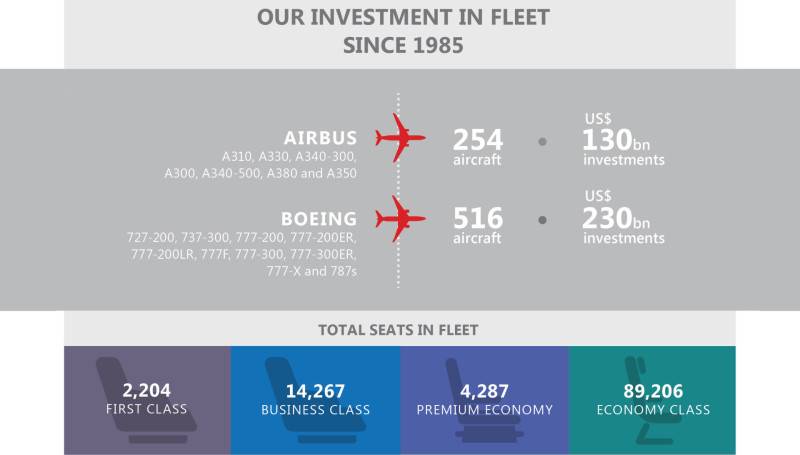
The Group continued investing heavily despite geopolitical uncertainty. During the year, Emirates Group invested Dh17.9 billion into aircraft, facilities, equipment and technology.
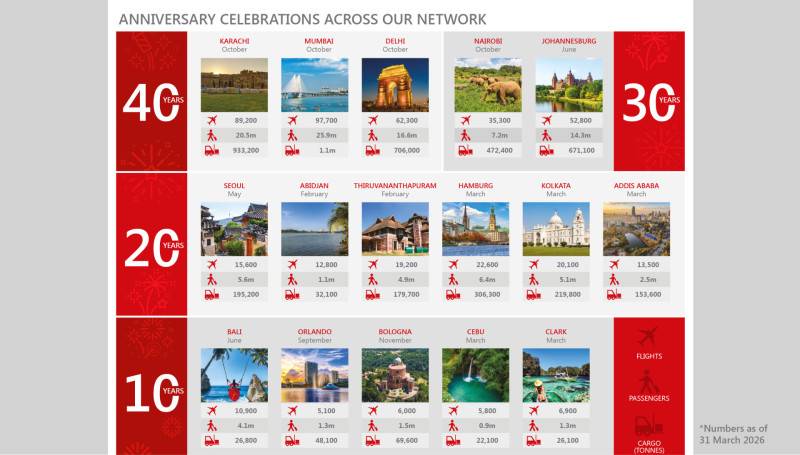
Emirates expanded its global network to 152 cities in 80 countries and added four new destinations including Da Nang, Hangzhou, Shenzhen and Siem Reap.
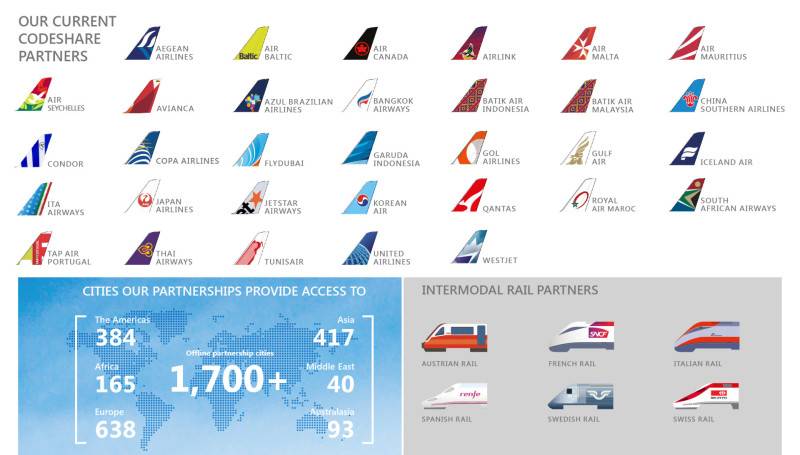
The airline also strengthened partnerships with 32 codeshare and 117 interline partners, giving customers access to more than 1,700 cities worldwide.
Emirates carried 53.2 million passengers during the financial year, while maintaining a passenger seat factor of 78.4 percent. Passenger yield increased 4 percent to 38.1 fils per revenue passenger kilometre, reflecting strong pricing power and demand for premium travel.
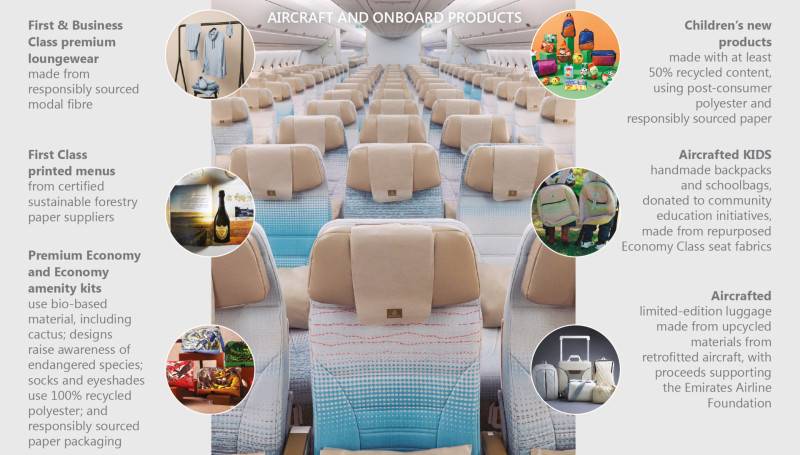
The airline’s Premium Economy expansion continued during the year, supported by the arrival of new Airbus A350 aircraft and the ongoing $5 billion retrofit programme covering 215 aircraft.
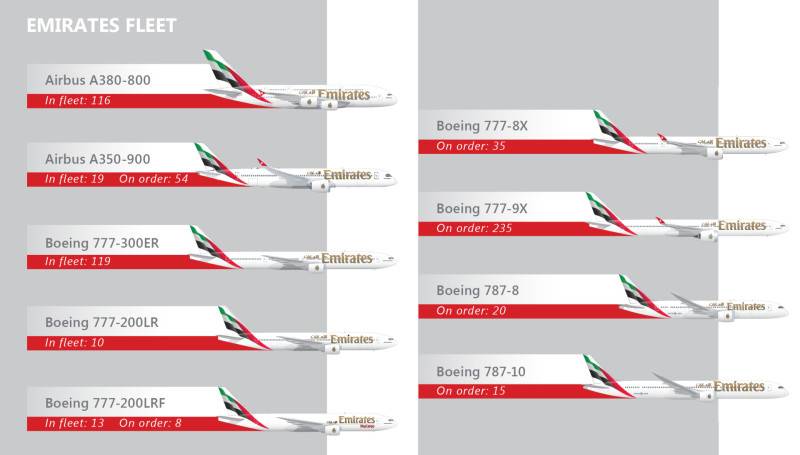
Fuel remained Emirates’ largest operating cost component, accounting for 29 percent of total operating expenses. However, the airline benefited from lower average fuel prices during the year, helping offset increased flying activity.
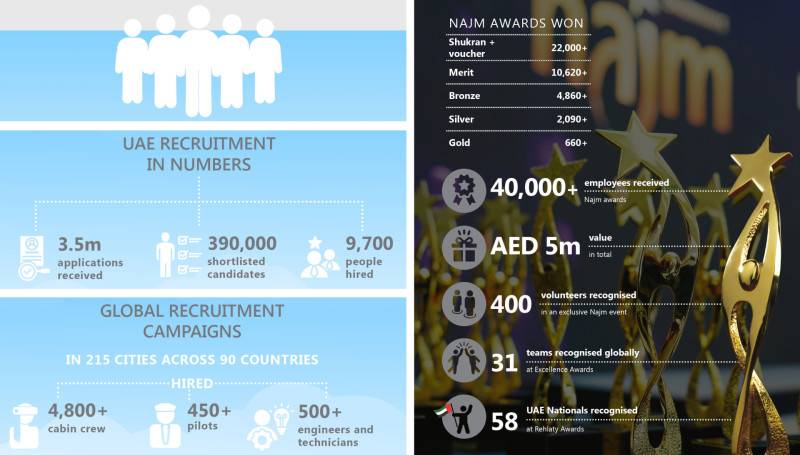
The Group’s workforce grew 8 per cent to 130,919 employees globally, while the UAE national workforce surpassed 4,000 employees.
Looking ahead, Emirates said it remains financially prepared for further market uncertainty. The Group confirmed it has hedged fuel requirements until 2028-29 and maintained strong liquidity to continue investing in growth, aircraft deliveries and infrastructure projects.