

Airlines halt Iran routes from UAE, Turkey and Qatar amid escalating economic protests
Dubai, Istanbul and Doha routes hit as carriers revise schedules
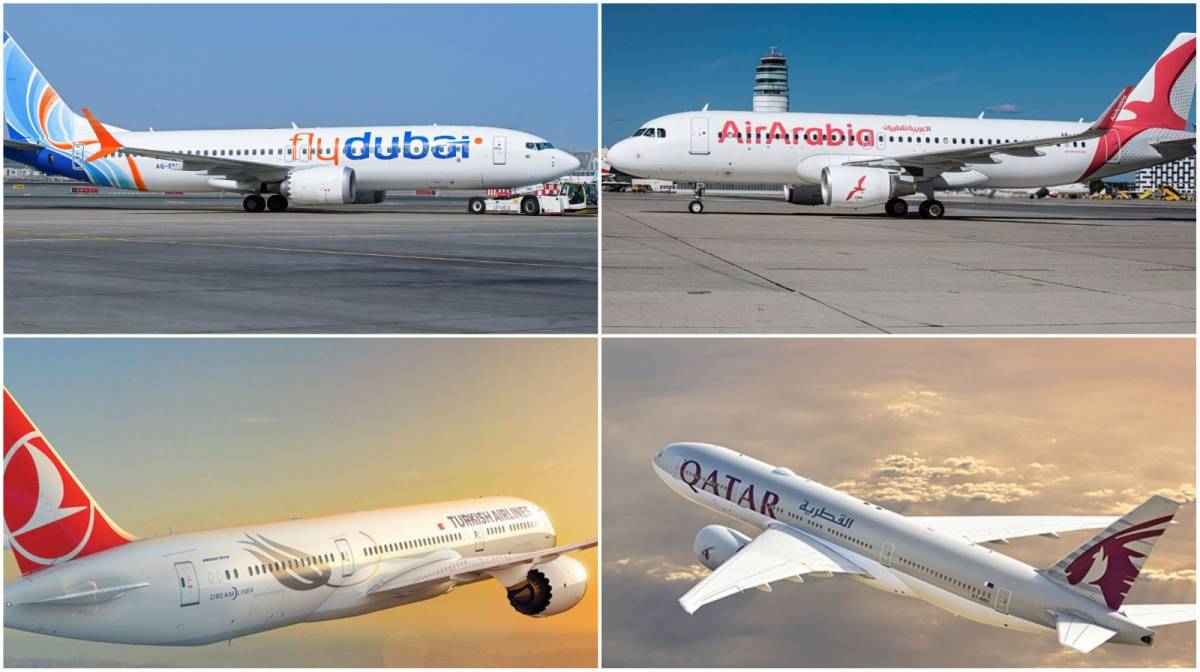
DUBAI – Flights between the UAE and Iran were widely cancelled on Friday as unrest across the Islamic Republic triggered major disruption to regional air travel.
Dubai Airports data showed dozens of services grounded, while Turkish and Qatari airlines also suspended multiple routes to Tehran. The cancellations came amid one of the most extensive waves of protests Iran has seen in years, driven by economic hardship, inflation and currency collapse.
Demonstrations that began in late December have now spread to all 31 Iranian provinces, including Tehran, Isfahan, Shiraz and Mashhad. Authorities have imposed a near total internet blackout, cutting mobile networks and limiting online communication as security forces moved to contain the unrest.
UAE flights to Iran
At least 17 flights from Dubai to Iranian cities were cancelled on Friday, according to Dubai Airports. The affected destinations included Tehran, Shiraz and Mashhad, three of Iran’s main aviation hubs. Separate data published by Al Khaleej newspaper showed that six scheduled Dubai services to Iran had been withdrawn earlier in the day, with no official reason provided.
Passengers were left scrambling for alternative travel plans as airlines advised customers to check flight status updates and contact booking agents. The airport operator did not issue a public statement explaining the cancellations, though the timing coincided with Iran’s communications blackout and intensifying street protests.
Sharjah-based Air Arabia suspended several of its Iran routes as well. The airline’s website showed the cancellation of Flight G9201 from Sharjah to Tehran, Flight G9213 to Shiraz, Flight G9217 to Lar and Flight G9205 to Mashhad. No timeline was given for when services might resume.
Regional carriers
Disruption extended well beyond the UAE. Turkish Airlines cancelled all five of its scheduled Friday flights to Tehran, according to Istanbul Airport’s mobile application. The same platform showed that five additional flights operated by Iranian carriers were also cancelled, while seven others remained listed as operating.
Turkish media later reported wider disruption, saying Turkish Airlines cancelled 17 Iran-bound flights, Turkey’s Ajet withdrew six services, and Pegasus Airlines also halted flights to several Iranian cities. Qatar was also affected, with Hamad International Airport confirming that at least two Doha to Tehran flights scheduled for Friday had been cancelled.
Iran unrest
The protests began when shopkeepers in Tehran’s Grand Bazaar closed their businesses in late December, before spreading nationwide. What started as anger over soaring living costs has increasingly taken on political overtones, with unrest now reported in 17 of Iran’s 31 provinces.
The country’s economy has been hit hard by years of international sanctions, sharply limiting access to global markets and foreign currency. The Iranian rial has lost 56 percent of its value in the past six months, hitting 1.42 million to the dollar, while food prices have jumped by an average of 72 percent year on year.
Authorities responded by shutting down internet and mobile networks nationwide, leaving large parts of Iran effectively cut off from the outside world. Phone calls into the country failed to connect, while domestic news sites only updated intermittently.
International reaction
Iran’s Supreme Leader Ayatollah Ali Khamenei addressed the unrest on January 3, drawing a distinction between protesters and what he called “rioters”. He said those with grievances deserved to be heard but warned that disorder would not be tolerated.
The government’s National Security Council later said there would be no tolerance for “saboteurs”, while accusing the United States and Israel of exploiting the unrest. US President Donald Trump warned Iran against using force against protesters, saying severe action would follow if authorities began killing demonstrators.
The European Union called on Tehran to restore internet access and uphold freedom of expression. “The people of Iran are expressing their legitimate aspiration for a better life,” EU spokesman Anouar El Anouni said.
Norway-based NGO Iran Human Rights said at least 45 protesters, including eight minors, have been killed by security forces since the unrest began, with more than 2,000 people arrested and hundreds wounded.
Despite the growing turmoil, Iranian officials have continued diplomatic engagements abroad, with Foreign Minister Abbas Araqchi meeting Lebanese leaders in Beirut this week as protests continued at home.