

Islamabad Talks: PM Shehbaz meets JD Vance as Pakistan hosts high-stakes US-Iran dialogue
Senior US, Iranian and Pakistani officials participate in intensive discussions on nuclear programme, sanctions and ceasefire terms
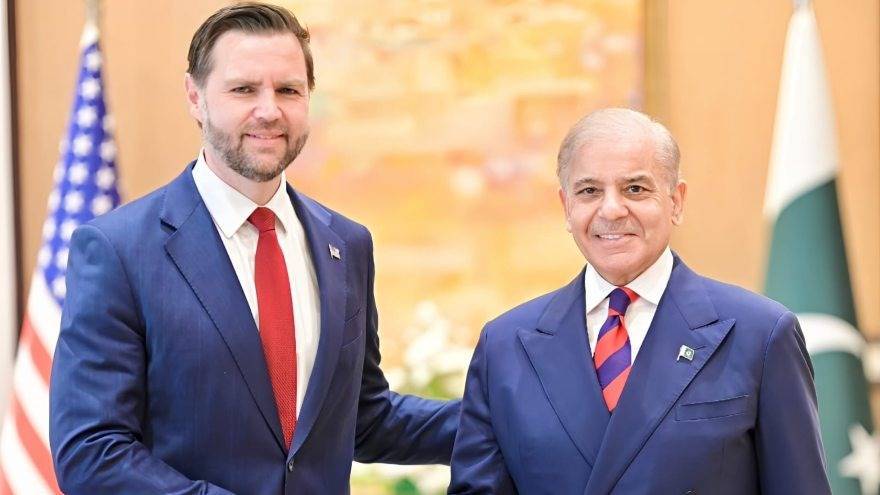
ISLAMABAD – Pakistan Prime Minister Shehbaz Sharif held a high-level meeting with United States Vice President JD Vance in Islamabad on Saturday as the Islamabad Talks formally commenced.
The diplomatic engagement brings together senior delegations from the United States and Iran under Pakistan’s facilitation, aimed at advancing dialogue amid heightened regional tensions. The discussions are taking place at a critical moment following a temporary pause in hostilities in the Middle East.
Pakistan has positioned itself as a facilitator of dialogue, stressing the need for sustained diplomatic engagement to secure regional peace.
JD Vance meets PM Shehbaz
PM Shehbaz was accompanied by Deputy Prime Minister and Foreign Minister Ishaq Dar and Interior Minister Mohsin Naqvi during his meeting with the US delegation. Vice President JD Vance was joined by Special Envoy Steve Witkoff and Jared Kushner as part of the visiting US team.
As the Islamabad Talks commenced today, the Prime Minister of Pakistan, Muhammad Shehbaz Sharif held a meeting with His Excellency JD Vance, Vice President of the United States of America.
— Government of Pakistan (@GovtofPakistan) April 11, 2026
The U.S. Vice President was assisted by Special Envoy Steve Witkoff and Mr. Jared Kushner.… pic.twitter.com/e67UzIPc5f
The prime minister commended the commitment of both delegations to engage constructively and expressed hope that the Islamabad Talks would serve as a stepping stone towards durable peace in the region. He reiterated Pakistan’s readiness to continue facilitating dialogue between relevant parties to support progress towards a sustainable resolution.
The US delegation’s arrival at Nur Khan Air Base was marked by a formal reception hosted by Deputy Prime Minister Ishaq Dar, Interior Minister Mohsin Raza Naqvi, and Chief of Defence Forces and Chief of Army Staff Field Marshal Syed Asim Munir. Senior officials from US national security and defence institutions also accompanied the Vice President.
According to the Ministry of Foreign Affairs, the US delegation’s participation underscores Washington’s commitment to regional and global stability. The Foreign Office noted that Pakistan welcomed the engagement and expressed optimism that discussions would proceed constructively.
Islamabad Talks
The Iranian delegation, led by Parliament Speaker Mohammad Bagher Ghalibaf and Foreign Minister Abbas Araghchi, also arrived in Islamabad earlier in the day. Additional members include senior Iranian security and economic officials, reflecting the breadth of the discussions.
The Islamabad Talks mark the first direct high-level engagement between the United States and Iran since 1979, making the diplomatic initiative a significant development in international relations.
The talks are being held against the backdrop of a fragile ceasefire following months of conflict that began in late February and spread across multiple regional theatres. Pakistan played a key role in facilitating a temporary halt to hostilities earlier this month, creating space for diplomatic engagement.
Iran’s participation has been linked to specific conditions, including a halt to military strikes in Lebanon and progress on the release of frozen Iranian assets valued at approximately $7 billion. Tehran has also insisted that any agreement must extend across multiple regional fronts, including allied groups.
The United States is expected to focus on restrictions to Iran’s nuclear programme, including limits on enrichment activities and broader security assurances. In contrast, Iran is seeking sanctions relief, recognition of its nuclear rights, access to frozen funds, and guarantees over maritime navigation routes.
US President Donald Trump has warned that military options remain on the table should negotiations fail, while Vice President JD Vance described the talks as a potential opportunity but cautioned against delays or obstruction.
The Islamabad Talks are structured around Iran’s 10-point proposal, which has been accepted by Washington as a working framework. However, major differences persist over implementation, sequencing, and verification mechanisms.
Key issues include Iran’s missile programme, regional proxy networks, sanctions relief mechanisms, and maritime security arrangements in strategic waterways. While immediate breakthroughs are considered unlikely, officials and analysts suggest the talks may lay the groundwork for continued dialogue or limited de-escalation measures.
Pakistan has reiterated its commitment to facilitating constructive engagement, emphasising that long-term stability in the region can only be achieved through sustained diplomatic efforts involving all relevant stakeholders.