

RTA, Emaar to lift Burj Khalifa/Dubai Mall Metro Station capacity by 65pc with major station expansion
Platform, concourse and bridge upgrades to ease peak-hour congestion in Downtown Dubai

DUBAI – Dubai’s Roads and Transport Authority and Emaar Properties have signed an agreement to significantly expand Burj Khalifa and Dubai Mall Metro Station, one of the most heavily used stops on the Dubai Metro network.
The project has been designed to respond to sustained growth in passenger demand driven by tourism, retail activity and the area’s role as the focal point for major celebrations. The station already plays a critical role during New Year’s Eve, national holidays and religious festivals, when tens of thousands of people converge on Downtown Dubai within a short time frame.
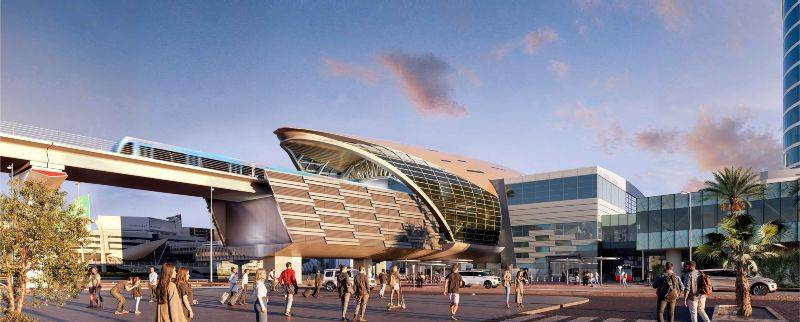
Under the agreement, the station’s total built-up area will be expanded from 6,700 square metres to 8,500 square metres. A comprehensive programme of works will enhance entrances, pedestrian bridges, concourse areas and platforms, while new escalators and lifts will be added to increase vertical circulation and reduce bottlenecks. Entry and exit gates will be separated, the number of fare gates will be increased, and commercial areas will be expanded to improve passenger services and generate additional revenue. Landscaping and urban integration elements will also be delivered as part of the wider scope.
Capacity boost
Once the project is completed, Burj Khalifa and Dubai Mall Metro Station will be able to handle 12,320 passengers per hour, up from the current 7,250, representing a 65 per cent increase in throughput. The expanded facilities will allow the station to accommodate up to 220,000 passengers a day, a level designed to cope with peak travel periods and the continuing growth of Downtown Dubai as a residential, tourism and retail hub.

The agreement was signed by Mattar Al Tayer, Director General and Chairman of the Board of Executive Directors of the RTA, and Mohamed Alabbar, Founder of Emaar and Noon and Chairman of Eagle Hills. The signing took place on the sidelines of the Dubai World Project Management Forum, attended by senior officials from both organisations.
The project is structured as a Public–Private Partnership, reflecting Dubai’s long-standing approach to mobilising private sector expertise and capital in support of strategic public infrastructure. The partnership brings together RTA’s transport planning and operational experience with Emaar’s long involvement in shaping Downtown Dubai and managing some of the city’s most visited destinations.
Public partnership
Al Tayer said the agreement reflects the vision of His Highness Sheikh Mohammed bin Rashid Al Maktoum to strengthen integration between the public and private sectors. He noted that this approach underpins the development of world-class infrastructure aligned with Dubai’s rapid urban and economic growth, while enhancing the city’s readiness to host major international events and reinforcing its position as a global hub for sustainable urban mobility and quality of life.
He described the expansion of Burj Khalifa and Dubai Mall Metro Station as a strategic investment at the heart of Dubai’s urban core, where tourism, commerce and entertainment are most concentrated. According to Al Tayer, the project supports RTA’s objective of building proactive infrastructure capable of accommodating rapid increases in population and visitor numbers, while improving traffic flow and ensuring smoother mobility during peak periods and major occasions.
The station is a critical gateway for people travelling to Burj Khalifa, Dubai Mall and the wider Downtown Dubai district. During high-profile events, particularly New Year’s Eve, the station becomes one of the busiest transport nodes in the country, making capacity, safety and efficient passenger movement essential.
User experience
Al Tayer said Burj Khalifa and Dubai Mall Metro Station is one of the most important stations on the network because of its location at the heart of the city’s most visited district. It is the most convenient and accessible option for residents and visitors heading to Burj Khalifa, Dubai Mall and surrounding developments, especially during major celebrations and holidays.
Increasing the station’s capacity by 65 per cent and raising its daily handling capability to up to 220,000 passengers will deliver a step change in metro services for Downtown Dubai. The improvements are expected to be particularly noticeable during peak periods such as New Year’s celebrations and national and religious holidays, when passenger volumes reach their highest levels. The upgrades are designed to ensure high standards of safety, comfort and passenger flow efficiency, while supporting continued growth in ridership through to 2040. Over the past five years, the station has recorded a 7.5 per cent increase in passenger numbers, underlining the sustained upward trend.
The separation of entry and exit gates, together with a larger number of fare gates and wider concourse areas, is intended to reduce cross-flows and queuing, while additional escalators and lifts will shorten transfer times between levels. Expanded commercial spaces will add convenience for travellers and create new opportunities for retail and service providers within the station environment.
Urban investment
Alabbar said the agreement is aligned with Emaar’s vision of developing integrated urban destinations that place people at the centre of design and planning. He highlighted the importance of ease of access and seamless mobility in supporting the appeal of Downtown Dubai, which attracts millions of residents, shoppers and tourists each year.
The Burj Khalifa and Dubai Mall precinct, he said, goes beyond being a commercial and tourism destination and represents the vibrant heart of a global city. This level of activity requires transport infrastructure of the highest efficiency and readiness, capable of absorbing large surges in demand while maintaining a high-quality visitor experience.
Alabbar added that expanding the metro station is a direct investment in quality of life, reducing travel times, improving access to some of Dubai’s most prominent landmarks and enhancing the experience of visitors during peak periods. These include New Year’s Eve and holiday seasons, which see the highest levels of movement in the area. He said the partnership with the RTA demonstrates a successful model of public and private sector integration that supports sustainable urban growth and helps ensure Dubai remains ready to keep pace with rising visitor numbers.
Emaar will continue working with its strategic partners to develop an integrated ecosystem of destinations and services aimed at positioning Downtown Dubai as one of the most accessible urban areas in the world, offering high standards of liveability and remaining among the most attractive global city centres.
Passenger trends
Burj Khalifa and Dubai Mall Metro Station has seen sustained growth in ridership since it opened in early 2010. Passenger numbers rose from 6.13 million in 2013 to 7.254 million in 2016, before increasing further to 7.885 million in 2019, when the station was handling an average of about 43,000 passengers a day, inbound and outbound.
Following the pandemic period, growth resumed at a faster pace. Ridership reached 8.827 million passengers in 2022 and exceeded 10.202 million in 2023, with a daily average of around 56,000 passengers. In 2024, the number of station users climbed to more than 10.577 million, and the previous year recorded further growth to reach nearly 11 million passengers. These figures highlight the scale of demand at a station that serves one of the world’s most visited urban districts.
The increase in both daily averages and annual totals has placed pressure on existing facilities, particularly during major events. The planned expansion is therefore designed not only to meet current demand but to provide sufficient headroom for future growth in line with Dubai’s tourism, retail and residential development plans.
Station design
The architectural design of Burj Khalifa and Dubai Mall Metro Station follows the shell-inspired form used across elevated stations on the Red and Green Lines. The expansion will maintain this established aesthetic while upgrading interior spaces to meet higher capacity requirements. The design principles focus on safety, security and efficient passenger movement, with clear sightlines and simple layouts that minimise walking distances and support smooth flows through the station.
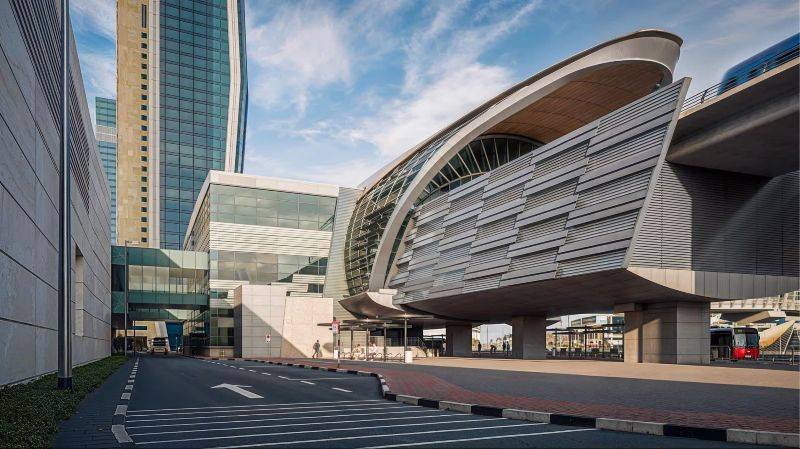
At ground level, entrances are fully integrated with public transport services and other mobility options such as bicycles and electric scooters, ensuring direct connectivity with pedestrian routes and the surrounding urban fabric. This approach is intended to encourage multimodal travel and make it easier for people to complete their journeys without relying on private vehicles.
The station has also been designed to be inclusive, taking into account the needs of people of determination, senior citizens, residents, visitors and parents with prams. Lifts, ramps and wide circulation areas are incorporated to ensure accessibility for all users, supporting Dubai’s wider commitment to universal design across its transport network.