

Over 6,000 global leaders to attend World Governments Summit 2026 in Dubai
World Laureates Summit brings Nobel Prize winners to address global challenges

DUBAI – The World Governments Summit (WGS) 2026 is set to take place in Dubai from 3 to 5 February under the theme “Shaping Future Governments”, promising the largest international participation in the Summit’s history.
With more than 6,000 attendees, including heads of state, ministers, CEOs, and thought leaders, this edition underscores the Summit’s role as a global platform for shaping governance and anticipating future trends.
Since its inception in 2013, the Summit has evolved from a regional forum into a nexus for international leaders and private sector innovators. Over the years, it has become a platform for exchanging ideas, creating strategic partnerships, and developing practical solutions to address global challenges.
World Governments Summit 2026
The 2026 edition will see record leadership attendance, with more than 35 heads of state and over 500 ministers participating. The event is supported by over 70 strategic partners, including multinational corporations and leading academic institutions, reflecting the Summit’s strong public-private collaboration model.

The Summit’s leadership gathering will feature prominent global figures, including King Jigme Khesar Namgyel Wangchuck of Bhutan; President Guy Parmelin of Switzerland; President Daniel Noboa of Ecuador; President Alar Karis of Estonia; President Gordana Siljanovska-Davkova of North Macedonia; President Vjosa Osmani of Kosovo; and Crown Prince Sheikh Sabah Al-Khaled Al-Hamad Al-Mubarak Al-Sabah of Kuwait.
Heads of government attending include Prime Ministers Pedro Sánchez (Spain), Edi Rama (Albania), Irakli Kobakhidze (Georgia), Mostafa Madbouly (Egypt), Masrour Barzani (Kurdistan Region of Iraq), and Roosevelt Skerrit (Dominica), among others.
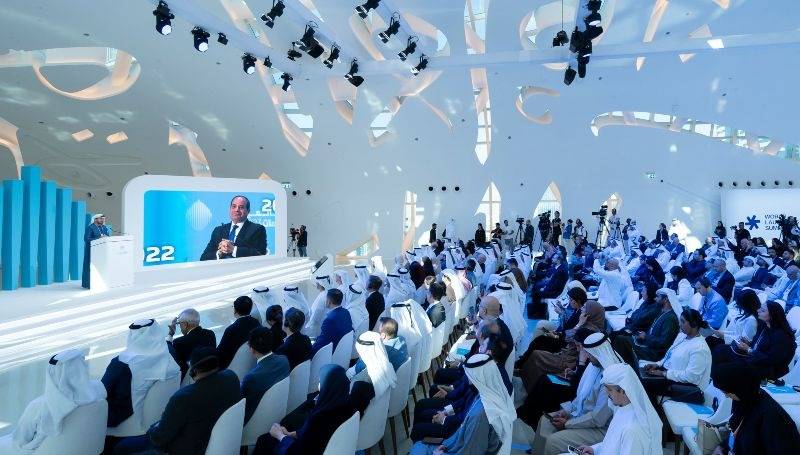
The Summit is also hosting 24 specialised global forums and 35 ministerial and high-level meetings to discuss governance, technology, investment, logistics, aviation, tourism, and global trade. Over 36 strategic reports will be released in collaboration with international knowledge partners.
World Laureates Summit
Running from 1 to 2 February, just before the main Summit, the World Laureates Summit brings together winners of prestigious awards such as the Nobel Prize, Turing Award, Wolf Prize, and Fields Medal. Notable attendees include Michael Levitt (2013 Nobel in Chemistry), Steven Chu (1997 Nobel in Physics), Kip Thorne (2017 Nobel in Physics), Yoshua Bengio (2018 Turing Award), and John Hopcroft (1986 Turing Award).
During the two-day summit, laureates will collaborate to propose scientific solutions to pressing global challenges, with outcomes to be presented during the World Governments Summit.
Strategic dialogues
The Summit will host discussions on the future of key sectors, bringing together global CEOs and industry leaders. Participants include the Chairman of Alibaba, CEOs of Airbus, IBM, Ericsson, Waymo, Rakuten, and Hugo Boss, alongside media founders and executives from Bloomberg, Euro News, India Today Group, Axios, and Monocle.
These sessions aim to foster strategic collaboration between governments and private enterprises to accelerate innovation, enhance public services, and advance sustainable development worldwide.
Growing scale
The 2026 edition reflects a significant increase in scale and global impact, drawing representatives from over 100 international and regional organisations. Among them are leaders from the IMF, OECD, IFC, Arab Monetary Fund, OPEC Fund, and the World Bank.
Key thematic areas include Global Governance, Societal Wellbeing, Economic Prosperity, Urban Futures, Emerging Technologies, and Strategic Investments. Over 320 sessions will feature 450 global figures, including presidents, ministers, experts, and decision-makers.
Ministerial meetings
High-level meetings will cover diverse topics, including the Arab Fiscal Forum, Arab Youth Ministers roundtable, Global Councils on SDGs, and discussions on next-generation governments. Bilateral dialogues with Kazakhstan, South Korea, and Ecuador, alongside the Kuwait-UAE Economic Forum, will further strengthen international cooperation.
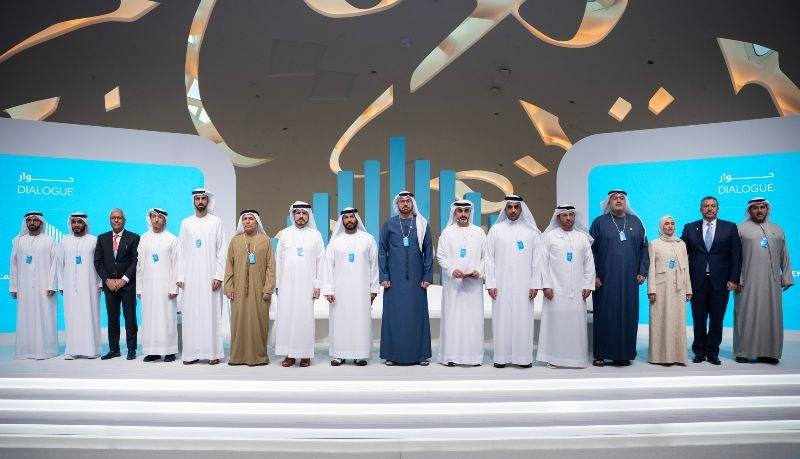
International organisations will host several strategic meetings, including the Investment Roundtable for Latin America and the Caribbean with IFC, the Arab Public Administration Forum, the 10th International Cooperation Conference (ACS) Roundtable, the Future of Aviation Roundtable in collaboration with ICAO, and the OECD-EU High-Level Dialogue.
Global forums
The Summit agenda features 24 specialised forums designed to anticipate future trends and challenges in governance, technology, and societal development. Notable forums include:
- Artificial Intelligence Forum
- Global Logistics Dialogue
- Future of Education Forum
- Sustainability Impact Forum
- Emerging Economies Forum
- Global Health Forum
- Future of Mobility Forum
- Government Services Forum
- Government Regulations & Justice Forum
These forums will host private sector leaders, experts, and academics, including representatives from Dubai Airports, Emirates, TAP Portugal, KLM, 25hours Hotels, EHL Hospitality Business School, McGill University, Arizona State University, Southern California University, Oxford, Hong Kong University, and IMD.
Excellence awards
The Summit continues to recognise innovation and governance excellence through four prestigious awards:
- Best Minister Award – in partnership with PwC
- Most Reformed Government Global Award – in collaboration with EY
- Dubai International Best Practices Award for Sustainable Development – in collaboration with UN-Habitat and Dubai Municipality
- Global Teacher Prize – in partnership with the Varkey Foundation
These awards highlight outstanding contributions to public service, governance, education, and sustainable development, celebrating the individuals and institutions shaping future governments.