

Eid weather alert: Rainfall, gusty winds expected across UAE from March 21-24
Unsettled conditions expected across multiple regions through holiday period

DUBAI – Residents across the United Arab Emirates (UAE) can expect a change in weather conditions during the Eid Al Fitr 2026 holiday, with cloud cover, rainfall and gusty winds forecast to affect several parts of the country.
The National Centre of Meteorology (NCM) has indicated that unstable weather patterns will develop in the lead-up to Eid and continue through the holiday period. These conditions are expected to bring a mix of light showers and heavier rainfall across different regions.
The forecast comes as meteorological systems converge over the country, creating favourable conditions for cloud formation and precipitation. According to the NCM, clouds will begin moving in from the west between March 21 and March 24, with intermittent cumulonimbus cloud activity likely to result in varying intensities of rainfall.
UAE weather outlook
The expected conditions are being driven by a combination of atmospheric factors. An upper-level depression is extending into the region, accompanied by a surface low-pressure system. At the same time, humid southeasterly winds are drawing moisture from the Arabian Sea, increasing the likelihood of cloud formation.
An upper jet stream is also contributing to the movement of cloud bands across the UAE, enhancing the development of overcast skies. This combination is expected to make this Eid period notably wetter compared to typical seasonal conditions.
Pre-Eid trends
The unsettled weather pattern is set to build gradually before the start of Eid. From March 18 onwards, skies are expected to turn partly cloudy to overcast, particularly over western coastal areas and islands. Light rainfall may occur during the daytime, accompanied by a noticeable drop in temperatures.
Winds are forecast to strengthen during this period, with northwesterly gusts reaching up to 40 km/h. These conditions may lead to blowing dust and reduced visibility, particularly in open areas. Similar patterns are expected to persist through Thursday and Friday, with intermittent cloud cover and isolated showers continuing across coastal and western regions.
Weather during Eid holiday
From Saturday, March 21, through Tuesday, March 24, weather activity is expected to intensify. The NCM has forecast rainfall of varying intensity across multiple parts of the UAE during this period, describing the overall conditions as moderate but active.
Cumulonimbus clouds are likely to develop intermittently, leading to sudden and localised rainfall events. While some areas may experience light drizzle, others could see heavier downpours within short periods. Wind speeds may continue to reach up to 40 km/h at times, adding to the variability in conditions.
Sea conditions are also expected to be affected, with the Arabian Gulf and the Oman Sea likely to experience moderate to rough waves. This may have implications for marine activities and coastal travel during the holiday.
The presence of cloud cover and rainfall is expected to bring a dip in temperatures compared to recent highs. Earlier in the week, the highest recorded temperature reached 41°C in Bada Dafas in the Al Dhafrah region at 3:15pm local time, highlighting the contrast with the cooler conditions expected during Eid.
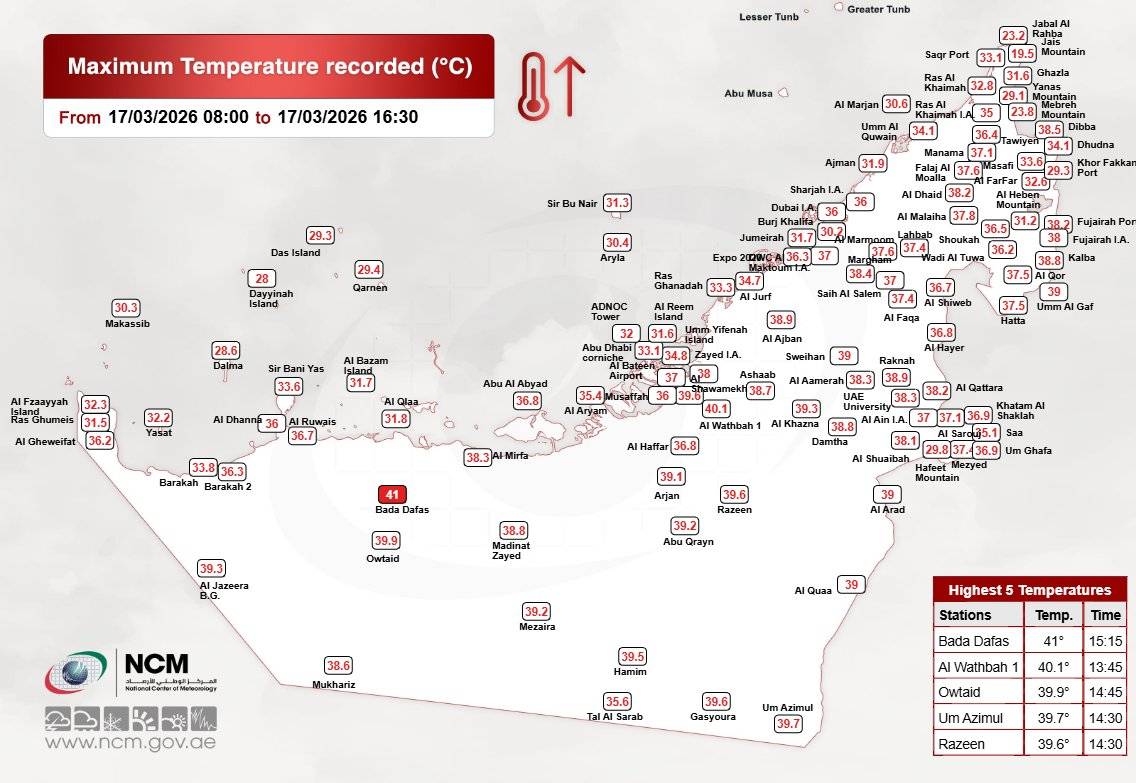
The shift towards milder temperatures, combined with increased humidity, will contribute to a more variable weather pattern across the country.
Travel impact
The forecast conditions could affect travel plans and outdoor activities during the Eid break. Wet roads, reduced visibility due to dust and rain, and gusty winds may lead to slower traffic movement in some areas.
Authorities advise residents to monitor official weather updates, particularly as conditions may change quickly during periods of active cloud formation. Those planning coastal or marine outings are also urged to check sea conditions in advance, given the expected rough waters.