

Dubai traffic boost as RTA unveils new bridges linking 2nd December Street to key corridors
Major intersection upgrade delivered ahead of schedule
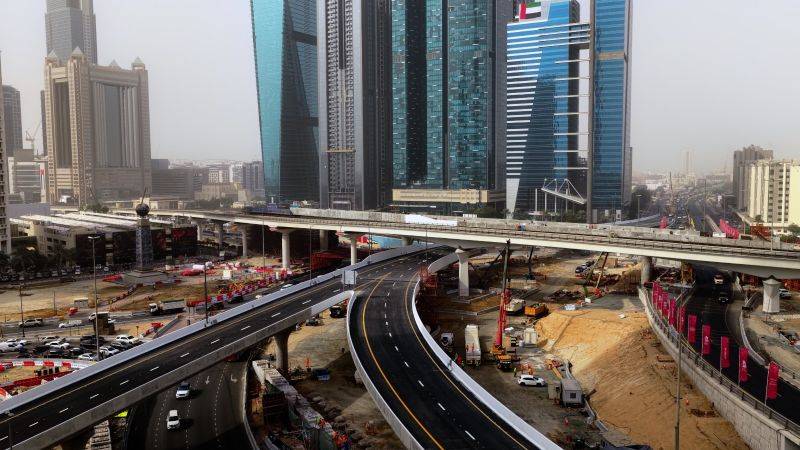
DUBAI – The Roads and Transport Authority (RTA) has opened two new bridges as part of the Trade Centre Roundabout Development Project, marking a significant milestone in one of Dubai most important traffic upgrades.
The bridges serve traffic moving from 2nd December Street towards Sheikh Rashid Street and Al Majlis Street, which connects to Al Mustaqbal Street. Their opening comes ahead of the planned mid-January schedule, providing early relief at a junction long regarded as one of Dubai’s busiest.
The newly operational structures form part of a wider transformation aimed at easing congestion, reducing journey times and improving connectivity between major residential, commercial and event districts. With each bridge offering two lanes in both directions, the combined length reaches 2,000 metres and accommodates up to 6,000 vehicles per hour, significantly enhancing traffic flow through the area.
Early opening
According to the RTA, the early opening reflects steady progress on site and a broader strategy to deliver phased benefits to road users before full project completion. The bridges improve movement from 2nd December Street towards Sheikh Rashid Street and Al Majlis Street, while also easing pressure at the existing roundabout.
As a result, journey times from 2nd December Street to Al Majlis Street, Al Mustaqbal Street and Zabeel Palace Street have dropped sharply from around 10 minutes to just two minutes. Traffic density at the Trade Centre Roundabout has also been reduced, improving reliability for daily commuters and visitors to nearby commercial hubs.

Mattar Al Tayer, Director General and Chairman of the Board of Executive Directors of the RTA, said the Trade Centre Roundabout is among Dubai’s most strategic intersections. It links Sheikh Zayed Road with Sheikh Khalifa bin Zayed Street, Sheikh Rashid Street, 2nd December Street, Zabeel Palace Street and Al Majlis Street, forming a critical gateway between old and new parts of the city.
Project scope
The Trade Centre Roundabout Development Project carries a total cost exceeding Dh696 million and represents a comprehensive reconfiguration of the area’s road network. Central to the scheme is the construction of five bridges with a combined length of 5,000 metres, alongside the conversion of the existing roundabout into an at-grade intersection.
The project is designed to enhance traffic flow from Sheikh Zayed Road towards 2nd December Street and improve southbound movement from Al Mustaqbal Street towards Sheikh Zayed Road. It also enables free-flow traffic from 2nd December Street in Jumeirah and Al Satwa towards Al Majlis Street and Al Mustaqbal Street, serving Dubai World Trade Centre and Dubai International Financial Centre, as well as traffic from Sheikh Rashid Street towards Deira.
A second-level bridge will further support uninterrupted movement from Sheikh Zayed Road towards Sheikh Khalifa bin Zayed Street, strengthening east–west connectivity across the area.
Phased delivery
Work on the project is progressing faster than the approved schedule, with overall completion nearing 50%, according to the RTA. The authority has confirmed that openings will continue in phases to maximise early benefits for road users.
In March, a bridge linking Sheikh Zayed Road directly to Sheikh Khalifa bin Zayed Street is scheduled to open. Two additional bridges are expected to become operational in October 2026, serving traffic travelling from Sheikh Rashid Street and Al Majlis Street towards 2nd December Street.

Once fully completed, the project is expected to reduce average delays at the intersection from 12 minutes to just 90 seconds. Journey time for vehicles travelling from Sheikh Zayed Road to Sheikh Khalifa bin Zayed Street will also fall from six minutes to around one minute, significantly improving travel predictability through the corridor.
Five bridges
The five bridges under construction are designed to allow free-flow movement in multiple directions without the need for traffic signals. One of the key structures is a second-level bridge with two lanes extending from Sheikh Zayed Road to Sheikh Khalifa bin Zayed Street towards Deira. This bridge is 1,000 metres long and can handle approximately 3,000 vehicles per hour.
Two further bridges, each providing two lanes in both directions, will link Sheikh Rashid Street with 2nd December Street. Together, they span 2,000 metres and carry a combined capacity of about 6,000 vehicles per hour.
Another pair of bridges will extend from Al Majlis Street to 2nd December Street, offering a direct connection between Al Mustaqbal Street and 2nd December Street. These bridges also total 2,000 metres in length and are designed to accommodate around 6,000 vehicles per hour, strengthening access between central Dubai districts.
Wider impact
The project serves a broad mix of commercial, residential and development areas, most notably Dubai World Trade Centre, which for more than four decades has hosted major international exhibitions and conferences such as GITEX, Arabian Travel Market, Arab Health Exhibition and Congress, and Gulfood. Improved access is also expected to benefit Dubai International Financial Centre, a leading financial hub for the Middle East, Africa and South Asia.
Surrounding communities including Zabeel, Al Satwa, Al Karama, Al Jafiliya and Al Mankhool are among the key beneficiaries, with the total number of residents and visitors served by the project estimated at more than 500,000.
Beyond the roundabout itself, the scheme forms part of a wider master plan that includes the development of Al Mustaqbal Street. This complementary project stretches from its intersection with Zabeel Palace Street to Financial Centre Street and is scheduled for completion in 2027.
The Al Mustaqbal Street works include bridges and tunnels with a combined length of 1,500 metres, along with widening the road from three to four lanes in each direction. These changes will increase capacity from 9,000 vehicles per hour to 12,000 vehicles per hour, a 33% rise, while reducing journey time from eight minutes to three minutes and 30 seconds.
Additional elements include three tunnels totalling 1,100 metres at the intersection of Al Mustaqbal Street and Trade Centre Street, a 400-metre two-lane bridge serving traffic from Dubai World Trade Centre towards Zabeel Palace Street, new free-flow ramps at key junctions, a pedestrian bridge on Al Sukook Street and upgrades to existing intersections along the corridor.