

High-stakes US-Iran negotiations in Switzerland end with ceasefire push and Hormuz deal framework
Mediators confirm structured roadmap with technical negotiations continuing through the week

DUBAI – High-level diplomatic discussions between United States and Iran concluded in Switzerland on Sunday after a tense round of negotiations focused on regional security, maritime stability, and a potential long-term political framework.
The talks were held in the Swiss mountain resort of Buergenstock with mediation support from Qatar and Pakistan.
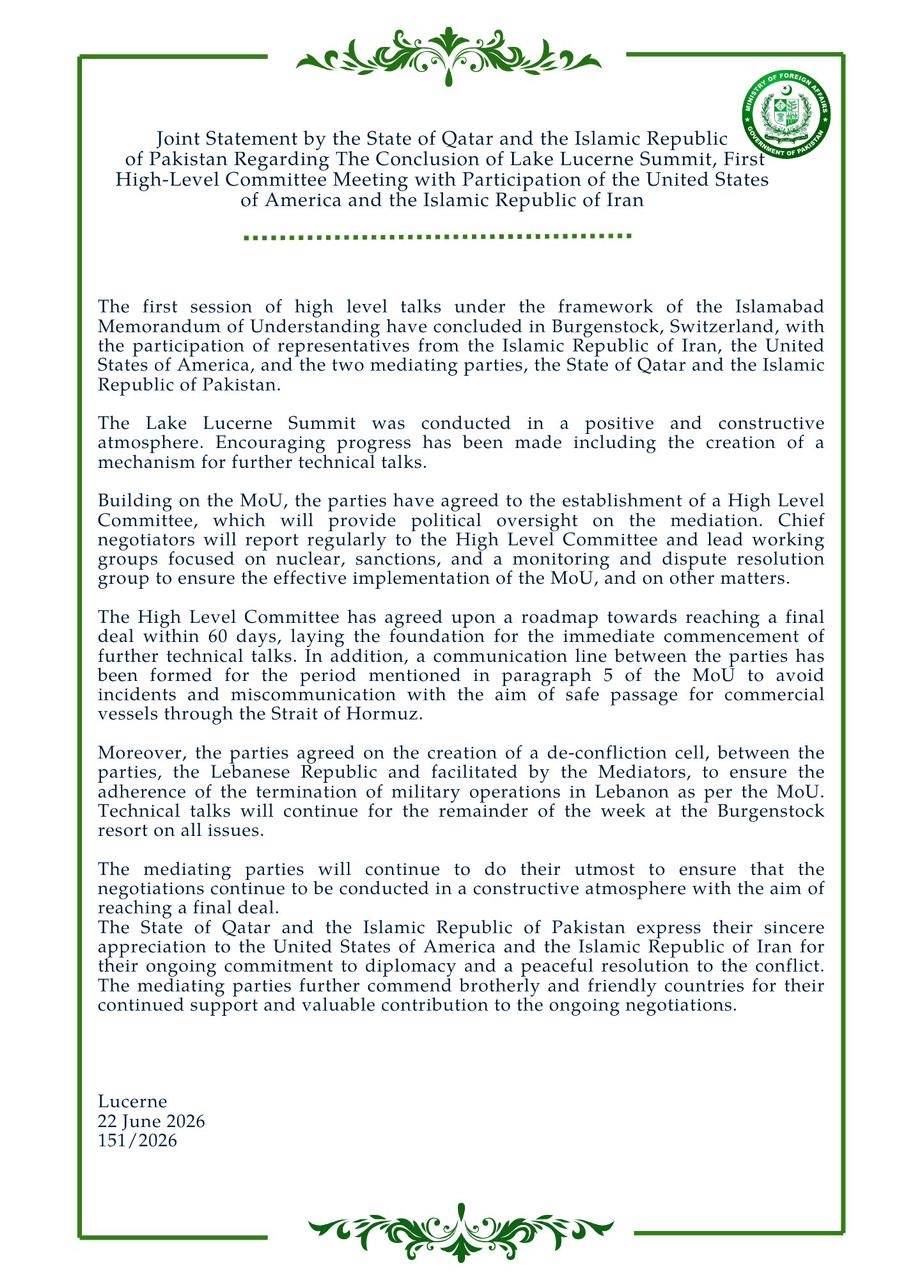
A joint statement confirmed that both sides agreed to a structured roadmap aiming for a final deal within 60 days, while technical-level discussions are set to continue throughout the week.
The negotiations were conducted amid heightened tensions linked to maritime disruptions and ongoing instability in parts of the Middle East, particularly around energy routes and conflict zones.
US-Iran talks
The talks were led on the US side by Vice President JD Vance, while Iran’s delegation included senior officials and Foreign Minister Abbas Araghchi. Discussions extended into the early hours of Sunday, reflecting the complexity of issues on the table, including nuclear-related concerns, sanctions relief, and regional de-escalation frameworks.
Mediators confirmed that a mechanism had been discussed to help end hostilities in Lebanon and establish structured communication channels to reduce the risk of escalation between regional actors. The talks also focused on maintaining diplomatic continuity through indirect engagement, with mediators facilitating exchanges between delegations when direct sessions stalled.

In parallel, Iranian sources indicated that discussions included economic expectations such as oil export waivers and the release of frozen assets, while US officials emphasised broader security and compliance mechanisms tied to any phased agreement.
Strait of Hormuz
One of the key focal points was the security of the Strait of Hormuz, a critical maritime passage linking global energy supplies through the Gulf. The strait, officially known as Strait of Hormuz, had seen fluctuating shipping traffic following conflicting statements and heightened regional tensions.
The joint statement noted that both sides agreed on steps to ensure safe passage for commercial vessels and to prevent disruption to global shipping lanes. A communication mechanism was discussed to manage incidents and reduce the risk of escalation at sea, particularly amid reports of reduced vessel movement during the peak of tensions.
Iranian officials had earlier claimed operational restrictions on maritime traffic, citing regional security concerns linked to developments in Lebanon, where hostilities involving Hezbollah and Israeli forces have continued to destabilise the situation. The US, however, maintained that shipping activity had not fully ceased but acknowledged temporary disruptions.
Market reaction
Global energy markets reacted swiftly to developments emerging from the Switzerland talks. Brent crude futures declined by more than $1, settling near $79.04 a barrel, reflecting easing concerns over immediate supply disruptions. West Texas Intermediate also moved lower as traders assessed the potential stabilisation of regional supply routes.
The fluctuations followed earlier volatility when prices briefly surged above $82 amid fears of escalation and possible closure of key shipping lanes. Market sentiment shifted after the joint statement signalled progress toward a structured diplomatic framework and reduced immediate geopolitical risk premiums.
Analysts noted that expectations of potential sanctions relief and the possibility of increased Iranian oil flows contributed to downward pressure on prices. Additional supply signals from regional producers further reinforced the perception of improving short-term availability in global markets.
Regional tensions
Despite diplomatic progress, tensions remain elevated across several fronts. The situation in Lebanon continues to influence negotiations, with ongoing clashes involving Hezbollah and Israeli forces contributing to instability. Reports indicated that while some areas experienced temporary calm, sporadic violence persisted in certain regions.
At the same time, political messaging from Washington remained firm, with warnings tied to the behaviour of regional allied groups and maritime security. The broader framework under discussion includes mechanisms aimed at reducing proxy conflict escalation and ensuring compliance with ceasefire-related arrangements.
Iran has maintained that its negotiating position is linked to developments on the ground, particularly in Lebanon, and has tied parts of its engagement to broader regional security guarantees. Meanwhile, US officials have stressed the importance of maintaining open shipping routes and preventing further disruption to global energy flows through strategic waterways.