

Saudi Arabia sets new world record for ultra-low energy desalination
Advanced technologies drive significant reduction in operational energy consumption
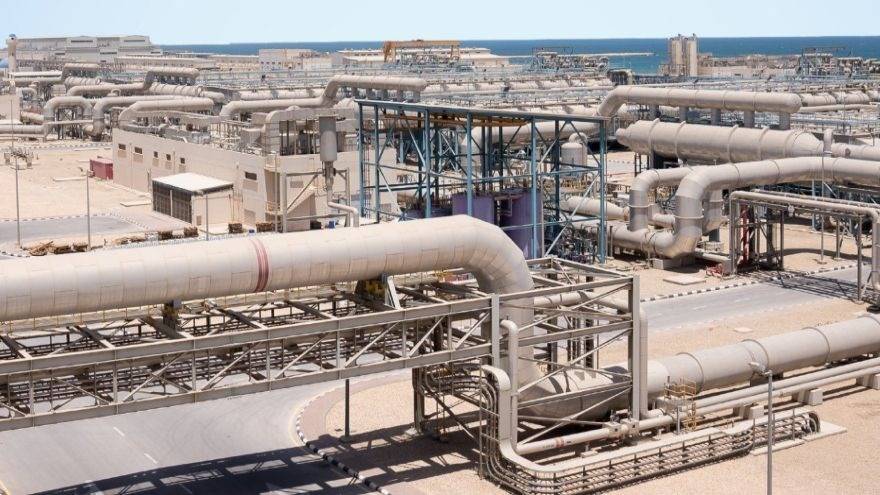
DUBAI – Saudi Arabia has secured a new entry in the Guinness World Records after achieving the lowest energy consumption rate for desalinated water production globally.
The milestone was recorded at a mobile reverse osmosis (RO) desalination plant within the Yanbu complex on the Red Sea coast.
The Saudi Water Authority (SWA) confirmed that the facility recorded an energy consumption rate of just 1.55 kilowatt-hours per cubic metre (kWh/m³). The plant has a production capacity of 200,000 cubic metres per day, marking a notable leap in operational efficiency for desalination technologies worldwide.
New world record
The new benchmark surpasses the previous global record of 1.7 kWh/m³, held by the Shuaibah 5 desalination plant, also located on the Red Sea coast. Earlier improvements at Shuaibah 5 had already reduced consumption from 2.34 kWh/m³, reflecting rapid technological progress in the sector.
According to SWA, conventional desalination facilities typically consume between 4 and 5 kWh/m³, placing the Yanbu achievement significantly ahead of global averages. The reduction has been attributed to the integration of high-performance RO membranes, advanced energy recovery systems, and highly efficient pre-treatment processes, alongside partial reliance on solar power.
Technology boost
The Yanbu project was developed in collaboration with the Saudi Water Innovation Centre, the Water Technologies Innovation Institute and Research Advancements, and The Water Desalination. The operational model incorporates advanced filtration systems and eco-friendly technologies designed for scalability across varied environments.
The compact plant occupies less than 3,000 square metres, highlighting efficient land use and improved infrastructure productivity. Authorities noted that the innovation is expected to reduce operating costs, enhance long-term sustainability, and strengthen the reliability of water supply under different conditions.
Saudi Arabia remains one of the world’s largest producers of desalinated water, with output exceeding 11.1 million cubic metres per day. The latest milestone aligns with the Kingdom’s target to reduce energy consumption in the water sector by 30 percent by 2030.