

Sri Lanka launches free tourist ETA for UAE, Pakistan, India and 37 other nations
New travel policy targets key international visitor markets
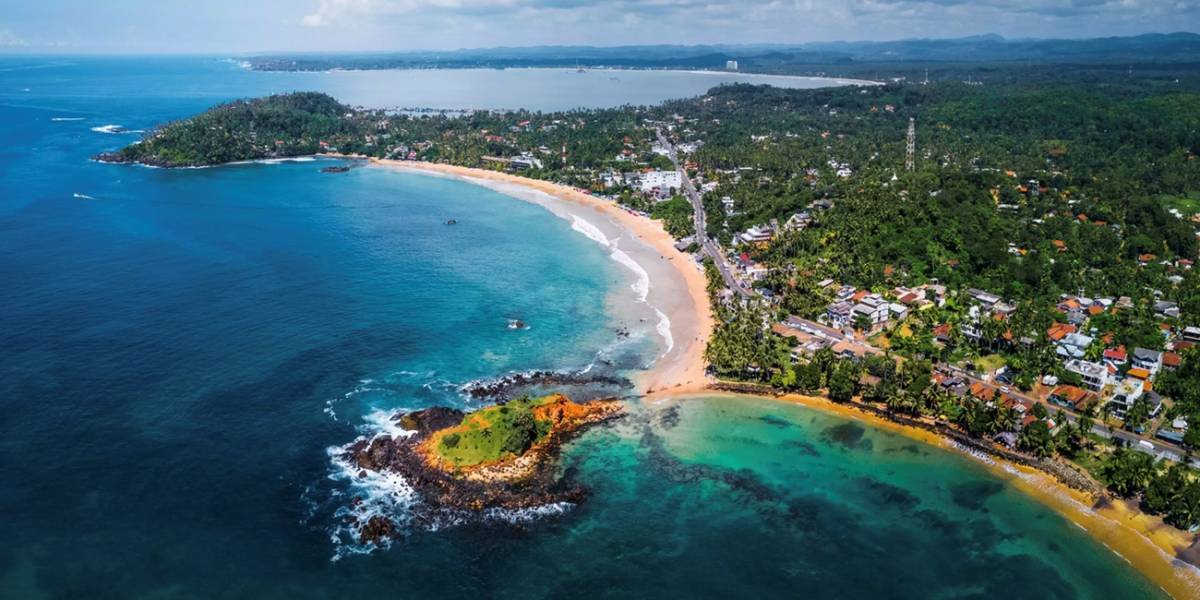
DUBAI – Sri Lanka has officially introduced a free tourist visa programme for travellers from 40 countries, including the UAE, Pakistan and India, in a move designed to strengthen its position as a major destination across Asia, Europe and the Middle East.
The scheme, which came into effect on May 25, 2026, offers eligible visitors a free Electronic Travel Authorisation (ETA) for short-term tourist stays.
The announcement follows months of anticipation and marks the implementation of a policy approved earlier by Sri Lanka's Cabinet on March 30, 2026, before later receiving parliamentary endorsement. Authorities say the initiative is aimed at reducing travel costs while maintaining immigration screening procedures through the ETA system.
Despite the visa becoming free of charge, foreign visitors are still required to complete formal pre-arrival procedures and obtain approval before travelling.
New scheme
According to a circular issued by Sri Lanka’s Department of Immigration and Emigration on May 19, citizens of the selected nations can now obtain a tourist ETA without paying the standard fee previously attached to the system.
The free authorisation applies to holders of diplomatic, official, service and ordinary passports from approved countries. The policy extends to travellers from nations that represent some of Sri Lanka’s most important tourism markets, including the United Kingdom, United States, India, China and Australia.
Officials have also clarified that travellers who paid ETA fees before May 25 will not be eligible for refunds, even if their nationality falls under the newly approved list.
The move finally brings practical implementation to a proposal that had circulated for several years and had generated considerable discussion within tourism and travel sectors.
Authorities have simultaneously instructed Sri Lankan diplomatic missions and relevant agencies to communicate the revised procedures to international travellers.
Entry rules
The programme provides eligible tourists with a free visa allowing a stay of up to 30 days in Sri Lanka.
Under the revised system, travellers can benefit from double-entry privileges within that 30-day validity period. This means tourists may enter Sri Lanka, leave during their stay and return once more without obtaining a separate authorisation.
However, immigration rules specify that during the second arrival, travellers will only receive access for the remaining duration of the original 30-day validity period.
Visitors wishing to remain in Sri Lanka beyond the initial period may apply for an extension. Such requests, however, will continue to require payment of the standard visa extension fees.
The Department of Immigration also highlighted a separate arrangement for Maldivian citizens. Under a bilateral reciprocity agreement between both countries, Maldivian nationals will receive a 90-day tourist visa through the ETA system rather than the standard 30-day arrangement.
Meanwhile, travellers from Maldives, Seychelles and Singapore, who previously enjoyed different entry arrangements, will also now be required to obtain ETA approval before travelling. Their authorisations, however, will be processed free of charge.
Eligible nations
The list of countries included under the free tourist ETA programme spans Europe, Asia, North America and the Gulf region.
The approved countries are Australia, Austria, Bahrain, Belarus, Belgium, Canada, China, Czech Republic, Denmark, Finland, France, Germany, India, Indonesia, Iran, Israel, Italy, Japan, Kazakhstan, Kuwait, Malaysia, Nepal, Netherlands, New Zealand, Norway, Oman, Pakistan, Poland, Qatar, Russia, Saudi Arabia, South Korea, Spain, Sweden, Switzerland, Thailand, Turkey, United Arab Emirates, United Kingdom and United States.
The list demonstrates Sri Lanka’s strategy of focusing on markets with strong outbound tourism numbers and growing travel demand.
Travel analysts have noted that the policy reduces one of the smaller but important costs associated with international travel. While administrative checks remain in place through the ETA process, the elimination of visa fees lowers the overall expense of entering the island nation.
The initiative arrives as Colombo continues efforts to attract larger numbers of international visitors and support tourism recovery by making travel procedures simpler and more accessible for overseas guests.
For travellers planning trips to Sri Lanka, the changes remove the financial burden of ETA fees, but authorities continue to stress that approval must still be secured before departure. The adjustment effectively changes the cost of entry rather than the process itself, maintaining immigration screening while making access easier for millions of potential visitors across multiple regions.