

Inside Dubai’s smart mobility push: RTA’s specialised projects explained
Emergency response upgrades reshape citywide resilience
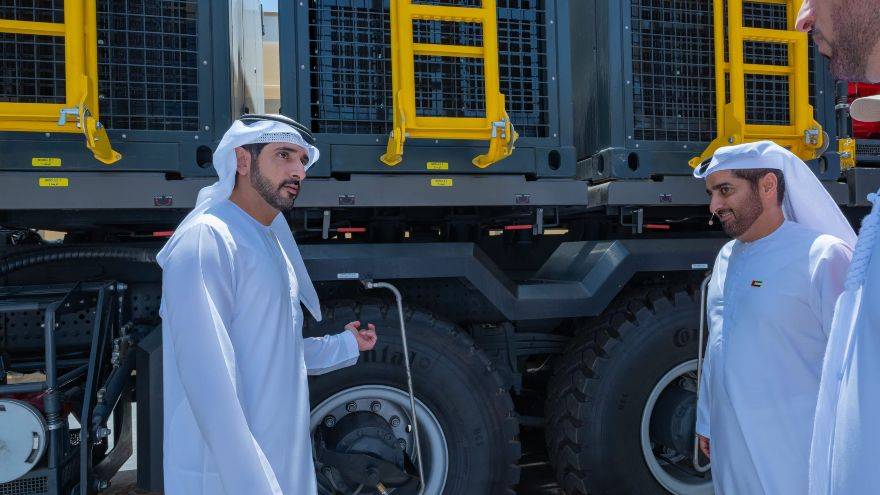
DUBAI – Dubai’s latest mobility drive is taking shape through a series of specialised initiatives designed to transform how residents and visitors move across the city.
The projects, reviewed by His Highness Sheikh Hamdan bin Mohammed bin Rashid Al Maktoum, highlight a broader strategy focused on innovation, sustainability and future readiness. From emergency response vehicles to fully digital bus stations and integrated soft mobility systems, the developments signal a shift towards a smarter and more resilient transport network.
Hamdan bin Mohammed reviews specialised initiatives and projects undertaken by Dubai’s Roads and Transport Authority (RTA), including the rapid intervention vehicle, the smart bus station, and soft mobility parking facilities. pic.twitter.com/2OmruS6j5c
— Dubai Media Office (@DXBMediaOffice) April 26, 2026
Officials say these initiatives are not standalone upgrades but part of a wider rethinking of urban mobility. The emphasis lies on combining advanced technologies with practical infrastructure to improve efficiency, safety and user experience. The programme aligns with Dubai’s long-term ambition to remain among the world’s leading cities in adopting future-focused transport solutions.
Rapid intervention vehicle
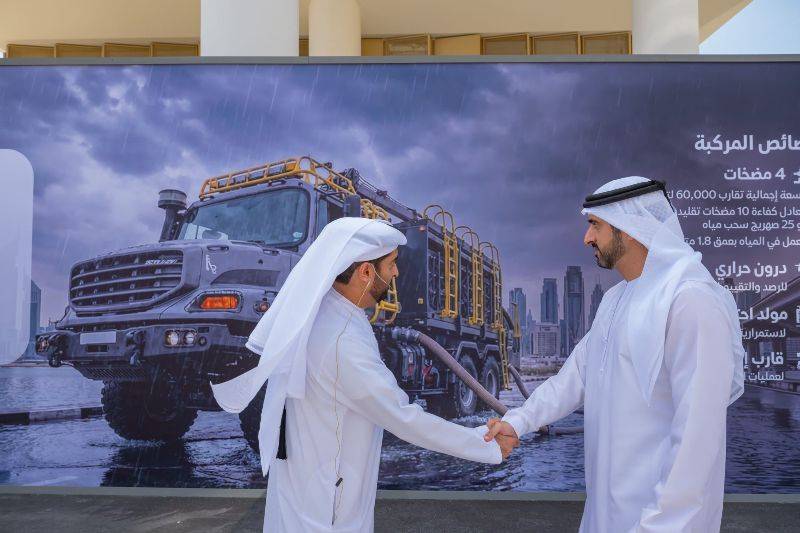
One of the most notable developments is the rapid intervention vehicle, introduced to strengthen Dubai’s readiness during emergencies, particularly heavy rainfall. Built for speed and efficiency, the vehicle is designed to ensure uninterrupted traffic flow even in challenging weather conditions.
Rapid intervention vehicle developed by RTA to enhance readiness for emergencies and heavy rainfall, while ensuring uninterrupted traffic flow. The vehicle features advanced equipment, including four pumps with a combined capacity of approximately 60,000 litres per minute,… pic.twitter.com/gK9tvb3I76
— Dubai Media Office (@DXBMediaOffice) April 26, 2026
The system is equipped with four high-capacity pumps with a combined output of approximately 60,000 litres per minute. This performance is equivalent to around 10 conventional pumps or 25 water suction tankers, marking a significant leap in operational capability. It can discharge water at a rate of nearly 1,000 litres per second and function effectively in depths of up to 1.8 metres.
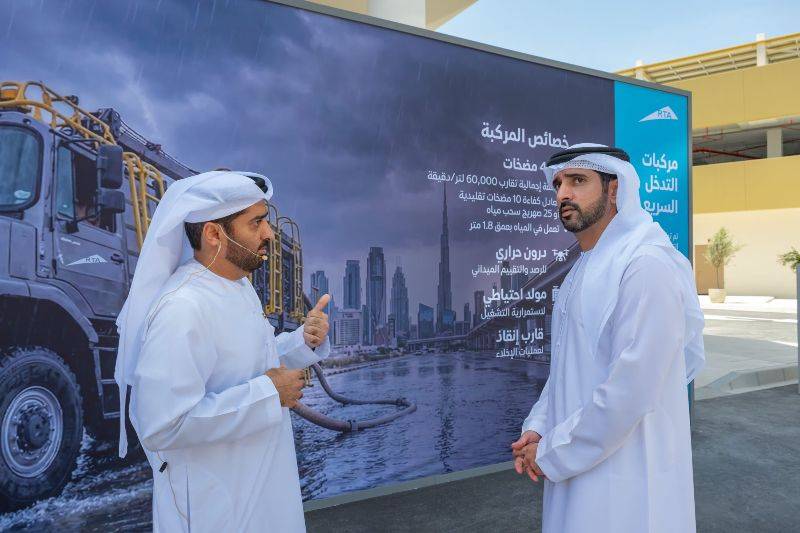
Unlike traditional equipment, which often requires preparation time, the rapid intervention vehicle is ready for immediate deployment. This enables authorities to respond faster to flooding incidents, particularly in areas where access is limited or water accumulation is severe.
As part of its efforts to develop an integrated and smart mobility system in #Dubai, RTA has launched three key initiatives:
— RTA (@rta_dubai) April 26, 2026
The Rapid Intervention Vehicles to handle emergencies and heavy rainfall, with a pumping capacity of up to 60,000 litres per minute;
the Smart Bus…
The vehicle also features an integrated system that includes a hydraulically operated main pump, three pump engines and multiple suction hoses. Supporting equipment such as a hose reel trailer, a rescue boat and a thermal drone enhances its field capabilities. A backup generator ensures uninterrupted operation, while a lighting tower supports night-time or low-visibility conditions.
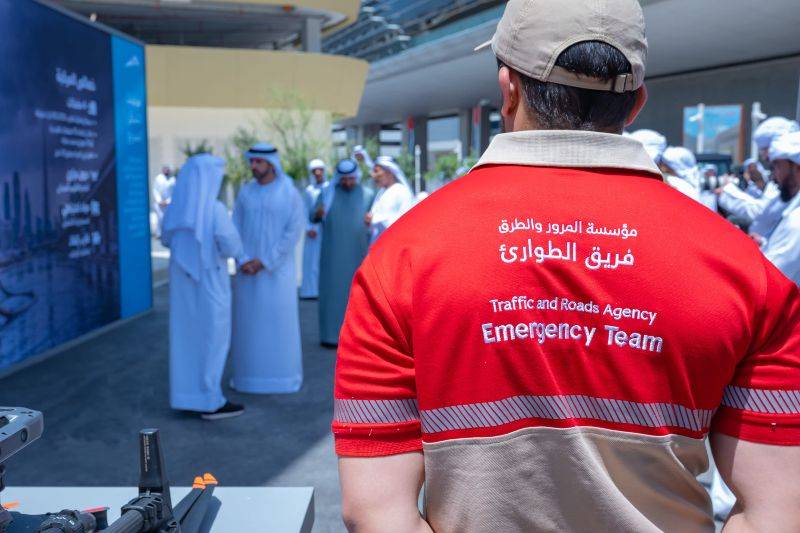
The impact of this system is measurable. Response times for water-related emergencies are expected to be reduced by more than 75%, improving safety and protecting infrastructure. The initiative also strengthens Dubai’s approach to climate resilience, ensuring that transport networks remain functional even during extreme weather events.
Smart bus station
Another key initiative is the smart bus station, part of the Roads and Transport Authority’s wider push towards digital transformation. Located on Sheikh Zayed Road in Al Barsha 2, near Mall of the Emirates, the station represents a shift towards fully integrated, user-centric public transport services.
The project is nearing completion, with 90% of work already finalised and full delivery expected by the end of the current month. The station is designed to offer a seamless passenger experience by converting all services into contactless and paperless formats.
Smart Bus Station by RTA features the full conversion of customer services into contactless, paperless digital services, integrated with the nol card and S’hail app to deliver a seamless mobility experience for passengers. @rta_dubai pic.twitter.com/5BKEZ4YTRB
— Dubai Media Office (@DXBMediaOffice) April 26, 2026
Integration with the nol card system and the S’hail app allows users to plan, pay and navigate journeys through a single digital ecosystem. This reduces reliance on physical infrastructure while improving efficiency and convenience for passengers.
Sustainability is another core feature of the station. Solar panels have been installed to reduce energy consumption, supporting Dubai’s environmental goals. In addition, the station uses artificial intelligence-powered cameras for crowd management and to detect violations, enhancing both safety and operational efficiency.
Smart sensors are also deployed to monitor air quality, providing real-time data that can be used to maintain a comfortable environment for passengers. The station meets Leadership in Energy and Environmental Design Platinum standards, indicating a high level of environmental performance.
By combining digital services with sustainable design, the smart bus station sets a benchmark for future public transport infrastructure in Dubai.
Soft mobility parking
The third initiative focuses on soft mobility, reflecting a growing demand for alternative transport options such as bicycles and electric scooters. Dedicated parking facilities are being introduced to organise and support the use of these modes across the city.
The facilities are designed with practical features, including shaded structures that protect users from heat and sunlight. Charging points for electric scooters are also included, ensuring that devices remain operational throughout the day.
The soft mobility parking facilities project aims to streamline the use of bicycles and electric scooters. The facilities feature modern designs that provide shade and protection from sunlight, scooter-charging capability, and smart systems for monitoring usage, while also… pic.twitter.com/8OcfDHsDhG
— Dubai Media Office (@DXBMediaOffice) April 26, 2026
Smart systems are integrated into the facilities to monitor usage patterns and optimise operations. These systems also create opportunities for advertising, adding a commercial dimension to the infrastructure.
The project is based on best practices observed in leading global cities, with a focus on integrating soft mobility into the wider transport network. By placing these facilities near public transport stations and key destinations, authorities aim to improve first and last-mile connectivity.
This approach ensures that users can easily transition between different modes of transport, reducing reliance on private vehicles and supporting a more sustainable urban environment.
Expansion and growth
The introduction of soft mobility infrastructure comes at a time of significant growth in usage. Bicycle trips in Dubai increased by 23%, reaching a total of 57.6 million journeys in 2025. The figures reflect a rising preference for flexible and environmentally friendly transport options.
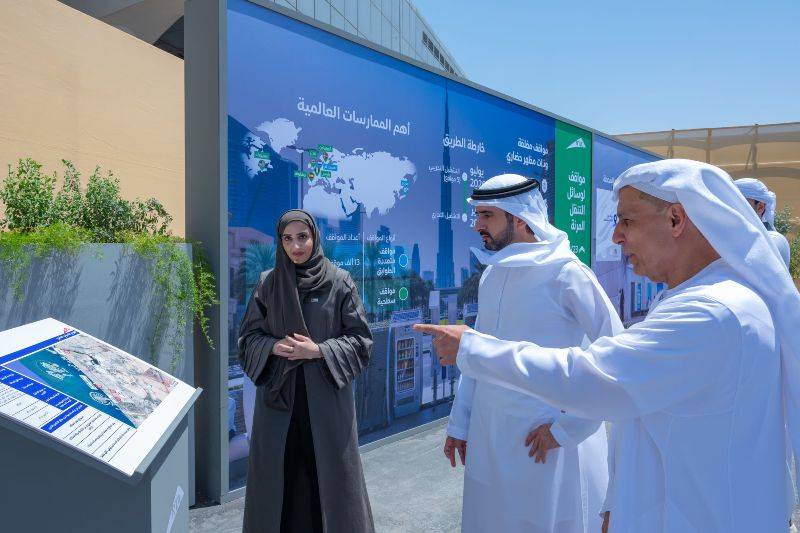
To accommodate this demand, a phased expansion plan has been developed. Pilot operations are scheduled to begin at five locations in July 2026, allowing authorities to test and refine the system. Full-scale implementation is expected to follow, with permanent operations targeted for 2028.
The expansion strategy is designed to ensure that infrastructure keeps pace with demand while maintaining high standards of safety and usability. It also supports broader goals related to sustainability and urban planning.
Strategic direction
The initiatives reviewed form part of a wider effort led by the Roads and Transport Authority to enhance the city’s transport ecosystem. Officials emphasise that the focus is on integrating advanced technologies with practical solutions to address both current and future mobility challenges.
According to Mattar Al Tayer, the projects demonstrate a commitment to adopting global best practices while tailoring solutions to Dubai’s specific needs. The aim is to create a transport system that is efficient, sustainable and capable of supporting the city’s continued growth.
The emphasis on innovation is evident across all three initiatives. Whether through high-capacity emergency vehicles, AI-enabled infrastructure or smart mobility solutions, the projects highlight a consistent approach centred on technology and user experience.