

Dubai International Airport welcomes record 46 million guests in H1 2025
India, Saudi Arabia lead among top origin markets for passengers
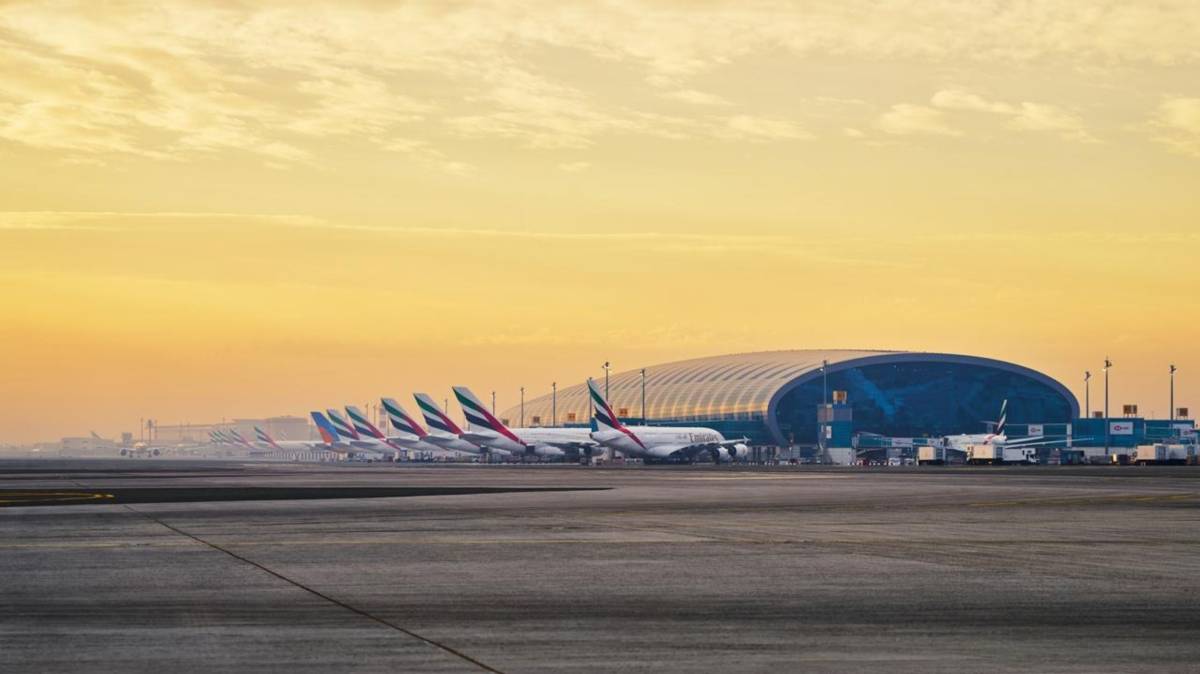
DUBAI International Airport has marked its busiest-ever first half, welcoming 46 million guests between January and June 2025.
The milestone represents a 2.3 per cent increase over the same period in 2024, despite temporary airspace restrictions in May and June due to regional issues. The results reaffirm Dubai’s aviation strength and highlight the airport’s critical role in supporting the emirate’s broader economic momentum.
In the second quarter alone, the airport recorded 22.5 million guests – a 3.1 percent year-on-year increase. April was the standout month of the quarter, registering 8 million passengers, making it the busiest April in the airport’s history.
Paul Griffiths, CEO of Dubai Airports, commented: “Dubai International Airport’s continued growth through a period of regional challenges highlights the strength of Dubai and the UAE, the agility of our operations, and the commitment of our airport community. The oneDXB mindset once again enabled us to manage disruption while elevating the guest experience and ensuring seamless global connectivity.”
He added that travel activity is expected to increase further in the second half of the year, starting with the late-summer peak and culminating in a busy winter season driven by major entertainment, sports, and business events. The upcoming Dubai Airshow 2025 is expected to be a major highlight, set to break previous records and showcase the bold future of aviation and aerospace. Based on current trends, the airport forecasts annual traffic to reach 96 million this year – edging closer to the symbolic 100 million mark.
Passenger and baggage trends
The airport’s average monthly traffic in H1 stood at approximately 7.7 million, with daily averages reaching 254,000. January was the busiest month of the period, setting a new all-time monthly record of 8.5 million passengers.
Flight operations remained robust, with a total of 222,000 flights handled during the six-month period. The average load factor – which measures how efficiently seats are filled – stood at 76 per cent. Meanwhile, the baggage system processed 41.8 million pieces of luggage, with 91 per cent delivered within 45 minutes of arrival. The mishandled baggage rate was recorded at just 2 bags per 1,000 passengers, significantly outperforming the global 2024 average of 6.3 reported by SITA.
The busiest baggage-handling days were recorded between January 3 and 5, when daily volumes peaked at 300,000 bags. With year-end projections exceeding 85 million bags processed, Dubai International Airport is on track to break its previous record of 81.2 million bags set in 2024.
Operational performance at guest touchpoints remained consistently strong. In the first half of the year, 99.2 per cent of passengers cleared departure passport control in under 10 minutes, 98.4 per cent cleared arrivals in under 15 minutes, and 98.7 per cent passed through security checks in under five minutes. These figures are based on real-time data collected through DXB’s passenger flow monitoring system.
Top destinations and markets
India retained its position as the airport’s largest country market in H1, with 5.9 million passengers. Saudi Arabia followed with 3.6 million, the United Kingdom with 3 million, Pakistan with 2.1 million, and the United States with 1.6 million travellers.
London remained the busiest city destination, recording 1.8 million passengers, ahead of Riyadh with 1.5 million, Mumbai with 1.2 million, and Jeddah and New Delhi with 1.1 million each. Istanbul closely followed with 982,000 guests.
Cargo and network reach
Cargo volumes at Dubai International Airport remained stable, with the airport handling just over 1 million tonnes of freight in the first six months of 2025 – reflecting a marginal 0.1 per cent increase over the same period last year. Despite modest growth, the airport continues to play a vital role in global trade and logistics, connecting businesses and industries across continents.
Dubai International Airport is currently linked to more than 269 destinations across 107 countries, served by a network of over 92 international carriers. This extensive connectivity remains a core driver of Dubai’s global appeal as a hub for tourism, investment, and long-term development.

With strong performance in the first half and a packed event calendar ahead, including the much-anticipated Dubai Airshow 2025, the airport is set to remain a cornerstone of the region’s aviation and economic ecosystem.
Dubai Airports
Dubai Airports manages both of the emirate’s airports – Dubai International (DXB) and Al Maktoum International (DWC). While DXB remains the world's busiest international airport, DWC is the focal point of Dubai’s long-term aviation vision. With a planned investment of US$35 billion announced in May 2024, DWC will be transformed into the world’s largest airport, capable of handling 260 million passengers and 12 million tonnes of cargo annually once fully operational.
The facility will feature five runways, futuristic infrastructure, and seamless intermodal connections, setting new global benchmarks for efficiency and passenger experience.