

UAE summons Iranian envoy, closes Tehran embassy following missile, drone attacks
Three killed, 58 injured; GCC warns of response option
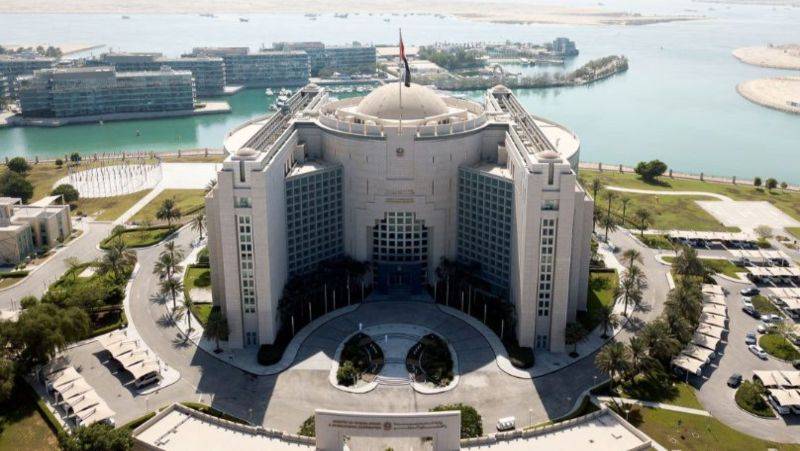
DUBAI – The United Arab Emirates (UAE) has summoned Iran’s Ambassador and delivered a strongly worded note of protest following missile and drone attacks targeting its territory.
In a parallel move, the UAE announced the closure of its Embassy in Tehran and the withdrawal of its Ambassador and diplomatic staff, describing the escalation as a grave violation of sovereignty and international law.
It comes after authorities confirmed fatalities, injuries and material damage as air defence systems intercepted hundreds of incoming threats.
Diplomatic protest
The Ministry of Foreign Affairs summoned Reza Ameri, Ambassador of the Islamic Republic of Iran to the UAE, conveying condemnation in the strongest terms of what it described as Iran’s terrorist attacks and assaults. The Ministry stressed that targeting UAE territory constitutes a blatant violation of sovereignty, a threat to national security and a breach of international conventions, resolutions and established norms.
UAE Summons Iranian Ambassador and Delivers Note of Protest over Iran’s Terrorist Attackshttps://t.co/r62zcTFvsX pic.twitter.com/aAQc3FJzpM
— MoFA وزارة الخارجية (@mofauae) March 2, 2026
During the meeting, Khalifa Shaheen Al Marar, Minister of State, expressed categorical rejection of any justifications issued by the Iranian government regarding the hostile escalation. He stated that civilian sites including residential areas, airports, ports and service facilities were targeted, placing innocent civilians at risk.
Al Marar underscored that the escalation disregards the UAE’s clear position that it would not permit its territory to be used in any military action against Iran. He said the attacks contravene the principles of good neighbourliness and the Charter of the United Nations, undermining the path of de-escalation and peaceful solutions consistently pursued by the UAE.
He warned of serious repercussions for bilateral relations, with direct impact across political, economic and commercial levels. The UAE demanded that its sovereignty be respected, that the attacks cease immediately and unconditionally, and affirmed that it reserves its right to respond in full accordance with its legal rights.
Embassy closure
Late on Sunday, the UAE announced the closure of its Embassy in Tehran and the withdrawal of its Ambassador and all members of its diplomatic mission. The Ministry of Foreign Affairs said the decision reflects a firm and unwavering stance against any aggression threatening the country’s security and sovereignty.
UAE Announces Closure of Embassy in Tehran and Withdrawal of Ambassador and Diplomatic Mission, Condemns Iranian Missile Attackshttps://t.co/u5Kv5Axh3I pic.twitter.com/Yj0FVI26R2
— MoFA وزارة الخارجية (@mofauae) March 1, 2026
The Ministry described the missile attacks as hostile actions targeting civilian sites and constituting a flagrant violation of national sovereignty and a clear breach of international law and the Charter of the United Nations. It added that continued hostile and provocative conduct undermines de-escalation efforts and pushes the region towards a highly dangerous trajectory, threatening regional and international peace and stability, as well as energy security and the stability of the global economy.
Casualties in UAE
The Ministry of Defence reported that since the start of the Iranian attack on Saturday, the UAE’s air force and air defence systems have dealt with 165 ballistic missiles, two cruise missiles and 541 Iranian drones.
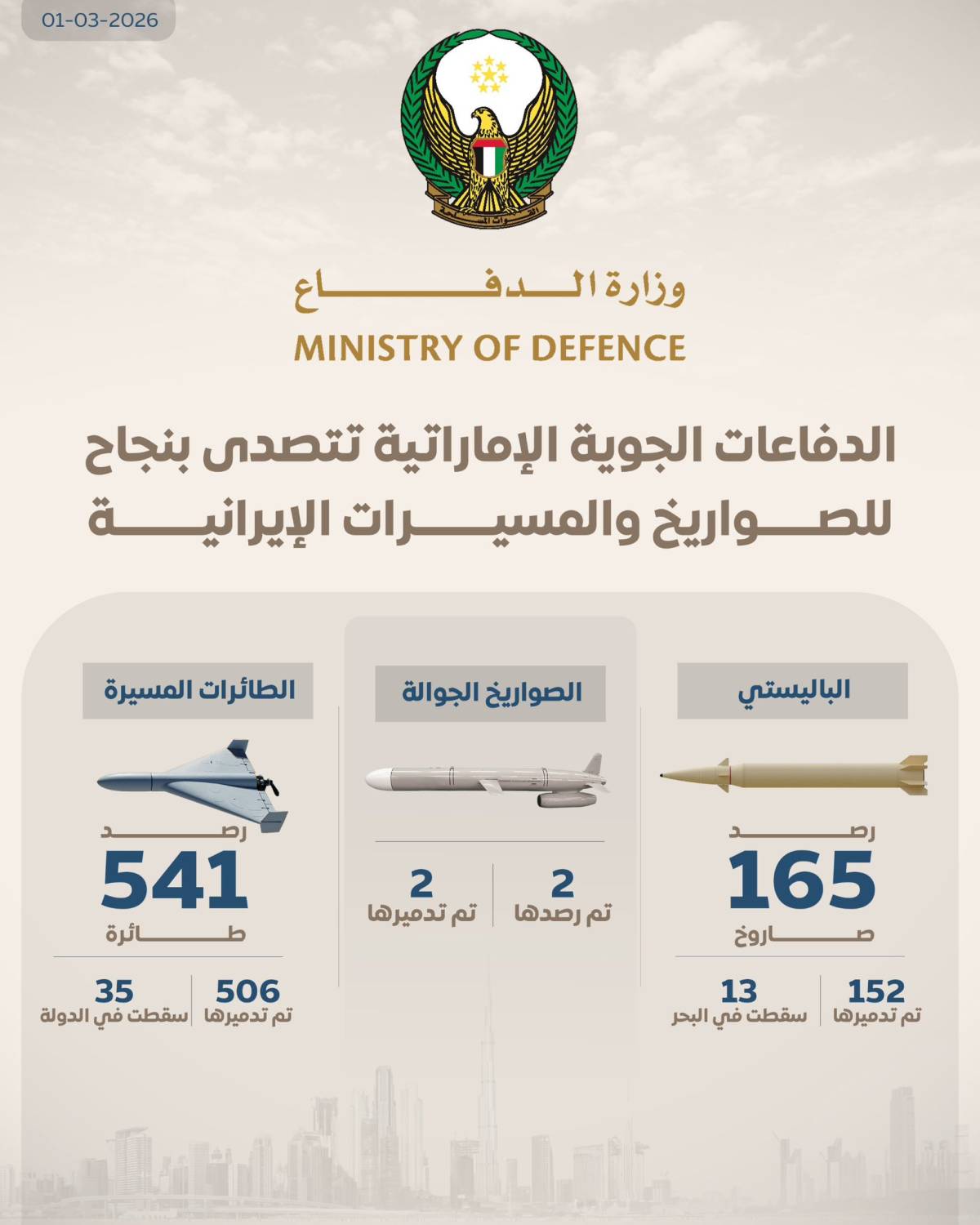
On the second morning of the attack, 20 ballistic missiles were destroyed, while eight fell into the sea. Two cruise missiles and 311 drones were also destroyed, while 21 drones struck civilian targets.
In total, 165 ballistic missiles launched towards the country were detected, with 152 destroyed and 13 falling into the sea. Both cruise missiles detected were destroyed. Of the 541 drones tracked, 506 were intercepted and destroyed, while 35 landed inside the country, causing material damage.
The incidents resulted in three fatalities of Pakistani, Nepali and Bangladeshi nationalities, and 58 minor injuries among Emirati, Egyptian, Ethiopian, Filipino, Pakistani, Iranian, Indian, Bangladeshi, Sri Lankan, Azerbaijani, Yemeni, Ugandan, Eritrean, Lebanese and Afghan nationals.
The Ministry noted that debris from intercepted ballistic missiles and drones fell in various parts of the country, causing minor to moderate material damage to several civilian properties. It affirmed that the armed forces remain fully prepared to address any threats and stressed that the safety of citizens, residents and visitors remains a top priority. The public was urged to rely on official sources and avoid rumours.
Regional response
Dr Anwar Gargash, Diplomatic Adviser to the UAE President, called on Iran to act responsibly, warning that recent attacks on Gulf states represent a strategic miscalculation. He stated that Iran’s actions had isolated the country and cautioned against targeting neighbours, saying: “Your war is not with your neighbours.”
In a social media post, Gargash described the aggression against Gulf states as a miscalculation at a critical juncture and said the escalation reinforces concerns about Iran’s role as a source of instability in the region. He urged Tehran to “return to reason” and deal with its neighbours rationally and responsibly before isolation widens.
العدوان الإيراني على دول الخليج أخطأ العنوان، وعزل إيران في لحظتها الحرجة. حربكم ليست مع جيرانكم، وبهذا التصعيد تؤكدون رواية من يرى أن إيران مصدر الخطر الرئيسي للمنطقة، وأن برنامجها الصاروخي عنوانٌ دائم لعدم الاستقرار.
— د. أنور قرقاش (@AnwarGargash) March 1, 2026
عودوا إلى رشدكم، وإلى محيطكم، وتعاملوا مع جواركم بعقلٍ…
In an interview with Sky News Arabia, he said the UAE and its neighbours had spent months attempting to prevent events from reaching this stage and remain focused on returning the crisis to negotiations. He warned that military action would complicate the situation and create new challenges, adding that recent developments risk rebuilding long-term mistrust with Gulf states. He emphasised that Gulf societies are civilian communities not built for conflict and reassured residents that the UAE is prepared.
GCC condemns “treacherous” attacks
The Gulf Cooperation Council convened an extraordinary meeting to address the missile and drone attacks on the UAE, Bahrain, Saudi Arabia, Oman, Qatar and Kuwait. In a formal statement, the Council reviewed the extensive damage resulting from what it described as “treacherous Iranian attacks”, saying they caused “significant material damage” and “terrorised civilians”.
The statement expressed the Council’s rejection and strongest condemnation of the “criminal Iranian attacks”, describing them as a “serious violation” of sovereignty and a clear breach of international law.
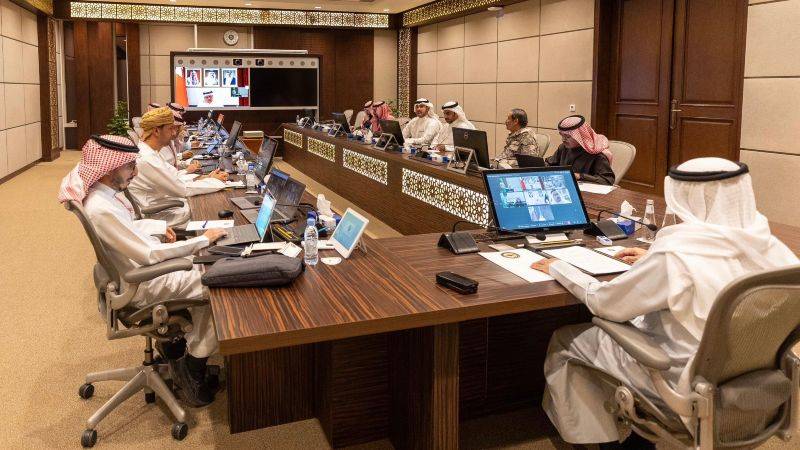
The Council affirmed full solidarity among member states and stressed that the security of its members is indivisible. It confirmed that states reserve their legal right to respond under Article 51 of the United Nations Charter and to take all necessary measures to safeguard sovereignty and stability. It called on the international community to condemn the attacks unequivocally and urged the United Nations Security Council to assume its responsibilities by taking an immediate and firm stance to prevent such violations.
The Council reiterated the importance of dialogue and diplomacy, warning that escalation would drag the region into dangerous trajectories with catastrophic consequences for international peace and security. Appreciation was expressed to countries that condemned the Iranian attacks, expressed solidarity with GCC states, and supported measures taken to protect sovereignty, security, and stability.