

Dubai: New road upgrade to cut journey times from 20 minutes to just five
RTA says 60% of Oud Maitha Road and Al Asayel Street project completed
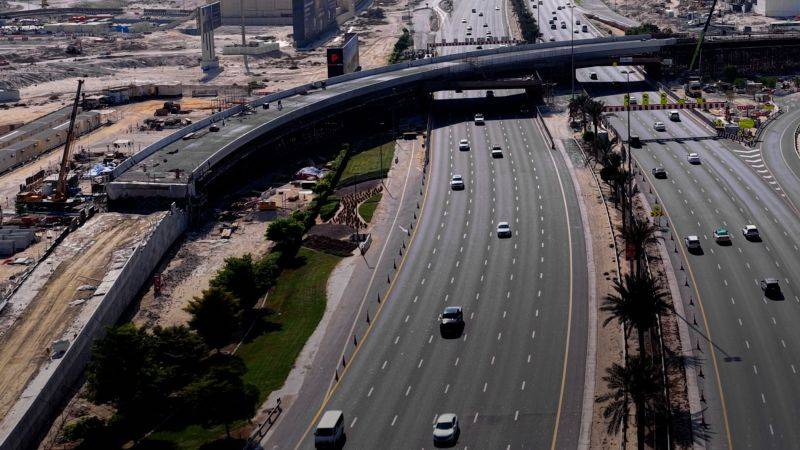
DUBAI – The Roads and Transport Authority (RTA) has announced that 60 percent of the Oud Maitha Road and Al Asayel Street Development Project has been completed, marking a major milestone in the wider Sheikh Rashid Corridor Development Project.
The scheme is designed to enhance connectivity between Al Asayel Street and Al Khail Road via Al Wasl Club Street, while also providing a dedicated exit to Oud Maitha Road and Al Wasl Club Street. Once completed, the project is expected to serve a population exceeding 420,000 residents by 2030.
The scope of works includes the development of four major intersections, the construction of bridges spanning a total length of 4.3 kilometres, and the expansion of road networks extending 14 kilometres. According to the RTA, the project will significantly improve traffic movement across several strategic locations and support ongoing urban growth in surrounding residential and service areas.
Construction progress has advanced steadily across multiple components. The project contractor has completed 70% of the bridges serving traffic movements from Al Asayel Street to Al Khail Road in the northbound direction towards Business Bay Crossing. Preparatory works are currently under way ahead of the opening of this section in the first quarter of the current year. In parallel, around 60% of construction works have been completed on the tunnel serving traffic from Dubai-Al Ain Road towards Al Wasl Club Street. Remaining road widening works and associated bridge structures are progressing and are scheduled to open in the third quarter of this year.
Four intersections
Mattar Al Tayer, Director General and Chairman of the Board of Executive Directors of Dubai’s Roads and Transport Authority, said the project aligns with leadership directives to complete the development of the Sheikh Rashid Corridor in line with Dubai’s urban expansion and population growth. He described the project as one of the emirate’s key road infrastructure developments, encompassing the upgrade of four major intersections alongside extensive bridge and road construction.
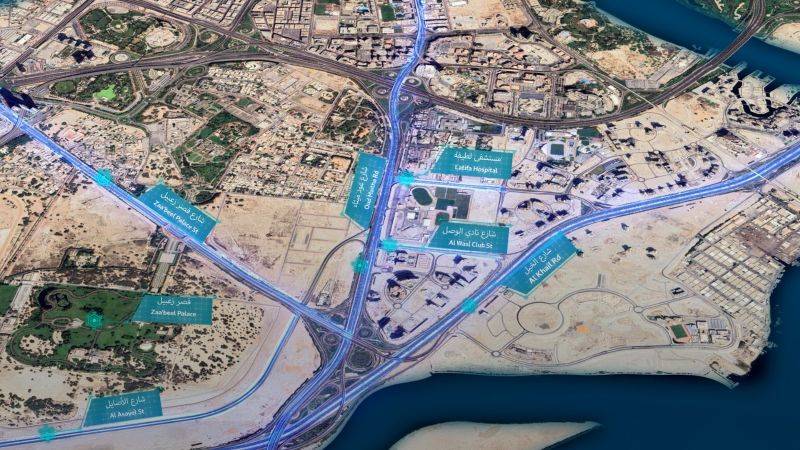
Al Tayer noted that the project supports a range of key service, residential and development areas, including Zabeel, Al Jaddaf, Oud Maitha, Umm Hurair, Latifa Hospital and Al Wasl Club. He added that the population served by the upgraded corridor is projected to exceed 420,000 residents by 2030.
The upgrades are expected to deliver substantial traffic benefits. The capacity of Oud Maitha Road will increase from 10,400 vehicles per hour in both directions to 15,600 vehicles per hour, representing a 50% increase. Journey times along the corridor are set to reduce from 20 minutes to just five minutes, reflecting an improvement of 75 percent.
First intersection
The first upgraded junction is the intersection of Oud Maitha Road with Sheikh Rashid Road. Works at this location include the addition of a left-turn slip ramp for traffic travelling from Oud Maitha Road onto Sheikh Rashid Road towards Al Garhoud Bridge. This enhancement will increase capacity to 1,800 vehicles per hour.
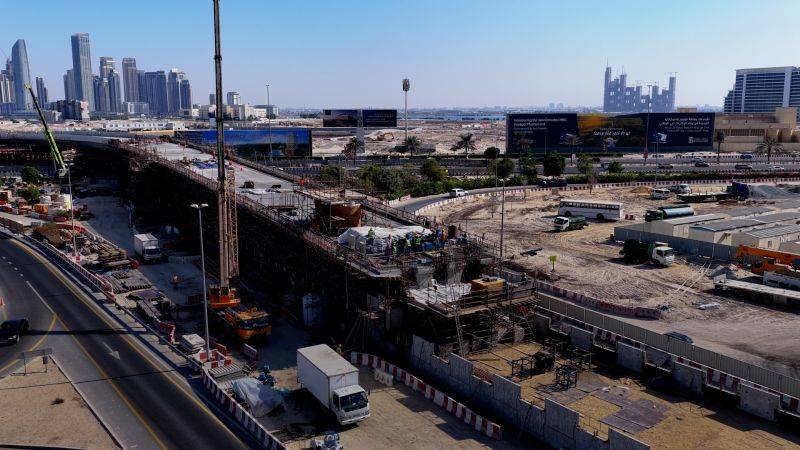
The project scope also covers the upgrade of the service road on Sheikh Rashid Road between the existing bridge and the Al Zahrawi Street exit. This intervention is aimed at addressing existing traffic overlap while improving overall road safety. In addition, the number of right-turn lanes for traffic moving from Sheikh Rashid Road to Oud Maitha Road in the direction of Dubai–Al Ain Road will increase from two lanes to three, raising capacity to 4,000 vehicles per hour.
Second intersection
At the intersection of Oud Maitha Road with Al Asayel Street and Al Wasl Club Street, the project involves the construction of two bridges linking Al Asayel Street to Al Khail Road via Al Wasl Club Street. The first bridge will comprise two lanes with a capacity of 2,400 vehicles per hour, serving traffic movements from Al Asayel Street towards Al Wasl Club Street. The second bridge will comprise three lanes with a capacity of 3,600 vehicles per hour, serving traffic movements from Al Khail Road towards Al Asayel Road.
Additional works at this intersection include the construction of a separate two-lane bridge with a capacity of 2,400 vehicles per hour to accommodate left-turn movements from Al Asayel Street towards Oud Maitha Road. The access road to Al Wasl Club will also be upgraded, alongside improvements to entry and exit points on Al Wasl Club Street. These measures are intended to resolve existing weaving and merging conflicts along the main corridor and improve overall traffic efficiency.
Third intersection
The third upgraded junction is the intersection of Al Wasl Club Street with Al Khail Road. This phase includes the construction of a two-lane bridge serving traffic movements from Al Asayel Street to Al Khail Road towards Business Bay Crossing, with a capacity of 3,000 vehicles per hour.
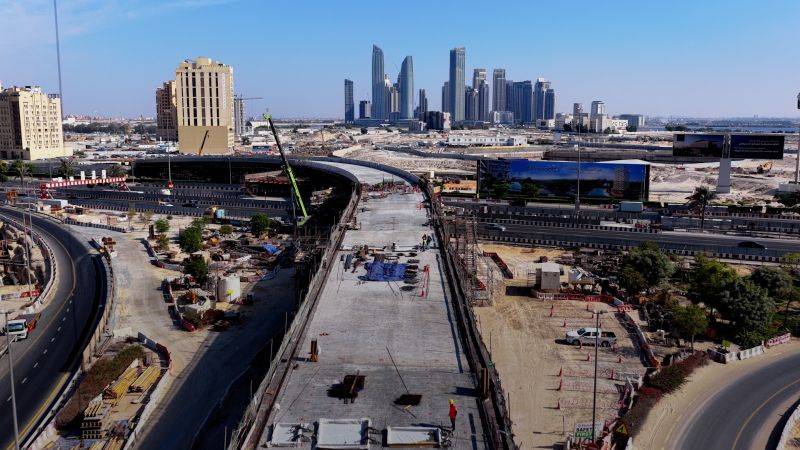
The scope further includes the upgrade of Al Wasl Club Street itself, with exit capacity towards Al Khail Road increased to two lanes. Service roads will be constructed in both directions, and dedicated parking spaces will be provided to enhance traffic flow and accessibility for road users in the area.
Fourth intersection
The fourth and final intersection covered by the project is the junction of Zabeel Palace Street with Al Khail Road and Oud Maitha Road. Works include the addition of an extra left-turn slip lane on the ramp serving traffic from Al Khail Road towards Dubai-Al Ain Road, doubling capacity from 900 vehicles per hour to 1,800 vehicles per hour.
The project also includes the construction of a single-lane vehicle tunnel with a capacity of 1,200 vehicles per hour, serving traffic movements from Dubai-Al Ain Road towards Al Wasl Club Street. This tunnel is designed to address existing traffic overlap at the junction. In addition, the number of lanes on the existing bridge serving traffic from Al Khail Road towards Oud Maitha Road will increase from two to three lanes, raising bridge capacity from 2,200 vehicles per hour to 3,300 vehicles per hour.
Together, the staged upgrades across the four intersections form a central component of the Sheikh Rashid Corridor Development Project, supporting smoother traffic flow, improved connectivity and long-term capacity across one of Dubai’s key transport corridors.