

Norway completes first electric plane test flight
Aircraft covered 160km route in 55 minutes during cargo simulation

OSLO – Norway has marked a milestone in aviation as an electric aircraft successfully completed the 160-kilometre route between Stavanger and Bergen, simulating a cargo service for the first time in real-world conditions.
The aircraft, an ALIA produced by US-based BETA Technologies, departed Stavanger Airport at 11:00 and landed in Bergen after a 55-minute journey yesterday.
The flight forms part of Norway’s international test arena for zero- and low-emission aviation, a partnership involving Avinor, the Civil Aviation Authority of Norway (CAA Norway), BETA Technologies, and Bristow Norway. Designed to simulate a cargo service, the route will be flown regularly throughout the trial period that runs until January.
Norway electric plane
The ALIA aircraft is a single-engine model designed for single-pilot operations, with a payload capacity of 562kg – roughly equivalent to five passengers. It flies at speeds between 115 and 145 knots (210–270 km/h), comparable to a light aircraft, and has a maximum range of 400km, comfortably covering the Stavanger–Bergen sector and enabling a return journey on a single charge.

The test arena is structured into three phases. The first, which began on 8 August, focused on take-offs and landings at Stavanger to familiarise pilots, ground staff, and tower controllers with the aircraft. The second phase now underway involves full-route flights, while the third phase, due later this year, will see the aircraft operating under instrument flight rules.
“This phase is critical for capturing the real-world data needed to understand how electric aircraft can operate effectively in this unique landscape. It’s exciting for this partnership, and our aircraft, to play a key role in shaping the future of regional air mobility,” said Shawn Hall, BETA’s Chief Revenue Officer.

Avinor and CAA Norway established the test arena to build operational experience and prepare the aviation ecosystem for the introduction of zero- and low-emission aircraft. By running tests in active airspace and airports, the initiative aims to provide insights into infrastructure needs, safety regulations, and integration into existing networks.
“We are learning each day how to support innovation and further understand and regulate new technologies. The Test Arena is taking significant steps, and we in the Civil Aviation Authority of Norway value the professional and safe conduct of the parties involved in making the first flight possible,” said Jan Petter Steinland, Director Strategic Analysis & Transformation at the Civil Aviation Authority of Norway.
When could it be commercial?
The Norwegian authorities are closely monitoring the programme to ensure electric aviation can be introduced commercially as soon as the technology is proven reliable. Current expectations suggest commercial deployment could take place between 2028 and 2030, once aircraft certification, charging infrastructure, and operational frameworks are in place.
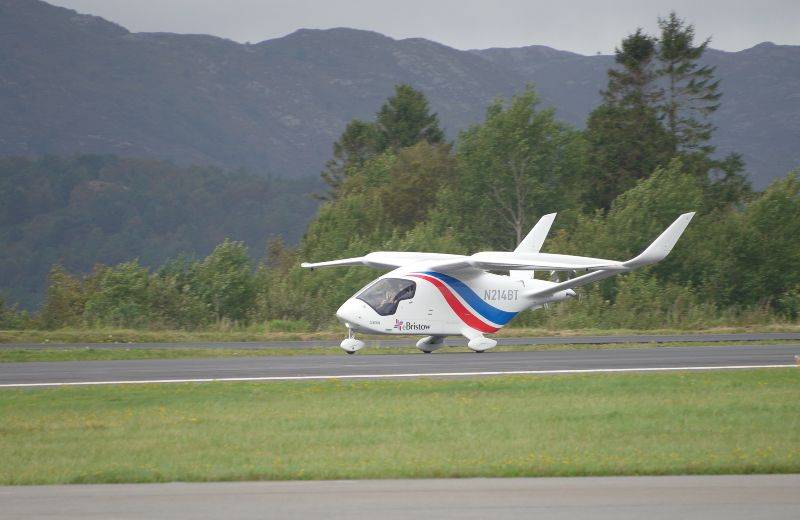
Norway has been at the forefront of testing electric aircraft. In 2019, an Avinor CEO was forced to make an emergency landing while piloting a smaller electric plane, underscoring the challenges of early technology adoption. The current ALIA trials, however, represent a far more advanced step, combining longer ranges, higher payloads, and integration with commercial operations.
With the Stavanger–Bergen route now active, the trial is set to continue until January, generating valuable data for partners and regulators. Each phase is designed to advance operational maturity, laying the groundwork for scaling electric aviation across Norway and beyond.