

Abu Dhabi Butterfly Gardens opens with biodomes, baby sloth and rainforest wildlife
More than ten thousand insects fly freely beside tropical mammals and birds
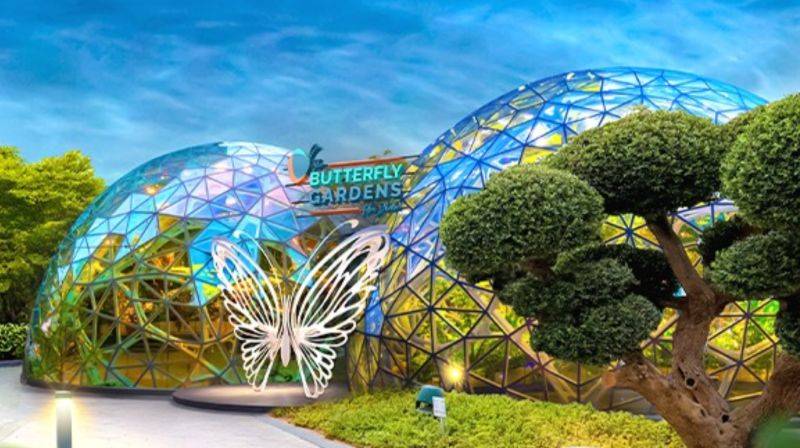
ABU DHABI has added a new immersive wildlife destination to its growing list of indoor attractions with the opening of Butterfly Gardens Abu Dhabi at Al Qana.
Located just minutes from the Sheikh Zayed Grand Mosque and directly opposite The National Aquarium, the venue brings together more than 10,000 butterflies and a collection of tropical animals inside fully climate-controlled biodomes.
Visitors step into warm, misted environments designed to replicate equatorial rainforests, where planted pathways, flowing water and natural light set the tone for a slow, exploratory walk.
Abu Dhabi Butterfly Gardens
The gardens are designed as a free-flight experience rather than a conventional exhibit, with butterflies moving naturally through the space and often settling on leaves, fruit and visitors’ shoulders.
Two vast domes form the heart of the attraction, one inspired by South East Asia and the other by South America, each filled with tall trees, flowering plants and carefully maintained humidity and temperature levels that reflect tropical conditions.
Living domes
Unlike many indoor attractions, the Butterfly Gardens were built around existing living trees rather than planted afterwards. Ten-metre-tall trunks rise through the domes and spread their canopies beneath unfiltered glass roofs, which allow maximum ultraviolet light to reach the plants and butterflies. This light is critical to butterfly behaviour, keeping them active and encouraging natural movement throughout the day, with discreet UV lighting taking over after sunset to maintain activity into the evening.
The result is a space that feels closer to an outdoor rainforest than an indoor gallery. Wooden walkways wind past koi ponds and under leafy arches, while the constant hum of water and rustle of wings replaces the noise of the city outside. Temperature and humidity are kept at equatorial levels, typically between 30°C and 32°C, creating conditions similar to those found in the Amazon and South East Asian jungles.
From chrysalis
One of the most closely watched areas of the gardens is the butterfly nursery, where rows of shimmering chrysalides hang in neat formations. Here, visitors can witness the final stages of metamorphosis as butterflies emerge, dry their wings and prepare for their first flight. Pupae arrive through long-standing partnerships with family-run butterfly farms in Costa Rica and the Philippines, each specialising in particular species and host plants.
These farms operate under conservation-focused breeding programmes, with a portion of butterflies released back into the wild to support pollination and ecosystem health. Within the Abu Dhabi gardens, butterflies feed on nectar-rich flowers and trays of fresh fruit such as pineapple and watermelon, allowing them to behave as they would in their natural habitats rather than relying on artificial feeders.
Beyond wings
While butterflies dominate the air, the gardens also host a range of tropical animals that move freely through the planted environments. Among the most eye-catching is the Palawan bearcat, also known as a binturong, a shaggy, tree-dwelling mammal that plays an important role in rainforest seed dispersal. Sri Lankan giant squirrels dash along branches and railings, while Gouldian finches add flashes of colour as they flit through the foliage.
In the Americas-themed dome, visitors encounter tamanduas, small anteaters that use long tongues to probe branches for insects, and Cuvier’s dwarf caiman resting near water features. The butterfly collection here includes large blue species and owl butterflies, whose wing patterns resemble watchful eyes. A notable milestone for the attraction is the birth of a baby sloth on site, the first recorded in Abu Dhabi, indicating that the animals have settled comfortably into their new environment.
Learning spaces
Education forms a central part of the experience, with interactive displays explaining pollination, life cycles and rainforest ecosystems. School groups can take part in structured programmes focused on biodiversity and insect life, while guided tours are available for families and visitors seeking a deeper understanding of the species on display. Every element of the gardens, from planting choices to construction materials, has been tested to ensure it is safe for insects, and no pesticides are used within the domes.
The attraction is fully indoors, making it a year-round option regardless of outside temperatures. Facilities include a café, a small retail boutique and dedicated spaces for workshops and events, allowing visitors to extend their stay from a brief walk-through to a full afternoon among the trees and butterflies. A combined ticket option links the gardens with The National Aquarium, creating a broader wildlife experience within Al Qana.
Butterfly Gardens Abu Dhabi is open Monday to Friday from 10am to 8pm and Saturday and Sunday from 9am to 8pm. Entry to the gardens is priced at Dh55, with a combined ticket for both the Butterfly Gardens and The National Aquarium available for Dh150.