

Where do India and Pakistan passports rank in the world in 2026?
South Asia’s mobility gap widens in latest global index
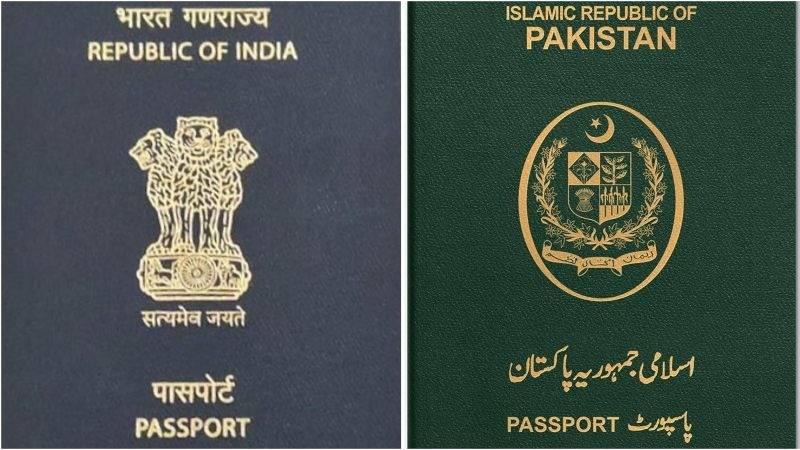
DUBAI – India and Pakistan entered 2026 with very different positions in the global mobility race, according to the latest Henley Passport Index.
India is ranked 80th, giving its citizens visa free or visa on arrival access to 55 destinations, while Pakistan stands at 98th with access to 31 destinations. Both countries improved their standing compared to the previous year, but the gap between them remains significant in terms of travel freedom.
The Henley Passport Index, now in its 20th year, ranks 199 passports against 227 destinations using exclusive data from the International Air Transport Association. It remains the most widely cited global benchmark of passport power and mobility.
Indian passport
India’s 80th place ranking puts it level with Algeria and Niger in the 2026 Henley Passport Index. With 55 destinations available without the need for a prior visa, Indian travellers have seen measurable growth in access across Asia, Africa, and parts of the Caribbean. The increase reflects a combination of bilateral agreements, regional travel facilitation, and expanding diplomatic engagement.
The five place rise from last year represents one of India’s strongest annual improvements in recent times. However, despite the progress, Indian passport holders still require traditional visas for most of Europe, North America, and East Asia, which continues to limit the overall strength of the passport when compared with global leaders.
Over the past decade, India has steadily improved its ranking from the mid-80s into its current position, underlining a slow but consistent expansion of travel freedom. The widening network of visa on arrival and electronic travel authorisation arrangements has played a key role in pushing the country’s total to 55 accessible destinations.
Pakistani passport
Pakistan’s passport now ranks 98th worldwide, tied with Yemen, and allows access to 31 destinations without a prior visa. These include a combination of visa free, visa on arrival, and electronic travel authorisation arrangements covering Asia, Africa, the Caribbean, and Oceania.
Visa free access is available to destinations such as Barbados, Dominica, Haiti, Rwanda, Vanuatu, and Trinidad and Tobago, while visa on arrival entry is offered by countries including Cambodia, Maldives, Nepal, Qatar, Senegal, and Timor-Leste. Pakistani travellers can also use eTA systems for Kenya, Seychelles, and Sri Lanka, adding flexibility for short-term travel.
Pakistan’s two place rise from 100th in 2025 to 98th in 2026 reflects expanding diplomatic engagement and administrative modernisation. The country has introduced a Digital Integrated Dashboard that tracks passport applications and deliveries in real time, speeding up processing across domestic and overseas missions. A redesigned passport featuring historical and cultural landmarks from all four provinces has also been rolled out, aligning with international security and design standards.
Top performers
At the top of the 2026 rankings, Singapore remains the world’s most powerful passport for the third consecutive year, granting visa free access to 192 destinations. Japan and South Korea share second place with 188 destinations, continuing Asia’s dominance at the summit of global mobility.
Denmark, Luxembourg, Spain, Sweden, and Switzerland occupy third place with 186 destinations, while a large group of European countries including Austria, Belgium, France, Germany, Italy, the Netherlands, and Norway share fourth place with 185 destinations.
The fifth position is jointly held by Hungary, Slovakia, Slovenia, and the United Arab Emirates, whose passports allow entry to 184 destinations. The UAE is the strongest long-term performer on the index, having climbed 57 places since 2006 and added 149 visa free destinations, the biggest gain in the index’s history.
New Zealand follows in sixth place, with Australia and the United Kingdom sharing seventh, Canada eighth, Malaysia ninth, and the United States returning to the top ten in 10th place with 179 destinations. Despite its return, the US recorded one of the steepest annual declines in visa free access, alongside the UK, highlighting shifting global visa and diplomatic trends.
At the bottom of the index, Afghanistan remains the weakest passport, with access to just 24 destinations, creating a 168-destination gap between the most and least powerful passports in 2026.