

Where does UAE passport rank in 2026?
184 destinations now open to Emirati travellers without prior visas
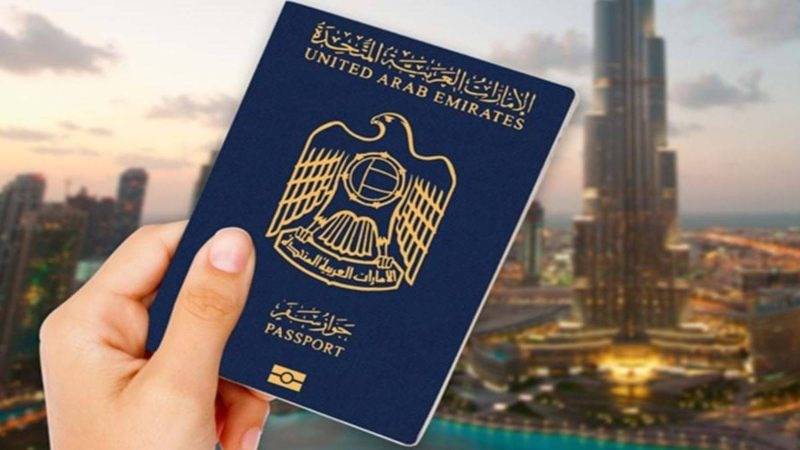
DUBAI – The United Arab Emirates has secured one of the strongest positions ever recorded by an Arab nation on the Henley Passport Index, ranking fifth globally in 2026 after a dramatic and sustained rise over two decades.
The latest edition of the index, now marking its 20th anniversary, shows Emirati citizens can travel to 184 destinations without obtaining a visa in advance, either visa free or with visa on arrival. This level of access places the UAE among a small group of countries whose passports function as true global travel enablers.
What makes the UAE’s position especially striking is the scale of its ascent. Since 2006, the Emirati passport has gained access to 149 additional destinations, representing the largest increase ever recorded in the history of the Henley Passport Index. Over the same period, the country has climbed 57 places, moving from a relatively restricted travel document into one of the most powerful in the world.
Where does UAE passport rank?
The Henley Passport Index is based on exclusive data from the International Air Transport Association (IATA), which tracks the visa requirements of nearly every country and territory worldwide. The index measures how many destinations passport holders can enter without needing to arrange a visa in advance, a key indicator of a country’s global mobility and diplomatic reach.
In 2026, the UAE sits in fifth place, level with Hungary, Slovakia and Slovenia, all of which also provide their citizens access to 184 destinations. This ranking puts the UAE ahead of several long established travel heavyweights, including New Zealand in sixth place, the United Kingdom and Australia in seventh, Canada in eighth, and the United States in tenth.
Henley & Partners chairman Dr Christian H. Kaelin, who created the index, described the UAE’s climb as unmatched. He said the country’s progress shows how long term vision, political stability and proactive diplomacy translate directly into greater freedom of movement for citizens and increased international soft power.
Diplomatic strategy
UAE officials have linked the passport’s rise to a deliberate foreign policy built on openness, dialogue and partnerships across regions. Omar Obaid Al Shamsi, Under Secretary of the UAE Ministry of Foreign Affairs, said the ranking reflects the leadership’s commitment to building strategic relationships that strengthen the country’s standing on the global stage.
He noted that expanding visa free access is not just about tourism, but also about enabling business, education and cultural exchange. As more doors open for Emirati travellers, the UAE’s influence and connectivity across markets continues to deepen.
Henley & Partners research into passport strength shows that countries with reciprocal visa policies, active foreign relations, economic stability and tourism friendly approaches are more likely to see sustained improvements in travel access. The UAE fits that profile closely, combining international diplomacy with an economy that welcomes global visitors, investors and residents.
Global context
The growing importance of passport power is also linked to rising global travel. IATA forecasts that more than 5.2 billion airline passengers will fly worldwide in 2026, making international mobility a key factor in economic and social participation.
Willie Walsh, Director General of IATA, said governments are under pressure to balance secure borders with convenient travel. He pointed to technologies such as digital identity and digital passports as tools that can support both security and efficiency as demand increases.
Against this backdrop, a highly ranked passport gives countries a significant advantage in allowing their citizens to participate in global trade, tourism and professional mobility without friction.
Top strongest passports
While the UAE has emerged as the leading passport in the Arab world and one of the strongest globally, the very top of the Henley Passport Index remains dominated by a small group of highly connected nations.
In 2026, Singapore holds first place with access to 192 destinations. Japan and South Korea share second place with 188 destinations, followed by Denmark, Luxembourg, Spain and Switzerland on 186. A large European group including France, Germany, Italy, the Netherlands and Norway sits in fourth place with 185 destinations.
The UAE’s fifth place position means Emirati passport holders now enjoy broader access than citizens of many G7 countries, highlighting a shift in global travel power towards states that have invested heavily in diplomacy, connectivity and openness.