

Trump extends US-Iran ceasefire on Pakistan’s request amid ongoing mediation push
JD Vance delays Islamabad visit as Tehran yet to confirm participation in talks
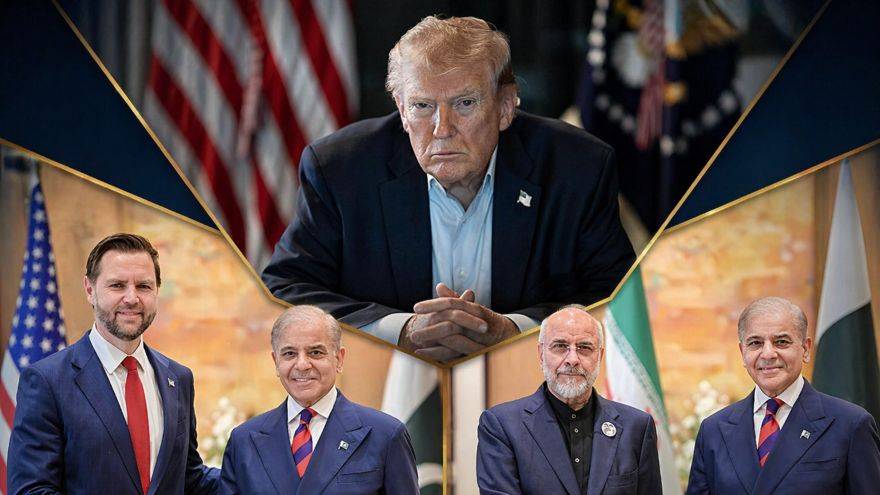
WASHINGTON/ISLAMABAD – The United States has extended its ceasefire with Iran following a formal request from Pakistan, President Donald Trump announced on Tuesday, as diplomatic efforts intensify in Islamabad to bring Tehran into proposed negotiations.
Trump said the decision was made after appeals from Pakistan’s leadership to allow more time for talks to develop a unified Iranian position. He confirmed that US forces would continue maintaining a maritime blockade on Iranian ports while holding off further military action during the extended truce period.
“Upon the request of [Pakistan’s Army chief] Field Marshal Asim Munir and Prime Minister Shehbaz Sharif of Pakistan, we have been asked to hold our attack on Iran until such time as their leaders can come up with a unified proposal,” Trump said, adding that the ceasefire would remain in place until discussions are concluded.
The extension marks a significant diplomatic intervention by Pakistan, which is acting as mediator in efforts to prevent escalation between Washington and Tehran.
Islamabad talks in focus
Vice President JD Vance, expected to lead the US delegation for the planned talks in Islamabad, has yet to depart, with officials confirming his travel remains on hold. The delay comes amid uncertainty over Iran’s participation and the status of negotiations.
Pakistan’s Information Minister, Attaullah Tarar, said Islamabad remained in contact with Iranian authorities and was actively pursuing dialogue. Security has been tightened across the capital, with approximately 20,000 personnel deployed and key venues placed under strict control ahead of potential negotiations.
Iran has not yet confirmed attendance at the proposed talks, with officials citing ongoing tensions and maritime incidents involving Iranian vessels as key concerns.
Maritime and diplomatic tensions
Iran’s Foreign Minister, Abbas Araqchi, has described US actions targeting Iranian shipping as an “act of war”, while Iranian officials accused Washington of escalating pressure through the seizure of vessels and enforcement of sanctions-linked maritime restrictions.
Blockading Iranian ports is an act of war and thus a violation of the ceasefire.
— Seyed Abbas Araghchi (@araghchi) April 21, 2026
Striking a commercial vessel and taking its crew hostage is an even greater violation.
Iran knows how to neutralize restrictions, how to defend its interests, and how to resist bullying.
US Central Command confirmed that American forces boarded a tanker carrying around 2 million barrels of crude in an operation conducted “without incident”. The US has also reported turning back 28 vessels under its enforcement campaign targeting Iranian-linked maritime activity.
Since the start of the U.S. blockade against ships entering or exiting Iranian ports, U.S. forces have directed 28 vessels to turn around or return to port. pic.twitter.com/mZOq3SfxKt
— U.S. Central Command (@CENTCOM) April 21, 2026
Iranian government spokesperson Fatemeh Mohajerani warned that Tehran would respond firmly to any renewed aggression, even as the ceasefire extension provides a temporary pause in hostilities.
Strait of Hormuz
The Strait of Hormuz remains a critical flashpoint, with restricted passage affecting global energy flows. Iran has limited access through the waterway, reversing earlier signals of reopening following continued US restrictions on Iranian ports.
The disruption has impacted roughly 20 million barrels of oil traffic per day, contributing to volatility in global energy markets and pushing oil prices higher. Investors remain cautious as the diplomatic situation continues to evolve.
Nuclear negotiations
At the centre of the dispute remains Iran’s nuclear programme. Washington continues to demand restrictions preventing weapons development, including limits on enriched uranium stockpiles, while Tehran insists its programme is for peaceful purposes and seeks sanctions relief.
Previous rounds of talks ended without agreement, but Pakistan’s mediation effort is seen as a renewed attempt to bridge differences during the extended ceasefire window.