

Wadi Wurayah becomes UAE’s first UNESCO natural World Heritage site
Fujairah reserve joins global list after decision in Busan
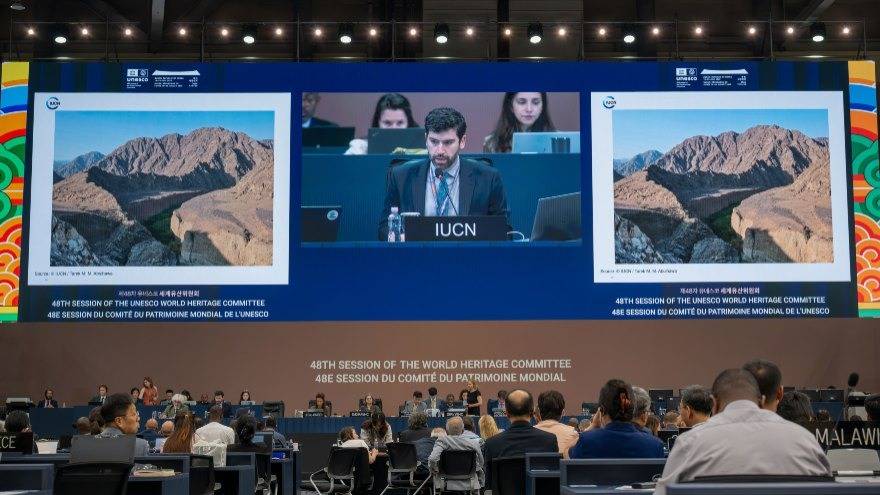
DUBAI – The Wadi Wurayah National Park in Fujairah has become the U
AE's first natural site to be inscribed on UNESCO's World Heritage List, marking a landmark achievement for the country's environmental conservation efforts.
The recognition was approved during the 48th session of UNESCO's World Heritage Committee in Busan, South Korea, following the review of the UAE's nomination dossier. The inscription recognises the reserve's Outstanding Universal Natural Value, placing it among the world's most significant protected landscapes.
إدراج محمية وادي الوريعة في الفجيرة ضمن قائمة التراث العالمي لليونسكو، لتصبح أول موقع إماراتي يُدرج لقيمته الطبيعية الاستثنائية، وثالث موقع إماراتي على القائمة.
— UAEGOV (@UAEmediaoffice) July 25, 2026
إنجاز يعكس التزام دولة الإمارات بحماية التراث الطبيعي، وصون التنوع البيولوجي، وتعزيز الاستدامة للأجيال القادمة. pic.twitter.com/TixdsYFiGW
The achievement also makes Wadi Wurayah the UAE's third World Heritage property, following the Cultural Sites of Al Ain, inscribed in 2011, and Sharjah's Faya Palaeolandscape, added in 2025. It is, however, the first UAE site to receive UNESCO recognition specifically for its natural heritage.
Historic honour
The designation highlights Wadi Wurayah's exceptional ecological importance, rich biodiversity, remarkable geological formations and status as one of the Arabian Peninsula's most important freshwater ecosystems. The reserve has long been recognised nationally as one of the UAE's most valuable natural landscapes, and UNESCO's decision now places it under internationally recognised conservation and management standards.

The UAE delegation, led by the Ministry of Culture and the Government of Fujairah, attended the World Heritage Committee session during the nomination process. Officials described the inscription as a reflection of the country's long-term commitment to preserving its natural heritage and protecting biodiversity for future generations.
His Highness Sheikh Mohammed bin Hamad bin Mohammed Al Sharqi, Crown Prince of Fujairah and Ambassador of the Wadi Wurayah nomination file to UNESCO, described the recognition as a historic milestone for both the UAE and Fujairah. He said the achievement reflects the country's commitment to protecting its natural heritage according to the highest international standards while reinforcing the emirate's position on the global heritage map.
He added that Wadi Wurayah now serves as an internationally recognised model for environmental preservation, reflecting the Fujairah government's vision under His Highness Sheikh Hamad bin Mohammed Al Sharqi, Supreme Council Member and Ruler of Fujairah, to safeguard the site's natural and historical significance.
Biodiversity haven
Located within the Hajar Mountains overlooking the Gulf of Oman, Wadi Wurayah National Park spans approximately 225 square kilometres. The landscape combines rugged mountains, valleys, perennial freshwater springs and waterfalls, creating one of the most diverse habitats in the UAE.
UNESCO's recognition is supported by the reserve's extraordinary biodiversity. More than 1,099 species have been recorded in the park, including 883 animal species and 216 plant species. At least 10 of these species are globally threatened.

The reserve is home to around half of all terrestrial mammal species and nearly half of all terrestrial reptile species documented across the UAE. Among its most notable inhabitants are the endangered Arabian tahr, the elusive Arabian caracal, Blanford's fox and several rare insects and plant species found only in limited parts of the region.
Asilah Abdullah Al Mualla, Director-General of the Fujairah Environment Authority, said the area's ecological significance became increasingly evident after scientific studies began in 2006. Initial surveys documented around 860 species, a figure that has since grown to 1,099 following continued research and conservation work.
She also noted that Wadi Wurayah contains one of the UAE's few permanent surface water systems, including more than 300 springs, around 60 streams and the country's only permanent natural waterfall. These freshwater resources support ecosystems rarely found elsewhere in the Arabian Peninsula.
Ancient landscape
Another defining feature behind UNESCO's decision is Wadi Wurayah's globally important geology. The reserve contains one of the world's largest and best-preserved exposures of ophiolite rock formations, representing fragments of ancient oceanic crust and the Earth's upper mantle that formed around 90 million years ago.
These formations provide scientists with rare opportunities to study geological processes that shaped the Earth's oceans and continents, making the reserve an internationally significant destination for geological research.
Officials also highlighted Wadi Wurayah's role as a living natural laboratory where researchers continue to study ecological processes, biodiversity and environmental change. The site's scientific importance extends beyond the UAE, contributing to international research and conservation efforts.
The road to recognition
The road to UNESCO recognition has taken nearly two decades. Baseline environmental studies launched in 2006 led to the reserve being designated as the UAE's first mountain protected area in 2009.
To allow fragile ecosystems to recover, authorities closed the park to tourists in 2013 after scientific assessments concluded that reduced human activity would help rehabilitate wildlife habitats. Monitoring later confirmed that the conservation measures had successfully strengthened biodiversity.
The reserve reopened in January 2026 under a controlled visitor programme, allowing guided group visits while maintaining strict environmental protections.
Sheikh Salem bin Khalid Al Qassimi, Minister of Culture and Chair of the UAE National Commission for Education, Culture and Science, said the inscription represents a strategic national achievement that strengthens the UAE's leadership in protecting natural heritage and biodiversity. He described heritage preservation as a cornerstone of national identity and sustainable development, adding that Wadi Wurayah's recognition broadens opportunities for international scientific cooperation and knowledge exchange.
Dr Ahmed Hamdan Al Zeyoudi, Director of the Office of the Crown Prince of Fujairah, said authorities will continue efforts to preserve the reserve according to the highest international standards while enhancing its status as a destination showcasing the relationship between people and nature.
Asilah Al Mualla said UNESCO recognition marks the beginning of a new phase focused on continued research, monitoring and reporting to ensure the reserve maintains its World Heritage status. She noted that international recognition will further highlight the UAE's experience in protecting natural heritage while bringing greater global attention to one of the Arabian Peninsula's most important ecological reserves.