

Dubai airline expands India network with two new weekly freighters
Emirates SkyCargo to transport perishables, electronics, pharmaceuticals, and garments
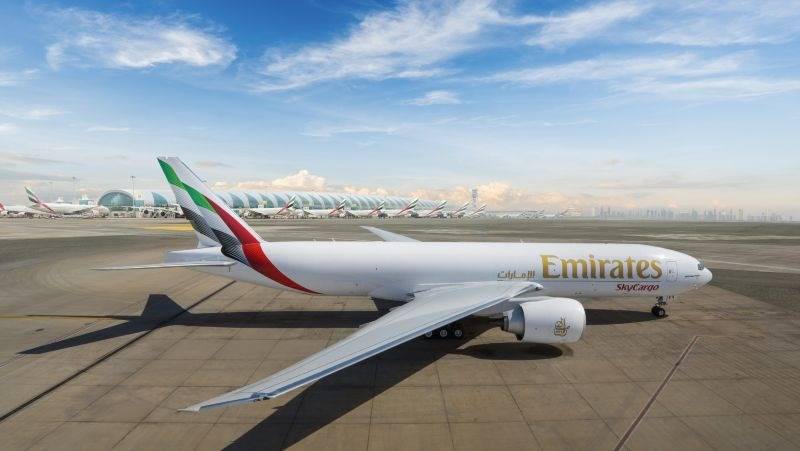
DUBAI/MUMBAI – Emirates SkyCargo is set to deploy two additional weekly freighters to India, responding to growing trade demand and strengthening connectivity between the UAE and the South Asian country.
One freighter will operate to Mumbai, the other to Ahmedabad, increasing the airline’s existing capacity and enhancing links for businesses across India.
These freighters, together with Emirates’ extensive passenger network, are expected to uplift an average of 3,000 tonnes of cargo weekly.
Expanded services
Currently, Emirates serves India with three weekly freighters – one to Mumbai and two to Ahmedabad – alongside bellyhold capacity on 167 passenger flights to nine Indian gateways. The new Mumbai freighter, launching on 4 March 2026, will connect Dubai, Singapore and India.
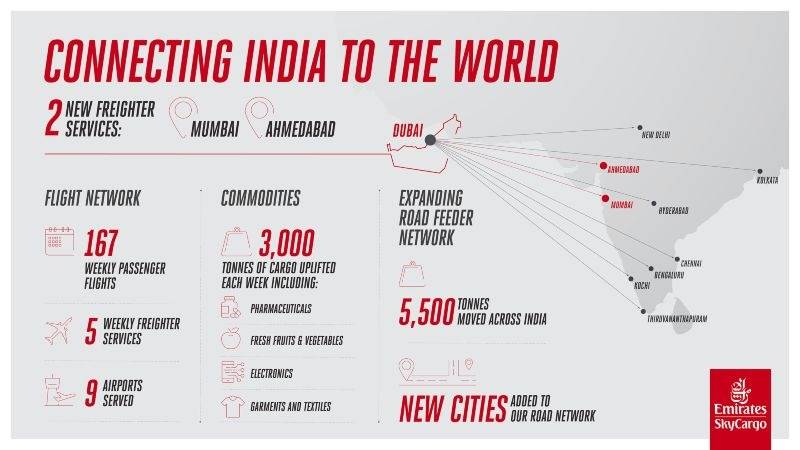
The Ahmedabad service will be a direct freighter, also commencing in March. Both aircraft will transport key commodities including pharmaceuticals, fresh fruits and vegetables, other perishables, and personal electronics such as mobile phones, laptops and tablets.
In addition to these services, Emirates SkyCargo will operate a dedicated weekly freighter to Dhaka, Bangladesh, from April 2026, further expanding its regional freighter network.
India trade boost
“Our new freighter frequencies to India reflect both the strength of India’s trade corridors, and our long-term commitment to supporting them,” said Badr Abbas, Divisional Senior Vice President, Emirates SkyCargo. “India is a powerhouse of manufacturing, pharmaceuticals, perishables and eCommerce. The demand for reliable and stable capacity continues to grow. These additional freighters bolster our operations, offering more connectivity and capacity to serve customers in India and globally.”
As the UAE-India Comprehensive Economic Partnership Agreement (CEPA) nears its third anniversary, bilateral trade is thriving. India’s exports to the UAE are growing faster than overall export growth, with Emirates SkyCargo supporting the trade agreement. The airline transports weekly volumes including 600 tonnes of pharmaceuticals, 500 tonnes of perishables, and substantial tonnage of garments, textiles, and electronics.
Logistics network
Beyond aircraft, Emirates SkyCargo has developed a robust trucking network to reach offline destinations across India. In 2025, over 1,000 trucks transported almost 5,500 tonnes of cargo, carrying automotive and aircraft spare parts, machinery, tools, spices, clothing, and even a satellite. Temperature-controlled reefer trucks ensure safe transport of delicate pharmaceuticals and medical equipment.
The addition of Coimbatore and Goa as offline stations has unlocked new trade opportunities. Coimbatore, a hub for engineering, textiles, and automotive SMEs, now enjoys enhanced access to global markets through Emirates SkyCargo.
Regional growth
Since commencing operations to Mumbai and Delhi in 1985, Emirates SkyCargo has expanded to nine Indian cities: Ahmedabad, Bengaluru, Chennai, Delhi, Hyderabad, Kochi, Kolkata, Mumbai, and Thiruvananthapuram. With the Cargo Open Sky policy in India, the airline continues to extend outbound capabilities, connecting primary and secondary cities to its established global network.
This week, Emirates SkyCargo participated in Air Cargo India, engaging in industry workshops, panel discussions, and networking events. The airline was also named International Airline of the Year at the STAT Times International Awards for Excellence in Air Cargo for the third consecutive year, reflecting its ongoing commitment to facilitating global supply chains.