

UAE unveils hybrid air mobility rules allowing flying taxis on helipads
New framework enables dual-use pads for eVTOLs and helicopters
DUBAI: The United Arab Emirates (UAE) has become the first country in the world to issue a hybrid regulatory framework allowing flying taxis to operate from existing helipads.
The move, announced by the General Civil Aviation Authority (GCAA), enables both electric Vertical Take-Off and Landing aircraft (eVTOLs) and conventional helicopters to share infrastructure, dramatically accelerating the nation’s advanced air mobility (AAM) rollout.
The framework is designed to fast-track operational readiness while minimising costs. It aligns with government goals to adopt high-efficiency, non-bureaucratic solutions, and provides a cost-effective approach to infrastructure development without compromising safety or performance.
Dual-use infrastructure
With this regulation in place, flying taxis such as Archer Aviation’s 'Midnight' and Joby Aviation’s aircraft can now take off and land from existing helicopter pads. According to Archer’s CCO, Nikhil Goel, more than 70 helipads across Abu Dhabi could be adapted quickly. "We plan to leverage the existing helipads, then add electrification so we can launch and scale rapidly with minimal capital," he said in an earlier interview.
The GCAA noted the initiative helps optimise infrastructure use and cements the UAE’s role as a global leader in integrating futuristic mobility systems into national aviation infrastructure. Saif Mohammed Al Suwaidi, GCAA Director-General, emphasised that this framework “redefines how aviation evolves.”
Test flights completed
The announcement comes days after successful test flights in both Abu Dhabi and Dubai. Abu Dhabi’s Cruise Terminal helipad served as the launch site for an autonomous air taxi flight last month.
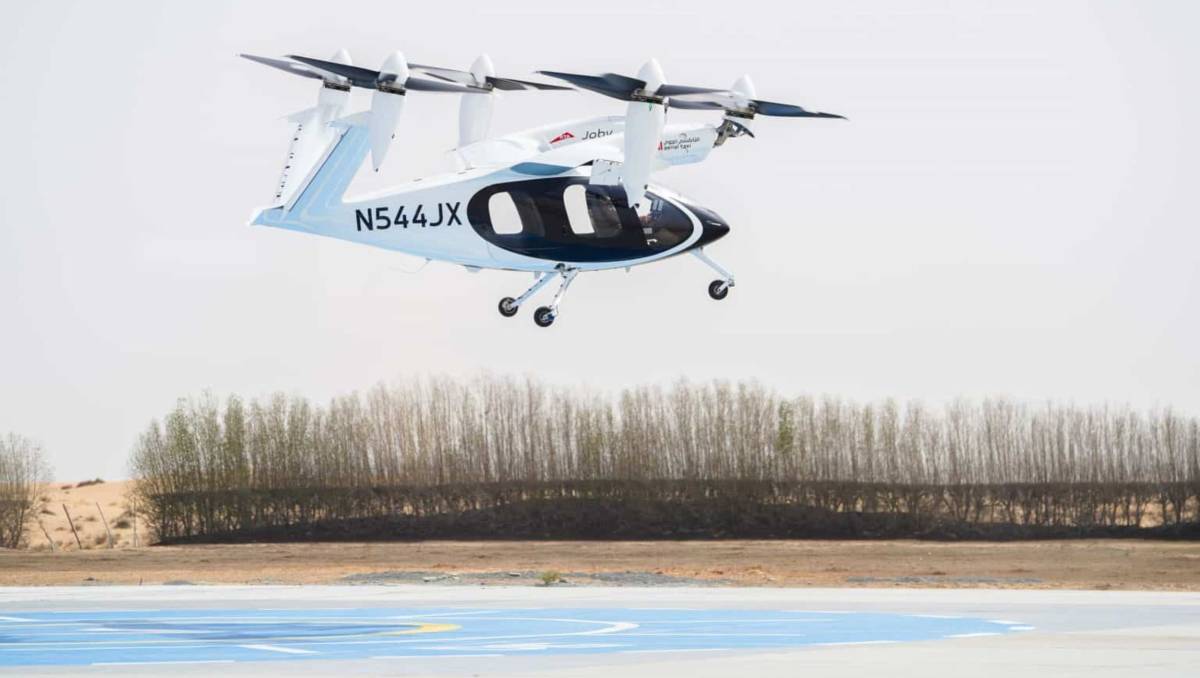
Meanwhile, Dubai marked its first test of a Joby flying taxi on Monday at the Jetman Helipad in Margham, located along the Dubai–Al Ain Road.
The Joby aircraft, which reaches speeds of up to 320 km/h with a 160 km range, is expected to enter commercial service in 2026. Travel time from Dubai International Airport to Palm Jumeirah could shrink from 45 minutes by car to just 12 minutes by air.
These developments support the UAE’s vision under its D33 Economic Agenda, aimed at revolutionising urban transport with smart, sustainable solutions.