

From air taxis to AI bus station: 7 Dubai traffic changes making headlines
New transport initiatives promise faster journeys for residents and visitors
DUBAI – If there is one conversation guaranteed to unite Dubai residents, it is traffic. From peak-hour queues on Sheikh Zayed Road to packed junctions around Jumeirah and Business Bay, the city’s rapid growth continues to place increasing pressure on its transport network.
But Dubai is also accelerating efforts to transform the way people move around the emirate. Over the past few weeks alone, authorities have unveiled a series of major infrastructure upgrades, smart mobility initiatives and long-term transport projects designed to improve connectivity, reduce congestion and streamline journeys across the city.
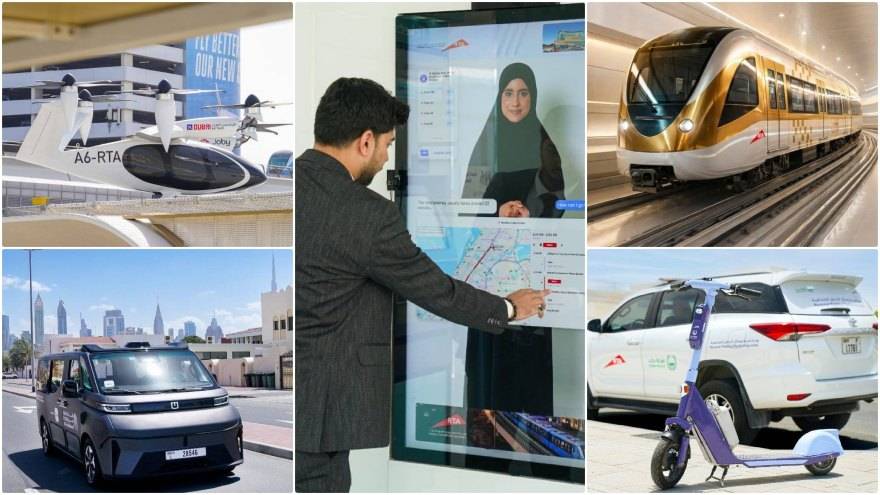
From a brand-new Metro line and AI-powered transport hubs to stricter enforcement for e-scooters and the launch of futuristic Air Taxi infrastructure, here are the latest Dubai traffic and transport developments making headlines this May.
World Trade Centre bridge
One of the latest additions to Dubai’s road network is a newly opened 500-metre bridge near the World Trade Centre area, aimed at improving outbound traffic movement from Al Bada towards 2nd December Street.
The bridge forms part of the wider World Trade Centre Roundabout Development Project, one of the Roads and Transport Authority’s major traffic improvement schemes currently underway. Motorists travelling towards Sheikh Rashid Road and Al Mustaqbal Street are expected to benefit from significantly smoother traffic flow.
According to RTA, the single-lane bridge can handle up to 1,200 vehicles per hour and reduces journey times from around eight minutes to just two minutes. The structure joins three previously completed bridges under the same project.
Overall, the World Trade Centre Roundabout Development Project includes six bridges extending a combined 5,000 metres, designed to enable uninterrupted traffic movement across several key directions in central Dubai.
AI-powered bus station
Dubai has also introduced a new AI-powered bus station at Mall of the Emirates, operating around the clock and directly connected to the existing Metro station.
The upgraded station serves 11 bus routes and has been designed to improve passenger convenience while reducing waiting times. Authorities say the project supports Dubai’s wider ambition to integrate smart technologies into public transport services.
Among the station’s standout features is a digital smart kiosk equipped with a virtual assistant capable of helping passengers with journey planning, customer enquiries and lost-and-found services. Travellers can also access the RTA call centre directly through the system.
Additional features include modern ticketing and digital top-up machines, alongside smart vending solutions offering beverages and loyalty programme benefits.
The launch reflects a broader shift towards AI-assisted mobility infrastructure across Dubai’s transport ecosystem, particularly in high-footfall locations connected to Metro services.
Driverless taxis
Dubai’s coastal districts are also becoming a testing ground for the future of transport following the launch of the emirate’s first commercial driverless taxi service.
The Roads and Transport Authority has officially rolled out 100 autonomous taxis across Jumeirah and Umm Suqeim in partnership with Apollo Go and WeRide, marking another major step in Dubai’s smart mobility ambitions.
Passengers can book the self-driving vehicles through both the Uber app and Apollo Go app, allowing the service to integrate directly into existing ride-hailing habits. Authorities say the phased rollout will help assess operational performance and passenger demand before expanding the autonomous fleet further across the city.
The Gulf region has rapidly emerged as a major hub for autonomous mobility, attracting global technology firms due to its advanced infrastructure, strong ride-hailing demand and supportive regulatory environment.
WeRide, which has operated in the Middle East since 2021, already runs robotaxi services in Abu Dhabi and Riyadh, while Baidu’s Apollo Go has also expanded its regional footprint through commercial services in Abu Dhabi earlier this year.
Dubai’s launch reinforces the emirate’s long-term target of making 25 per cent of all journeys autonomous by 2030 under its Self-Driving Transport Strategy. The initiative also complements broader transport developments underway across Jumeirah, including major road upgrades, Metro expansion plans and smart mobility infrastructure.
Gold Line
Dubai’s Metro network is also preparing for one of its biggest expansions yet with the newly announced Gold Line.
Revealed at the end of April, the 42-kilometre line will feature 18 stations and is expected to serve approximately 1.5 million residents once completed. The project is scheduled for completion on September 9, 2032, coinciding with the 23rd anniversary of the Dubai Metro.
The route will connect 15 strategic areas across Dubai, beginning at Al Ghubaiba in the historic heart of the city and extending to Jumeirah Golf Estates.
Authorities say the Gold Line will significantly improve connectivity with existing transport systems. It will link with the Red Line at two locations, the Green Line at one location and the Etihad Rail passenger network twice.
The expansion is also expected to support 55 major real estate developments currently under construction across Dubai.
Crackdown on e-scooters
Dubai authorities have simultaneously tightened regulations around personal mobility devices, with a new enforcement unit now monitoring e-scooters, bicycles and e-bikes across the emirate.
Launched jointly by Dubai Police and the RTA on May 1, the Personal Mobility Monitoring Unit patrols cycling tracks, major roads and soft mobility zones to ensure compliance with traffic regulations.
The initiative aims to improve safety standards while addressing reckless riding and misuse of personal mobility vehicles.
Officials confirmed that the unit will focus on violations including riding outside designated tracks, speeding, failing to wear helmets and carrying passengers on electric scooters. Offenders may face fines, while non-compliant vehicles can also be impounded.
The move comes as Dubai continues to expand cycling infrastructure and encourage alternative transport solutions as part of broader sustainability goals.
Smart parking
Parking enforcement is also becoming increasingly technology-driven following a new partnership between Parkin Company PJSC and EMAAR Mall Management.
Under the multi-year agreement, advanced AI-powered parking enforcement systems will be introduced at Dubai Mall, Dubai Hills Mall and Marina Mall.
The rollout centres on Automatic Number Plate Recognition technology, which automatically scans vehicle registration plates occupying parking bays designated for People of Determination.
The system verifies whether a valid permit is linked to the vehicle before flagging potential violations for review by Parkin inspectors. Authorities said a short grace period will be offered in cases of accidental misuse.
In addition to automated monitoring, field inspections will also take place across all three malls to reinforce compliance and improve traffic movement within busy retail destinations.
Officials say the initiative is designed to protect accessibility, improve parking efficiency and support more organised vehicle circulation in high-traffic commercial hubs.
Air Taxi station
Perhaps Dubai’s most futuristic transport development is the newly completed Air Taxi station near Dubai International Airport.
Reviewed recently by Sheikh Hamdan bin Mohammed bin Rashid Al Maktoum, the four-storey facility marks a major step towards launching commercial Air Taxi operations in the emirate later this year.
Developed by Skyports Infrastructure, the station spans 3,100 square metres and includes two dedicated take-off and landing pads, charging infrastructure for electric aircraft and a two-level car park.
The facility has been designed to handle up to 170,000 passengers annually, with climate-controlled waiting areas and streamlined boarding systems.
According to the RTA, Air Taxi journeys could dramatically reduce travel times across Dubai. A trip between Dubai International Airport and Palm Jumeirah, for example, is expected to take around 10 minutes compared to roughly 45 minutes by car.
The service will operate as part of Dubai’s wider transport network, integrating with Metro lines, buses and other shared mobility systems to create seamless end-to-end journeys across the city.