

Qatar Airways posts $1.94bn profit as global aviation resilience shines through uncertainty
Strong passenger demand and cargo expansion drive consistent year-on-year performance
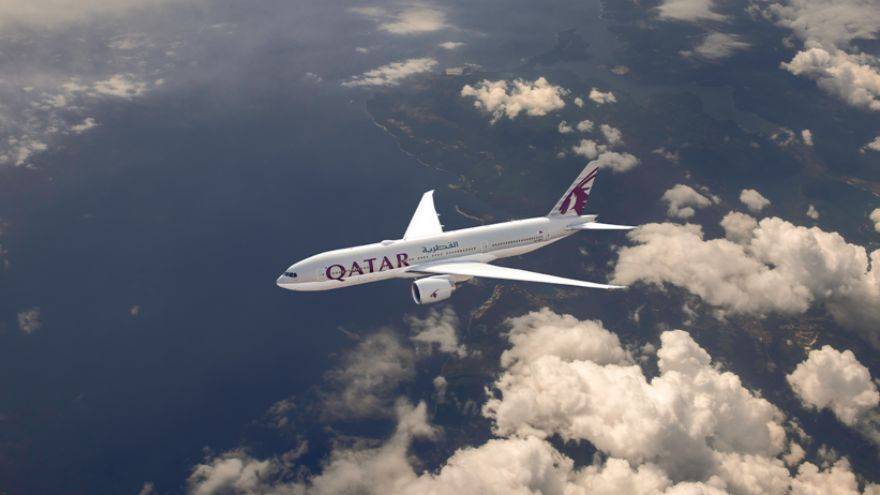
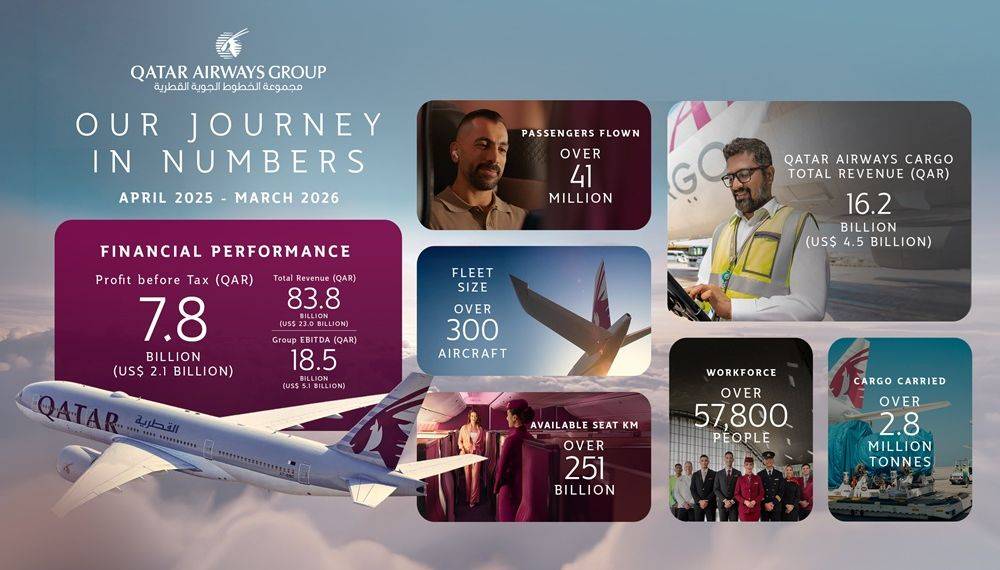
DUBAI – The Qatar Airways Group has reported a post-tax profit of QAR 7.08bn (US$1.94bn) for the financial year 2025/26, highlighting a year of strong operational resilience and sustained global demand despite geopolitical tensions and wider economic instability.
The performance underscores the Group’s ability to maintain profitability while navigating a challenging final month of the reporting period impacted by external disruptions.
Throughout the year, the Group strengthened its global aviation footprint through consistent network performance, strategic investments and service enhancements. It carried more than 41.8 million passengers across its extensive international network, supported by seamless connectivity through Hamad International Airport, which continues to serve as a key global transit hub.
Cargo operations also delivered a significant contribution to overall performance, reinforcing Qatar Airways’ position in global logistics markets. Alongside passenger growth, the Group continued to expand its operational capabilities, workforce expertise and technological integration across its airline and associated businesses, ensuring sustained service delivery across more than 90 countries.
Financial strength
The reported profit of QAR 7.08bn (US$1.94bn) reflects strong underlying financial discipline and diversified revenue streams across passenger, cargo and ancillary operations. Despite global volatility, the Group maintained a stable balance sheet supported by consistent travel demand and high cargo yields.
The airline’s cargo division transported more than 1.43 million tonnes of chargeable freight during the financial year, reinforcing its position as a leading global air freight operator with a 12% global market share. This performance highlights the importance of logistics operations in balancing cyclical fluctuations in passenger travel demand.
Strong financial outcomes were also underpinned by strategic partnerships and fleet planning initiatives, ensuring long-term capacity alignment with projected demand growth. Investments made during the year reflect a focus on scalability and operational resilience across both passenger and cargo segments.
Operational excellence
Operational performance remained a key highlight, with Qatar Airways achieving an 86% on-time performance rate, placing it among the top five most punctual airlines globally. This achievement was recognised through the Cirium Platinum Award for Operational Excellence, awarded by Cirium.
The airline’s performance reflects sustained improvements in scheduling reliability, turnaround efficiency and network coordination. These gains were particularly significant given the complexity of operating across a large global network under varying regional conditions.
Operational stability was further reinforced through continuous workforce coordination and advanced digital systems, enabling efficient response to disruptions and maintaining high service standards across all operational touchpoints.
Awards & infrastructure
The 2025/26 financial year saw continued global recognition for the Group’s service excellence and infrastructure leadership. Qatar Airways was named World’s Best Airline 2025 by Skytrax, marking a record ninth win and reinforcing its position among the world’s leading carriers.
In addition, Hamad International Airport retained its title as Best Airport in the Middle East for the 11th consecutive year, while also being recognised for airport retail excellence through Qatar Duty Free, which secured Best Airport Shopping globally for the third consecutive year.
The airport ecosystem continues to serve as a central pillar of the Group’s passenger experience strategy, combining connectivity, retail innovation and operational efficiency. These elements contribute to maintaining Doha’s position as a leading international aviation hub.
Fleet & connectivity
A major highlight of the year was the Group’s landmark fleet expansion agreements with Boeing and GE Aerospace, covering the acquisition and servicing of up to 210 aircraft and 400 engines. This represents one of the largest fleet commitments in commercial aviation history.
The Group also advanced its onboard digital transformation strategy, operating the world’s first and largest Starlink-equipped widebody fleet. High-speed connectivity is now available across Boeing 777, Airbus A350 and Boeing 787-8 aircraft, providing passengers with seamless internet access across long-haul and ultra-long-haul routes.
These developments reflect a broader focus on enhancing passenger experience through technological innovation, while ensuring future capacity growth aligns with rising global travel demand.
Cargo leadership
Qatar Airways Cargo continued to demonstrate strong performance, transporting 1.43 million tonnes of chargeable freight during the financial year. This operational scale reaffirmed its position as the world’s largest international air cargo carrier.
With a 12% global market share, the cargo division plays a central role in global supply chain connectivity, supporting industries ranging from e-commerce to pharmaceuticals and high-value goods transport. Its extensive network enables rapid movement of goods across key international trade routes.
The division’s performance also reflects ongoing investment in fleet capacity, logistics infrastructure and digital freight management systems, ensuring efficiency and reliability in a highly competitive global market.
Future outlook
Looking ahead, the Group is actively rebuilding and expanding its global schedule, with plans to serve more than 160 destinations by summer 2026. This expansion is supported by a strengthened balance sheet and long-term fleet commitments designed to enhance global connectivity.
The continued integration of advanced connectivity systems, including Starlink-enabled aircraft, is expected to further elevate the passenger experience across key international routes.