

Emirates earns US$ 6.2b to become world’s most profitable airline
Emirates Group sees record revenue, EBITDA and cash reserves in 2024–25

DUBAI: The Emirates Group has announced its best-ever financial performance for the year ending 31 March 2025, recording a staggering profit before tax of Dh22.7 billion (US$6.2 billion), up 18% from the previous year.
This milestone cements the Group’s status as the world’s most profitable aviation company for the reporting period.
Emirates, the airline division, delivered an exceptional Dh21.2 billion (US$5.8 billion) in profit, making it the most profitable airline globally.
Backed by strong consumer demand, strategic expansion, and operational excellence, both Emirates and its aviation services subsidiary dnata registered record-breaking revenues. The Group’s overall revenue surged by 6% year-on-year to Dh145.4 billion (US$39.6 billion), while its cash assets rose by 13% to Dh53.4 billion (US$14.6 billion). EBITDA also reached an all-time high of Dh42.2 billion (US$11.5 billion).
Record-breaking growth
Emirates alone reported revenue of Dh127.9 billion (US$34.9 billion), 6% higher than last year. The airline’s cash reserves stood at Dh49.7 billion (US$13.5 billion), up 16%. Its passenger and cargo capacity increased by 4% to reach 60.0 billion ATKMs, approaching pre-pandemic levels.
The airline served 53.7 million passengers, up 3% from the prior year, across 148 cities in 80 countries and territories. Emirates launched flights to Bogotá and Madagascar, reinstated services to Phnom Penh, Lagos, Adelaide and Edinburgh, and enhanced operations to 21 other destinations. Passenger Seat Factor was reported at 78.9%, with a yield of 36.6 fils (10 US cents) per RPKM.
The carrier’s investment in fleet modernisation remained a priority. It added four Airbus A350 aircraft to its fleet, serving routes including Edinburgh, Mumbai, and Colombo. Its total fleet stood at 260 aircraft with an average age of 10.7 years. Emirates’ aircraft order book includes 314 pending deliveries, comprising 61 A350s, 205 Boeing 777X, 35 787s, and 13 777 freighters.
Operational investments
To support growth, Emirates Group invested Dh14.0 billion (US$3.8 billion) during the year in new aircraft, equipment, technology, facilities, and acquisitions. The Group’s workforce expanded by 9% to 121,223, marking the largest team in its history.
In its first year of applying the UAE’s corporate tax regime, the Group paid a 9% tax charge, resulting in a net profit of Dh20.5 billion (US$5.6 billion) after tax. A dividend of Dh6.0 billion (US$1.6 billion) was declared to the Group’s owner, the Investment Corporation of Dubai.
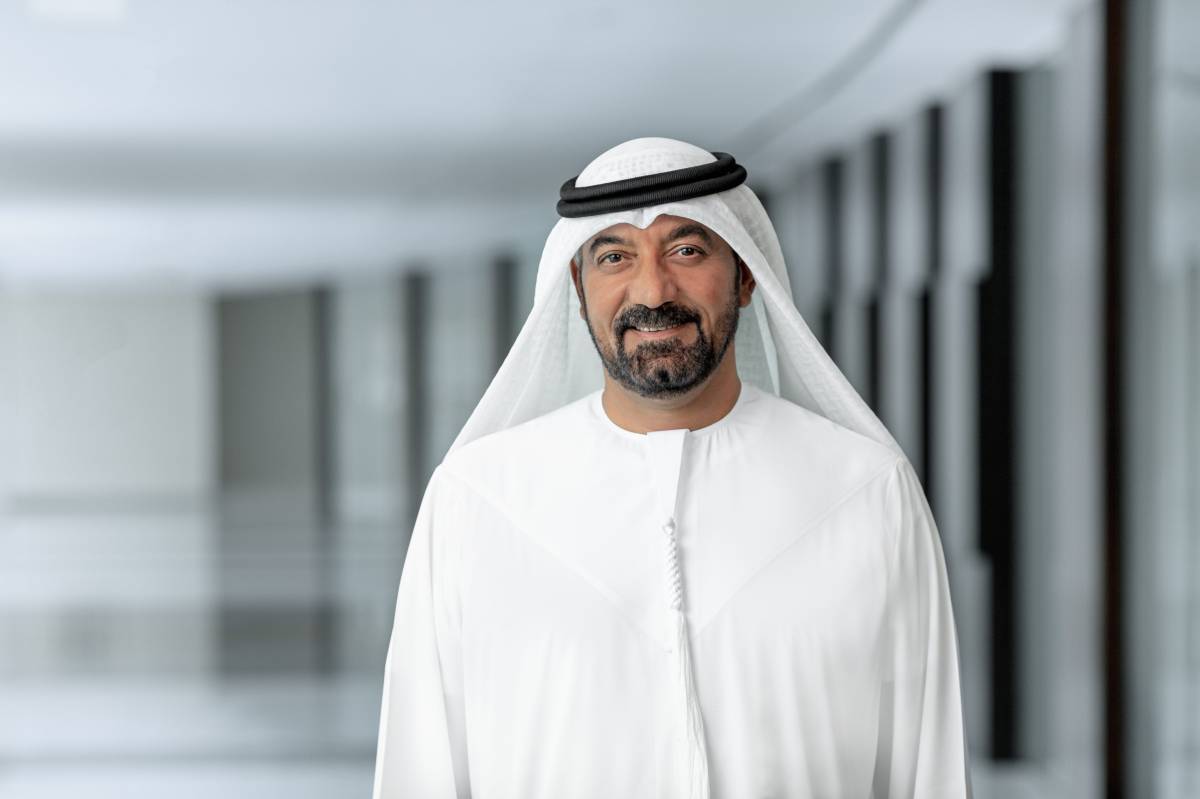
Chairman and Chief Executive of Emirates airline and Group, Sheikh Ahmed bin Saeed Al Maktoum, praised Dubai’s leadership and vision as key drivers of success. “It is no accident that Dubai has produced hugely successful global aviation entities,” he said, highlighting long-term investments in people, technology, and partnerships.
dnata milestones
dnata, the Group’s global air and travel services provider, also reported its strongest performance to date. It achieved a pre-tax profit of Dh1.6 billion (US$430 million), a 2% increase, with revenue rising 10% to Dh21.1 billion (US$5.8 billion). dnata held cash assets of Dh3.7 billion (US$1.0 billion).
The company is preparing for significant capacity expansions with new cargo facilities in Amsterdam, Dubai, and Erbil scheduled for completion in 2025–26. These developments will boost dnata’s cargo handling capabilities in key global markets.
Fleet and fuel economics
Despite industry-wide delivery delays, Emirates expanded its retrofit programme to include 219 aircraft, allocating US$5.0 billion for the effort. The airline’s fuel costs dropped slightly to Dh32.6 billion (US$8.9 billion) from Dh34.2 billion (US$9.3 billion) in 2023–24, due to lower fuel prices and hedging gains, despite a 5% increase in volume uplift.
Fuel remained the largest expense, accounting for 31% of total operating costs, followed by employee costs and ownership-related expenses. Emirates also recorded operating cash flow of Dh40.8 billion (US$11.1 billion), further supporting ongoing expansion plans.

Premium services expansion
In 2024–25, Emirates continued enhancing customer experience across touchpoints. The airline invested Dh63 million in lounge upgrades and new openings in London Stansted and Jeddah, bringing its global lounge count to 41. It also launched chauffeur-drive services in Riyadh, now available in over 70 cities.
Retail initiatives included the opening of eight Emirates World stores globally, investing Dh34 million in premium travel experiences with specialist consultants.
Cargo and logistics
Emirates SkyCargo reported a standout performance, moving 2.3 million tonnes of freight – a 7% rise. Revenue hit Dh16.1 billion (US$4.4 billion), contributing 13% to total airline revenue. Cargo yield per FTKM rose 10%, reaching pre-pandemic levels.

Fleet expansion continued with two new Boeing 777 freighters and two wet-leased 747s. Emirates also ordered 10 additional Boeing 777Fs. SkyCargo’s freighter fleet is projected to grow to 21 by the end of 2026, with 13 on order. Copenhagen was added to the freighter network, while a memorandum with Astral Aviation was signed to extend reach in Africa.
The carrier also launched Emirates Delivers in Saudi Arabia, expanding its e-commerce logistics offering, and introduced eQuote – a digital self-service platform for spot cargo quotations across 75 countries.
Subsidiaries’ performance
Emirates Flight Catering (EKFC) increased external customer revenue by 11% to Dh1.1 billion (US$293 million), delivering 15.4 million meals for 114 airlines. It allocated Dh160 million for expanding its Linencraft facility to manage 400 tonnes of laundry daily by 2026. EKFC also debuted its gourmet retail arm, Foodcraft, in the UAE.
MMI and Emirates Leisure Retail (ELR) achieved Dh3.1 billion (US$847 million) in revenue, up 6%. Both brands expanded into 22 new locations, including MMI’s first retail presence in Sri Lanka.
Strong financial standing
The Group maintained a solid balance sheet, fulfilling all contractual obligations, including aircraft-related payments and debt servicing. Emirates repaid its US$750 million corporate bond, issued in 2013, on schedule, reinforcing its reputation in global financial markets.
Its proactive risk management strategy yielded further savings, including oil price hedging, long-term interest rate coverage, and currency exposure mitigation through options and forward contracts. These measures improved cash flow predictability and financial resilience amidst market volatility.