

Dubai International Airport breaks global aviation record with 95.2m annual traffic
India remains top market as China posts strong growth
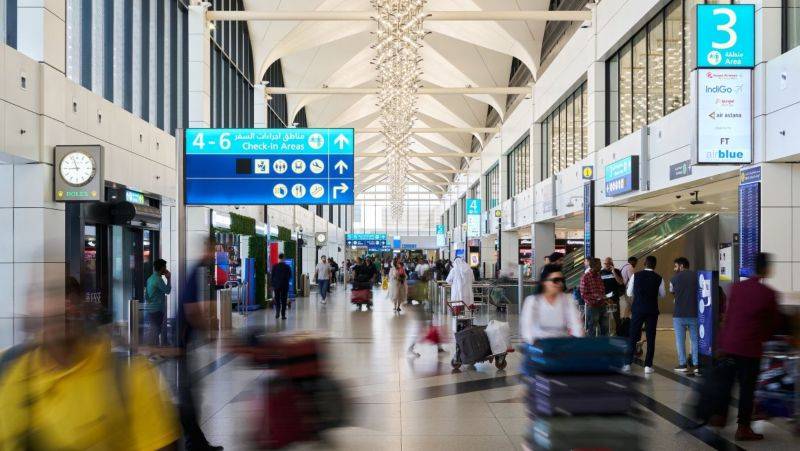
DUBAI – Dubai International (DXB) has set a new global benchmark, welcoming 95.2 million guests in 2025 and recording the highest annual international passenger traffic ever achieved by any airport.
The figure represents a 3.1% increase compared to the previous year, confirming the airport’s position as the world’s busiest international hub.
More notably, the year was defined by sustained performance at record levels rather than a single spike in demand. DXB achieved its busiest day, month, quarter and full year on record, operating at the edge of its physical capacity while maintaining consistent operational standards.
Record milestones
December emerged as the busiest month in DXB’s history, with 8.7 million guests passing through the airport, up 6.1% year on year. The fourth quarter also set a new high, reaching 25.1 million guests, marking a 5.9% increase over the same period in 2024.
Aircraft activity rose in tandem with passenger demand. Total flight movements reached 118,000 in the fourth quarter, up 5%, bringing the annual total to 454,800 movements, a 3.3% increase compared to the previous year.

Despite higher traffic volumes, efficiency indicators remained strong. The average number of passengers per movement stood at 214, reflecting the deployment of larger aircraft and high load efficiency. The annual load factor reached 77.6%, a marginal adjustment of 0.5 percentage points.
DXB at full scale
Rather than experiencing isolated peaks, 2025 highlighted DXB’s ability to sustain high volumes consistently. The airport managed 86.75 million bags during the year, a 4.95% increase year on year and the highest baggage volume ever handled in a calendar year.
Operational performance metrics remained robust. Around 89% of arriving baggage was delivered to guests terminating at DXB within 45 minutes of the aircraft arriving on stand. Mishandled baggage performance stood at 99.75%, equivalent to 2.47 mishandled bags per 1,000 guests.
Guest processing times also remained stable at scale. At departure passport control, 99.35% of guests waited less than 10 minutes. On arrival, 98.8% cleared passport control within 15 minutes. Security checks were completed in under five minutes for 98.9% of guests.
The performance reflects coordination across the oneDXB community, comprising airlines, service partners and government stakeholders, enabling the airport to operate consistently near capacity while maintaining service standards.
Global reach
India retained its position as DXB’s largest country market, accounting for 11.9 million guests. The Kingdom of Saudi Arabia followed with 7.5 million, the United Kingdom with 6.3 million, Pakistan with 4.3 million, and the United States with 3.3 million.
Several markets recorded notable growth during the year. Traffic from China increased by 16.6% to reach 2.5 million guests. Russia grew 6% to 2.8 million, Turkey rose 6.7% to 2.2 million, Egypt expanded 14.3% to 1.8 million, and Italy climbed 12.5% to 1.6 million.
London remained the busiest city destination, with 3.9 million guests travelling between the UK capital and Dubai. Riyadh followed with 3 million, while Mumbai and Jeddah recorded 2.4 million each. New Delhi completed the top five with 2.2 million guests.
By the end of 2025, DXB was connected to 291 destinations across 110 countries, served by 108 international airlines, reinforcing its standing as one of the most globally connected hubs in the aviation network.
What’s next for DXB?
Paul Griffiths, CEO of Dubai Airports, said the milestone reflects sustained operational maturity rather than short-term peaks. “Airports are often defined by moments of intensity, but long-term performance is defined by how well those moments are sustained. In 2025, DXB showed that record traffic is no longer an exception, but part of its operating reality,” he said.
Griffiths added that traffic is expected to approach 99.5 million in 2026, supported by continued coordination across the sector and the oneDXB community.
As demand continues to build and capacity is carefully managed, Dubai’s aviation ecosystem is entering a phase where sustained performance defines success. The complementary role of Dubai World Central – Al Maktoum International (DWC) is expected to expand as traffic patterns evolve, positioning the emirate for its next chapter in global aviation growth.